
Core Active Amine & Oligomer Systems for Belgium
Engineered to accelerate surface crosslinking and eliminate tackiness under energy-efficient LED curing and traditional high-pressure mercury arcs.
Active Amine Chemistry in Belgium’s Advanced Manufacturing Sector
A rigorous examination of chemical engineering challenges, photochemical kinetics, and cross-border regulatory compliance in the Heart of Europe.
Belgian Industrial Status: Navigating High-Speed Converting & Tight Regulations
Belgium holds a unique, strategic position within the European chemical and manufacturing landscape. Anchored by the Port of Antwerp-Bruges—the second largest petrochemical cluster in the world after Houston—the Belgian market operates as both a major production corridor and a sophisticated consumer of specialty radiation-curing chemicals. From the textile and flooring hubs of Flanders (Kortrijk, Ghent) to the packaging converters surrounding Brussels and Wallonia, Belgian industrial formulators operate under strict energy and environmental performance targets.
A central challenge in contemporary Belgian UV/EB manufacturing is the rapid transition toward energy-efficient LED UV curing systems (365nm, 385nm, and 395nm) coupled with the total eradication of migratory volatile organic compounds (VOCs). Traditional high-pressure mercury lamps generate ozone and significant heat, which Belgian plants are actively phasing out under the EU Green Deal framework. However, LED curing delivers narrow-wavelength light that frequently fails to fully activate surface layers due to atmospheric oxygen inhibition. Active amines (amino acrylates and co-initiators) act as critical hydrogen-transfer agents that react rapidly with peroxy radicals, mitigating oxygen inhibition and ensuring tack-free curing at line speeds exceeding 400 meters per minute.
Global Amine Synergist Trends: Migration Control & Molecular Entrapment
Historically, industrial formulators relied on small-molecule tertiary amines such as triethanolamine (TEA), methyldiethanolamine (MDEA), or ethyl 4-(dimethylamino)benzoate (EDAB). On a global scale, regulatory enforcement—particularly driven by EU REACH, the Swiss Ordinance on Food Contact Materials, and Nestlé Guidance—has rendered migratory, low-molecular-weight amines commercially unviable due to toxicity, skin irritation, and odor transfer.
The global radiation curing frontier has permanently shifted to polymerizable amino acrylates. By chemically incorporating active amine groups into acrylated oligomer and polyester backbones, these modern active amines participate directly in free-radical chain polymerization. Once crosslinked under UV light, the amine functionality becomes fully locked into the 3D insoluble polymer network, reducing migration below analytical detection limits (<10 ppb) while virtually eliminating post-cure amine blooming and yellowing.
Zero-Oxygen Inhibition
Rapid α-amino radical generation through hydrogen abstraction scavenging peroxy radicals at air-film interfaces, maximizing scratch resistance.
Food Contact Compliant
Full polymer entrapment tailored to pass stringent migration protocols under Swiss Ordinance, EuPIA, and Belgian national standards.
LED 395nm Synergy
Engineered to work synergistically with Type II photoinitiators (ITX, DETX, Benzophenone) ensuring rapid through-cure under cold UV lighting.
Localized Belgian Application Scenarios
Precision chemistries formulated to solve specific performance bottlenecks across key Belgian manufacturing sectors.
Flemish Flooring & PVC Sheets
Flanders is globally renowned for luxury vinyl tiles (LVT) and resilient PVC flooring. Our low-viscosity active amine grades (such as 1262B) reduce resin viscosity without solvent diluents, improving micro-scratch resistance, leveling over calendered PVC substrates, and stain repelling.
Pharma & Food Label Printing
Surrounding Brussels and Tournai, premier European label converters require rapid UV flexo and offset curing with strictly non-migrating synergists. Our copolymerizable amino acrylates ensure zero offset set-off in reel-to-reel processes while conforming to pharma cleanroom requirements.
Automotive Components & Assembly
Belgian automotive suppliers require dual-cure and fast tack-free UV clear coats for interior trims and lighting lenses. Amine functionalization accelerates surface glass transition (Tg) development, resisting finger print transfer, perspiration, and alcohol abrasion.
Technical Roadmap & Future Outlook (2025–2030)
Pioneering sustainable radiation-curing mechanisms aligned with Europe’s Circular Economy Action Plan.
Bio-Carbon Amine Backbones
Synthesizing amino acrylates derived up to 45% from renewable plant-based feedstocks without sacrificing radical generation efficiency or batch clarity.
Dual-Cure Dark Reaction Matrix
Integrating secondary thermal or moisture-cure active amine bridges for shadowed geometries in complex 3D-molded electronics and composite parts.
Sub-50nm Waterborne Dispersions
Next-generation waterborne amino polyurethane acrylates (WBPUA) eliminating organic reactive diluents completely for zero-VOC interior finishes.
AI-Assisted Kinetic Optimization
Deploying predictive machine learning algorithms to tune oligomer molecular weights and amine values specifically to client curing lamps and conveyor setups.
Holistic Macro-Industry Formulation Strategies
Solving the triple trade-off: Cure Speed vs. Flexibility vs. Long-Term Photolytic Stability.
In classical radiation chemistry, accelerating surface curing speed often comes at the direct expense of polymer flexibility and color stability. High concentrations of traditional tertiary amines create chromophoric conjugated structures upon weathering, resulting in undesirable yellowing under solar exposure. Furthermore, excessive radical crosslink density at the top surface creates severe internal stress, resulting in curling on flexible substrates or delamination from difficult materials like untreated BOPP, PET, or metallic foils.
Ever Ray’s Macro Formulation Solution: We recommend a balanced polymer matrix architecture incorporating 10% to 25% active amino acrylate oligomer paired with high-molecular-weight aliphatic polyurethane acrylates and hyperbranched resins. This creates a staggered crosslinking gradient. The active amine rapidly scavenges surface oxygen to achieve immediate dry-to-touch performance, while the elastomeric aliphatic polyurethane segments dissipate shrinkage stress, ensuring high pencil hardness (3H–5H) alongside 100% adhesion in cross-hatch tape testing.
Frequently Asked Questions for Belgian Engineers & Buyers
Direct technical answers regarding regulatory compliance, reaction kinetics, and bulk delivery terms.
How do active amines differ from conventional amino acrylates?
Are your active amine grades fully registered under EU REACH for Belgian importation?
Can active amines resolve curing issues in 395nm LED UV printing presses?
What is the typical shipping lead time and minimum order quantity (MOQ) for Belgium?
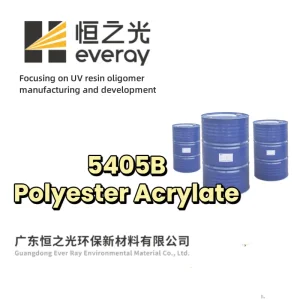
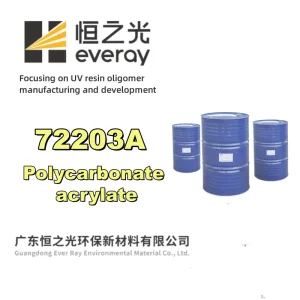
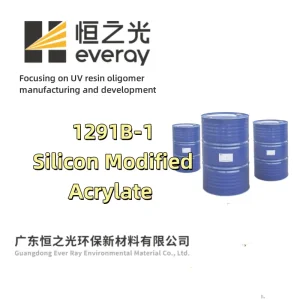
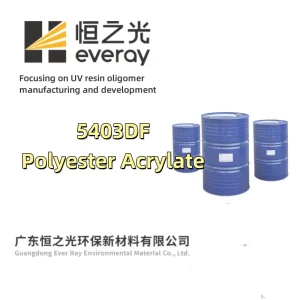
High-Performance Acrylate Resins & Special Polymers for Belgium
Engineered oligomer systems covering the full spectrum of industrial coating, graphic arts, and adhesive requirements.
Ready to Formulate with Belgian Regulatory Confidence?
Connect with Ever Ray’s senior UV chemical engineers. We engineer custom active amine concentrations, supply full REACH dossiers, and deliver formulation samples directly to your pilot facility.
Send Inquiry Now