Industrial Oligomer Formulations: Part I
Standard-calibrated curable systems balancing tensile cross-linking, hyper-leveling mechanics, and accelerated UV-depth conversion.
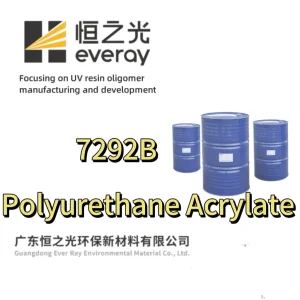
Industrial Macro-Analysis: The Next Evolution in Wood Epoxy Polymers
The international market for architectural and industrial wood bonding has moved past simple bisphenol A/epichlorohydrin blends. Today's industrial fabricators demand nanoscale fiber penetration, photochemically controlled kinetics, and ultra-low exothermic curing.
Eliminating Anisotropic Internal Shear
Natural timber behaves as an orthotropic, living composite that undergoes continuous dimensional changes in response to relative ambient humidity. Traditional rigid epoxies induce concentrated interfacial shear stresses along the cell walls, culminating in micro-fracturing and glue-line delamination. Modern wood epoxy chemistry resolves this by polymerizing hyperbranched polyurethane domains that dissipate energy under cyclical moisture expansion.
Sub-Micron Cellular Translocation
Viscosity management is paramount. By blending low-shrink modified acrylate monomers and tailoring monomer distribution curves, our resins drop formulation viscosity without organic solvents. This allows uninhibited transport through softwood tracheids and hardwood libriform fibers, locking the resin mechanically into cellular cavities before polymerization completes.
Zero-VOC Industrial Decarbonization
Stringent VOC legislation worldwide is driving the replacement of solvent-borne polyurethane and urea-formaldehyde resins. 100% reactive solids systems utilize their fluid state purely through active diluents and oligomeric fractions that integrate directly into the three-dimensional thermoset structure, preventing atmospheric solvent losses during industrial cross-linking.
Polymer Architecture & Empirical Substrate Correlation
Selection criteria based on structural mechanics, radical propagation kinetics, and wood-surface interaction physics.
| Oligomer Chemical Class | Elastic Modulus (GPa) | Shore D Hardness | Cellular Pore Penetration | Accelerated QUV Yellowing (ΔE*) | Primary Industrial Use Case |
|---|---|---|---|---|---|
| Standard Bisphenol A Epoxy Acrylate | 3.4 – 3.8 | 85 – 90 | Moderate (Requires heat reduction) | > 4.5 (Moderate risk) | UV primer sandable coats, interior architectural boards |
| Aliphatic Polyurethane Acrylate | 1.2 – 1.8 | 65 – 75 | High (Low kinetic chain length) | < 0.8 (Extreme stability) | Architectural timber slabs, transparent river tables, marine decks |
| Hyperbranched Polyester Acrylate | 2.8 – 3.2 | 82 – 86 | Ultra-High (Spherical nanoscaled) | 1.5 – 2.0 (Stable) | Veneer impregnations, moisture barrier wood primers |
| Aromatic Polyurethane Urethane Acrylate | 2.2 – 2.6 | 78 – 82 | High (Solvent-free medium shear) | 3.0 – 3.8 (Indoor preference) | High-wear engineered oak flooring, factory roller coatings |
Targeted Regional Applications & Compliance Assurance
Deploying engineered polymer chemistries across varied global microclimates, ensuring regulatory compliance and lasting structural bonds.
Tropical & High-RH Operations (Southeast Asia & Brazil)
In environments where relative humidity frequently exceeds 85%, capillary water condensation blocks resin access to hydrophilic hydroxyls on wood surfaces. We provide custom amine-terminated promoters and active silane coupling structures that displace moisture films, chemically grafting into cellulose and hemicellulose chains to prevent blistering.
Sub-Zero Dimensional Stability (Nordics & Canada)
Timber used in high-latitude regions faces extreme seasonal indoor-heating cycles that rapidly strip moisture, causing high cross-grain shrinkage. Our aliphatic urethane backbones retain structural elasticity below -30°C, absorbing thermal shocks and preventing micro-fracturing without losing surface hardness.
EU REACH & US TSCA Regulatory Frameworks
Our raw materials pass extensive toxicological profiling to verify SVHC non-inclusion, full compliance with EU REACH Annex XVII, and alignment with US EPA TSCA Section 5 rules. Formulations intended for indoor commercial use meet AgBB criteria, Blue Angel limits, and LEED v4 credit requirements for low-emitting materials.
Technological Roadmap: The Next Frontier in Resin Engineering
Strategic R&D targets focused on self-healing matrices, bio-sourced carbons, and intelligent photopolymerization controls.
Bio-Based Acrylate Synthesis
Integrating renewable feeds including cashew nut shell liquid (CNSL), itaconic derivatives, and tall-oil polyols, achieving >40% bio-based carbon without compromising cure speed.
Dynamic Reversible Covalent Networks
Introducing hindered urea and transesterification catalysts that allow heat-assisted scratch healing and dynamic re-bonding under micro-crack formations.
Excimer Laser Surface Texturing
Perfecting resins responsive to 172nm excimer lamps, generating micro-wrinkled soft-touch matte finishes without physical silica flattening agents that can dull timber grains.
AI-Driven Formulation Matching
Using machine-learning algorithms that adjust photoinitiator cocktails, monomer balance, and oligomer viscosity to match wood density, oil content, and moisture levels in automated production lines.
Technical & Commercial Clarifications for Formulators
Detailed answers addressing substrate challenges, photo-kinetics, curing setups, and large-scale manufacturing questions.
How do Ever Ray's modified oligomers resolve resin exotherm risks during deep wood castings?
What mechanisms prevent moisture-induced delamination when applying UV resins on oily or dense hardwoods?
How do aliphatic polyurethane acrylates stop resin yellowing in high-UV outdoor wood applications?
What production setups are required to switch factory lines from solvent-borne wood lacquers to Ever Ray 100% solids UV?
Can custom viscosities and cure speeds be calibrated for regional automated roller coating plants?
Industrial Oligomer Formulations: Part II
Functional monomers, specialized adhesion bases, and elastomeric oligomers configured for rigorous manufacturing protocols.