
High-Performance Resins: Primary Wholesale Formulations
Engineered to balance crosslink density, surface tension, chemical stability, and cure speed across rigorous commercial converting applications.
Buy Anti-Yellowing Polyurethane Acrylate Oligomer-High Flexibility UV Resin for Adhesive and Nail Gel Manufacturer, Factory
View Product Specs
High-Quality Low shrinkage 1290H can apply for PVC floor coating applications Supplier, Product
View Product Specs
Buy Bisphenol A Epoxy Acrylate Resin 9104: A Core Resin for High-Performance UV Coatings Factory, Products
View Product Specs
Buy Durable 7296C UV resin: solvent-resistant, abrasion-resistant, suitable for nail polish and wood coating Manufacturers, Factory
View Product Specs
Wholesale A Versatile Solution for High-Efficiency Curing Applications: Epoxy Acrylate 92001 Manufacturer, Product
View Product Specs
High-Quality 5650F UV resin for UV varnish and printing ink Manufacturer, Product
View Product Specs
Wholesale Bisphenol A Epoxy Acrylate Resin 9105M-80: A Versatile Core Resin for Durable and Glossy UV Coatings Manufacturer, Suppliers
View Product Specs
High-Quality 6160M-3: Fast curing modified epoxy acrylate for improved performance Manufacturer, Supplier
View Product SpecsMacro-Industrial Status of Water-Based Chemical Manufacturing
The global shift toward zero-VOC limits, decarbonization, and stringent chemical safety protocols has elevated water-based polymers from niche alternatives to mission-critical industrial standards.
Regulatory Catalysts & Mandates
Strict volatile organic compound (VOC) caps across North America (EPA Clean Air Act Title V), the European Union (REACH regulations and Industrial Emissions Directive), and the Asia-Pacific region are accelerating the phase-out of traditional solvent-based resin systems.
Modern tier-1 coating line operations require waterborne polyurethane acrylates (WPUA) and water-dilutable photopolymers to comply with workplace exposure limits (OEL) while removing fire and explosion insurance overhead.
Cross-Linking & Film Cohesion
Historically, waterborne coatings struggled with inferior solvent resistance, slow water evaporation, and reduced hardness compared to solvent systems. Recent advancements in self-crosslinking polymer emulsions and core-shell dispersion chemistry have solved these limitations.
By integrating acrylate end-groups directly into hydrophilic polyurethane backbones, modern chemical factories produce resins that achieve rapid crosslinking upon UV exposure or catalytic thermal drying.
Operational Safety & ESG Governance
Transitioning from toxic reactive diluents and flammable organic solvents (such as toluene, xylene, and ethyl acetate) reduces operational hazards for wholesale converters.
Facilities using advanced aqueous formulations reduce explosion-proof HVAC investments, decrease hazardous waste disposal costs by up to 64%, and qualify for international carbon neutral supply chain certifications.
Molecular Architecture: The Transition to High-Performance Waterborne UV
Understanding the molecular balance between ionic stabilization, acrylate functionality, and mechanical resilience in modern water-based formulations.
Anionic & Non-Ionic Stabilization
Stable waterborne polyurethane acrylate dispersions (WPUDs) require internal emulsifying agents. By reacting dimethylolpropionic acid (DMPA) or polyether glycols into the prepolymer backbone, we form self-emulsifying micelles.
When neutralized with tertiary amines (such as TEA), these domains maintain colloidal stability across wide pH and shear-rate spectrums without requiring fugitive surfactants that can harm film water-resistance.
Hyperbranched Acrylate Integration
Conventional linear polymers exhibit high melt viscosity when molecular weight increases. By introducing hyperbranched architectures, our synthesis yields low hydrodynamic volume coupled with high multi-functional terminal acrylate counts.
This molecular configuration delivers high crosslink density, rapid UV photopolymerization under both Mercury and LED arrays (365nm to 405nm), and superior surface scratch resistance.
Dual-Cure Chemistry & Shadow Areas
For complex three-dimensional substrates, our factories develop dual-cure systems combining primary UV photopolymerization with secondary moisture, isocyanate, or thermal curing.
This eliminates uncured resin in shadow zones, making it suitable for automotive interior components, complex electronics encapsulation, and deep 3D structural bonding.
Localized Commercial Applications: Engineering Solutions for Specific Substrates
Customizing resin viscosity, surface energy, and mechanical ductility to meet targeted industrial performance criteria.
Industrial Wood & Architectural Flooring
High-throughput automated production lines require sealers, sanding primers, and topcoats that flash off water quickly and cure under high-speed line rates.
Our waterborne polyurethane acrylate dispersions offer excellent chemical resistance against hot liquids, ethanol, and household chemicals, while maintaining an open-grain finish and meeting European EN 717-1 formaldehyde and low-VOC standards.
3C Consumer Electronics & Engineering Plastics
Polycarbonate (PC), ABS, and PMMA housings require protective coatings that resist scratching and wear without chemical micro-cracking caused by solvent attack.
Our water-based aliphatic PUA platforms provide reliable cross-hatch adhesion, pass rigorous RCA abrasion testing (>300 cycles), and resist cosmetic degradation from artificial sweat and thermal shock.
Packaging Inks & Overprint Varnishes (OPV)
Food packaging and pharmaceutical converting facilities demand migration-compliant, odor-free, high-gloss formulations with stable printability.
Waterborne UV formulations eliminate monomer odor and lower total extractables. They maintain stable ink transfer and color density on flexographic, gravure, and roll coater presses operating at over 200 m/min.
Technical Roadmap: Next-Generation Water-Based Polymer Engineering
A systematic framework detailing ongoing synthetic advancements, scale-up protocols, and environmental impact mitigation.
Bio-Carbon Integration
Synthesizing waterborne polyurethane resins derived from bio-succinic acid and seed-oil polyols, reaching >45% renewable carbon content without compromising hardness.
High-Speed LED Responsiveness
Redesigning photoinitiator-oligomer interaction to overcome surface oxygen inhibition under low-energy 395nm UVA LED sources in high-moisture air.
Zero-Surfactant Dispersions
Utilizing high-pressure micro-fluidization and zwitterionic self-stabilizers to achieve stable nanometer micelle size distributions without emulsifiers.
Circular Recyclability
Developing reversible covalent crosslinks that provide robust chemical resistance in service, while allowing clean debonding during wash processes in industrial plastic recycling.
Frequently Asked Questions on Water-Based UV Manufacturing
Expert answers addressing the practical technical challenges faced by global formulators and plant engineers.
Conventional 100% solids UV systems achieve hardness by increasing crosslink density using multi-functional monomers like TMPTA or DPHA, which causes embrittlement and high curing shrinkage. Waterborne polyurethane acrylates (WPUA) decouple this mechanism. The polyurethane backbone contains hard segments (isocyanates and short chain diols) for physical hardness and soft segments (polyether or polyester glycols) that retain elastic flexibility. Acrylate groups terminate the chains, providing dense crosslinking at the boundary layers without causing the polymer matrix to become brittle.
Proper flash-off is essential for waterborne UV formulations. If curing lamps are triggered while water remains inside the coating layer, trapped moisture turns to steam, creating micro-voids, haziness, and reduced gloss. The industrial standard involves passing the coated substrate through a convection IR or hot-air drying zone (typically 50°C to 70°C for 2 to 5 minutes) until residual water drops below 2-3%. After complete physical coalescence, the film passes under high-intensity UV lamps for photopolymerization, converting into a chemically resistant polymer within seconds.
To prevent ester hydrolysis during overseas transport in warm, humid containers, our production base builds the polymer backbone using polycarbonate diols (PCD) and sterically hindered cycloaliphatic isocyanates (such as IPDI or H12MDI). Furthermore, the internal carboxylate salt counter-ions are neutralized with optimized tertiary amines, preventing pH drops below 7.2. Products are shipped in fluorinated or anti-corrosive polyethylene drums with integrated thermal buffering guidelines, ensuring 12+ months of stability.
Yes, but production lines require two minor operational adjustments: drying capability and contact material compatibility. First, a thermal or forced-air drying zone must be positioned between the application station (roller, curtain, or spray) and the UV light array. Second, because water possesses higher surface tension than organic solvents, formulators often incorporate substrate-wetting polyether siloxane additives, and fluid delivery lines must use stainless steel (304/316) or inert engineering plastics to prevent corrosion.
Advanced Monomers, Reactive Oligomers & Specialty Modifiers
Designed for downstream formulators seeking specific performance attributes in adhesion, chemical resistance, fast curing, and reduced shrinkage.
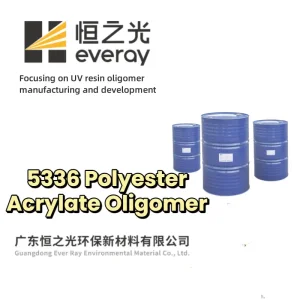
Buy Polyester Acrylate 5336 – The Ideal Resin for High-Performance UV Inks and Varnishes Manufacturer, Supplier
View Product Specs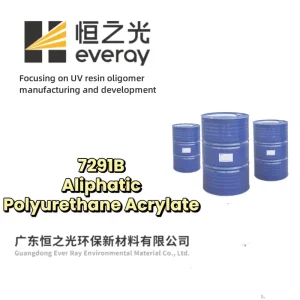
High-Quality A Revolutionary Choice Empowering High-End UV Applications: PUA 7291B Factories, Products
View Product Specs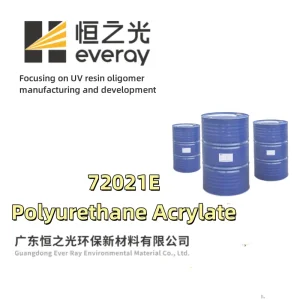
Buy 72021E UV-resin for Multi-Substrate Bonding Factory, Factories
View Product Specs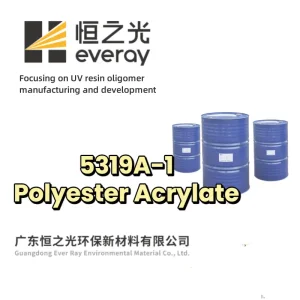
Buy Polyester Acrylate 5319A-1–A Reliable Solution for High-Performance UV Coatings Manufacturers, Suppliers
View Product Specs
Wholesale Low viscosity 6300 modified epoxy acrylate UV resin for UV paper varnish Supplier, Suppliers
View Product Specs
Buy Polyester Acrylate 5202B – The Ideal Choice for High-Performance UV Coatings Manufacturer, Product
View Product Specs
Buy 17701 Low Shrinkage Modified Acrylate Oligomer - Resin for Offset and Film Inks Factories, Product
View Product Specs
Wholesale 6851A High-Performance Modified Epoxy Acrylate Resin | For UV Coatings, Inks & Gel Polishes | High Transparency & Yellowing Resistance Manufacturers, Factories
View Product SpecsWholesale Factory Infrastructure: Scalability, QA/QC & Delivery
Operating a chemical manufacturing plant requires strict compliance, rigorous raw material selection, and verified batch consistency.
Precision Laboratory Verification
Every commercial batch undergoes testing using Gel Permeation Chromatography (GPC) for molecular weight distribution, cone-and-plate viscometry across multiple temperatures, and Karl Fischer titration to verify water dispersion stability.
Full spectroscopic data and Certificate of Analysis (COA) documents accompany all bulk ISO tank and drum shipments, guaranteeing consistency between production runs.
Specialized Export Packaging & Cold-Chain
Water-based photopolymers require protection from temperature extremes during transit. Freezing can break the micellar dispersion, while excessive heat (>45°C) can cause premature thermal gelling.
We provide insulated IBC totes, temperature-monitored refrigerated container shipping, and nitrogen-blanketed containers to ensure our products arrive ready for immediate processing.
Tailored OEM & Synthesis Capabilities
Whether you require targeted modifications to cure under 395nm LED arrays, specific shear-thinning behavior for high-speed curtain coating, or improved adhesion on untreated polypropylene substrates, our chemical engineering team provides customized synthesis.
We work directly with Tier-1 formulators under strict Non-Disclosure Agreements (NDAs) to engineer tailored resin solutions that protect your market differentiation.
