Direct Factory Sourcing
High-Performance Oligomers & Glass Primers
Explore standard and customized UV-curable monomers and prepolymers engineered to resolve brittle adhesion, moisture peeling, and yellowing risks on smooth, non-porous glass substrates.
Wholesale 67283:Rapid-setting yellowing-resistant modified epoxy acrylate solution Manufacturers, Supplier
View Specification
Buy Aromatic PA UV-resin 7162 for Plastic Spray-coatings, wood-finishes and UV-inks Manufacturer, Supplier
View Specification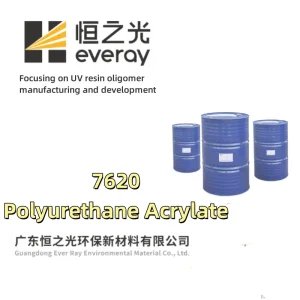
High-Quality 7620 UV-curing Resin applied in UV vacuum electroplating Factories, Products
View Specification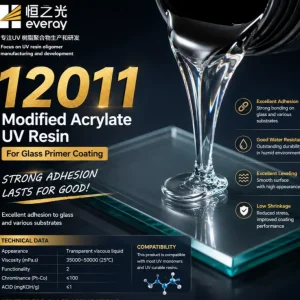
Wholesale 12011 Modified Acrylate UV Resin for Glass Primer Coatings | Excellent Adhesion & Boiling Water Resistance Manufacturer, Product
View Specification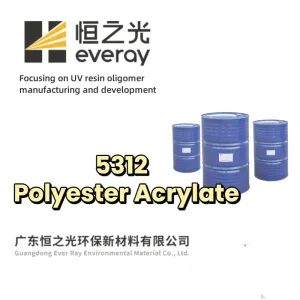
Wholesale Polyester Acrylate 5312–A High-Efficiency, Multi-Purpose UV Resin Solution Factory, Product
View Specification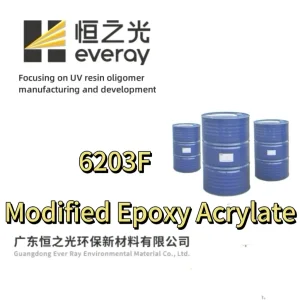
Wholesale 6203F Low-Shrinkage Modified Epoxy Acrylate Resin - High Adhesion UV Prepolymer Manufacturer, Supplier
View Specification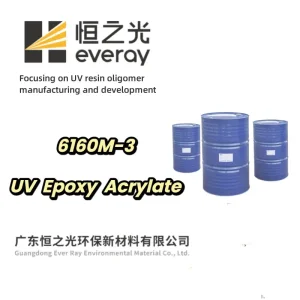
High-Quality 6160M-3: Fast curing modified epoxy acrylate for improved performance Manufacturer, Supplier
View Specification
Industry Whitepaper Analysis
The Global Commercial & Industrial Landscape of UV Glass Primers
Addressing the core technical hurdles of non-porous silica bonding: volumetric shrinkage, interfacial tension, and hydrolytic stability in demanding environmental conditions.
Inorganic Interface Chemistry
Glass is inherently smooth, polar, and chemically non-reactive to basic free-radical acrylic polymers. Without an advanced primer layer containing silane coupling agents (e.g., methacryloxypropyltrimethoxysilane), coatings quickly delaminate under humidity.
- Hydrolytic cleavage prevention via dense covalent Si-O-Si bridging.
- Elimination of interfacial moisture condensation channels.
- Compensation for thermal expansion coefficient discrepancies.
Shrinkage & Internal Stress
Standard UV coatings exhibit high volumetric shrinkage (up to 8-12%) during free-radical polymerization. This micro-scale contraction creates intense shear stress along the substrate plane, destroying cross-hatch adhesion scores.
- Use of hyperbranched & modified epoxy acrylates to lower volume shrinkage to <3%.
- High cross-linking density without macro-molecular brittleness.
- Retention of flexibility for subsequent machining, cutting, and tempering.
Boiling Water & Chemical Resistance
For glass packaging (perfume bottles, spirits) and architectural spandrel glass, coatings must endure extreme autoclave or hot water sterilization cycles without blistering, fogging, or loss of adhesion.
- Special functional oligomers (e.g., Grade 12011) withstand 100°C boiling tests for >2 hours.
- Resistance to synthetic alcohol, essential oils, and cosmetic alkali.
- Maintains 5B cross-hatch adhesion directly following hot water immersion.
Manufacturing Infrastructure
Guangdong Industrial Supply Chain Advantages
Combining synthesized resin raw material control, multi-ton automated reactors, and dedicated R&D application centers to reduce procurement lead times and product inconsistency.
40,000+
Production Base (Sq. Meters)
10+
Continuous Synthesis Lines
< 0.5%
Batch-to-Batch Viscosity Variance
100%
Pre-Shipment Quality Testing
Oligomer Self-Synthesis
Unlike formulation blenders that purchase generic prepolymers, our manufacturing plant in Yunfu synthesizes modified epoxy, polyester, and polyurethane acrylates directly from primary chemical precursors.
Standardized QA Validation
Every single batch undergoes testing for double bond conversion rate, acid value, refractive index, solid content, Gardner color, and initial/aged adhesion via automated analytical instruments.
Agile Global Logistics
Proximity to Pearl River Delta international shipping hubs (Shenzhen, Guangzhou, Hong Kong) allows streamlined containerization and temperature-monitored ocean freight for sensitive monomers.
Custom Formulation Support
Our senior chemical formulation teams tailor refractive indices, diluent percentages, curing light bandwidth sensitivity (Hg lamp vs. 365-395nm UV LED), and viscosity for specific line equipment.
Target Market Realities
High-Value Industrial Application Scenarios
From flat float glass to automated 3D cosmetic container lines, discover how UV glass primers bridge the gap between substrate physics and finish durability.
Cosmetic Packaging
Glass flacons and spirit bottles require high-gloss base coats capable of accepting UV vacuum metallization, hot stamping, or silk-screen finishes without flaking.
Electronic Touch Glass
Smartphone cover glass, automotive cockpit displays, and control panels demand non-conductive, ultra-clear UV primers that survive thermal shock cycles (-40°C to +85°C).
Architectural Spandrels
Interior decorative partitions, splashbacks, and architectural spandrel glass coated via high-speed roller coater lines require rapid cure speed and long-term UV sun resistance.
UV Screen & Digital Inks
High-resolution flatbed UV inkjet and screen inks applied to glass require reactive primer oligomers that allow immediate drop pinning and ink droplet spreading control.
Home Appliance Glass
Oven doors, refrigerator panels, and induction cooktop trim layers benefit from heat-dissipating, cross-linked acrylate matrices immune to kitchen grease and cleaning solutions.
Material Selection Matrix
UV Curable Resin Chemistry Comparison for Glass Coatings
Select the optimal oligomeric architecture based on cure mechanism, mechanical durability, and environmental resistance targets.
| Resin Technology | Adhesion on Bare Glass | Volume Shrinkage (%) | Boil-Water Resistance | Weatherability (UV) | Primary Industrial Match |
|---|---|---|---|---|---|
| Modified Acrylate (e.g., 12011) | 5B (Cross-Hatch) | < 2.5% | > 2 Hours @ 100°C | High | Universal Glass Primers, Cosmetic Bottles |
| Standard Bisphenol A Epoxy Acrylate | 1B - 2B (Poor Initial) | 7.0% - 9.0% | Fails (< 15 mins) | Low (Yellows) | Overprint Varnishes, Wood, Paper Sealers |
| Aliphatic Polyurethane Acrylate (PUA) | 4B (With Silane Additive) | 3.0% - 4.5% | Moderate (30-45 mins) | Exceptional (Non-Yellowing) | Outdoor Architectural & Touch Screens |
| Aromatic Polyurethane Acrylate (7113A) | 4B - 5B | 3.5% - 5.0% | Good (60 mins) | Moderate | Vacuum Metallization Basecoats, Rigid Packaging |
| Hyperbranched Multi-Functional Acrylates | 3B - 4B | < 3.0% | High | High | Fast-Speed LED Hardcoats, Anti-Scratch Layers |
Strategic Procurement
Global Sourcing Trends & Quality Specifications
Formulators in Europe, North America, and Southeast Asia are shifting sourcing models based on environmental compliance, spectral transition, and single-source redundancy.
1. Regulatory Compliance (REACH & RoHS)
Global brand owners mandate coatings free from hazardous air pollutants (HAPs), benzene, heavy metals, and restricted photoinitiators (e.g., TPO bans in the EU). Sourcing from compliant Chinese synthesizers ensures documented SVHC compliance.
2. The LED UV Migration (365nm to 395nm)
Rising industrial electricity tariffs and carbon tax mandates are accelerating the retirement of high-pressure mercury arc lamps in favor of energy-efficient UV LED curing systems. Resins must have elevated reactivity at longer UV wavelengths.
3. Total Formulation Cost Optimization
Procuring proprietary premixed primers from multinational chemical distributors often carries premium brand markups. Direct wholesale partnership with Chinese monomer and oligomer factories allows coating blenders to capture 30-45% cost savings.
Expert Answers
Frequently Asked Questions: UV Glass Primer Chemistry
Technical and procurement clarifications addressed directly by our senior material science team.
Why does UV coating peel from glass after 24 to 48 hours?
Initial bonding is often purely driven by weak physical van der Waals forces. As post-curing polymerization reactions continue, progressive shrinkage increases internal planar shear stresses. Simultaneously, ambient humidity penetrates the coating-glass interface, cleaving weak hydrogen bonds. Specialized glass primers utilize chemically active silane or carboxylic groups that establish permanent covalent bonds directly with silica.
How does modified acrylate 12011 achieve boil-water resistance?
Grade 12011 incorporates specific hydrophobic segments alongside reactive polar coupling sites. Upon exposure to UV radiation, it forms a high-density, low-shrinkage interpenetrating crosslinked network that blocks moisture ingress channels. This hydrophobic barrier shields the covalent bonds at the substrate interface from hydrolytic degradation during boiling water exposure.
Can your UV primers be cured with modern 395nm UV LED lamps?
Yes. While conventional epoxy acrylates rely primarily on shortwave UV-C energy (254nm) from mercury lamps to overcome oxygen inhibition, our engineering team supplies custom reactive monomer packages and amine synergists (such as amino acrylates) that achieve complete tack-free surface conversion under 365-395nm LED systems.
What is the standard shelf life and storage protocol for international orders?
When stored in original, unopened, light-proof steel drums under 25°C in a dry environment, our UV oligomers and primers possess a verified shelf life of 6 to 12 months. All export shipments are provided with comprehensive Certificate of Analysis (COA), Technical Data Sheets (TDS), and updated GHS-compliant Safety Data Sheets (SDS).
Complete Portfolio Range
Specialty Industrial Oligomers & Acrylate Solutions
Explore additional high-performance formulations for offset printing, high-temperature resistance, and vacuum electroplating applications.
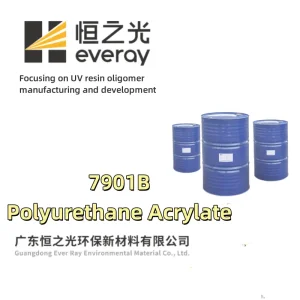
High-Quality 7901B UV-resin for industrial coatings Factory, Products
View Specification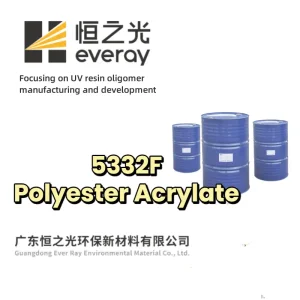
Buy Polyester Acrylate 5332F – The Premium Choice for Offset Inks Supplier, Factory
View Specification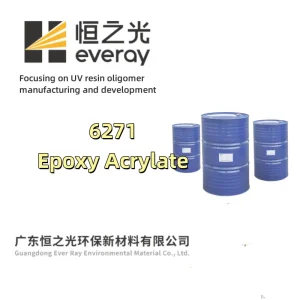
High-Quality Durable 6271 UV resin: very suitable for UV adhesive with low yellowing risk Suppliers, Products
View Specification
High-Quality A150 UV-resin for UV-ink and UV-coatings Manufacturer, Factories
View Specification
Buy Fast Curing Modified Epoxy Acrylate Oligomer - High Flexibility Acrylic Resin for UV Plastic Coating & Furniture Supplier, Product
View Specification
Buy Fast Curing Modified Epoxy Acrylate Resin 6231 for High Gloss UV Coatings and Inks Manufacturer, Supplier
View Specification
High-Quality High Abrasion & Yellowing Resistance Modified Epoxy Acrylate Resin 6271 for UV Coatings & Adhesives Supplier, Product
View Specification