Precision Curing UV Resins & Epoxy Oligomers (Batch 01)
Commercial formulations calibrated for zero-oxygen-inhibition, rapid UV LED response, and superior mechanical durability across industrial coating and screen printing operations.
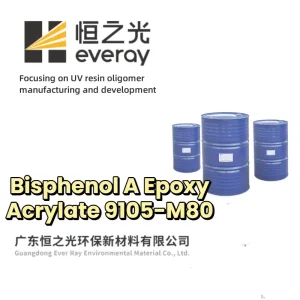
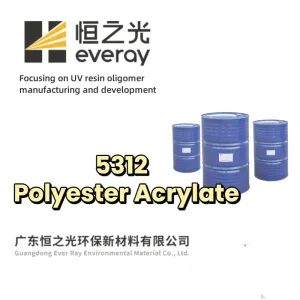
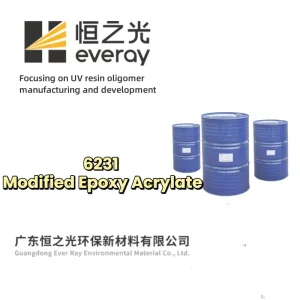
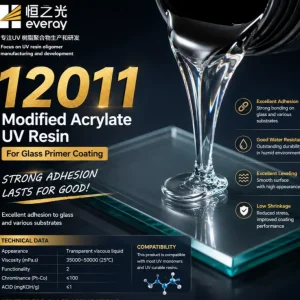
High-Yield Solutions for Next-Gen UV Curing Epoxy Matrices
Systemic solutions mitigating intrinsic epoxy polymer limitations: overcoming crosslinking volumetric shrinkage, maximizing interfacial surface tension match, and eradicating dark cure delays.
Shrinkage Mitigation & Stress Dissipation
Standard free-radical acrylic resins suffer from 6% to 10% volumetric shrinkage during high-speed radiation. Our modified epoxy-acrylate and cationic cycloaliphatic formulations integrate ring-opening oxirane monomers, reducing shrinkage stress to <1.8%, preserving structural integrity on rigid inorganic surfaces such as borosilicate glass, anodized aluminum, and primed alloy substrates.
<1.8% Volumetric Delta Stress NeutralDual-Mechanism (Free Radical / Cationic) Systems
By synergizing rapid acrylic double-bond photopolymerization with delayed cationic ring-opening oxetane/epoxide reactions, Ever Ray dual-cure hybrid matrices eliminate the "shadow curing" dilemma. This technology guarantees complete conversion even in opaque pigmented inks, deep optical bond gaps, and thick-film multi-layer electronic potting.
Zero Unreacted Monomers Shadow Curing CapableSub-Nanometer Adhesion Modification
Overcoming substrate boundary delamination on polyolefins, untreated PET, and polished metals. Chemical anchoring via polar hydroxyl-functionalized acrylate chains and silane-functional coupling precursors ensures adhesion durability that survives 100°C boiling water immersion tests, autoclave cycling, and prolonged MEK rub exposure without micro-cracking.
5B Cross-Hatch Retained MEK >200 Double RubsThe Global Shift: Energy Economics & Decarbonization in UV Chemistry
Analyzing the worldwide industrial transition from high-VOC thermal cure ovens to high-yield UV/EB photopolymerization across North America, the European Union, and Asia-Pacific manufacturing hubs.
North American Precision Manufacturing
Accelerating demand across Tier-1 automotive sensor potting and high-speed flexographic package converting. Stricter EPA clean-air enforcement mandates zero-solvent formulas. Supply chain stability depends heavily on consistent wholesale partners capable of shipping multi-metric-ton lots with certified flash-point stability and standardized batch Viscosity Indices.
European Green Deal & REACH Compliance
With stringent European Chemicals Agency (ECHA) scrutiny on photoinitiator migration and free BPA monomers, European compounders are replacing standard epoxy matrices with bio-derived modified acrylates and hyperbranched oligomers that feature low cytotoxicity, migration neutrality, and food-packaging certification potential.
Asia-Pacific Industrial & Consumer Electronics Hub
High-density PCB conformal coatings, flat-panel OLED optical clear bonding (OCR), and 3C consumer electronics drive enormous metric-ton volume. Asia's mass production lines operate at continuous feed rates of up to 80 meters/min, requiring oligomer curing speeds within 0.1 to 0.5 seconds under 395nm/365nm UV LED arrays.
Localized Technical Integration & Global Compliance Framework
Enterprise chemical procurement requires stringent chain-of-custody protocols, regulatory transparency, and immediate formulation support tailored to regional statutory environments.
Full Dossier Transparency (SDS / TDS / CoA)
Every commercial container shipped from Ever Ray facilities includes batch-specific Certificates of Analysis confirming viscosity (Brookfield CAP2000+), acid value (<2.0 mg KOH/g), refractive index (nD25), and residual solvent content (<0.05%). Globally harmonized SDS documents comply with GHS Rev. 8 and regional OSHA/WHMIS requirements.
Climate-Controlled Bulk Distribution Logistics
To eliminate spontaneous thermal dark polymerization or premature viscosity drift across tropical shipping lanes, our international logistics network coordinates refrigerated reefer containers or stabilized packaging insulated against UV radiation, keeping materials strictly between 15°C and 25°C from warehouse dock to customer compounding floor.
On-Site Formulation Engineering Clinics
Procuring raw resins is only half the battle. Our doctoral polymer engineers assist client compounding chemists remotely or through field visits—fine-tuning photoinitiator package ratios (Type I TPO/819 vs. Type II ITX/EDB pairings), adjusting reactive monomer diluent ladders, and calibrating UV radiometer curing profiles.
Targeted Application Environments for UV Curable Formulations
Comprehensive formulation matrices engineered for precise adhesion energy, thermal resistance, and scratch-proof optical clarity across major market verticals.
Industrial Wood & Parquet Topcoats
High-solids modified epoxy acrylate resins act as primary pore-filling sealers and transparent sandable primers. Exceptional mechanical hardness (4H-6H pencil hardness) combined with aromatic urethane elasticity protects natural timber and laminate planking from gouging, heel abrasion, and domestic chemical stains.
3C Electronics & Mobile Housings
Mobile devices demand vacuum-metallized UV primers and non-yellowing aliphatic hardcoats on polycarbonate and PMMA casings. Formulations using hyperbranched acrylate monomers resist human skin sebum, high-humidity salt sprays, and thermal cycling shock (-40°C to +85°C) without micro-fissuring.
High-Density UV Inkjet & Flexo Chemistry
Viscosity-stabilized polyester and amino-modified epoxy acrylates provide rapid pigment wetting for carbon black, phthalocyanine blue, and titanium dioxide. Extremely fast surface curing counters oxygen quenching, producing razor-sharp, bleed-free dot reproduction on high-speed label presses.
Precision Photopolymer Additive (SLA/DLP)
Additive manufacturing resins demand low initial uncured viscosity (<300 cps at 25°C) paired with high green-strength directly after laser exposure. Cycloaliphatic epoxy-acrylate hybrids deliver isotropic tensile strength and heat deflection temperatures (HDT) exceeding 110°C.
Structural Optoelectronics & Glass Primers
Designed for architectural facade glass panels, camera lens module assembly, and shadowless bonding. These specialty adhesion-promoted resins incorporate functionalized silane anchor blocks, surviving severe 100-hour boiling water immersion tests while maintaining >99% visible-spectrum optical clarity.
Cosmetic UV Oligomers & Nail Gels
Exclusively synthesized from high-purity, skin-safe aliphatic polyurethane acrylates. Formulated for zero skin exotherm (low heat release during curing), long-lasting mirror gloss, and effortless acetone soak-off capability without damaging the underlying natural keratin structure.
Engineering Roadmap: Next-Generation Radiation Curing Matrices
Ever Ray Materials maintains sustained R&D investment into sustainable synthesis, longer-wavelength spectral response, and self-healing macromolecular architectures.
Bio-Based Carbon Content Synthesis
Phase-in of monomers synthesized from renewable plant oils, succinic acids, and functional lignin derivates. Our 2026-2028 objective targets 40% certified renewable bio-carbon content across workhorse epoxy acrylate grades without sacrificing baseline reactivity or coating hardness.
405nm - 450nm Deep-Cure Matrices
As the industrial world pivots definitively away from toxic medium-pressure mercury arc lamps to narrowband UV LEDs (365nm, 385nm, 395nm, and visible 405nm), our synthetic chemistry is modifying chromophore reception, allowing thick cross sections (>2mm) to cure instantly at ultra-low watt densities.
Smart Dynamic Network Self-Healing Coatings
Integrating dynamic covalent bonds (Diels-Alder linkages and disulfide exchange bridges) directly into the hyperbranched acrylic backbone. Surface micro-scratches on automotive clearcoats or mobile displays resolve under ambient solar exposure, significantly extending substrate service lifespans.
Frequently Asked Technical & Wholesale Questions
Answers to rigorous chemical formulation, processing, and purchasing inquiries encountered by senior technical directors and R&D procurement leads.
How does Ever Ray control batch-to-batch viscosity drift during maritime container shipping?
Can epoxy acrylate oligomers be modified to pass 100°C boiling water adhesion tests on glass?
What is the standard strategy for eliminating oxygen inhibition in high-speed, thin-film UV printing?
What minimum order quantities (MOQ) and lead times apply for custom chemical synthesis?
Are Ever Ray UV curing resins compliant with RoHS, REACH, and California Prop 65?
Advanced Performance Acrylates & Specialty Adhesives (Batch 02)
Complete your chemical compounding architecture with high-elasticity modified oligomers, shadowless optical adhesives, and pure acrylic backbones.