
Precision Formulation Catalog
High-Efficiency Modified Resins & Acrylate Oligomers
Engineered for formulators demanding extreme cure speed, substrate wetting, hardness, and minimal shrinkage stress.
Industry White Paper Context
The Global Industrial Landscape for Modified Epoxy Resin Sourcing
Evaluating regulatory pressures, decarbonization timelines, and structural conversion from thermal thermosets to UV/LED-curable modified epoxy acrylates.
Decarbonization & VOC Mandates
Global manufacturing hubs across North America and Western Europe face stringent VOC curbs via REACH and EPA regulations. Modern formulators replace traditional solventborne epoxies with 100% solids UV-curable modified epoxy acrylate oligomers, eliminating thermal baking ovens and cutting process energy consumption by up to 75%.
Microelectronic Packaging & 3C Cycles
The miniaturization of consumer electronics (smartphones, IoT sensors, automotive dashboards) demands adhesive chemistries that cure in seconds without thermal warpage. Using epoxy acrylate systems modified for low volume shrinkage guarantees dielectric reliability and mechanical integrity under thermal cycling.
Supply Chain Diversification
Tier-1 procurement teams avoid mono-regional vulnerabilities by forming joint-development relationships directly with specialized chemical synthetic bases. Factory-direct partnerships mitigate intermediate trading markups while unlocking customized molecular configurations matched to specific line speeds.
Formulation Engineering
Comparative Analysis: Modified Epoxy Acrylate vs Alternative UV Oligomers
Evaluating fundamental physical-chemical attributes to assist chemical engineers and formulators in choosing optimal raw materials.
| Polymer Backbone Class | Tensile Strength & Hardness | Cure Reactivity (Line Speed) | Adhesion on Problematic Substrates | Shrinkage Profile | Ideal Application Spectrum |
|---|---|---|---|---|---|
| Standard Bisphenol-A Epoxy Acrylate | Very High (Pencil 3H-5H) | Maximum (>50 m/min) | Excellent on Wood, Paper & Porous | Moderate to High (5-8%) | OPVs, Wood Sealers, Heavy Varnishes |
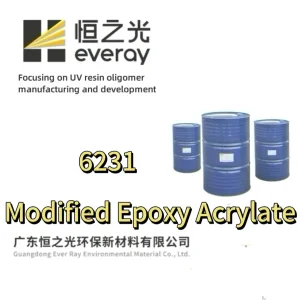
| Modified Epoxy Acrylate (Ever Ray 6231 / 6160) | Balanced Hardness + Flexibility | Ultra-Fast (High Conversion) | Superior (Plastics, Treated Metals) | Controlled / Low (3-5%) | Offset Inks, PVD Vacuum Topcoats, 3C Plastics |
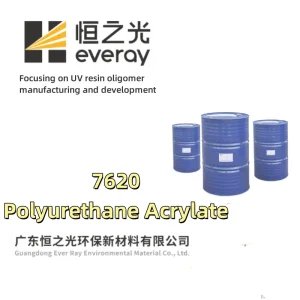
| Aliphatic Polyurethane Acrylate (PUA) | Flexible to High Toughness | Moderate to Fast | Exceptional (PC, PMMA, PET) | Low (<3%) | Optical Films, 3D Printing, Automotive Topcoats |
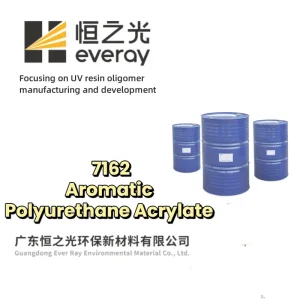
| Aromatic Polyurethane Acrylate | Tough & Highly Abrasion Resistant | Fast | High (Wood, PVC, Composites) | Low to Moderate | Industrial Parquet Flooring, Architectural Wood |
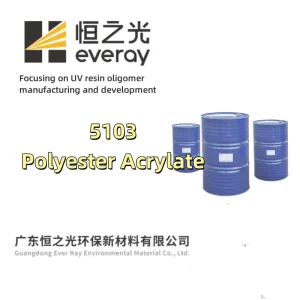
| Polyester Acrylate Oligomer | Medium Hardness | Fast with Pigments | High on Paper, Foils & Metals | Moderate | High-Gloss Printing Inks, Gravure, Flexography |
Practical Deployment
Localized Application Scenarios: Precision Formulating in Field Conditions
How using epoxy resin systems solves micro-climatic, physical, and process limitations across major downstream production lines.
Vacuum Plating & PVD Metalizing
In high-end cosmetics packaging and automotive interior components, PVD aluminum and chromium vapor-deposition demands perfect interlayer adhesion. Our modified epoxy acrylate series (e.g., 7230E, 7620) exhibits micro-polar groups that anchor seamlessly to metalized thin layers without flaking under thermal-humidity shock tests (-40°C to 85°C).
High-Speed Commercial UV Offset Inks
High-speed web offset lithography demands rapid ink-water balance, shear-thinning rheological behavior, and quick surface cure. Combining Ever Ray 5335F polyester acrylate with modified epoxy acrylates delivers optimal pigment wetting while preventing emulsification and misting at rotational press speeds exceeding 15,000 sheets/hour.
Additive Manufacturing & Photopolymer 3D
High-resolution SLA/DLP 3D printers face dimensional distortion from cure shrinkage. By leveraging specialized hybrid dual-cure modified epoxy acrylates and hyperbranched oligomers, engineers produce functional mechanical prototypes characterized by high heat deflection temperatures (HDT > 90°C) and superior tensile retention.
China Supply Chain Dominance
Guangdong Ever Ray: Factory Scalability & Sourcing Resilience
Operating from our modern chemical manufacturing base in Yunfu, Guangdong, we ensure global security of supply through backward vertical integration.
40,000 m² Facility
Fully permitted, high-capacity chemical synthesis plant equipped with DCS computer-controlled automated reactors.
10+ Precision Lines
Parallel production lines allow immediate batch switching, preventing cross-contamination between epoxy, PUA, and polyester batches.
Raw Material Reserve
Direct long-term procurement of feedstocks (Bisphenol-A, acrylic acid, HDI, IPDI) cushions customers against spot market volatility.
Strict Analytical QA
In-house GPC, FTIR, and rheological profiling ensure every outbound IBC drum or tanker matches standard specifications down to ±1.5%.
2006
Founding Year
40,000m²+
Factory Area
10+
Patented Technologies
100+
Skilled Personnel
Chemical Evolution
Technology Roadmap: 2026–2030 UV Resin Innovations
Forward-looking synthesis pathways engineered by Guangdong Ever Ray's PhD-led R&D team.
LED Low-Energy Photo-Triggering
Traditional mercury vapor lamps face global phaseout under the Minamata Convention. We are synthesizing hyper-reactive modified epoxy acrylates optimized for 365nm, 385nm, and 395nm LED spectra that completely overcome surface tackiness and oxygen inhibition without requiring inert nitrogen blanketing.
Bio-Based Carbon Footprint Reduction
By substituting petroleum feedstocks with isosorbide, modified epoxidized soybean oil (AESO), and lignin derivatives, our green polymer initiative delivers epoxy acrylates with up to 45% renewable bio-carbon content while retaining the Tg and tensile modulus demanded by industrial coaters.
Dual-Cure Photothermal Networks
For complex 3D parts and opaque structural adhesives where UV rays cannot penetrate shadow zones, Ever Ray's upcoming dual-cure oligomers combine photo-radical polymerization with secondary ambient or thermal epoxy ring-opening mechanisms to ensure complete conversion throughout deep cavities.
Export & Regulatory Assurance
Global Regulatory Compliance & Regional Formulation Support
Eliminating international trade friction with complete chemical documentation and localized logistics coordination.
GHS, REACH & TSCA Compliance
All resin grades are backed by fully verified multi-language SDS, complete chemical inventory verification (EINECS, TSCA, IECSC), and raw material purity analyses that conform to RoHS 3 and halogen-free restrictions.
Application Lab Troubleshooting
Our Jiangmen technical center provides comprehensive rheological testing, adhesion pull-off validation, yellowing oven simulations, and cure-window evaluation for clients experiencing substrate-specific issues.
Flexible Export Packaging
Shipments are dispatched in UN-certified 200kg steel drums, 1000kg composite IBCs, or ISO containers with specialized anti-polymerization stabilizers to guarantee thermal shelf stability across trans-oceanic shipping routes.
Extended Synthesis Series
Commercial Photopolymers for Specialty Industrial Applications
Engineered monomers and oligomers ready for immediate bulk delivery and trial formulation sampling.
Procurement & Technical Q&A
Frequently Asked Inquiries from Formulators & Global Wholesalers
Clear technical answers addressing synthesis mechanisms, operational thresholds, batch controls, and ordering protocols.
Why choose a modified epoxy acrylate over an unmodified Bisphenol-A epoxy acrylate?
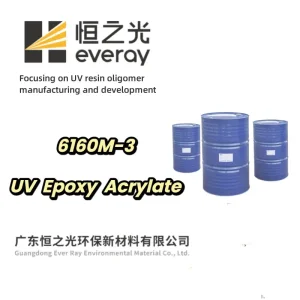
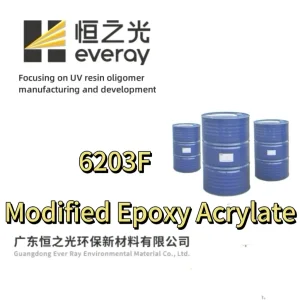
Unmodified Bisphenol-A epoxy acrylates offer high cure speeds and surface hardness but suffer from brittleness, high volume shrinkage (>7%), and poor intercoat adhesion. Our modified grades (such as Ever Ray 6231, 6203F, and 6160M-3) incorporate flexible aliphatic chains, carboxyl acid modifications, or polyurethane segments to mitigate shrinkage, enhance substrate wetting, and ensure flexibility without sacrificing chemical resistance.
How does Guangdong Ever Ray ensure batch-to-batch consistency in high-volume export orders?
Every production lot undergoes rigorous statistical process control inside our automated Yunfu synthesis base. Key metrics—including acid value, hydroxyl value, viscosity profile (Brookfield), double-bond conversion kinetics, and color index (Gardner)—are measured at regular intervals. Outbound shipments must match internal reference standards within ±1.5% to eliminate line-drift for downstream formulators.
Can your technical lab tailor epoxy acrylate viscosity for solvent-free spray coating lines?
Yes. High viscosity is a frequent challenge with epoxy acrylates. Our synthesis team can adjust oligomer molecular weight distribution or formulate pre-diluted packages utilizing multi-functional reactive diluents (TPGDA, DPGDA, TMPTA) or functional acrylate monomers to reach target spray viscosity (15–35 seconds Ford Cup #4 at 25°C) without using volatile solvents.
What strategies prevent yellowing in epoxy acrylate formulations exposed to natural sunlight?
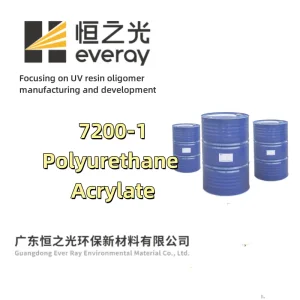
The aromatic rings in bisphenol-A epoxy structures inherently absorb UV energy, causing radical-induced quinoid chromophore formation (yellowing). For exterior applications, we recommend blending modified epoxy acrylates with our aliphatic polyurethane acrylate (PUA) oligomers (such as 7200-1) along with hindered amine light stabilizers (HALS) and benzotriazole UV absorbers.
What are the recommended storage protocols and expected shelf life for bulk shipments?
Acrylate double bonds are subject to thermally-induced free radical polymerization if mishandled. Containers must be stored between 10°C and 30°C in dark, dry, well-ventilated warehouses away from direct sun and strong oxidizers. Acrylates require dissolved atmospheric oxygen to maintain stabilizer efficacy (MEHQ); thus, tanks must never be purged with pure nitrogen. Under proper conditions, guaranteed shelf life is 6 to 12 months.
