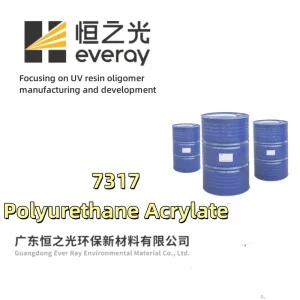
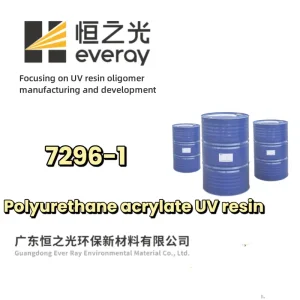
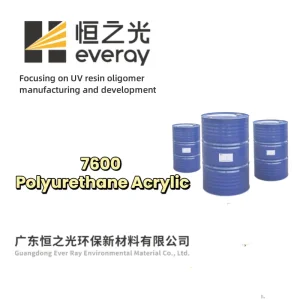
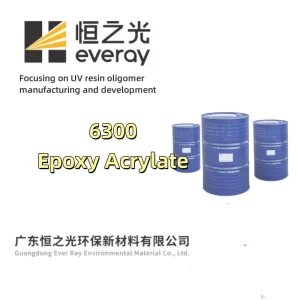
Featured SLA-Grade Acrylate Oligomers & Raw Resins
Direct sourcing for UV formulations: Low-shrinkage prepolymers, high-purity acrylates, and specialized oligomers engineered for sub-micron photopolymerization resolution.
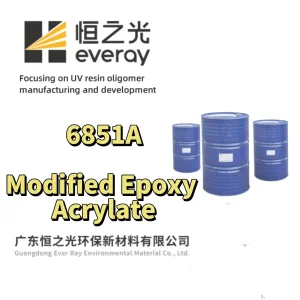
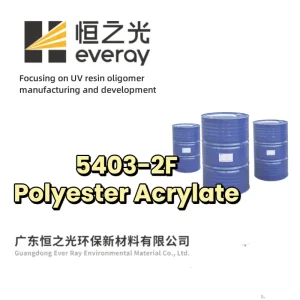
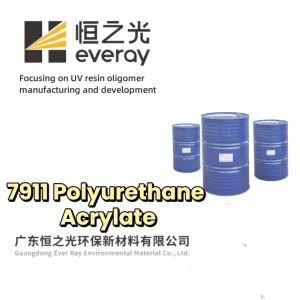
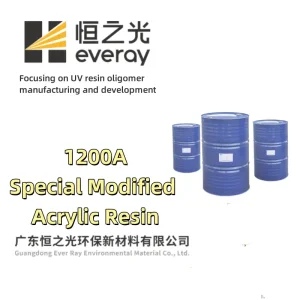
State of the Industry: The Chinese SLA Resin Manufacturing Advantage
A macroeconomic analysis of synthesis capabilities, raw material integration, and continuous quality control in Guangdong's chemical corridor.
In modern industrial additive manufacturing, Stereolithography (SLA) and Digital Light Processing (DLP/LCD) resin formulations have evolved beyond baseline prototyping media. Today's commercial SLA resins must function as engineering plastics, competing directly with injection-molded ABS, polypropylene, and filled nylon. Achieving this transition requires an intricate synthesis balance: managing the kinetic crosslinking speed of free-radical acrylates while counteracting volumetric post-gelation shrinkage through specialized interpenetrating polymer networks (IPNs) and cationic hybrid systems.
As the epicenter of global photopolymer synthesis, leading wholesale SLA resin manufacturers in China—anchored prominently by Guangdong Ever Ray Environmental Material Co., Ltd. (operating since 2006)—have achieved unparalleled structural advantages that deliver extreme value to international OEM formulators, contract manufacturing bureaus, and chemical distributors.
Full Upstream Monomer Integration
Direct synthesis access to fundamental feedstocks—including acrylic acid, polyols, epoxy resins, and aliphatic isocyanates—enables precise oligomer tailoring while buffering against international price volatility.
Batch-to-Batch Rheology Control
Advanced 40,000 m² reactors utilize automated DCS feedback to control oligomerization conversion rates, locking in target viscosities (±50 mPa.s) essential for consistent wiper blade spreading in SLA vats.
Global Compliance & Purity
Manufactured under strict ISO9001/ISO14001 frameworks, with complete compliance for REACH, RoHS, TSCA, and specialized low-odor/biocompatibility protocols (ISO 10993 cytotoxicity testing).
Agile Formulation Tailoring
Rapid synthesis turns around custom resins in 2–3 weeks. Formulations can be fine-tuned for 355nm DPSS lasers, 385nm UV LEDs, or 405nm monochrome LCD masking systems.
Emerging Trends in High-Performance Photopolymer Chemistry
How leading chemical suppliers are overcoming the traditional physical trade-offs of light-cured resins.
Dual-Cure Thermal/Photopolymer IPNs
To exceed the brittle limits of single-network acrylates, next-generation engineering resins combine a light-initiated stage (to form green part shape) with a secondary thermal curing epoxy or urethane network. This achieves ultimate tensile strengths above 65 MPa and heat deflection temperatures (HDT) up to 280°C.
Aliphatic Non-Yellowing Systems
By phasing out aromatic precursors in favor of cycloaliphatic epoxies and pure aliphatic polyurethane acrylates, manufacturers now supply crystal-clear formulations with Delta E < 1.5 after 1000 hours of Xenon weathering, vital for optical lightguides and transparent fluidics.
Ultra-Low Volumetric Shrinkage
Shrinkage during photo-polymerization induces internal stresses, warpage, and dimensional skewing. Integrating hyperbranched acrylates and dendritic oligomers reduces radical volume reduction below 1.2%, allowing metrology-grade tolerances in automotive checking fixtures.
Targeted Application Frameworks for Global Converters
Deploying specialized SLA photopolymers into high-yield, mission-critical industrial manufacturing pipelines.
Consumer Electronics (3C)
Formulations tuned for precision thin-wall snap fits, speaker grilles, and wearable prototyping. Delivers high impact resistance (Izod Notched > 40 J/m), smooth cosmetic finishes, and high electro-insulating dielectric strength.
Automotive Prototyping
Large-format SLA masters for aerodynamic wind-tunnel testing, dashboard HVAC ducts, and under-hood brackets requiring HDT > 110°C alongside resistance against synthetic oils, brake fluids, and thermal cycling.
Dental & Medical Orthodontics
High-yield thermoforming model resins engineered for vacuum aligner production. Features near-zero post-cure shrinkage, high surface hardness (Shore 85D+), and absolute resistance to boiling thermoforming cycle pressures.
Investment Casting & Tooling
Low-ash content photoresins designed for jewelry casting and aerospace turbine investment molds. Zero residual expansion upon thermal burnout prevents shell cracking during rapid dewaxing phases.
Global Enterprise Procurement Checklist for SLA Resins
Navigating chemical logistics, viscosity preservation, quality validation, and supply agreements.
Purchasing photopolymer resins at metric-ton scale requires rigorous evaluation well beyond standard consumer bottled resin criteria. B2B enterprise procurement officers and additive supply chain managers must verify:
- Temperature-Controlled Cold-Chain Routing: Thermal instability during ocean transit can trigger premature free-radical initiation or additive settling. Ever Ray incorporates tailored polymerization inhibitors (phenolic/quinoid stabilizers) that safeguard shelf lives up to 18 months under tropical marine container temperatures.
- Laser Spectrum Matching: Laser-based SLA units (e.g., 355nm frequency-tripled Nd:YVO4) demand substantially different photosensitizer matching compared to LED-based DLP/LCD arrays (385nm or 405nm). Procurement contracts must specify excitation spectrum cut-offs.
- TDS/MSDS/COA Batch Tracking: Every batch exported from our Jiangmen/Yunfu hubs includes comprehensive analytical validation: Brookfield dynamic viscosity testing, Pycnometer specific gravity verification, and FTIR crosslink conversion benchmarks.
Frequently Asked Questions (FAQ) for Chemical Formulators
Key technical answers directly from our formulation chemists and process engineers.
What is the structural difference between aliphatic and aromatic polyurethane acrylate oligomers in SLA resin formulations? +
How do you resolve viscosity and recoater blade resistance issues on large vat SLA printers? +
Can Ever Ray engineer bespoke SLA resins to fulfill customized mechanical and thermal parameters? +
What chemical mechanisms mitigate oxygen inhibition in thin-layer photopolymer printing? +
What export documentation, safety certifications, and logistics safeguards accompany wholesale consignments? +
Advanced UV Systems, Oligomers & Functional Resins
Complete product spectrum: High-strength ABS-like formulations, impact-resistant polyurethane acrylates, and specialty effect prepolymers.