
Featured Industrial Epoxy Acrylates & Resins
Direct factory wholesale formulations precision-engineered for self-leveling matrix stability, scratch resistance, and rapid curability.
High-Quality A150 UV-resin for UV-ink and UV-coatings Manufacturer, Factories
Explore Product
High-Quality 7901B UV-resin for industrial coatings Factory, Products
Explore Product
Wholesale Polyester Acrylate 5312–A High-Efficiency, Multi-Purpose UV Resin Solution Factory, Product
Explore Product
Wholesale Aromatic PA UV-resin 7113A for UV Vacuum-metallization and Plastic-coating Manufacturers, Suppliers
Explore Product
Buy 61163 High Solid Low Viscosity Anti-Yellowing Modified Epoxy Acrylate Resin For UV Coating Factory, Factories
Explore Product
Buy Anti-Yellowing Polyurethane Acrylate Oligomer-High Flexibility UV Resin for Adhesive and Nail Gel Manufacturer, Factory
Explore Product
Wholesale 6805A-1 UV-resin in UV Offset Printing Suppliers, Product
Explore Product
Buy 6102 UV Resin:Enhanced low shrinkage epoxy acrylate, perfect for UV wood coatings Supplier, Product
Explore ProductGlobal Industry Evolution & Enterprise Sourcing Landscape
Transitioning from labor-intensive multi-step solvent coatings to rapid-cure, low-VOC self-leveling epoxy matrices across advanced global supply chains.
Ultra-Low VOC & Regulatory Mandates
Global procurement teams operating in North America, the EU, and East Asia are under stringent regulatory pressures (REACH, EPA Method 24, and GB Standards) to phase out high-VOC systems. Modern self-leveling epoxy technologies must achieve seamless surface tension balance without aromatic diluents, utilizing reactive oligomers and functional monomers to attain zero shrinkage and negligible odor.
High Rheological Tolerance & Rapid Cycle Times
Large-scale civil infrastructure, aerospace hangars, cleanrooms, and automated logistics warehouses require thick-film systems (1.5mm to 4mm) that self-smooth within minutes. Wholesale factory sourcing prioritizes controlled pseudoplastic behavior: resins that flow freely under shearing during application yet rapidly level without surface orange peel, pinholes, or cratering.
Thermal Stability & Mechanical Resistance
Enterprise procurement requires coatings capable of resisting heavy dynamic forklift loads, micro-scratching, and aggressive chemical cleaners. By synthesizing Bisphenol A epoxy backbones with hyperbranched acrylic components, suppliers can deliver tailored crosslink networks that achieve a Barcol hardness exceeding 50 while preserving dynamic impact toughness.
Macro-Industry Engineering Solutions: Formulation Architecture
Addressing core mechanical failure modes in self-leveling floors: shrinkage stress, air release dynamics, and UV yellowing degradation.
| Performance Criterion | Legacy Wholesale Formulations | Advanced Ever Ray Engineered Matrix | Industrial Value Proposition |
|---|---|---|---|
| Leveling & Rheology | High reliance on solvent thinning (slow cure, micro-voids) | Low-viscosity modified oligomers & mono-functional acrylates | Mirror-smooth self-planarization within 15–20 minutes without solvent venting. |
| Volumetric Shrinkage | 4.5% – 7.0% (Risk of edge debonding & micro-cracking) | < 1.2% via hyperbranched steric hindrance polymers | Exceptional substrate adhesion on concrete, terrazzo, and metallic decks. |
| Photolytic Stability | Rapid discoloration under indirect UV / LED lighting | Aliphatic polyurethane acrylate / cycloaliphatic hybrids | Delta E < 1.5 across 2,000 hours QUV-A exposure; pristine aesthetic longevity. |
| Air Release / Defoaming | Requires intense mechanical de-aeration or solvent aids | Engineered internal surface tension modifier integration | Spontaneous micro-bubble burst mechanism, drastically reducing labor rework. |
| Chemical & Acid Resistance | Susceptible to organic solvent swelling and acid hazing | Dense tri-functional and multi-functional crosslink density | Withstands 30% H2SO4, hydraulic fluids, and industrial decontamination agents. |
E-E-A-T Compliance, Localized Technical Support & Global Reliability
Operational integrity certified from the synthesis reactor in Yunfu to global site application, meeting stringent international trade benchmarks.
Audited Batch Consistency & QC
Every resin batch manufactured across our 10+ automated production lines undergoes rigorous rheometer evaluation, gel permeation chromatography (GPC), and FTIR analysis to ensure continuous molecular weight distribution and viscosity tolerances within ±3%.
Worldwide Field Engineering
Our senior formulation chemists provide on-site technical diagnostics, evaluating regional ambient humidity, substrate moisture vapor emissions, and specialized curing machinery to recommend optimized accelerator packages and initiator blends.
Full Supply Chain Documentation
Complete regulatory compliance dossiers are furnished for every shipment: localized Safety Data Sheets (GHS/CLP compliant), full Technical Data Sheets (TDS), Certificate of Analysis (CoA), and RoHS/REACH SVHC declarations for smooth customs clearance.
Technical Roadmap: Next-Generation Self-Leveling Epoxy
Pioneering sustainable chemistry: Bio-renewable building blocks, dual-cure photopolymerization, and functional nano-composites.
Bio-Based & Circular Monomers
Developing epoxidized soybean oil (ESBO) derivatives and cardanol-based epoxy acrylates to replace petrochemical BPA feedstocks. Target: Delivering > 45% bio-based carbon content in self-leveling resins while preserving glass transition temperatures (Tg > 85°C) and cure responsiveness.
LED/Dual-Cure Photopolymerization
Bridging traditional two-component (2K) amine/epoxy thermosets with 395nm UVA LED-curable acrylate matrices. This allows instant surface immobilisation within 3 seconds, followed by ambient depth curing through shadowed zones—reducing facility shutdown times from 72 hours down to 4 hours.
Smart Self-Healing & Graphene Dispersion
Integrating pre-dispersed graphene nanoplatelets and reversible Diels-Alder adducts into the epoxy backbone to achieve permanent ESD/conductive dissipative properties (10^6 to 10^9 ohms/sq) with intrinsic micro-scratch recovery under ambient thermal cycling.
High-Performance Acrylates & Functional Oligomers
Engineered monomers, flexible modifiers, and crosslinking agents for mission-critical industrial formulations.
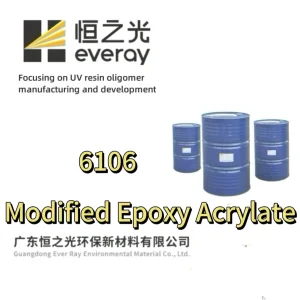
Wholesale 6106 Fast-Curing Modified Epoxy Acrylate Oligomer—High Adhesion, Flexible & Yellowing-Resistant UV Resin 产品买家热搜关键词 Manufacturer, Suppliers
Explore Product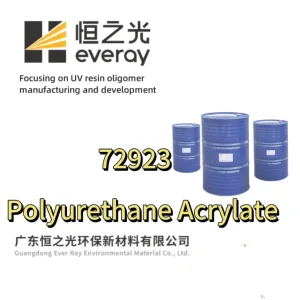
Wholesale 72923 Fast-Cure Non-Yellowing Polyurethane Acrylate Resin for UV Peelable adhesive Manufacturers, Factories
Explore Product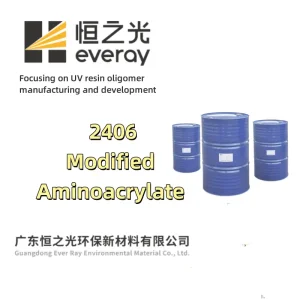
Buy 2406 UV Resin: Low Odor Solution for Rapid Paper and Plastic Varnishes Manufacturer, Factories
Explore Product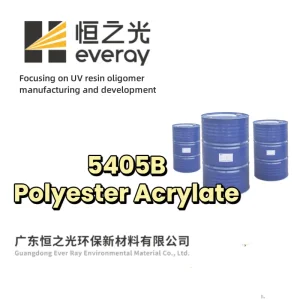
High-Quality Polyester Acrylate 5405B – A High-Efficiency Solution for Multi-Field UV Applications Suppliers, Product
Explore Product
Wholesale High Gloss Fast Curing Modified Epoxy Acrylate Resin (UV Oligomer) Manufacturers, Product
Explore Product
Buy 5336B High-Performance Polyester Acrylate Resin | Ultra-Fast Cure for UV Offset & Flexo Inks Supplier, Factory
Explore Product
Buy 61003A Fast Curing Tough Yellowing Resistant Modified Epoxy Acrylate Resin - UV Oligomer for Potting & Varnish Manufacturer, Factories
Explore Product
Buy Polyester Acrylate 5311A – A High-Efficiency and Durable UV Resin Choice Manufacturers, Suppliers
Explore ProductIndustrial Procurement FAQ: Technical & Supply Clarifications
In-depth responses curated by senior material specialists for enterprise resin purchasers, formulators, and distribution partners.
How does modified epoxy acrylate improve upon standard BPA epoxy in self-leveling floors?
Standard Bisphenol A epoxy acrylates deliver high hardness and solvent resistance but often exhibit high brittleness, elevated curing shrinkage, and vulnerability to yellowing under daylight. Our chemically modified epoxy acrylates incorporate internal aliphatic segments and specialized mono/di-functional linkages. This dramatically lowers system viscosity for natural self-planarization, improves elongation-at-break, and resists discoloration without compromising surface hardness.
What is the recommended viscosity range for high-build self-leveling systems?
For high-build applications (2mm to 4mm thickness), an ideal resin component viscosity ranges between 800 to 2,500 mPa.s at 25°C before aggregate loading. When blended with mineral fillers (e.g., quartz sand, silica flour), the fully formulated mixture should maintain workable flowability below 6,000 mPa.s under moderate shear, facilitating autonomous air-bubble expulsion and seamless leveling within working times.
What minimum order quantities (MOQ) and packaging formats are available for international export?
We support global chemical distributors and manufacturing plants with flexible industrial packaging: standard 200kg sealed steel drums, 1,000kg composite IBC totes, and bulk ISO tanks for high-throughput automated lines. Standard sample evaluation packages (1kg to 5kg) with corresponding Certificates of Analysis are available for initial laboratory compatibility validation.
How does Ever Ray guarantee batch-to-batch chemical stability across large contract volumes?
Production at our dedicated Yunfu facility is governed by strict ISO9001 and ISO14001 process automation. From incoming raw chemical inspection to end-point monomer conversion monitoring, each batch is tracked via automated DCS control loops. Every lot is cataloged with retaining samples stored for 12 months, ensuring absolute traceability and consistency across multi-container export schedules.
