Direct-From-Factory Solutions
Engineered Oligomers & High-Performance UV Resins
Verified wholesale resins engineered for rapid conversion, enhanced crosslinking density, and demanding commercial substrates.
Market Intelligence & Paradigm Shifts
Macro Trends Reshaping the Global Resin Coatings Sector
Analysis of technological conversions, net-zero imperatives, and radiation curing innovations governing 2025–2030 manufacturing operations.
Transition to LED-UV & Low-Energy Curing
Traditional medium-pressure mercury arc lamps are being rapidly replaced by 365nm–395nm LED systems to curb thermal stress on heat-sensitive wood, thin-gauge films, and electronic substrates while reducing manufacturing line energy consumption by up to 60%.
Decarbonization & Bio-Based Acrylates
Driven by EU Green Deal mandates and scope-3 audit requirements, tier-1 industrial formulators demand oligomers derived from bio-succinic acid, renewable polyols, and cardanol, balancing eco-footprints with rigid chemical resistance.
Hyperbranched Dendritic Architectures
Addressing the classical conflict between film hardness and application viscosity, hyperbranched acrylic oligomers deliver multi-acrylate radical functionality (>6 functional groups per molecule) without driving up processing viscosity or initiating film embrittlement.
Engineering Observation: The chemical industry is moving from simple resin sourcing to molecular co-engineering. When evaluating wholesale resin coating factories, top-tier buyers prioritize producers capable of controlling polymer dispersion indexes (PDI), functional oligomer conversions, and residual monomer limits below strict ppm thresholds.
Procurement Criteria & Due Diligence
What Tier-1 Formulators Demand from Bulk Resin Factories
Strategic criteria modern sourcing departments employ to vet chemical manufacturing facilities, mitigate supply risk, and guarantee formulation stability.
Batch-to-Batch Cpk Stability
Strict viscosity tolerances (±5% mPa.s) and standardized color indexes (Gardner ≤ 1) measured under calibrated Brookfield rheometer protocols to prevent line jamming in high-speed roll coaters.
Toxicology & Regulatory Dossiers
Ready-to-file REACH, TSCA, and RoHS documentation. Rigorous scrutiny on extractables and low migration profiles for food packaging inks (Nestlé guidance compliant) and cosmetic nail varnishes.
Containerized Bulk Supply Chain
ISO tank, IBC tote (1000kg), and closed-loop steel drum packaging paired with nitrogen blanket protection to guarantee an inhibitor-stabilized shelf life exceeding 12 months under varied transit climates.
Dedicated Synthesis Customization
Engineering tailor-made polyol backbones, varying isocyanate inputs (IPDI vs. HDI vs. TDI), and adjusting acrylate functionality to resolve substrate adhesion challenges on untreated polyolefins.
Substrate Matching & Formulation Chemistry
Macro Solutions Across Core Industrial Sectors
Solving complex boundary-layer friction, intercoat adhesion failures, and atmospheric oxygen inhibition across primary fabrication environments.
3C Electronics & Optical Plastics
Formulating optical-grade aliphatic polyurethane acrylates (PUA) eliminates yellowing under intense UV weathering. Blended with hyperbranched monomers, coatings achieve pencil hardness ≥ 3H without sacrificing ductile flex resistance on PC, ABS, and PMMA housings.
Continuous Wood & Parquet Flooring
Roll-coating lines demand fast-sand primers and ultra-abrasion topcoats. Epoxy acrylate oligomers provide economical high build and rapid cure, while specialized dual-functional polyurethane acrylates withstand 10,000+ Taber abraser cycles.
High-Speed Graphic Arts & OPVs
Offset and flexographic UV inks encounter surface tack from oxygen inhibition. Amino-modified polyethers and active amine co-initiators act as radical regenerators, driving clean surface cure at web speeds exceeding 300 meters per minute.
2006
Established Plant
40,000m²
Production Footprint
10+
Synthesis Reactors
10+
National Invention Patents
100+
Chemical Specialists
Chemical Selection Engine
UV Oligomer Chemistry Performance Comparison
A reference matrix developed by Ever Ray application engineers to guide formulators in selecting optimal prepolymers based on operational trade-offs.
| Oligomer Chemistry Family | Hardness | Flexibility | Yellowing Resistance | Curing Velocity | Target Substrates / Industrial End-Use |
|---|---|---|---|---|---|
| Bisphenol A Epoxy Acrylate | Very High (5/5) | Low (1/5) | Moderate (2/5) | Extremely Fast (5/5) | Wood sanding primers, paper varnishes, industrial offset inks |
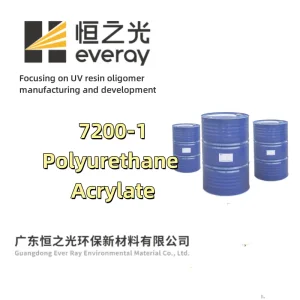
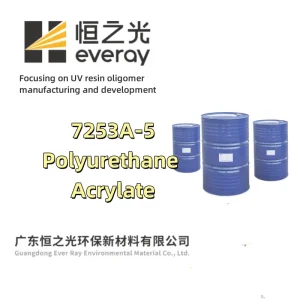
| Aliphatic Polyurethane Acrylate | Moderate (3/5) | High (5/5) | Outstanding (5/5) | Moderate (3/5) | 3C electronics, clear exterior topcoats, cosmetic UV gels |
| Aromatic Polyurethane Acrylate | High (4/5) | Balanced (3/5) | Poor (1/5) | Good (4/5) | Heavy-duty indoor floor coatings, scratch-resistant cabinetry |
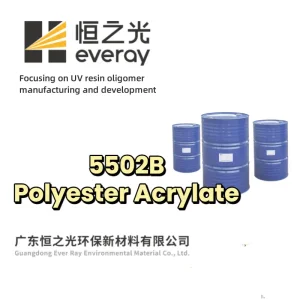
| Polyester Acrylate | Moderate (3/5) | Moderate (3/5) | Good (3/5) | Fast (4/5) | High-pigment flexo inks, lithographic printing, plastic primers |
| Hyperbranched Acrylate | Extremely High (5/5) | Low-Moderate (2/5) | High (4/5) | Instantaneous (5/5) | Anti-scratch thin hard-coats, high-speed optical fiber cladding |
| Waterborne Polyurethane Acrylate | Flexible (2/5) | Superior (5/5) | High (4/5) | Thermal + UV Dual | Eco-sensitive wood furniture, natural leathers, zero-VOC lines |
Quality Architecture & Regulatory Assurance
Factory Compliance, Localization & Export Verification
Ensuring frictionless international trade through comprehensive analytical characterization and robust regional warehousing networks.
Analytical COA & Purity Testing
Every commercial batch is accompanied by Certificate of Analysis records derived via Gel Permeation Chromatography (GPC), Fourier Transform Infrared Spectroscopy (FTIR), and Karl Fischer titration to verify oligomer molecular weight and low water content (<0.1%).
Global Maritime Logistics Support
Experienced chemical trade handling across EXW, FOB, CIF, and DDP terms. Resins are classified according to IMDG / IATA specifications, equipped with multilingual GHS SDS datasheets for customs clearance in North America, Europe, Southeast Asia, and the Middle East.
Application Lab Validation
Formulators receive direct guidance from our senior UV chemical engineers in Jiangmen and Yunfu. We conduct pilot-scale drawdown trials, UV cure simulation (LED vs Mercury), and adhesion testing on your specific target substrate prior to volume shipments.
Next-Generation Synthesis
Chemical Synthesis Roadmap: The Future of Photopolymers
Continuous evolution in monomeric diluents, dual-curing photopolymerization, and functional additive hybridization.
Dual-Cure Photopolymer Systems (Free Radical + Cationic/Thermal)
To eliminate shadows and cure thick cross-sections in automotive bonding and electronic encapsulation, next-generation resin platforms combine UV-induced initial tacking with secondary ambient-moisture or thermal polymerization to achieve complete deep conversion.
Monomer-Free & Odorless Photopolymer Systems
Replacing hazardous, high-vapor-pressure mono-acrylates (such as TPGDA and HDDA) with self-diluting hyperbranched oligomers and alkoxylated acrylate backbones, driving volatile organic emissions (VOCs) to zero and mitigating occupational skin sensitization concerns.
Photocurable Resins for Additive Manufacturing & SLA 3D
Adapting aliphatic urethane acrylate architectures specifically for stereolithography (SLA), DLP, and continuous liquid interface production (CLIP). Focus centers on lowering critical exposure energy ($E_c$) and controlling polymerization shrinkage stress below 1.5%.
Self-Healing & Anti-Fingerprint Covalent Functionalization
Integrating fluorine-silicon segment modifications and reversible disulfide linkages directly into UV-curable prepolymers to furnish smart automotive interior skins and optical coatings that spontaneously repair micro-scratches under ambient thermal stimulation.
Technical FAQs
Wholesale Resin Coatings & Oligomer Formulation FAQs
In-depth responses from our technical team answering the most frequent procurement and formulation inquiries.
What is the fundamental performance difference between aliphatic and aromatic polyurethane acrylates (PUA)?
Aliphatic polyurethane acrylates are synthesized with aliphatic diisocyanates (such as IPDI or HDI), giving them superior ultraviolet light stability, weatherability, and virtually zero yellowing tendencies under accelerated QUV aging. They are the benchmark choice for exterior clear coats, 3C electronic plastics, and cosmetic nail varnishes. In contrast, aromatic polyurethane acrylates (built using TDI or MDI backbones) yield elevated tensile modulus, superior hardness, and exceptional Taber abrasion resistance at a more competitive cost structure, but will discolor when exposed to direct sunlight. Therefore, aromatic PUAs are engineered primarily for interior industrial parquet flooring, architectural sealers, and dark-pigmented inks.
How can formulation chemists counter atmospheric oxygen inhibition in thin-film UV cure operations?
Oxygen inhibition occurs when ambient triplet oxygen ($O_2$) diffuses into the liquid surface layer and quenches propagating free radicals, forming stable peroxy radicals ($ROO\cdot$) that retard polymerization and cause residual surface tack. To overcome this in high-speed lines without inert nitrogen purging, formulators blend in amino-modified acrylates or active amine co-initiators. The secondary/tertiary amines undergo continuous hydrogen abstraction with peroxy radicals, consuming dissolved oxygen and regenerating active alkyl radicals that ensure crisp, tack-free surface conversion even at high production speeds.
What oligomer architecture provides the best solution for UV wood coatings and sanding sealers?
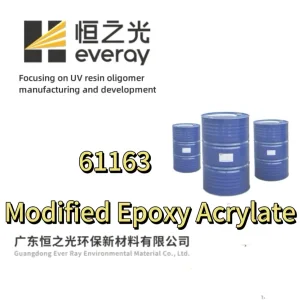
For wood basecoats and sanding primers, Bisphenol A epoxy acrylates (such as Ever Ray 9105M-80 or 6100D-85) are the industry standard due to their rapid cure kinetics, high glass transition temperature ($T_g$), and easy chalking/sandability that prevents abrasive paper gumming. For clear topcoats where mechanical wear, micro-scratch resistance, and chemical household resistance are paramount, chemists combine modified epoxy acrylates with flexible polyurethane acrylates and hyperbranched acrylic oligomers to balance hardness with impact flexibility.
Can Ever Ray tailor resin viscosity, functionality, and backbone structures for custom industrial trials?
Yes. Ever Ray operates synthesis reactors capable of custom pilot batches (from 500kg up to multi-ton lots). Our R&D team adjusts the primary polyol backbone (polyester, polyether, or polycarbonate), modifies the isocyanate ratio, selects reactive diluent carrier blends (such as HDDA, TMPTA, or TPGDA), and introduces special functional anchors (phosphate or silane groups) to optimize crosshatch tape adhesion on difficult substrates including polypropylene, untreated aluminum, and float glass.
What international quality certifications and technical documentation accompany bulk export shipments?
All bulk export orders are manufactured under strict ISO 9001:2015 quality controls and are supplied with a comprehensive Technical Data Sheet (TDS), validated Safety Data Sheet (SDS) conformant to UN GHS Revision 8, and a lot-specific Certificate of Analysis (COA) specifying viscosity, acid value, non-volatile content, and color grade. In addition, our standard oligomers are evaluated for compliance with EU REACH, RoHS 3.0, halogen-free directives, and heavy metal restrictions.
Formulation Toolset & Specialized Prepolymers
High-Reactivity Prepolymers & Specialty Acrylic Resins
Complete your chemical engineering formulary with our verified range of functional oligomers, peelable matrix binders, and high-gloss resins.