
Featured Material Adhesive Products: Primary Formulations
Engineered for industrial formulators requiring rapid curing kinetics, controlled shrinkage, and superior substrate interfacial bonding on plastics, glass, and metals.
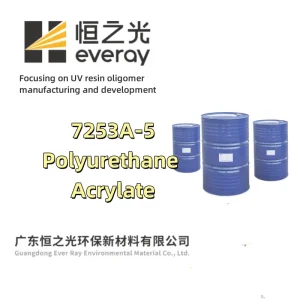
Wholesale Multifunctional 7253A-5 UV resin: heat-resistant, cold-resistant, suitable for various adhesives Supplier, Factories
View Product Specs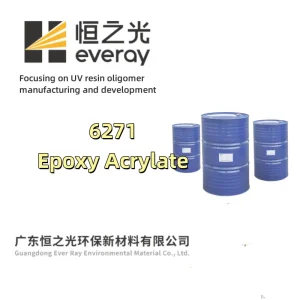
High-Quality Durable 6271 UV resin: very suitable for UV adhesive with low yellowing risk Suppliers, Products
View Product Specs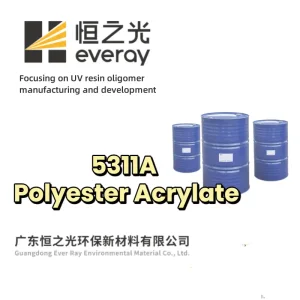
Buy Polyester Acrylate 5311A – A High-Efficiency and Durable UV Resin Choice Manufacturers, Suppliers
View Product Specs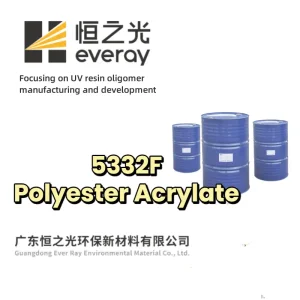
Buy Polyester Acrylate 5332F – The Premium Choice for Offset Inks Supplier, Factory
View Product Specs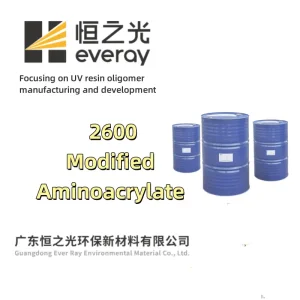
High-Quality Durable 2600UV resin: high hardness and excellent wear resistance, suitable for UV applications Factory, Factories
View Product Specs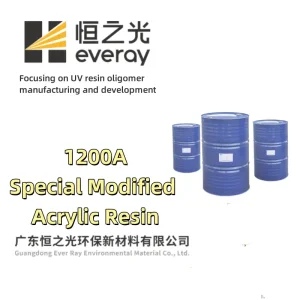
High-Quality 1200A UV resin in adhesion of density-board primer and metal-substrate Suppliers, Product
View Product Specs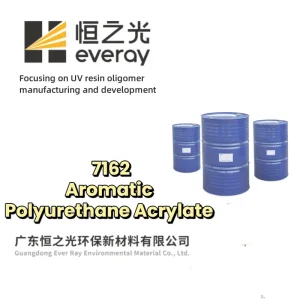
Buy Aromatic PA UV-resin 7162 for Plastic Spray-coatings, wood-finishes and UV-inks Manufacturer, Supplier
View Product Specs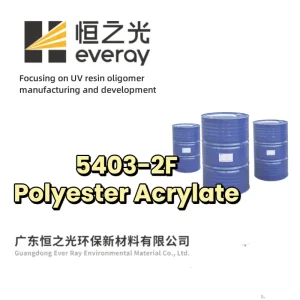
Buy Polyester Acrylate 5403-2F – A Reliable Choice for High-Quality UV Inks Suppliers, Product
View Product SpecsMacromolecular Design of Wholesale Material Adhesive Systems
Understanding the kinetic equilibrium between double-bond conversion rates, volumetric shrinkage stress, and cohesive modulus in modern radiation-cured material adhesives.
Aliphatic vs. Aromatic Polyurethane Acrylates
In reactive material adhesive design, oligomeric backbone architecture dictates structural durability. Aliphatic polyurethane acrylates (PUA) utilize isophorone diisocyanate (IPDI) or hexamethylene diisocyanate (HDI), preventing photo-oxidative quinoid formation under intense outdoor solar radiation. Conversely, aromatic PUA systems leverage TDI or MDI structures, providing elevated lap-shear cohesion, superior glass-transition temperature (Tg), and optimal cost-performance economics in enclosed industrial laminates.
Mitigating Volumetric Shrinkage Stress
Standard free-radical polymerization of acrylic double bonds (C=C) inherently induces a 5% to 15% volume contraction as van der Waals distances transition to covalent bonds. Ever Ray's proprietary material adhesive oligomers integrate flexible polyether and polyester segment extenders. This hyperbranched macromolecular geometry disperses internal tensile stresses across the interface, preventing micro-delamination along low-surface-energy substrates such as untreated BOPP, PET, and anodized aluminum.
Interfacial Surface Wetting & Functional Monomers
Thermodynamic adhesion requires the liquid adhesive formulation surface tension (γL) to be substantially lower than the critical substrate surface energy (γS). By incorporating specialty acid-functionalized acrylates (phosphate esters and carboxylic acid acrylates) into our adhesive oligomers, we achieve immediate spontaneous wetting and secondary chemical bond pairing with inorganic hydroxyl sites present on glass, silicon wafers, and galvanized metals.
| Adhesive Chemistry Class | Tensile Modulus (MPa) | Elongation at Break (%) | Substrate Specificity | UV Light Spectrum | Thermal Stability Range |
|---|---|---|---|---|---|
| Aliphatic Urethane (e.g., 6271, 7253A) | 120 – 450 | 80% – 220% | Optical Polycarbonate, PET, PMMA, Glass | 365nm – 395nm (LED & Hg) | -45°C to +135°C Continuous |
| Epoxy Acrylate Modified (e.g., 6160M, 6116) | 650 – 1,200 | 5% – 35% | Metals, Ceramic, Glass, Rigid Plastics | 254nm – 385nm High Energy | -20°C to +160°C Peak |
| Polyester Acrylate (e.g., 5311A, 5403-2F) | 250 – 780 | 30% – 110% | Paperboard, Treated Polyolefins, Foils | 365nm – 405nm Wideband | -30°C to +110°C Continuous |
| Functional Pure Acrylate (e.g., 1100UV, 1200A) | 80 – 320 | 120% – 350% | Low Surface Energy Films, MDF Primers | 385nm – 395nm LED Optimal | -40°C to +125°C Continuous |
China Manufacturing Scale & Integrated Supply Chain Efficiency
How Guangdong Ever Ray Environmental Material Co., Ltd. eliminates intermediary margin stacking, stabilizes chemical raw material volatility, and accelerates global export velocity.
Dedicated Yunfu Industrial Base
Operating across an expansive 40,000+ m² modernized synthesis infrastructure in Yunfu, Guangdong, equipped with fully automated multi-ton glass-lined and stainless reaction vessels.
Upstream Cost Isolation
Direct volume procurement of acrylic acid, polyols, and isocyanates shields Tier-1 adhesive formulators from downstream commodity spot price spikes, sustaining 15-28% procurement savings.
Batch-to-Batch Repeatability
Every synthesis batch is verified via Gel Permeation Chromatography (GPC), Brookfied Viscometry, and Fourier-Transform Infrared (FTIR) spectroscopy, ensuring absolute delta-zero viscosity drift.
Export Logistics Agility
Strategic positioning in the Greater Bay Area enables frictionless freight departures via Shenzhen and Guangzhou deep-water ports, supporting seamless ISO tank, IBC tote, and drum exports.
Global Compliance & Regional Engineering Localization
Mitigating legal, environmental, and toxicity liabilities through rigorous raw material qualification and international standard cross-mapping.
EU REACH & SVHC Compliance
All Ever Ray material adhesive grades comply with European Chemicals Agency (ECHA) regulations. Formulations are certified free from Substances of Very High Concern (SVHC) exceeding 0.1% w/w, enabling smooth importing into Germany, France, Italy, and broader EU industrial zones without secondary registration bottlenecks.
US TSCA & EPA Clearances
Chemical inventories strictly adhere to United States Toxic Substances Control Act (TSCA) listings. Comprehensive 16-section Safety Data Sheets (GHS SDS) are localized with precise CAS number declarations, toxicological profiles, and proper DOT shipping classifications for rapid customs customs clearance across North American ports.
RoHS 3.0 & Halogen-Free Electronics Specs
Crucial for consumer electronics (3C) adhesives, our specialized oligomers undergo ICP-OES spectrometry testing to guarantee lead, cadmium, mercury, hexavalent chromium, PBB, and PBDE levels remain well below 100ppm thresholds, with total chlorine and bromine content meeting stringent IEC 61249-2-21 halogen-free criteria.
Targeted Substrates & Industrial Assembly Environments
Field-proven material adhesive implementations across microelectronics, automotive displays, structural composites, and medical devices.
Optically Clear Display Bonding (LOCA)
Formulated with low-modulus aliphatic polyurethane acrylates such as 6271, these adhesives offer 99.2% visible light transmittance, haze <0.3%, and zero yellowing (Delta b* <0.5 after 1,000h QUV test). They cushion delicate OLED and TFT panels against thermal expansion mismatch during operational heat cycling.
Automotive Sensor & Camera Packaging
Advanced Driver Assistance Systems (ADAS) camera modules demand non-outgassing, sub-second fixture cure. Utilizing our multifunctional 7253A-5, formulators build adhesives that preserve optical alignment under aggressive -40°C to +125°C under-the-hood automotive shock resistance testing.
Structural Metal-to-Polymer Lamination
Density-board primer and metal-substrate bonds engineered with 1200A and 2600UV introduce high-polarity anchor molecules into the matrix. This yields lap shear strengths exceeding 18 MPa on untreated aluminum plates, outperforming traditional two-component solvent adhesives.
Future Development Trends in Material Adhesive Formulations
Pioneering next-generation radiation-curing mechanisms tailored for sustainable factories, zero-emission mandates, and ultra-high-speed manufacturing lines.
UV-LED Monochromatic Curing
Replacing high-pressure mercury lamps with narrow-band 365nm/395nm UV-LEDs cuts energy use by 70%. Ever Ray optimizes oligomer sensitivity to ensure complete surface curing without oxygen inhibition.
Waterborne UV Acrylate Dispersions
Bridging eco-conscious water-thinnable chemistry with rapid photo-curing, eliminating monomeric reactive diluent odors and volatile organic compounds (VOCs) on sensitive interior packaging.
Dual-Cure Shadow-Zone Polymers
Combining primary UV radiation cure with secondary ambient moisture or thermal latent catalysts, guaranteeing total curing through opaque substrates, deep electronic potting, and metal crevices.
Bio-Based Carbon Polyols
Integrating modified soybean oil, castor derivatives, and succinic acid building blocks to drive renewable carbon content up to 45% without compromising mechanical toughness or water immersion resistance.
Advanced Acrylate Resins & Adhesion-Promoting Oligomers
High-performance oligomeric backbones engineered for specialized printing inks, matte wood clear coats, anti-yellowing laminates, and high-tack adhesives.
Wholesale Strong adhesion acrylate oligomer 1100UV resin, suitable for UV coatings and inks Supplier, Suppliers
View Product Specs
High-Quality 6116 Low Viscosity UV Curing Epoxy Oligomer, High Flexibility Acrylic Resin for Matte Wood & Ink Coatings Manufacturers, Products
View Product Specs
High-Quality 5403-3F Polyester Acrylate, which can achieve the best water-ink balance in UV ink Manufacturers, Products
View Product Specs
High-Quality 5320 polyester acrylate: optimal ink wettability and high gloss Factory, Factories
View Product Specs
High-Quality 5218 Polyester Acrylate UV Resin: Excellent Adhesion and Pigment Compatibility Manufacturer, Factories
View Product Specs
Buy Polyester Acrylate 5319A-1–A Reliable Solution for High-Performance UV Coatings Manufacturers, Suppliers
View Product Specs
High-Quality 6160M-3: Fast curing modified epoxy acrylate for improved performance Manufacturer, Supplier
View Product Specs
Wholesale 1762 UV resin as adhesive: durable and anti-yellowing, high bonding strength Manufacturers, Factory
View Product SpecsFrequently Asked Questions & Procurement Specifications
Comprehensive answers addressing chemical formulation compatibility, export documentation, shelf-life stabilization, and wholesale sample evaluations.
How do you optimize UV curable adhesives against oxygen inhibition?
Atmospheric oxygen rapidly quenches free radicals generated by excited photoinitiators, resulting in unreacted, tacky surface layers. We resolve this by integrating co-polymerizable amino acrylate oligomers and active amine synergists into the resin matrix. These tertiary amines donate active hydrogen atoms, rapidly scavenging peroxy radicals (ROO•) and regenerating initiating carbon-centered radicals to ensure tack-free surface cures at lower UV dosages.
What is the typical shelf life and storage protocol for wholesale drums?
When kept in original, unopened high-density polyethylene (HDPE) drums or lined steel containers away from direct UV radiation and temperatures between 5°C and 30°C, our oligomers maintain a minimum verified shelf-life of 12 months. All products are pre-stabilized with MEHQ and specialized phenolic inhibitors that demand trace dissolved oxygen to maintain stability, preventing spontaneous dark polymerization during maritime shipping.
Can Ever Ray synthesize custom oligomers to match specific modulus targets?
Yes. Our senior polymer synthesis department can tailor backbone polyol segments (polyester, polyether, polycarbonate), modulate isocyanate functionality (difunctional for flexibility vs. hexafunctional for scratch resistance), and modify dynamic viscosity. Customers can submit target peel strength, lap shear requirements, elongation percentages, and application curing spectra to initiate rapid 5-day benchtop synthesis iterations.
What analytical documentation accompanies global export shipments?
Every commercial consignment is accompanied by a batch-specific Certificate of Analysis (COA) documenting solid content, acid value, chromaticity (Gardner scale), Brookfield viscosity (mPa.s at 25°C), and non-volatile residues. In addition, we supply bilingual GHS-compliant Safety Data Sheets (SDS), technical application guidelines, and third-party laboratory verification for RoHS 3.0 and REACH Annex XVII parameters.
