Featured Industrial High Impact Resins & Oligomers
Direct B2B supply of rigorously certified impact-resistant oligomers, UV curable systems, and performance monomers optimized for mass production lines.
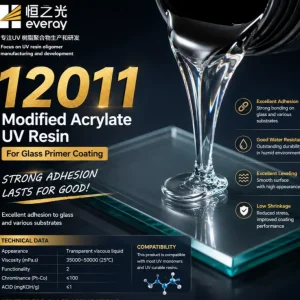
Macro Industry Transformation: The High-Impact Polymer Imperative
How global structural convergence towards lightweighting, functional durability, and rapid photopolymerization is redefining performance metrics for chemical procurement.
Interpenetrating Polymer Networks (IPN)
Unlike standard brittle acrylate architectures, our high-impact resins synthesize distinct hard aromatic segments with ductile aliphatic polyurethane blocks, distributing mechanical shear stress throughout molecular backbones.
Mitigation of Oxygen Inhibition
Integrated copolymerizable amine synergists accelerate chain growth and tackle micro-tackiness at thin margins, providing complete cross-link densities even on ultra-fast high-throughput assembly lines.
Low-Stress Thermal Cycling
Engineered to mitigate crack formation from severe coefficient of thermal expansion (CTE) mismatches across automotive composite bonding, glass primers, and outdoor optical displays.
Cross-Comparative Material Characterization
Quantitative validation of high-impact formulations against standard oligomeric polymers used across additive manufacturing and protective coatings.
| Polymer Class | Tensile Strength (MPa) | Elongation at Break (%) | Izod Impact (kJ/m²) | Yellowing Index (ΔY) | Primary Industrial Utility |
|---|---|---|---|---|---|
| High-Impact ABS-Like Oligomer | 58 - 65 | 25% - 40% | 38.0 - 45.0 | < 1.2 | Automotive snap-fits, consumer electronics housing |
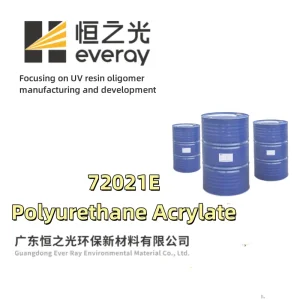
| Aliphatic Tough Polyurethane Acrylate | 42 - 50 | 60% - 110% | 45.0 - 55.0 | < 0.8 | Optical coatings, non-yellowing protective layers |
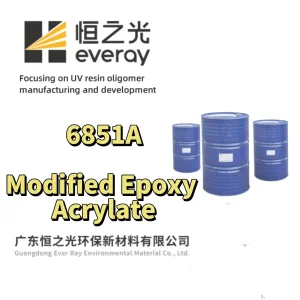
| Modified Bisphenol A Epoxy Acrylate | 70 - 85 | 3% - 6% | 12.0 - 18.0 | > 3.5 | Heavy-duty wood coatings, hard coat sealers, inks |
| Hyperbranched High-Density Oligomer | 75 - 90 | 2% - 4% | 9.0 - 14.0 | < 2.0 | Anti-scratch clear coats, extreme line speed curing |
Localized Technical Integration & Global Regulatory Compliance
Ensuring frictionless global fulfillment through rigorous batch control, chemical stewardship, and direct technical consultation.
Full Dossier Traceability
Every commercial batch is supplied with comprehensive Technical Data Sheets (TDS), Safety Data Sheets (SDS) matching GHS standards, and batch certificates validating purity, viscosity index, and acid values.
Cross-Border Regulatory Alignment
Formulated without SVHC (Substances of Very High Concern), fully supporting EU REACH, US TSCA, RoHS, and regional VOC reduction initiatives for sustainable automated manufacturing.
On-Site Line Matching & Formulating
Our senior chemical engineers provide direct formulation troubleshooting: adjusting initiator profiles for specific UV-LED or mercury arc systems, tuning cure speeds, and advising on reactive diluents.
Chemical Synthesis Roadmap: The Next Frontier
Continuous synthetic research targeted at high durability, eco-responsible backbones, and zero-defect photopolymer processing.
Bio-Based Acrylates
Integrating renewable carbon building blocks without sacrificing high tensile toughness or yellowing stability in optical topcoats.
Dual-Cure Photopolymers
Hybrid UV/thermal systems designed to eliminate shadow effects in deep-cavity electronic packaging and heavy automotive structural joints.
Nano-Composite Dispersion
Surface-treated nano-silica matrices cross-linked into hyperbranched backbones for unprecedented scratch defense and drop durability.
Near-Zero Shrinkage Monomers
Expanding ring-opening polymerization monomers paired with acrylates to drop cure shrinkage under 0.8% for micro-optics.
Technical & Strategic Procurement FAQ
Critical engineering considerations, curing kinetics, and commercial specifications for global resin formulators.
How does impact resin chemistry maintain both hardness and fracture elongation?
We leverage tailored soft-segment polyols (such as polycarbonate or polyester diols) coupled with rigid polyisocyanates. This molecular architecture creates microscopic domain separation where hard segments provide surface pencil hardness while elastomeric segments absorb mechanical impact energy.
What is the typical shelf-life and storage stabilization protocol for bulk export orders?
Our oligomers and resins are stabilized using high-efficiency radical scavengers like MEHQ, ensuring a shelf life of 12 months when stored below 30°C in opaque containers protected from direct sunlight and ambient heat radiation.
Can your high-impact formulations be adapted for 385nm and 405nm UV-LED engines?
Yes. Our resins are completely compatible with long-wavelength acylphosphine oxide photoinitiators (such as TPO or BAPO), eliminating surface tack and curing uniformly under low-energy UV-LED irradiation systems.
How do you assist client formulations failing cross-hatch adhesion on treated substrates?
We integrate functional adhesion promoters containing phosphate, carboxylic, or silane-coupled acrylate segments that create covalent bonds and mechanical interlocking across difficult engineering plastics (treated PP, PC, ABS) and metallic substrates.
High-Yield Acrylate Monomers & Industrial Oligomers
Comprehensive portfolio of advanced coating, adhesive, and printing formulations ready for global container-load shipping and specialized synthesis.