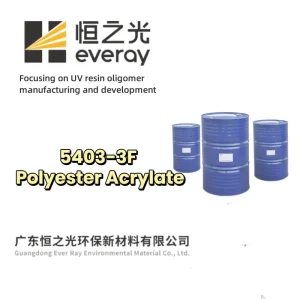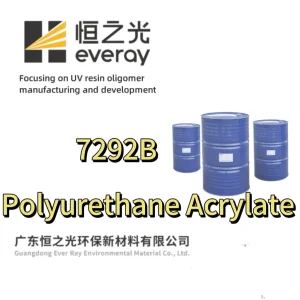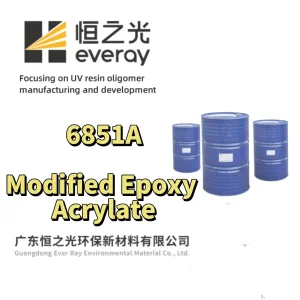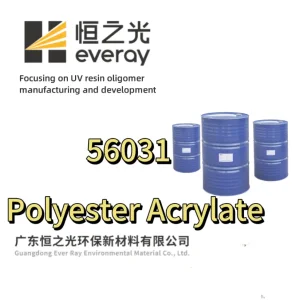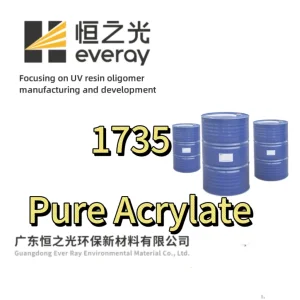
Featured Polymer Architecture
High-Adhesion UV Acrylate Resins • Series 01
Formulated with specialty functional anchoring groups, tailored backbone flexibility, and low volumetric shrinkage kinetics to overcome adhesion failure on glass, quartz, and mirror surfaces.
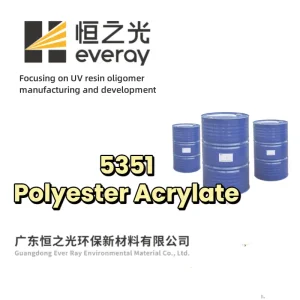
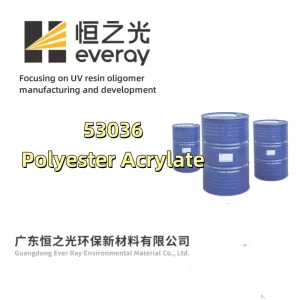
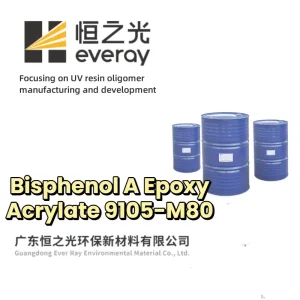
Technical Whitepaper • Part 01
Interfacial Chemical Mechanics: Achieving Irreversible Adhesion to Glass
Why standard acrylic formulations experience complete adhesive detachment on vitreous substrates, and how specialized molecular grafting creates moisture-resistant covalent bonds.
In radiation-curable coatings, printing inks, and structural adhesives, glass represents an exceptionally uncompromising substrate. Silicon dioxide (SiO2) networks present an inorganic, polar, and non-porous surface characterized by high surface energy but saturated with silanol (Si-OH) groups and dynamic physisorbed water layers. Conventional aliphatic or aromatic UV-curable oligomers undergo radical photopolymerization within milliseconds. During this ultra-fast free-radical conversion, vinyl double bonds are transformed into single sigma bonds, leading to severe volumetric shrinkage (typically between 5% and 12%). This cure shrinkage creates massive internal interfacial shear stress, shearing the organic polymer film directly away from the glass plate and producing zero crosshatch adhesion (0B/5B failure under ASTM D3359).
To engineer true Glass Adhesion UV Oligomers, Ever Ray’s macromolecular synthesizers utilize dual-mechanism adhesion strategies. First, we introduce silane coupling precursors (such as gamma-methacryloxypropyltrimethoxysilane condensates) and organophosphate functional groups into the oligomer backbone. Upon exposure to ambient air or mild post-bake, these alkoxysilane ligands hydrolyze and undergo condensation reactions with the surface silanol groups of the glass substrate, yielding permanent covalent Si-O-Si (siloxane) linkages. Second, we integrate flexible soft segments—including polyether and polycarbonate polyols—within the urethane acrylate architecture. These flexible domains lower the polymer’s glass transition temperature (Tg) and act as internal stress-dissipation buffers, effectively counterbalancing polymerization shrinkage and preserving optical clarity.
Siloxane Covalent Anchoring
Rather than relying on weak secondary van der Waals forces, our modified oligomers covalently weld themselves directly to the silicate matrix, maintaining interfacial bonds even when completely saturated with atmospheric humidity.
Boiling Water Immersion Stability
Hydrolytic debonding is the number one cause of failure in glass coatings. Ever Ray’s hydrophobic backbones prevent moisture migration through the cured matrix, enabling cured films to survive 2 to 4 hours in boiling water (100°C) without bubbling or whitening.
Engineered Shrinkage Buffer
By tailoring molecular weight between crosslinks (Mc) and selecting high-steric-hindrance monomers, our resins limit volumetric shrinkage to <2.8%, preventing edge-curling, internal stress fractures, and micro-cracking.
Technical Performance Matrix
Comparison of UV Curable Oligomer Chemistries on Vitreous Substrates
Quantitative laboratory benchmark assessing adhesion retention, optical purity, thermal resilience, and chemical defense across common oligomer families on untreated borosilicate and soda-lime glass.
| Polymer Chemistry Family | Initial Glass Adhesion | Boiling Water Resistance (100°C) | Tensile Shrinkage Rate | Optical Non-Yellowing | Primary Industrial Use-Case |
|---|---|---|---|---|---|
| Special Functional Urethane Acrylate | < 2.2% (Extremely Low) | Touchscreen Bonding, Architectural Glass, Automotive Displays | |||
| Pure Acrylate Glass Primer Resin | < 2.8% (Very Low) | UV Screen Printing Inks, Cosmetics Containers, Wine Bottles | |||
| Modified Epoxy Acrylate (Bisphenol A) | 6.5% – 9.0% (High) | Economic Industrial Glass Inks, Protective Masking Varnishes | |||
| Hyperbranched Acrylate Hardcoat | 7.0% – 11.5% (Very High) | Ultra-Hard Anti-Scratch Topcoats for Exterior Glass Panels | |||
| Low-Viscosity Polyester Acrylate | 4.5% – 6.0% (Moderate) | Fast-Cure Glass Overprint Varnishes (OPV) & Decorative Enamels |
Direct Chemical Manufacturer
World-Class Synthetics Infrastructure • Guangdong Production Hub
Leveraging complete upstream petrochemical integration, fully automated reactor clusters, and stringent DCS precision controls in Yunfu to supply high-reliability oligomers globally.
40,000 m² Modern Facility
Our dedicated chemical synthesis plant in Dawan Industrial Park features Class-A chemical production certifications, state-of-the-art distillation towers, and closed-loop emission recyclers.
10+ Fully Automated Lines
Equipped with DCS (Distributed Control Systems) regulating temperature ramps, catalytic feeding, and double-bond addition to guarantee ±3% batch-to-batch viscosity repeatability.
Upstream Monomer Feedstock
Direct supply agreements with primary producers of acrylic acid (AA), isophorone diisocyanate (IPDI), and bisphenol-A guarantee unshakeable price stability and uninterrupted output.
10+ Invention & Utility Patents
Our doctoral R&D teams innovate constantly in functional urethane architectures, hyperbranched resin kinetics, and bio-derived photopolymer synthesis to keep you ahead.
2006
Year Established
40,000+
Square Meters Plant
10+
Polymerization Lines
100+
Specialist Chemists
50+
Export Destination Countries
B2B Procurement Intelligence
Solving the Core Sourcing Friction for International UV Formulators
Chemical procurement leaders across Europe, North America, and Southeast Asia face escalating demands for batch transparency, hazardous materials compliance, and predictable lead times.
Elimination of Pot-Life Unstability
One-pack UV formulations containing silane primers often suffer premature gelling in the barrel due to spontaneous condensation. Ever Ray's blocked-silane chemistry activates only under UV or thermal curing, delivering 12+ months of warehouse storage stability.
Direct Factory Price Advantage
By eliminating overseas distributors, repackagers, and trading intermediaries, international formulators gain access to top-tier oligomer architectures with 18% to 32% cost savings per metric ton, protecting margins in competitive ink and coating sectors.
Rapid Sample-to-Container Supply
We supply verified 1kg and 5kg pilot evaluation samples dispatched via DHL/FedEx within 48 hours complete with Comprehensive CoA and starting formulation sheets, scaling seamlessly into 200kg drums or 1,000kg IBC totes.
Global Regulatory Stewardship
Full Compliance Across REACH, TSCA, RoHS, and Low-VOC Frameworks
Navigating the stringent landscape of international chemical restrictions with certified raw materials, zero-solvent solids, and complete analytical trace validation.
The commercial viability of industrial coatings relies heavily on uninterrupted chemical compliance. With global regulatory oversight tightening across the European Union (ECHA REACH), North America (EPA TSCA), and East Asia (China REACH/K-REACH), raw material suppliers must offer total chemical transparency. Every Glass Adhesion UV Oligomer synthesized by Ever Ray is 100% solid content (zero VOC), completely free of fugitive organic solvents such as benzene, toluene, xylene, or ethyl acetate.
Furthermore, in anticipation of upcoming consumer-goods mandates, we have phased out hazardous organotin catalysts (DBTDL) across our entire aliphatic urethane production lines, replacing them with nontoxic zirconium- and bismuth-based catalytic systems. Our resins meet all thresholds defined in RoHS Directive (EU) 2015/863, contain zero heavy metals, and conform strictly with limits for banned phthalates and halogenated flame retardants, ensuring hassle-free export clearance and consumer product safety.
EU REACH Registered • SVHC Free
Fully compliant with ECHA requirements. Our resins contain no Substances of Very High Concern (SVHC) exceeding 0.1% w/w, safeguarding European manufacturers from regulatory disruption.
Organotin & Heavy-Metal Free
Synthesized without toxic tin catalysts, our high-grade urethanes are fully approved for cosmetic packaging coatings, personal care glass perfume bottles, and touchable smart surfaces.
Zero-VOC Ecological Formulation
Enables coating lines to completely eliminate thermal evaporating ovens, slashing energy bills by up to 70% and ensuring full compliance with municipal Clean Air Act industrial VOC emission caps.
Application Engineering
Targeted Industrial Use-Cases & Formulating Recommendations
From micro-electronic optical display assemblies to luxury cosmetic glass packaging, discover how Ever Ray oligomers deliver targeted physical properties.
1. Optoelectronic Displays & Touchscreens
Used as the backbone for Liquid Optical Clear Adhesives (LOCA) bonding cover glass to ITO sensors and OLED panels. Offers 99.2% light transmittance, haze <0.1%, zero yellowing under continuous UV backlight, and rapid stress relaxation.
2. Automotive HUD & Laminated Safety Glass
Engineered for windscreens and head-up display interlayers requiring extreme thermal cycling resistance (-40°C to +105°C). Absorbs mechanical vibrations while preventing moisture-induced edge-delamination.
3. High-Speed UV Screen Inks for Containers
Specialized for luxury perfume flasks, spirit bottles, and pharmaceutical ampoules. Delivers instant 100% cure under high-speed multi-color printing lines (>80 bottles/min) with robust resistance to alcohol, perfumes, and dishwashing cycles.
4. Architectural Decorative & Splashback Panels
Ideal for roller-coated back-painted glass and splashbacks. Formulated with high-pigment-wetting polyester acrylates that accept dense titanium dioxide, carbon black, and effect pigments without compromising cure depth or substrate grip.
5. Photovoltaic & Solar Mirror Protective Coatings
Exterior-durable formulations designed to seal edges and protect rear-side reflective silver layers in concentrated solar power (CSP) and bifacial PV modules against salt spray, acid rain, and windblown sand erosion.
Future-Ready Technology
Next-Generation Trajectories in UV Glass Bonding Chemistry
How the transition toward UV-LED curing, renewable raw materials, and self-healing matrices is reshaping the formulation of glass-bonding oligomers.
UV LED (385-405nm) Fast-Cure Tuning
As conventional mercury vapor lamps are phased out under the Minamata Convention, our engineers optimize photo-reactivity at longer UV-A wavelengths, overcoming surface oxygen inhibition even under low-power LED curing arrays.
Bio-Based Oligomer Building Blocks
Synthesizing next-gen acrylates incorporating cardanol, itaconic acid, and modified dimer fatty acids. Achieve up to 45% bio-based carbon content without surrendering optical clarity or glass adhesion integrity.
Dual-Cure Photothermal & Moisture Systems
For assemblies featuring opaque silk-screen borders or complex shadow zones where UV light cannot penetrate, our hybrid dual-cure chemistries utilize secondary moisture or mild heat curing to ensure 100% cure across hidden boundaries.
Technical & Procurement FAQ
Frequently Asked Questions by Formulation Chemists & Sourcing Managers
Real-world technical troubleshooting, testing protocols, formulation guidance, and logistics answers straight from Ever Ray’s technical support laboratory.
1. Why does crosshatch adhesion on glass deteriorate after 24 hours of curing in humid environments?
This issue is typically caused by reversible physical adsorption rather than true covalent bonding. Standard resins bond initially via weak hydrogen bonding with surface silanols. In humid conditions, water molecules diffuse through the polymer network and displace these weak bonds because water forms stronger hydrogen bonds with SiO2. To fix this, formulate with an oligomer containing organofunctional alkoxysilane or phosphate groups that form covalent siloxane (Si-O-Si) bridges, which remain chemically intact against water displacement.
2. What is the optimal concentration of glass adhesion oligomers in a balanced UV formulation?
For top performance without formulation penalties, we recommend integrating 25% to 45% of our functional glass adhesion oligomer as the primary resin. Blending with 15% to 25% hard epoxy acrylate provides scratch resistance, while balancing with low-shrinkage reactive mono- and di-functional monomers (such as IBOA, ACMO, or TPGDA) maintains viscosity and allows stress relaxation.
3. Can Ever Ray custom-synthesize resin viscosity and reactivity for automated dispensing or flexo printing?
Yes. Ever Ray's R&D team frequently customizes molecular weight distributions, oligomer functionality (from difunctional to hexafunctional), and reactive monomer blends. Whether your application requires a low-viscosity resin (under 2,000 mPa.s at 25°C) for high-speed flexo printing or high-viscosity thixotropic pastes for screen printing, we can tailor the rheology and cure speed to match your requirements.
4. What substrate pre-treatment is required to pass the 100°C boiling water test?
While our modified oligomers achieve strong adhesion to clean glass without external silane primers, the substrate must be free of surface dust, oil, and cutting lubricants. An isopropyl alcohol (IPA) or hot alkaline detergent rinse is recommended. For high-volume manufacturing, mild flame or atmospheric corona/plasma pre-treatment activates the glass surface silanols, ensuring maximum boiling water and dishwasher resistance (over 4 hours under boiling conditions).
5. How do aliphatic and aromatic polyurethane acrylates compare in glass applications?
Aliphatic polyurethane acrylates are formulated with aliphatic isocyanates (e.g., IPDI or H12MDI), providing complete resistance to UV degradation and yellowing (ΔE < 0.5 after 1000h Q-Sun exposure). They are essential for clear optical bonding, architectural windows, and topcoats. Aromatic polyurethane acrylates offer higher tensile toughness and faster cure at lower cost, making them ideal for indoor pigmented inks and decorative opaque glass where UV yellowing is masked.
6. How does Ever Ray ensure batch-to-batch consistency for export shipments?
Our manufacturing operations in Yunfu use closed-loop Distributed Control Systems (DCS) monitoring temperature, vacuum levels, and feed rates to ±0.5°C precision. Every production batch undergoes rigorous Quality Control, verifying viscosity via Brookfield rheometer, refractive index, Gardner color, acid value, non-volatile content, and GC trace residuals. Each shipment is accompanied by a Certificate of Analysis (CoA) tied directly to retained sample libraries stored for 24 months.
7. What photoinitiator system is recommended for high-opacity pigmented glass inks?
For pigmented formulations (e.g., titanium white or jet black), we recommend pairing acylphosphine oxide photoinitiators (such as TPO, TPO-L, or BAPO/819) with alpha-hydroxyketones (such as 184 or 1173). Phosphine oxides absorb in the longer UV-A spectrum (380-410nm), penetrating deep into the pigmented layer to ensure full through-cure at the glass interface, while 184 ensures a hard, tack-free surface finish.
8. How do your oligomers resolve the conflict between high film hardness and low cure shrinkage?
High pencil hardness (e.g., 2H-4H) typically requires high crosslinking density, which inherently accelerates volumetric shrinkage and harms glass adhesion. Ever Ray overcomes this trade-off by synthesizing hybrid hyperbranched and urethane architectures. The flexible urethane core relaxes internal shrinkage stress while the hyperbranched periphery provides concentrated acrylate functionality, achieving 3H hardness with zero interfacial peeling.
9. What is the typical shelf life, packaging, and international transit protocol?
When kept sealed in original UV-opaque containers and stored between 10°C and 30°C in a cool, ventilated area away from sunlight, our oligomers have a guaranteed shelf life of 12 months. Export products are packed in heavy-duty 20kg steel pails, 200kg tight-head steel drums, or 1,000kg composite IBC totes, labeled with GHS, IMDG, and IATA compliant documentation.
10. How can international formulators request pilot evaluation samples?
Chemists and procurement specialists can request pilot samples (typically 1kg or 5kg containers) directly through our website contact form or via email. Please specify your target application, coating method, curing setup (Mercury or UV LED wavelength), and performance requirements. Samples are typically dispatched via express courier with full TDS, SDS, and starting formulations within 48 hours.
Accelerate Your UV Formulation Development
Connect with our senior technical chemists to discuss customized polymer architecture, request evaluation samples, or schedule an in-depth review of your technical specifications.
Talk to an Application Specialist
Industrial Catalog Extension
High-Adhesion UV Acrylate Resins • Series 02
Explore our broader selection of modified epoxy acrylates, polyester resins, and tough polyurethane oligomers engineered for demanding roll-coating, screen, and flexo production lines.