Direct Sourcing Catalog
High-Performance UV Oligomers & Epoxy Systems (Part I)
Engineered monomers, polyurethane acrylates, and specialty oligomers ready for global bulk shipping and testing.
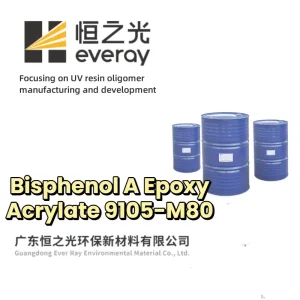
Wholesale Bisphenol A Epoxy Acrylate Resin 9105M-80: Core Resin for Durable & Glossy UV Coatings
Procure Grade
Wholesale Low Shrinkage High Flexibility UV Polyurethane Acrylate Resin for Nail Gel, Leather & Wood
Procure Grade
Buy 5335B UV-Resin in UV Color Inks, Overprint Varnishes, and Commercial Offset Inks
Procure Grade
High-Quality 53036 Polyester Acrylate UV Resin: Excimer Laser Suitable, Providing Soft Skin Feel
Procure Grade
Wholesale 7296-1: High Quality Polyurethane Acrylate with High Wear and Impact Resistance
Procure Grade
Wholesale 5403DF: Polyester Acrylic UV Resin for UV and Flexographic Printing Formulations
Procure Grade
High-Quality 5650F UV Resin for Industrial UV Overprint Varnish and Fast Printing Inks
Procure Grade
Technical Whitepaper
Structural Chemistry, Crosslinking Dynamics & Epoxy Resin Use Factory Capabilities
A comprehensive examination of free-radical crosslinking, oligomer architecture, and functional conversion kinetics.
Epoxy Acrylate Backbone Chemistry
Epoxy acrylates (EA), synthesized through the addition reaction of acrylic acid to bisphenol-A diglycidyl ether (DGEBA), serve as the foundational backbone for high-velocity industrial curing. Our direct synthesis controls terminal unsaturation, maintaining low residual acid values (<2 mg KOH/g) while driving double-bond conversion speeds exceeding 95% under standard UV light exposure.
Precision Viscosity & Diluent Packages
Standard bisphenol-A epoxy acrylates present elevated room-temperature viscosity. Our production line incorporates continuous molecular-weight stabilization and controlled monomer addition (TPGDA, TMPTA, DPGDA) directly inside the reaction vessel, preventing micro-gelation while delivering shear-thinning rheological behavior for high-speed automated roll and spray systems.
Crosslink Density & Scratch Resistance
By balancing di-functional and hyperbranched multifunctional oligomers, our factory engineers cured films with pencil hardness reaching 3H–5H on metal and rigid plastics. Controlled glass transition temperatures (Tg up to 65°C–85°C) guarantee superior resistance to solvent degradation, boiling water immersion, and environmental weathering.
Supply Chain Dominance
China Factory Infrastructure & International Scalability
Capitalizing on industrial clustering, upstream raw material integration, and rigorous testing protocols.
Upstream Precursor Integration
Situated in the industrial corridor of Yunfu and Jiangmen, Guangdong, our factory maintains raw pipeline access to key upstream precursors including epichlorohydrin, acrylic acid, and isocyanates. This deep supply integration buffers our international clients from price volatility and guarantees continuous high-volume production without component shortages.
Rigorous Batch Consistency & SPC
Every resin reactor is governed by automated Distributed Control Systems (DCS). Critical reaction parameters—temperature curves, titration cycles, and catalyst additions—are monitored continuously. Every export lot undergoes comprehensive HPLC, GPC (gel permeation chromatography), and rotational rheometry analysis to guarantee zero batch-to-batch variation.
Export Packaging & Marine Logistics
Resins are packaged according to rigorous international safety mandates. We support 200kg steel drums, 1000kg IBC totes, and ISO tanks treated with inert nitrogen blanket protection to prevent premature oxidation or ambient radical polymerization during intercontinental ocean transport.
Polymer Engineering Matrix
Comparative Performance Analysis: Selecting the Optimal Oligomer Architecture
A systematic technical evaluation designed for formulation chemists and chief procurement officers.
| Resin Chemistry Family | Tensile Strength (MPa) | Elongation at Break (%) | Curing Velocity (m/min) | Tg Transition (°C) | Dominant Industrial Use Case |
|---|---|---|---|---|---|
| Standard Bisphenol A Epoxy Acrylate | 45 – 70 | 1.5 – 4.0% | Up to 80 | 65 – 85 | Overprint varnishes, rigid wood primers, high-speed offset inks |
| Modified Flexible Epoxy Acrylate | 25 – 45 | 8.0 – 25.0% | 40 – 60 | 35 – 55 | Adhesion primers, plastic substrates, folding carton flexo inks |
| Aliphatic Polyurethane Acrylate (PUA) | 30 – 55 | 20.0 – 120.0% | 25 – 45 | 20 – 50 | Non-yellowing 3C electronic coatings, premium cosmetic nail gels |
| Aromatic Polyurethane Acrylate (PUA) | 35 – 60 | 10.0 – 45.0% | 35 – 55 | 40 – 65 | Heavy-duty wood floor topcoats, impact-resistant industrial coatings |
| Multifunctional Hyperbranched Acrylate | 60 – 95 | 0.5 – 2.0% | Up to 100+ | 90 – 130 | Anti-scratch optical films, excimer-matte surfaces, barrier sealers |
Compliance & Support
Localized Technical Integration & Global Regulatory Compliance
Bridging Chinese manufacturing velocity with strict international regulatory oversight and localized assistance.
REACH, RoHS & EPA Standards
All wholesale epoxy resin formulations and acrylate derivatives conform to the European Chemical Agency (ECHA) REACH certifications, RoHS compliance directives, and US TSCA regulations. We supply fully validated GHS-compliant Safety Data Sheets (SDS) and technical dossier documents in multiple languages.
Localized Formula Optimization
Environmental conditions dictate UV curing efficacy. Formulators operating in humid, tropical climates or dry, cold environments require tailored reactivity ratios. Our team of senior chemical engineers provides remote and on-site formula optimization, resolving issues related to surface tackiness, skin irritation, and cure-shrinkage cracking.
Application-Specific Quality Control
Beyond chemical assay checks, our factory houses real-world simulation equipment: high-speed roller coaters, automated flexographic test presses, LED-UV arrays (365nm, 385nm, 395nm), and traditional high-pressure mercury curing tunnels to validate resin performance before product dispatch.
Industry Trends
Emerging Paradigms in Radiation Curing & Global Procurement
Market trends moving from legacy solvent-borne systems toward sustainable, LED-responsive, bio-based photopolymers.
LED-UV Spectral Matching
Global regulations are phasing out toxic mercury-arc curing systems in favor of energy-efficient LED arrays. Traditional epoxy acrylates often struggle with surface cure under narrow 395nm wavelengths due to atmospheric oxygen inhibition. Our R&D facility engineers modified amino-acrylate oligomers and active amine synergists that donate labile hydrogen atoms to neutralize peroxy radicals, accelerating surface crosslinking under monochromatic LED exposure.
Waterborne UV-PUD Dispersion Systems
Stringent industrial zero-VOC mandates are driving demand for waterborne polyurethane acrylate dispersions (UV-PUD). By synthesizing hydrophilic internal emulsifiers into the polymer backbone, our factory produces water-thinnable resin systems that yield ultra-thin, low-gloss finishes ideal for interior automotive surfaces, premium wood coatings, and synthetic leather finishes.
Sustainable & Bio-Based Acrylate Feedstocks
In response to international ESG directives, our factory actively integrates renewable bio-polyols derived from soybean oil, castor oil, and cardanol into our synthesis lines. These bio-modified epoxy acrylate and urethane acrylate oligomers lower carbon footprints without compromising physical hardness or crosslink kinetics.
Technical Clarifications
Frequently Asked Questions: Wholesale Epoxy Resin Sourcing & Usage
Direct technical answers addressing formulating challenges, minimum purchase requirements, and testing parameters.
How does bisphenol-A epoxy acrylate compare to polyurethane acrylates in industrial coatings?
Bisphenol-A epoxy acrylates provide superior surface hardness (often reaching 4H), exceptionally high cure speeds, high gloss, and strong chemical/solvent resistance at an economical price point. However, their rigid aromatic backbone results in lower elongation and potential yellowing under outdoor UV sunlight. Polyurethane acrylates (specifically aliphatic grades) deliver superior flexibility, high tensile elongation, and long-term weatherability without yellowing, making them the preferred choice for outdoor applications, flexible plastics, and nail gels.
What strategies prevent oxygen inhibition when using epoxy acrylates in thin coatings?
Atmospheric oxygen reacts with active free radicals at the coating surface to create unreactive peroxy radicals, leading to residual tackiness. To resolve this, formulators can incorporate reactive amino-acrylate synergists or active amines from our product line. These tertiary amine complexes donate hydrogen atoms to transform sluggish peroxy radicals into active alkyl radicals, restoring surface cure speed. Alternative physical measures include inert nitrogen blanketing or incorporating excimer short-wavelength UV (172nm) arrays.
What are the minimum order quantities (MOQ) and lead times for wholesale international shipments?
Standard MOQs for standardized epoxy acrylate and urethane acrylate grades are 1 drum (200kg). For bespoke chemical syntheses or customized viscosity packages, our typical production run starts at 1,000kg. Standard catalog grades are dispatched from our Yunfu factory within 7 to 10 working days, with full logistics support to major export ports including Guangzhou, Shenzhen, and Hong Kong.
How should UV-curable epoxy resins be stored to avoid premature polymerization during shipping?
UV acrylates must be stored between 15°C and 30°C in an opaque, UV-shielded container. Crucially, free-radical acrylic oligomers depend on trace levels of dissolved oxygen to enable their phenolic inhibitors (such as MEHQ) to function effectively. Consequently, containers must never be sealed under pure nitrogen or pure vacuum environments. Keep materials protected from direct sunlight, ambient heat sources, and localized freeze-thaw extremes.
Can our engineering team request bespoke polymer synthesis to target unique substrate adhesion?
Yes. Our research and development center works directly with formulators. By sharing specific operational variables—such as substrate makeup (untreated PP, PET, aluminum alloy, optical glass), curing lamp specifications (LED 395nm vs. traditional Mercury), line velocity, and end-use test criteria—our synthesis chemists can adjust resin backbone polarity, functional branching, and monomer ratios to achieve your mechanical specifications.
Direct Sourcing Catalog
High-Performance UV Oligomers & Epoxy Systems (Part II)
Specialty modified monomers, functional acrylates, and high-adhesion primers manufactured for exacting requirements.
Buy 5338 UV Resin as Functional Oligomer and Active Diluent, Factory Price
Procure Grade
Buy Fast Curing Modified Epoxy Acrylate Oligomer - High Flexibility Resin for UV Plastic & Furniture
Procure Grade
Buy 17701 Low Shrinkage Modified Acrylate Oligomer - Resin for Offset and Film Inks
Procure Grade
Buy Polyester Acrylate 5377A – Ideal Choice for Flexographic UV Printing Inks
Procure Grade
Buy Durable 7296C UV Resin: Solvent-Resistant, Abrasion-Resistant for Nail Polish & Wood Coatings
Procure Grade
High-Quality 5218 Polyester Acrylate UV Resin: Excellent Adhesion and High Pigment Compatibility
Procure Grade
Wholesale Durable 6118 Epoxy Acrylate UV Resin: Formulated for UV Wood, Plastic, and Industrial Inks
Procure Grade