40,000 m²
Integrated Production Base
10+
Continuous Synthesis Lines
10+
Invention Patents Granted
100%
TDS / SDS Batch Traceability
Direct Sourcing Lineup - Part 1
High-Reactivity Oligomers & Specialty Acrylic Formulations
Precision-manufactured intermediate resins engineered to maximize hardness, cure kinetics, and dynamic flexibility across global printing and industrial topcoat applications.
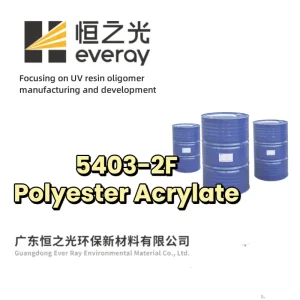
Buy Polyester Acrylate 5403-2F – A Reliable Choice for High-Quality UV Inks Suppliers, Product
Explore Specification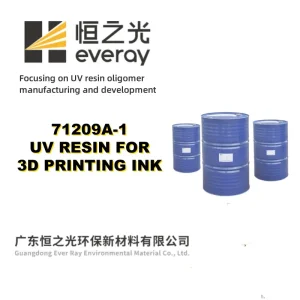
Buy 71209A-1 ABS-Like Engineering Resin: High Strength Meets High Impact Resistance Factory, Factories
Explore Specification
Wholesale Model 72027 Weather-Resistant Polyurethane Acrylate Resin | Low Yellowing & High Tack PSA Adhesive Oligomer for Outdoor Tapes & Labels Supplier, Factory
Explore Specification
Buy Polyester Acrylate 5319A-1–A Reliable Solution for High-Performance UV Coatings Manufacturers, Suppliers
Explore Specification
High-Quality Excellent adhesion: 7230E polyurethane acrylate UV Resin for vacuum plating Supplier, Factories
Explore Specification
High-Quality 9105A-80: Bisphenol A Epoxy Acrylate Resin - Superior Hardness and Chemical Resistance Ideal for Resin Polyester Applications Manufacturers, Suppliers
Explore Specification
Wholesale 7296-1: High quality polyurethane acrylate with excellent wear and impact resistance Manufacturer, Product
Explore Specification
Material Architecture & Polymer Dynamics
Epoxy Resin Topcoat Chemistry: Crosslinking Density & Radical Polymerization
Understanding the macromolecular architecture of Bisphenol A epoxy acrylates, cycloaliphatic formulations, and multi-functional crosslinkers.
Rigid Bisphenol A Core
Standard epoxy acrylates feature an aromatic phenylene backbone that provides unmatched mechanical modulus, high glass transition temperature (Tg > 65°C), and exceptional solvent barrier resistance.
- High pencil hardness (up to 4H-5H)
- Inherent chemical resistance against MEK
- Accelerated surface radical cure speed
Modified Flexibility Modifiers
Unmodified epoxy acrylates can suffer from micro-brittleness and high shrinkage rates. Incorporating caprolactone or polyether chains reduces cure strain from >8% down to <3.5% without dropping surface hardness.
- Superior mandrel bend flexibility
- Interlayer crosslink anchorage
- Elimination of micro-cracking in thick films
Atmospheric Cure Kinetics
Oxygen inhibition in free radical curing often leads to surface stickiness. Integrating active amine synergists into the epoxy oligomer backbone bypasses atmospheric quench and achieves tack-free states at lower UV dosage.
- Synergistic radical regeneration
- Optimized LED-UV 395nm response
- Low residual extractables profile
Commercial & Regulatory Landscape
Global Industrial Status: The Shift Toward Zero-VOC High Solids
Worldwide coating formulators are redesigning chemistries to comply with severe carbon taxation, REACH SVHC reviews, and VOC emission caps.
European Directives & REACH
Western European industrial finishers are phasing out solvent-borne polyurethane topcoats in favor of 100% solids UV-cured epoxy and urethane hybrids, reducing stack-gas VOC release to zero.
- Strict compliance with Decopaint & IED
- Elimination of monomer vapor emission
- Lower baking oven thermal footprints
North American High-Throughput Wood & Vinyl Lines
North American luxury vinyl tile (LVT) and pre-finished hardwood plants require roller-coaters operating beyond 60 m/min. Instant UV epoxy curing eliminates cure yards, slashing work-in-progress capital lockup.
- Line speeds exceed 60-80 m/min
- Immediate inline packaging qualification
- Micro-scratch resistance under high foot traffic
Asia-Pacific High-Density Electronics Manufacturing
Consumer electronics production across Greater China, Vietnam, and India relies heavily on precision UV epoxy formulations for vacuum metallization primers, phone housing finishes, and display frame bonding.
- Adhesion to difficult cyclic olefin copolymers
- Extreme cosmetic leveling control
- Boiling water & artificial sweat immersion safety
Substrate Matching & Formulation Deployment
Localized Application Engineering Across Core Substrates
How wholesale epoxy resin topcoats resolve real-world processing constraints across timber flooring, consumer plastics, architectural glass, and graphic packaging.
Industrial Flooring & Millwork
Applied via roller-coater machines in multi-layer finishing setups. Standard Bisphenol A epoxy acrylates serve as high-adhesion sanding primers, while modified epoxy topcoats withstand Taber abrasion testing.
- High sandability within 0.5s of UV exposure
- Pore-sealing efficiency on softwoods
- Compatibility with aluminum oxide particles
3C Consumer Electronics
Used on polycarbonate (PC), ABS, and fiberglass-reinforced resins. Blended with aliphatic urethanes to eliminate shrinkage warpage, securing 100/100 cross-hatch adhesion and fingerprint oleophobic resistance.
- RCA tape wear test > 300 cycles
- Resistance to thermal shock (-40°C to +85°C)
- High gloss > 95 GU at 60° angle
Vacuum Metallization
Epoxy topcoats act as the planarizing basecoat and protective topcoat on PVD aluminum films. High glass transition parameters prevent micro-cracks and vapor outgassing under deep vacuum chamber drawdowns.
- Pinhole-free high mirror reflectivity
- Boil-water resistance without silver peeling
- Rapid re-coat window on high-speed carousels
Overprint Varnishes (OPV)
High-speed flexographic and gravure overprint varnishes demand low resin viscosity and instantaneous curing. Modified epoxy formulations resist scuffing during automatic folding and high-speed packaging boxing.
- Low ink viscosity formulation window
- Resistance to blocking on rolled stock
- Enhanced gloss depth on bleached sulfate paper
Formulation Matrix
Epoxy Acrylate vs. Polyurethane & Polyester Systems
Compare key technical parameters to align procurement specifications with downline operational targets.
| Resin Chemistry Classification | Surface Hardness | Elongation at Break | UV Cure Dosage | Solvent Resistance (MEK Rubs) | Ideal Strategic Target |
|---|---|---|---|---|---|
| Standard Bisphenol A Epoxy Acrylate | 3H – 4H | 1% – 3% | < 80 mJ/cm² | > 200 double rubs | Hard coats, wood sealers, OPV varnishes |
| Modified Flexible Epoxy Acrylate | H – 2H | 5% – 12% | < 110 mJ/cm² | > 120 double rubs | Substrates subject to post-forming or flexing |
| Aliphatic Polyurethane Acrylate (PUA) | HB – 2H | 25% – 180% | < 150 mJ/cm² | > 100 double rubs | Exterior weatherable topcoats, non-yellowing clear |
| Aromatic Polyurethane Acrylate | H – 3H | 10% – 45% | < 130 mJ/cm² | > 150 double rubs | Cost-effective abrasion resistant flooring |
| Hyperbranched Multi-Functional Acrylate | 4H – 5H | < 1.5% | < 60 mJ/cm² | > 300 double rubs | Extreme scratch hardcoats, high-speed lines |
Supply Chain Excellence
Chinese Factory Supply Chain Resilience & Operational Efficiency
How upstream feedstock clustering, automated batch reactor banks, and deep-water port proximity secure predictable pricing and consistent shipping cycles.
Feedstock Clustering
Located inside Guangdong's premier chemical clusters, our synthesis facilities share dedicated pipelines and bulk transport networks with direct producers of Bisphenol A, epichlorohydrin, and acrylic acid. This setup shelters downstream buyers from raw-material supply shocks.
- Direct tanker delivery of monomer precursors
- Hedge against regional commodity spot spikes
- Guaranteed multi-month production runs without pause
DCS-Controlled Reactor Banks
Our Yunfu production hub operates automated 10-line reactor banks monitored by distributed control systems (DCS). Precise thermal dosing keeps acid value deviation under ±0.5 mg KOH/g and viscosity variation under ±5% across multi-ton production lots.
- Batch-to-batch polymer repeatability
- Automated real-time gel permeation tracking
- Continuous ring-opening verification lab assays
Logistics & Deep-Water Export
Proximity to Nansha, Shekou, and Jiangmen deep-water terminals ensures rapid container stuffing, multimodal rail dispatch, and expedited hazardous chemical maritime clearance for delivery across Europe, the Americas, and Southeast Asia.
- Standard 200 kg steel drums & 1000 kg IBC totes
- UN-certified export packaging
- Lead times compressed down to 7-14 business days
Future-Proof Engineering
Technology Roadmap: Bio-Based Carbons & Dual-Curing Systems
Next-generation polymer synthesis focuses on bio-renewable raw materials, LED ultra-long wavelength response, and shadow-area moisture dual-cure mechanisms.
Bio-Based Epoxy Oligomers
Synthesized by incorporating epoxidized soybean oils, cardanol extracts, and glycerol-derived acrylates. Yields up to 45% renewable bio-carbon content while matching petrochemical hardness benchmarks.
- Lower net carbon footprint across product lifecycle
- ASTM D6866 bio-carbon analytical validation
- Drop-in replacement for existing solvent-free formulas
Long-Wavelength LED-UV Kinetics
Traditional mercury arc lamps produce high heat and generate ozone emissions. Our emerging oligomers incorporate amine-modified functional groups that activate efficiently under 385nm, 395nm, and 405nm LED illumination.
- Eliminates thermal substrate distortion
- Reduces electrical consumption by over 60%
- Zero toxic mercury bulb disposal liability
Dual-Curing (UV + Moisture/Thermal)
To resolve shadow-cure limitations in complex 3D parts and electronic encapsulation, novel dual-cure polymers combine rapid UV surface pinning with secondary moisture or thermal network development.
- Complete cure across hidden shadow zones
- Reliable adhesion for optoelectronic potting
- Balanced structural toughness throughout deep cross-sections
Certified Standards
Localized Support, Technical Documentation & Compliance
Safe international shipments rely on detailed chemical documentation and thorough regulatory compliance for seamless border clearance.
Comprehensive TDS & SDS Packages
Every commercial production batch is accompanied by 16-section Globally Harmonized System (GHS) Safety Data Sheets and detailed Technical Data Sheets in English, Spanish, German, and French.
- Accurate Flashpoint & Specific Gravity indexes
- Detailed Brookfield Viscosity curves (25°C to 60°C)
- Clear guidance on unreacted monomer content
REACH, RoHS & TSCA Verification
Our resins comply with EU REACH registration mandates, contain zero RoHS banned heavy metals, and align with US TSCA inventory reporting requirements for smooth industrial handling.
- SVHC (Substances of Very High Concern) non-detection
- Formaldehyde-free and low-odor formulations
- Dedicated certificates of chemical origin
Formulation & Pilot Batch Support
Our senior application lab provides sample packaging from 1 kg trial units to pilot-line containers, including starting formulations, defoamer pairing advice, and curing lamp adjustments.
- Rapid air-freight sampling within 48 hours
- Substrate testing on your sample parts
- Direct formulator-to-engineer technical support
Direct Sourcing Lineup - Part 2
Specialty Epoxies, Polyurethanes & Functional Topcoat Resins
Advanced polymer grades engineered for vacuum metallization, anti-yellowing PSA tapes, high-adhesion plastic primers, and offset color inks.
Wholesale 1762 UV resin as adhesive: durable and anti-yellowing, high bonding strength Manufacturers, Factory
Explore Specification
Buy 6116 UV-resin in most substrate coating and UV-printing ink Factory, Product
Explore Specification
Buy Fast-Cure High-Gloss Modified Epoxy Acrylate UV Resin 6805A-1 for UV Ink and UV varnish Factory, Factories
Explore Specification
High-Quality Fast curing and strong adhesion 1730 UV resin suitable for vacuum plating Manufacturer, Suppliers
Explore Specification
Wholesale Aromatic PA UV-resin 7113A for UV Vacuum-metallization and Plastic-coating Manufacturers, Suppliers
Explore Specification
Wholesale High Gloss Fast Curing Modified Epoxy Acrylate Resin (UV Oligomer) Manufacturers, Product
Explore Specification
Wholesale 7411B UV Resin: Ideal low viscosity, high solids solution for matte UV applications Suppliers, Factory
Explore Specification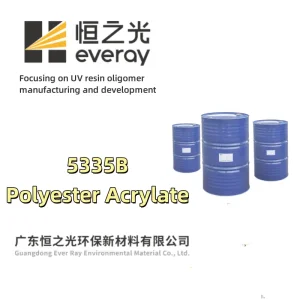
Buy 5335B UV-resin in UV color inks, varnishes, and offset inks Manufacturers, Products
Explore Specification
Technical Clarifications
Frequently Asked Technical & Sourcing Inquiries
Detailed answers from polymer chemists and industrial process engineers to help guide resin selection and plant formulation trials.
How do Bisphenol A epoxy acrylates balance film hardness against curing shrinkage?
Pure Bisphenol A epoxy acrylates can exhibit significant volumetric shrinkage (up to 7%-9%) due to dense carbon-carbon double bond conversions. To manage cure strain without dropping hardness, we synthesize modified grades (such as 6805A-1 and 6160M-3) that incorporate flexible polyether segments or mono-functional diluents (IBOA, ACMO). This approach reduces overall volume shrinkage below 3.5%, preserving excellent substrate adhesion while maintaining a 3H-4H pencil hardness rating.
Why do standard aromatic epoxy topcoats yellow, and which alternatives work outdoors?
Aromatic epoxy acrylates contain benzene rings with active ether bonds that photo-oxidize into quinoid chromophores under solar UV-A and UV-B exposure. For outdoor clear topcoats, exterior architectural trim, or cosmetic packaging, we recommend substituting with aliphatic polyurethane acrylates (e.g., Ever Ray 72027 or 7230E series). These use hydrogenated IPDI/H12MDI backbones that maintain transparency through extended QUV weathering cycles.
What is the standard procedure to test adhesion on untreated Polycarbonate (PC) and ABS?
We evaluate adhesion via ASTM D3359 cross-hatch tape testing (1mm grid for dry film thicknesses <50µm). In challenging plastic coatings, solvent swelling must be avoided without sacrificing anchor depth. Adding specialized pure acrylate oligomers or phosphate-modified functional acrylates promotes chemical anchorage on the plastic substrate, reliably maintaining 5B (100/100) adhesion through standard thermal cycles.
What minimum order quantities (MOQ) and packaging specifications apply to overseas buyers?
Our standard commercial factory packaging includes 20 kg metal pails, 200 kg heavy-gauge steel drums, and 1,000 kg UN-certified IBC totes. The standard minimum order quantity for custom synthesis is 1 metric ton. For catalog testing and trial runs, we offer 1 kg to 20 kg evaluation samples with international air courier dispatch, fully covered by technical batch test reports (COA) and GHS documentation.