Precision High-Reactivity Oligomers & Resins
Direct wholesale formulations engineered by Guangdong Ever Ray Environmental Material Co., Ltd. for roll coating, flexographic print, screen inks, and vacuum metallization processes.
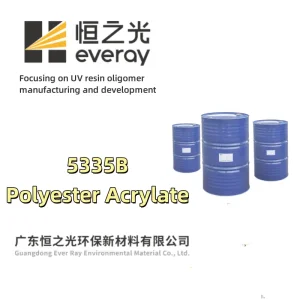
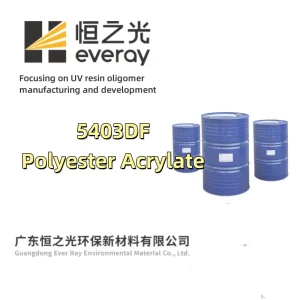
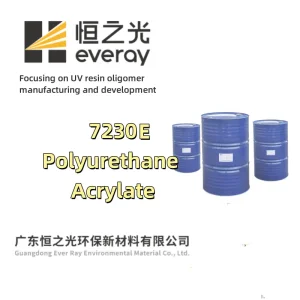
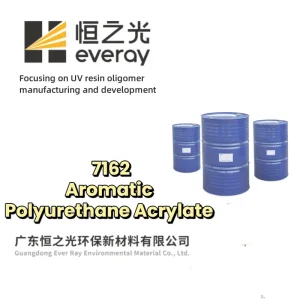
Global Epoxide Resin Evolution: Radiation Curing Meets Advanced Electronics
Traditional bisphenol-A diglycidyl ethers are rapidly shifting toward high-functionality radiation-curable epoxy acrylates. Discover how modern synthesis bridges high-speed crosslinking with ultra-dense network integrity.
Transition to Radiation-Curable Acrylates
Epoxide resins modified with acrylic acid create vinyl ester and epoxy acrylate backbones. This architecture couples the thermal resilience and chemical resistance of epoxy rings with the instantaneous free-radical polymerization kinetics of acrylate double bonds under UV and LED mercury lamps.
Elimination of VOCs & Hazardous Diluents
Global environmental mandates, including EU REACH, RoHS, and California SCAQMD, have rendered legacy solvent-borne epoxies obsolete in automated lines. Modern industrial users rely on 100% solids UV formulations where modified reactive monomers serve both as diluent and network building blocks.
Micro-Stress & Adhesion Optimization
One primary drawback of standard epoxide curing is excessive volumetric shrinkage during crosslinking, causing delamination on glass, aluminum, and engineering plastics like ABS and PC. Ever Ray resolves this through functional hyperbranched architectures and customized elastomeric oligomer backbones.
Enterprise Procurement Criteria: Mitigating Industrial Production Risks
Chemical procurement engineers in 3C electronic manufacturing, packaging converting, and coil coating evaluate wholesale suppliers using exacting quality, repeatability, and supply assurance metrics.
Narrow Viscosity Tolerances
On high-speed gravure and flexographic presses, even a ±5% shift in viscosity leads to dot gain or misting. Wholesale epoxide resins must maintain strict batch-to-batch polymer chain length distribution to protect run speeds up to 300 m/min.
Epoxy Equivalent Weight (EEW)
Strict conversion rates in the synthesis reactor ensure minimal residual oxirane groups or unreacted acrylic acid. This guarantees long shelf-life stability, predictable curing energy profiles, and skin irritation ratings within safe limits.
Color Value (Gardner Index ≤ 1)
For optical clear adhesives (OCA), 3C electronic phone housings, and decorative overprint varnishes, low yellowness is mandatory. Our proprietary low-temperature synthesis prevents thermal discoloration during resin production.
Raw Material Traceability
With an operational base in Guangdong, Ever Ray tracks each drum of epichlorohydrin, bisphenol derivatives, and reactive acrylic intermediates back to authenticated chemical suppliers, ensuring absolute purity and heavy metal control.
Formulator's Sourcing Note: When substituting conventional aromatic diglycidyl ethers with UV-curable modified epoxy acrylates, formulators typically observe a 40% reduction in thermal cure oven footprints and an immediate 85% drop in plant volatile organic compound (VOC) output.
Comparative Chemical Architecture: UV Oligomer Selection Guide
Formulating high-performance coatings demands matching polymer backbone chemistry to required physical benchmarks. Compare performance across key operational metrics.
| Resin Chemistry Family | Pencil Hardness | Tensile / Flexibility | UV Light Stability | Surface Cure Kinetics | Target Substrate Compatibility |
|---|---|---|---|---|---|
| Standard Bisphenol A Epoxy Acrylate | 4H - 5H | Low (Brittle) | Moderate (Yellowing) | Ultra-Fast (< 0.2s) | Wood sealers, paperboard, rigid metal, sanding primers |
| Modified Epoxy Acrylate (Flexible / Low Shrink) | 2H - 3H | High Elongation (15-25%) | Good | Fast | Vacuum metallized ABS, PC electronics, screen inks |
| Aliphatic Polyurethane Acrylate (PUA) | H - 2H | Exceptional (> 50%) | Non-Yellowing (QUV 1000h) | Medium-Fast | 3C topcoats, cosmetic gels, automotive exterior films |
| Aromatic Polyurethane Acrylate | 3H - 4H | Balanced Toughness | Indoor Only | Fast | Heavy-duty PVC flooring, parquet topcoats, industrial primers |
| Hyperbranched Acrylate Oligomer | 5H - 6H | Rigid Network | High | Instantaneous | Anti-scratch optical hard-coats, high-speed offset OPV |
Applied Formulation Blueprints for High-Growth Sectors
Turnkey raw material combinations developed in our Jiangmen and Yunfu synthesis centers to eliminate common processing failures.
3C Electronics & Vacuum Metallization
Overcoming rainbow iridescent defects and primer embrittlement on electroplated plastic surfaces. Our 7230E and Aromatic PU acrylates provide controlled polarity to anchor securely to aluminum vaporization layers while absorbing rapid thermal shocks between -40°C and 85°C.
UV Graphic Arts & High-Speed Inks
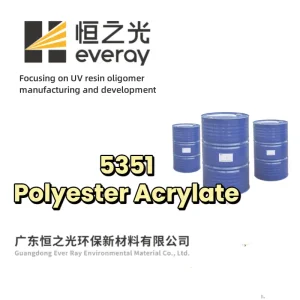
Combatting ink emulsification and oxygen inhibition in high-speed offset and flexo printing. Integrating 5403DF polyester acrylates and amine synergists balances hydrophilic/lipophilic properties on font rollers, yielding sharp micro-dots, dense color saturation, and immediate scratch-free stackability.
Industrial Flooring & Parquet Finishes
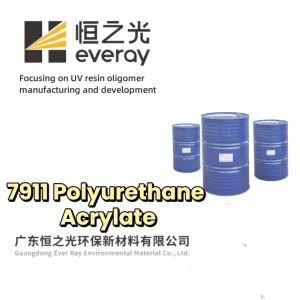
Flooring formulations demand extreme sandability at the substrate interface combined with scratch-proof clear coats. By utilizing rapid-cure bisphenol epoxy acrylates for sanding sealers and pairing them with high-molecular-weight 7911 polyurethane acrylates, coaters prevent shrinkage warping on multi-layer PVC and bamboo tiles.
Localized Engineering Support & Global Compliance Framework
Reliable chemical partnerships extend beyond the invoice. Ever Ray pairs wholesale chemical manufacturing scale with comprehensive testing documentation and regulatory clearance across five continents.
Export Regulatory Dossiers & SDS
Every industrial shipment comes complete with GHS-compliant Safety Data Sheets (16 sections), technical data sheets (TDS), certificates of analysis (CoA) detailing acid value, color, viscosity at 25°C, and residual monomers. Fully registered under EU REACH, US TSCA, and relevant regional inventories.
Specialized Industrial Packaging & Cold-Chain
Radiation-curable resins require strict handling to avoid premature polymerization triggered by ambient heat or incidental UV exposure. We supply wholesale volumes in 25 kg black HDPE jerrycans, 200 kg coated steel drums, and 1,000 kg IBC containers with built-in thermal and UV-barrier shielding.
Technology Roadmap: The Next Era of Epoxide & Radiation Chemistries
Continuous investment in photopolymer innovation positions our formulation partners ahead of shifting environmental rules and manufacturing techniques.
Bio-Based Carbon Replacements
Synthesizing epoxy acrylates using epoxidized vegetable oils (EVO) and renewable succinic and itaconic acids. Our labs are targeting resins with >45% biogenic carbon content while preserving the mechanical properties of petroleum bisphenol systems.
UV-LED Long-Wavelength Sensitization
Traditional mercury arc systems emit broad spectrum radiation, while modern energy-saving factories rely on 365nm, 385nm, and 395nm UV LEDs. Ever Ray engineers specialized amino-acrylate synergists and modified hyperbranched binders that cure without oxygen-inhibited surface tack under monochromatic light.
Photopolymer Resins for Additive Manufacturing
Custom stereolithography (SLA) and Digital Light Processing (DLP) photopolymers demand low viscosity (< 300 cps at 25°C) alongside high green-strength. We are deploying dual-cure thermal/UV epoxide blends for functional dental models and automotive prototypes.
Frequently Asked Questions: Technical & Wholesale Inquiries
Expert answers addressing the selection, formulation, and commercial ordering of Ever Ray epoxide and acrylate resins.
What is the fundamental difference between standard epoxide resin and epoxy acrylate oligomer?
How can our formulation overcome oxygen inhibition during thin-film UV curing?
What minimum order quantities (MOQ) and container options are supported for wholesale delivery?
Can Ever Ray tailor viscosity and refractive index for specific optoelectronic uses?
How does your production process maintain batch-to-batch consistency?
High-Performance Acrylates & Specialty Oligomers
Engineered for high weatherability, anti-yellowing performance, ultra-low shrinkage stress, and demanding industrial substrate adhesion.