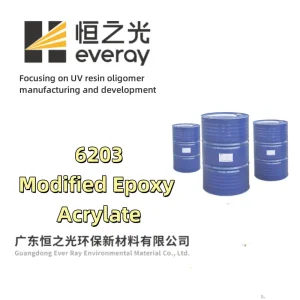
High-Quality 6203F UV resin for UV metal coating and printing ink
View Specifications
Direct supply of high-purity functional resins tested across high-speed printing, durable metal coatings, and precision optoelectronics.
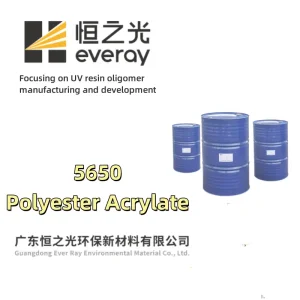
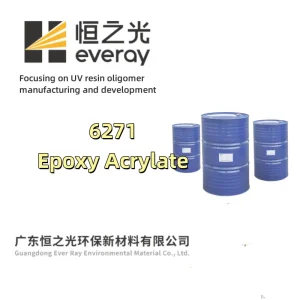
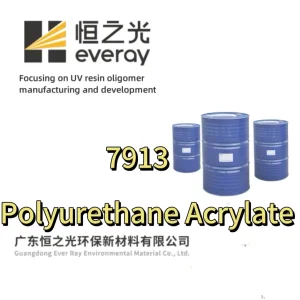
An in-depth analysis of global consumption trends, regional supply chain dynamics, and regulatory compliance pressures across key manufacturing markets.
The global acrylate oligomer market continues an accelerated transition away from thermal-dry solvent systems to 100% solids UV/EB chemistries. Driven by tightening emissions directives in North America and the EU, wholesale supply is undergoing structural realignment toward low-viscosity, high-functionality polymer backbones.
Stringent VOC restrictions, including REACH Annex XVII adjustments and regional carbon targets, require oligomer formulators to eliminate monomer outgassing, residual odor, and hazardous heavy metals. Manufacturers now prioritize bio-based diols and non-migrating photo-active moieties.
Wholesale buyers face volatile precursor values across acrylic acid, HDI, IPDI, and BPA derivatives. Our integrated manufacturing hub mitigates upstream disruptions by securing dual-stream raw materials and maintaining over 10 continuous synthesis lines.
Comprehensive matrix comparing mechanical thresholds, cure dynamics, and conversion efficiency across primary acrylate categories.
| Oligomer Chemistry | Hardness Range | Elongation (%) | Yellowing Index (ΔYI) | Cure Response (m/min) | Optimum Conversion Target |
|---|---|---|---|---|---|
| Bisphenol-A Epoxy Acrylate | 2H – 4H | 1% – 5% | Moderate (3.5 – 6.0) | Fast (> 45 m/min) | Rigid wood primers, heavy OPVs, fast-cure PCB solder masks |
| Aliphatic Polyurethane Acrylate | HB – 2H | 15% – 120% | Ultra-Low (< 0.8) | Medium (20 – 35 m/min) | 3C electronics casings, optical films, nail gels, automotive clearcoats |
| Aromatic Polyurethane Acrylate | H – 3H | 5% – 30% | High (> 7.0) | Fast (30 – 45 m/min) | Resilient PVC flooring, interior furniture finishes, structural UV adhesives |
| Chlorinated/Modified Polyester Acrylate | B – H | 10% – 50% | Low (1.2 – 2.5) | Fast (35 – 50 m/min) | Offset litho inks, flexographic packaging, plastic primer coats |
| Hyperbranched Acrylate Oligomer | 3H – 5H | < 2% | Low (1.0 – 1.8) | Extremely Fast (> 60 m/min) | Anti-scratch nano-coatings, excimer matting, 3D micro-stereolithography |
Tailored molecular chains designed to solve specific boundary challenges, from thermal stress to low surface energy plastics.
Polycarbonate, PMMA, and anodized aluminum substrates demand non-yellowing aliphatic PUA structures. Our 72583 grade guarantees minimal exotherm during high-intensity UV exposure, safeguarding sensitive microcircuits and preventing warp in ultra-thin injection molded shells.
Photopolymer formulations for DLP, SLA, and LCD printers require rapid photo-response, ultra-low green-state shrinkage, and engineering-grade tensile strength. Resins like 71209A-1 balance flexural modulus and izod impact resistance for high-accuracy functional prototyping.
Overcoming differential thermal expansion at optical glass-to-metal and plastic-to-glass interfaces. Grades like 6271 and 7253A-5 provide elastic dampening across thermal cycling ranges of -40°C to +120°C, sustaining bond integrity without cohesive failure.
UV offset and flexographic printing require superior pigment wetting and precise rheology. Our hyper-compatible polyester acrylates preserve water-ink stability, enhance dot reproduction, and counter surface oxygen inhibition on high-speed press lines.
For high-throughput roller lines on SPC/LVT vinyl flooring and engineered wood, our aromatic PUAs provide deep-seated abrasion resistance and Taber resistance, pairing with sanding sealers to prevent intercoat delamination.
High-clarity, low-heat release aliphatic urethane prepolymers tailored for cosmetic safety. They deliver high cross-linking gloss, excellent elasticity to flex with natural keratin substrates, and reliable acetone soak-off properties without yellowing.
How our synthetic chemists address LED transition wavelengths, oxygen inhibition mitigation, and sustainable carbon capture backbones.
Traditional mercury lamps emit broad-spectrum UVC, securing surface curing. Transitioning to single-wavelength 385–405nm LED arrays triggers severe surface oxygen inhibition. We engineer amine-modified acrylates and hyperbranched nodes that scavenge free peroxyl radicals directly.
172nm excimer laser irradiation forms micro-wrinkled surfaces within the first 100nm of the topcoat. Our 53036 polyester acrylate ensures targeted partial polymerization, delivering uniform, dead-matte skin-feel surfaces without external silica matting agents.
Replacing petroleum-derived polyols with cardanol, itaconic acid, and modified soybean oil structures. Targeting >45% renewable bio-carbon content while preserving the mechanical toughness and rapid curing expected of industrial-grade urethane acrylates.
Synergistic dual-cure formulations (UV + thermal or UV + moisture) built for thick electronic encapsulation and shadowed components. Free-radical UV exposure sets the geometry in seconds, while secondary thermal crosslinking completes deep curing.
We provide downstream formulators with fully verified testing protocols, reliable batch-to-batch consistency, and streamlined logistical support.
Equipped with Gel Permeation Chromatography (GPC), rotational rheometers, and FTIR spectrometers, our production facility standardizes molecular weight distribution (Mw/Mn) and double-bond value, eliminating batch variations on your production line.
We do not just ship chemical barrels; we provide complete formulation frameworks. Our application team troubleshoots difficult substrate wetting, advises on photoinitiator synergy (TPO, 1173, DETX), and guides monomer dilution packages.
Supplying clients across Europe, Asia-Pacific, and the Americas with complete regulatory clearance (TDS, SDS, RoHS, REACH). Our dedicated custom synthesis lab adjusts resin viscosity and functional backbones within rapid 3-week pilot sprint cycles.
Direct insights from senior technical chemists addressing common viscosity, polymerization, and substrate adhesion challenges.
Specialized chemical building blocks for excimer matting, dense wood primers, floor coatings, and structural bonding.