Featured Industrial Resins & Acrylate Oligomers
Engineered for high adhesion, rapid curing response, and zero-VOC waterborne conversion.
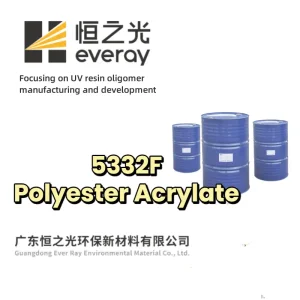
Polyester Acrylate 5332F
Buy Polyester Acrylate 5332F – The Premium Choice for Offset Inks Supplier, Factory
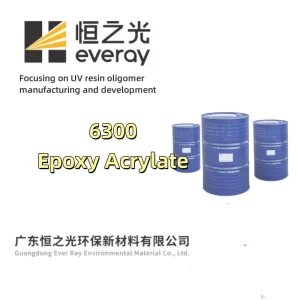
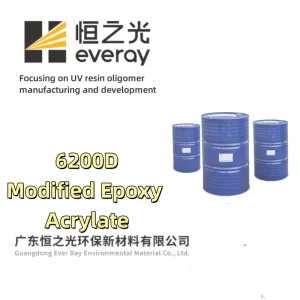
Modified Epoxy Acrylate 6300
Wholesale Low viscosity 6300 modified epoxy acrylate UV resin for UV paper varnish Supplier, Suppliers
Specialty UV Resin 70250
High-Quality 70250 UV-resin for 3D printing,UV-ink and UV wood-coatings Suppliers, Product
Offset Printing Resin 6805A-1
Wholesale 6805A-1 UV-resin in UV Offset Printing Suppliers, ProductWaterborne Polyurethane: Structural Engineering & Global Market Shifts
An in-depth evaluation of Waterborne Polyurethane (WPU) and Waterborne Polyurethane Dispersion (PUD) manufacturing, polymer architectures, and environmental mandates driving global chemical supply chains.
The industrial landscape for performance coatings, functional adhesives, and surface finishing technologies is undergoing an irreversible transition toward sustainable chemistries. At the center of this movement lies Waterborne Polyurethane (WPU)—a versatile class of polymeric materials synthesized by dispersing polyurethane particles within an aqueous phase rather than volatile organic solvents. Driven by strict international regulations such as the EU REACH Annex XVII amendments, US Clean Air Act VOC caps, and China’s stringent GB national standards on low-VOC coatings, chemical formulators and tier-one manufacturers are accelerating their complete replacement of solvent-borne systems.
1. Molecular Architecture and Synthetic Precision
Achieving identical or superior mechanical properties compared to traditional solvent-borne urethanes requires rigorous thermodynamic control over the phase separation between hard and soft segments. A classic WPU macromolecular chain consists of high-molecular-weight polyols (polyester, polyether, or polycarbonate diols) providing the flexible soft segment, diisocyanates (such as IPDI, HDI, or H12MDI for aliphatic systems, and TDI or MDI for aromatic grades) yielding structural rigidity, and internal emulsifiers carrying ionic or non-ionic hydrophilic groups (commonly DMPA or DMBA neutralized with tertiary amines).
In modern advanced factories, continuous polyaddition reactor loops enable precise regulation of the hydrophilic-lipophilic balance (HLB). By fine-tuning particle size distributions between 30 and 150 nm, our synthesis pipelines produce colloidal dispersions characterized by extraordinary shelf stability, transparent dry-film consolidation, and high crosslinking density upon thermal or photochemical cure.
2. Macro Trends: Convergence of UV-Curing & Waterborne Chemistries
Historically, the trade-off in waterborne systems was the drying rate and film hardness. The industry's technological zenith is currently represented by Waterborne UV-Curable Polyurethane Acrylate (WPUA) dispersions. By capping the urethane prepolymer backbone with hydroxyl-functional acrylates (such as HEA or HPA), the formulation yields a dual-drying mechanism: physical moisture evaporation followed by split-second free-radical photopolymerization under ultraviolet or LED UV lamp arrays. This hybrid mechanism slashes line dry-off times, lowers thermal energy expenditure on manufacturing lines, and creates an impermeable 3D polymer matrix with outstanding scratch, solvent, and water-boiling resistance.
Aliphatic Non-Yellowing
Utilizes pure IPDI/HDI backbones to eliminate chromophore formation, ensuring Delta E < 1.0 even after accelerated QUV aging tests.
Zero-VOC Formulation
Complies fully with ultra-low VOC global mandates, eliminating NMP/NEP solvents while preserving exceptional sub-micron film build.
Rapid Photopolymerization
Integrated terminal double bonds achieve high radical conversion yields under conventional mercury and 365/395nm LED radiation.
Manufacturing Infrastructure & China Factory Efficiency
Scalable chemical engineering, upstream monomer integration, and world-class quality systems.
Guangdong Ever Ray Environmental Material Co., Ltd. (operating since 2006) represents the zenith of automated Chinese specialty chemical manufacturing. Located in the dedicated Dawan Industrial Park (Yunfu, Guangdong), our 40,000+ m² facility is engineered from the ground up to solve the three core vulnerabilities facing global chemical procurers: batch-to-batch inconsistency, feedstock volatility, and logistical lead-time drift.
Upstream Chemical Integration
Direct bulk pipelines for raw acrylic monomers, polyols, and isocyanates hedge against macroeconomic raw material shocks, ensuring rock-solid pricing and uncompromised continuous supply contracts for overseas partners.
Stringent Statistical Quality Control
Every lot undergoes inline FTIR, GPC molecular weight benchmarking, dynamic viscosity profiling, and laser diffraction particle size metrics. Complete retention samples guarantee absolute traceability across international shipments.
Global Compliance & Packaging
Fully compliant with REACH, RoHS, and GHS standards. Available in custom packaging options ranging from 25kg HDPE carboys and 200kg steel drums to 1,000kg intermediate bulk containers (IBCs) with inert gas blanketing.
Localized Industrial Application Scenarios
Custom chemistry engineered specifically around end-use substrates, physical stressors, and application methods.
Consumer Electronics (3C)
Provides ultra-thin, highly elastic protective finishes on polycarbonates (PC), ABS, and PMMA housings. Delivers pencil hardness up to 3H while maintaining exceptional flexibility, sweat resistance, and scratch-healing performance.
Architectural Wood & Flooring
Solves grain-raising issues inherent in conventional water-based finishes. Functions as deep-penetrating primers and abrasion-resistant topcoats with an authentic open-pore natural wood feel and superior resistance to hot liquids.
Graphic Arts & Overprint Varnishes
Provides flexographic, offset, and screen inks with exceptional rheological stability, minimal water absorption, and high pigment loading. Cures into high-gloss, scuff-resistant barrier films over coated papers and synthetic foils.
Automotive Interior & Synthetic Leather
Waterborne PUDs impart soft-touch haptics, low-gloss elegance, and hydrolytic stability to polyurethane (PU) synthetic leathers, steering trims, and dashboard plastics, passing severe Bally flex tests up to 100,000 cycles.
Technical Guidance for Formulation Engineers & Procurement Directors
Systematic formulation advice to eliminate typical processing defects in waterborne and UV conversion lines.
Migrating a production line from solvent to waterborne UV systems requires managing different surface tensions, evaporation kinetics, and coalescence phenomena. Based on nearly two decades of in-house laboratory trials and factory assistance, our technical engineers provide the following best practices:
Overcoming Coalescence and Oxygen Inhibition
- Thermal Stage Balance: Ensure effective water flash-off prior to UV curing. Remaining residual water trapped within the crosslinked film creates micro-voids, haziness, and compromises adhesion over time. Infrared (IR) preheating zones between 50°C and 70°C prior to UV irradiation produce optimal results.
- Countering Surface Tack: Waterborne UV-cured formulations can encounter oxygen inhibition at the top atmospheric boundary. Incorporating co-reactive amino acrylates or active amine synergists into the resin backbone donates active hydrogen, quenching peroxide radicals and achieving immediate tack-free surfaces under high line speeds.
- Substrate Surface Energy Optimization: Low-surface-energy substrates such as non-polar polypropylene (PP) or untreated polyethylene (PE) require corona or plasma pre-treatment, paired with adhesion-promoting functional acrylates synthesized with phosphoric acid or hydroxyl-functionalized monomers.
Technical & Procurement FAQ
Addressing the exact mechanical, operational, and commercial questions asked by international buyers.
What is the primary difference between aliphatic and aromatic polyurethane acrylates?
Aliphatic polyurethane acrylates (PUA) are formulated with aliphatic diisocyanates (such as IPDI or HDI), providing superior non-yellowing and weatherability properties. They are the benchmark choice for clear topcoats, exterior coatings, 3C electronics, and optical nail gels. Aromatic PUAs (based on TDI or MDI) offer superior cost efficiency, high hardness, and tensile strength, making them ideal for pigmented formulations, indoor wood furniture, and industrial floor sealers where solar UV resistance is not required.
How does Ever Ray guarantee batch-to-batch viscosity and cure-speed consistency?
Our Yunfu production facility uses closed-loop automated reactors with high-precision digital dosing pumps. Every production batch undergoes comprehensive quality control: GPC for molecular weight distribution, FTIR spectra overlay against master standard curves, non-volatile solid content checks, and dynamic Brookfield viscosity verification. International shipments include an official Certificate of Analysis (COA) confirming tight specification tolerances.
Can Ever Ray synthesize custom oligomers to meet specific adhesion or elongation targets?
Yes. Our in-house R&D team holds over 10 utility and invention patents. We routinely tailor oligomer architectures—adjusting functional acrylate density, segment polyol molecular weight, ionic charge density, and reactive diluent combinations—to target demanding properties like extreme flexibility on thermoformable plastics, high scratch resistance, or adhesion to untreated glass and metallic substrates.
What documentation and sampling support is provided for international procurement evaluations?
We provide full documentation packages for export clients, including Technical Data Sheets (TDS), complete Safety Data Sheets (SDS) matching GHS standards in multiple languages, and starting formulation guides. Standard 500g to 1kg sample bottles are readily dispatched globally via air courier for immediate lab screening and compatibility testing.
Comprehensive Specialty Resin Catalog
High-performance grades for flexographic inks, optical clear adhesives, and extreme-durability topcoats.
Multi-Substrate UV Resin 72021E
Buy 72021E UV-resin for Multi-Substrate Bonding Factory, Factories
Multi-Field Polyester Acrylate 5405B
High-Quality Polyester Acrylate 5405B – A High-Efficiency Solution for Multi-Field UV Applications Suppliers, Product
High Gloss Modified Epoxy Acrylate
Wholesale High Gloss Fast Curing Modified Epoxy Acrylate Resin (UV Oligomer) Manufacturers, Product
Flexographic Ink Polyester 5377A
Buy Polyester Acrylate 5377A – The Ideal Choice for Flexographic UV Inks Suppliers, Factory