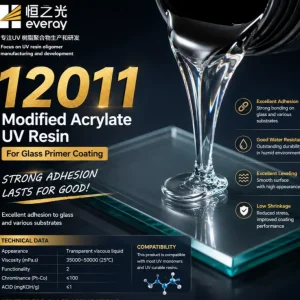
High-Performance Acrylate Oligomers & Glass Adhesion Monomers
Explore our foundational photo-curable systems engineered for optical clarity, fast reaction kinetics, extreme surface energy wetting, and covalent interfacial bonding.
5335B UV-Resin: Color Inks, Varnishes & Offset Inks
Explore 5335B Grade
6300 Modified Epoxy Acrylate Low Viscosity Varnish Resin
Explore 6300 Grade
Polyester Acrylate 5319A-1: High-Performance UV Coatings
Explore 5319A-1 Grade
61003A Fast-Curing Anti-Yellowing Modified Epoxy Acrylate
Explore 61003A Grade
7230E High-Adhesion Polyurethane Acrylate for Vacuum Plating
Explore 7230E Grade
1291B-1 Antifouling High-Purity Fluorinated UV Coating Resin
Explore 1291B-1 Grade
72021E Multi-Substrate Bonding Oligomer for Structural Joints
Explore 72021E Grade
6203F UV Resin: Industrial Metal Coatings & Printing Inks
Explore 6203F GradeThe Interface Challenge: Solving Glass Adhesion Degradation in UV Resins
In-depth polymer chemistry insights addressing silicate surface energy, volumetric cure shrinkage, and hydrolytic stability under severe environmental stress.
Silane Grafting & Interfacial Chelation
Standard radical polymerization often achieves mere mechanical interlocking, failing when water molecules diffuse to the inorganic substrate. Ever Ray integrates dual-functional alkoxysilane backbones and acidic adhesion promoters (such as phosphate acrylates) that undergo hydrolysis and condensation directly with surface silanol (Si-OH) groups, generating covalent Si-O-Si bonds that resist delamination under high humidity.
Mitigating Cure Shrinkage Stress
Acrylate double-bond conversion involves van der Waals distances shrinking to covalent bond lengths, typically causing 6% to 12% volumetric shrinkage. In rigid inorganic glass substrates, this produces intense internal shear stresses at the boundary layer. By synthesizing hyperbranched polyurethane acrylate networks and specialized cyclic monomers, we maintain crosslink density while lowering volumetric shrinkage to below 2.8%.
Hydrolytic Resilience & Boiling Water Endurance
Commercial glass primers frequently pass the initial 100% 5B cross-hatch tape test, but fail drastically after a 2-hour boiling water immersion or pressure cooker test (PCT). Our proprietary hydrophobic polyester-urethane architecture repels ambient vapor penetration, shielding the covalent interfacial anchor points and sustaining optical-grade clarity without micro-blistering or haze generation.
| Evaluation Parameter | Standard Radical UV Oligomers | Ever Ray Engineered Glass UV Systems | ASTM / ISO Test Protocol |
|---|---|---|---|
| Initial Dry Glass Adhesion | Class 3B - 4B (Moderate peeling) | Class 5B (100% Retention, zero chipping) | ASTM D3359 / ISO 2409 |
| Boiling Water Resistance (100°C) | Delamination < 30 minutes | Zero delamination > 4 hours | Internal / OEM Pressure Cooker Standard |
| Volumetric Cure Shrinkage | 7.5% - 11.2% | 2.1% - 3.4% (Ultra-low internal stress) | Density Pycnometer Method |
| Pencil Surface Hardness | H - 2H | 3H - 5H (Adjustable formulation) | ASTM D3363 (Wolf-Wilburn) |
| Optical Haze After Moisture Aging | > 4.8% (Severe clouding) | < 0.3% (Crystal transparent retention) | ASTM D1003 Spectrophotometry |
China Factory 4.0: Scalability, Quality Control & Supply Resilience
How Guangdong Ever Ray's Yunfu manufacturing facility mitigates geopolitical raw material disruptions and provides scalable, batch-consistent acrylated resins to worldwide markets.
Automated DCS Process Execution
Our Yunfu synthesis facility leverages Distributed Control Systems (DCS) for precise exothermic reaction regulation during esterification and urethanization, removing human variance in molecular weight distribution and residual monomer levels.
Upstream Chemical Integration
Situated within the Greater Bay Area chemical hub, Ever Ray maintains direct raw material pipelines for acrylic acid, specialized isocyanates (IPDI/HDI), and polyols, establishing high resistance against global supply chain fluctuations.
Analytical Quality Verification
Every industrial lot undergoes Gel Permeation Chromatography (GPC), Fourier Transform Infrared Spectroscopy (FTIR), and UV-curing kinetic profiling to ensure stable batch-to-batch conversion and viscosity before export clearance.
Global Export Ready (TDS & SDS)
Products are packed with standardized UN-certified steel drums and IBCs. Comprehensive Technical Data Sheets (TDS), GHS-compliant Safety Data Sheets (SDS), and custom regulatory compliance packages are provided for overseas customs clearance.
High-Yield Application Scenarios for UV Glass Adhesion Formulations
From consumer electronics touch panels to high-speed architectural screen printing and optical-grade laminations, see where Ever Ray formulations excel.
3C Touch Panel & Display Glass Screen Printing
Smartphone cover glass, smart home displays, and automotive center consoles demand jet-black screen printing inks with pinhole-free opacity and zero flaking during CNC edging and washing lines. Ever Ray 12011 and 7230E resins deliver reliable edge adhesion and pigment dispersion without sacrificing rapid UV LED cure speeds.
Architectural & Decorative Appliance Glass
Tempered glass splashbacks, induction cooktops, and luxury cosmetics bottles undergo rapid temperature fluctuations, dishwashing cycles, and alkaline detergents. Standard coatings blister when exposed to humidity. Formulating with our silane-modified oligomers ensures long-term boiling-water resilience and scratch-resistant gloss.
Optical Bonding & Structural UV Adhesives
Bonding glass to glass, glass to metals (aluminum/steel), or glass to engineering plastics (PC/PMMA) introduces differential thermal expansion coefficients (CTE mismatch). Our aliphatic polyurethane acrylate systems absorb expansion differentials without brittle failure, providing high optical transparency (>99%) and zero solar-induced yellowing.
Frequently Asked Questions: UV Glass Adhesion Resin Selection
Direct answers from our senior chemical formulation team addressing procurement requirements, processing mechanics, and shelf life parameters.
Why does UV resin lose adhesion on glass after water immersion?
Glass is hydrophilic with surface hydroxyls (Si-OH) that bond readily with atmospheric water. If a UV resin relies purely on physical wetting or weak hydrogen bonds, water molecules migrate into the interface, forming a hydration layer that displaces the resin. True water and boiling-water resistance requires chemical silane grafting or chelating phosphate functional groups to form covalent hydrolytically stable Si-O-Si linkages.
Is a separate silane coupling agent primer necessary when using Ever Ray resins?
While traditional lines apply a manual silane wiping primer before topcoating, Ever Ray's 12011 Modified Acrylate UV Resin is designed as a direct-to-glass self-priming oligomer. It incorporates functional coupling components directly into the backbone, delivering Class 5B adhesion in a single pass and eliminating manual surface wiping labor.
How do you compensate for curing shrinkage on rigid glass substrates?
We blend low-functionality aliphatic urethane acrylates with specialized mono-functional diluents (such as IBOA or cyclic trimethylolpropane formal acrylate) and hyperbranched backbones. This balances crosslink density with chain elasticity, keeping volumetric cure shrinkage below 3% to preserve joint integrity.
What is the recommended curing equipment (Mercury Arc vs. LED)?
Our glass adhesion resins are designed for broad UV light absorption. They react under traditional Medium Pressure Mercury Vapor lamps (254nm - 365nm) and can be paired with long-wavelength Type I photoinitiators (e.g., TPO or BAPO) for 365nm, 385nm, or 395nm LED curing arrays on temperature-sensitive substrates.
What are the minimum order quantities (MOQ) and sample lead times?
Standard qualification samples (500g to 1kg) ship within 48 to 72 hours alongside full TDS and SDS documentation. Commercial trial batches start at 20kg to 200kg steel drums, while full-scale industrial supply is available in 1-ton IBC totes with dedicated maritime export coordination.
How does Ever Ray handle custom resin synthesis?
Our technical team reviews your production specifications: glass type (soda-lime, borosilicate, aluminosilicate), curing setup, target viscosity, and testing metrics (e.g., thermal shock cycles, boiling water immersion). We develop matching synthesis iterations within our R&D lab to deliver targeted formulation performance.
Engineered UV Resins for Multi-Industry Surface Finishing
Specialized grades for high-durability coatings, exterior weatherability, wood finishes, and glass primers with boiling water resistance.
5338 Dual-Action UV Oligomer & Active Diluent System
Explore 5338 Grade
7296C Solvent & Abrasion-Resistant Urethane Acrylate
Explore 7296C Grade
7200-1 Non-Yellowing Aliphatic Polyurethane Acrylate
Explore 7200-1 Grade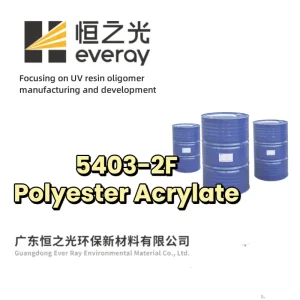
Polyester Acrylate 5403-2F for High-Fidelity UV Printing Inks
Explore 5403-2F Grade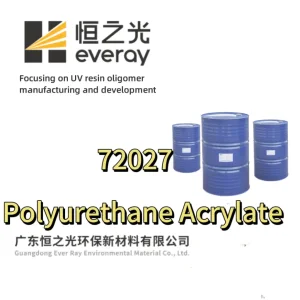
72027 Weather-Resistant High-Tack PSA Acrylate Resin
Explore 72027 Grade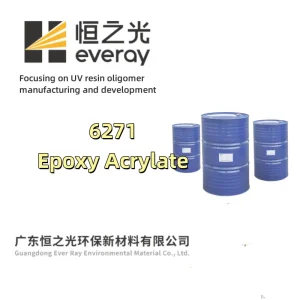
6271 Low-Yellowing Structural UV Adhesive Polymer
Explore 6271 Grade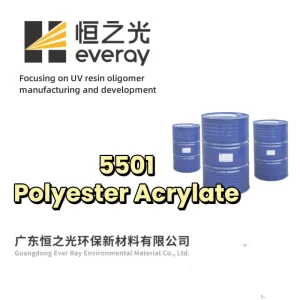
Polyester Acrylate 5501 Core Resin for LED-UV Wood Coatings
Explore 5501 Grade