
Featured UV Curable Resins & Precision Formulations
Select high-purity polyurethane acrylates, polyester acrylates, and specialty oligomers synthesized for industrial coating, printing ink, and additive manufacturing lines.
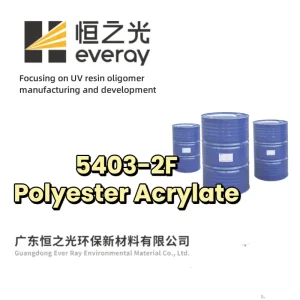
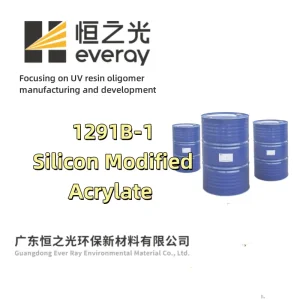
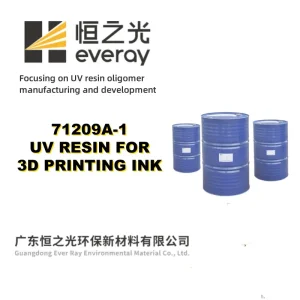
Molecular Chemistry of UV Polyurethane Acrylates (PUA)
UV-curable polyurethane acrylates (PUA) represent the pinnacle of high-durability polymer architecture in radiation curing technology. By synthesizing precise diisocyanates, polyol macrodiols, and hydroxy-functional acrylates, our chemists tailor crosslink density, mechanical elasticity, and chemical resistance.
Aliphatic PUA Oligomers
Synthesized with cycloaliphatic or linear aliphatic isocyanates such as IPDI (Isophorone Diisocyanate) and H12MDI. These backbones eliminate aromatic light-absorbing chromophores, delivering exceptional non-yellowing weatherability (ΔYI < 1.0 after 1,000h QUV).
Essential for optical-grade display films, consumer electronics (3C clearcoats), exterior architectural coatings, and cosmetic UV nail formulations.
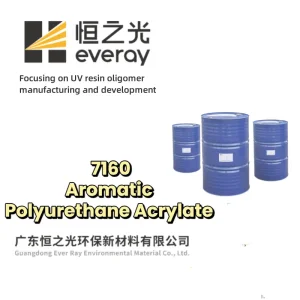
Aromatic PUA Oligomers
Built utilizing TDI or MDI platforms to offer unmatched urethane intermolecular hydrogen bonding. This results in high tensile strength, supreme Taber abrasion resistance, and fast radical polymerization rates at optimized cost.
The gold standard for heavy-duty industrial parquet, vinyl composite tile (VCT), high-speed flexographic inks, and indoor pigmented industrial primers.
Waterborne PUA Dispersions
Eco-engineered polyurethane acrylates dispersed in aqueous media via internal ionic emulsifiers (DMPA). Eliminates reactive diluent skin irritation while matching 100% solids performance after physical water flash-off and UV crosslinking.
Delivers zero VOC compliance, ultra-thin dry film thickness (5–15 μm), and deep pore wetting on luxury wood, natural leather, and heat-sensitive film substrates.
| Polymer System | Hardness vs. Elasticity | Yellowing Resistance | Tensile Strength (MPa) | Elongation at Break (%) | Ideal Application Sectors |
|---|---|---|---|---|---|
| Difunctional Aliphatic PUA | Flexible / Elastic | ΔYI < 0.8 (Excellent) | 18 – 30 MPa | 80% – 180% | Thermoformable PC films, Optical LOCA, Flexible Inks |
| Hexafunctional Aliphatic PUA | Ultra-Hard (3H–5H) | ΔYI < 1.2 (Superior) | 45 – 65 MPa | 2% – 8% | 3C Electronic Shells, Anti-Scratch Automotive Clearcoats |
| Aromatic Urethane Acrylate | High Impact / Rigid | ΔYI > 4.0 (Moderate) | 35 – 55 MPa | 10% – 35% | Industrial Parquet Flooring, Heavy Machinery Primers |
| Hyperbranched PUA Resin | Balanced / Dense | ΔYI < 1.5 (High) | 50 – 70 MPa | 5% – 15% | Low-Shrinkage Micro-Optics, Fast-Cure 3D Resins |
China Factory Supply Chain Dominance: Scale, Purity & Cost Efficiency
Guangdong Ever Ray Environmental Material Co., Ltd. (established in 2006) operates a centralized manufacturing complex in Yunfu, Guangdong, bridging raw petrochemical precursors with proprietary acrylate modification technology to guarantee uninterrupted global supply lines.
Feedstock Integration
Direct bulk pipeline connections to upstream Acrylic Acid (AA), IPDI, HDI, and Glycidyl Methacrylate manufacturers across South China eliminate middle-tier markups and buffer against global spot-market swings.
DCS Automated Synthesis
Over 10 automated reactor lines managed via Distributed Control Systems (DCS). Precise thermal dosing curves prevent runaway exotherms, maintaining polymerization conversion rates above 99.7%.
Zero-Defect Quality Control
Every batch undergoes rigorous GPC molecular weight analysis, Karl Fischer titration for water content (≤ 0.1%), rotational Brookfield viscosity verification, and color-index testing before export sign-off.
Expedited Export Logistics
Strategically situated in the Greater Bay Area near Guangzhou, Shenzhen, and Hong Kong ports. Standardized packaging in 25kg PE carboys, 200kg steel drums, and 1,000kg IBC totes for secure multi-modal shipping.
Procurement Standards: Dual-Sourcing, Localization & Global Compliance
Tier-1 multinational coating formulators demand more than low price points; they require strict risk mitigation, regulatory assurance, and agile customization to prevent factory-floor downtime.
REACH, TSCA & RoHS Compliance
All exported resin grades are fully compliant with EU REACH, US TSCA, IEC 62321 (RoHS 3.0), and halogen-free restrictions (<900 ppm total chlorine/bromine). Full dossiers and Safety Data Sheets (GHS SDS Rev. 8) accompany shipments in major international languages.
Dual-Sourcing & Redundancy
International chemical enterprises hedge geopolitical and regional supply risks by partnering with Ever Ray as a qualified dual-source supplier. Our mirrored synthesis capacity ensures seamless production handover during local feedstock constraints or shipping bottlenecks.
Low Monomer Odor & VOC Auditing
Industrial health protocols mandate rigorous volatile organic compound suppression. We implement high-vacuum devolatilization distillation during final synthesis phases, slashing residual monomer content below 0.05% for ultra-low skin sensitization and odor control.
Localized Application Scenarios: Cross-Industry Solutions
Discover how specific polymer formulations resolve intricate engineering bottlenecks across diverse manufacturing substrates.
3C Consumer Electronics
Substrate: Injection-molded PC, ABS, and PC/ABS smartphone & laptop chassis.
Engineering Challenge: High pencil hardness (3H) combined with resistance to hand sweat, sunscreen lotions, and drop impact without micro-cracking.
Ever Ray Solution: Aliphatic Polyurethane Acrylate blended with hyperbranched acrylate oligomers, providing elastic damping alongside high surface crosslinking density.
UV Optical Adhesives (LOCA)
Substrate: Glass-to-polarizer and touch sensor bonding in automotive cockpits and displays.
Engineering Challenge: Thermal shock resistance (-40°C to 105°C), refractive index matching (n=1.51), and near-zero cure shrinkage (<1.2%) to prevent optical mura defects.
Ever Ray Solution: Pure acrylate and aliphatic PUA copolymers delivering high transmission (>99%), exceptional flexibility, and long-term anti-yellowing clarity.
High-Toughness 3D Printing
Process: SLA, DLP, and LCD digital photopolymer additive manufacturing.
Engineering Challenge: Overcoming the inherent brittleness of typical acrylic photopolymers to produce functional, snap-fit snap joints and impact-resistant prototypes.
Ever Ray Solution: ABS-Like Engineering Resin series featuring tailored urethane segments, achieving 45 MPa tensile strength and >25% break elongation.
Industry Development Trends: Next-Gen UV Curing Chemistry
The UV curing landscape is pivoting rapidly toward energy decarbonization, bio-renewable feedstocks, and high-efficiency narrow-band irradiation.
LED-UV 395nm Migration
Formulators are replacing high-voltage mercury lamps with 365nm/395nm LED systems. We synthesize specialized amino-acrylate synergists and high-reactivity PUA backbones that overcome LED surface oxygen inhibition.
Bio-Based Polyols
In pursuit of corporate Net-Zero targets, Ever Ray synthesizes polyurethane acrylates derived from vegetable polyols and bio-succinic acid, boosting bio-renewable carbon content up to 45% without sacrificing mechanical performance.
Waterborne UV Systems
Stringent solvent air quality restrictions across the EU, US, and Asia are accelerating the adoption of zero-VOC waterborne PUA resins in the luxury furniture, automotive interior, and packaging printing sectors.
Self-Healing Dual-Cure
Pioneering hybrid systems combining UV free-radical curing with thermal moisture/blocked-isocyanate post-curing, providing optical clarity, self-healing scratch recovery, and deep shadowed-area crosslinking.
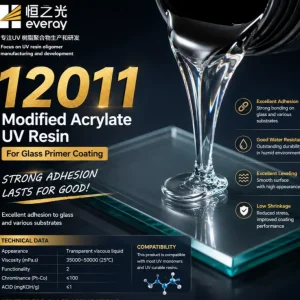
Industrial Polyurethane Acrylates & Performance Oligomers
Specialized oligomers engineered for peelable temporary protection, glass primer adhesion, heavy wear resistance, and high-speed graphic arts printing.
Frequently Asked Questions: Technical Guidance & Commercial Terms
Direct answers from our senior polymer engineers and global trade compliance managers to assist R&D formulators and enterprise procurement teams.
