
Engineered UV Epoxy Acrylates & Performance Oligomers
Explore the flagship oligomeric formulations engineered by Ever Ray to eliminate surface oxygen inhibition, mitigate volumetric curing shrinkage, and achieve exceptional pencil hardness.
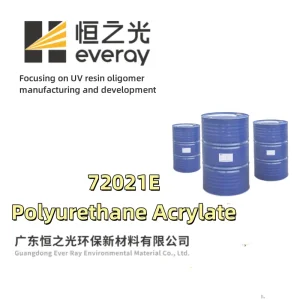
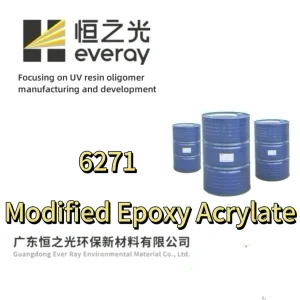
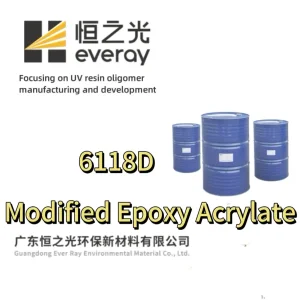
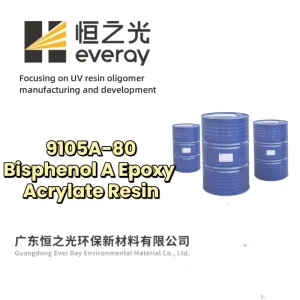
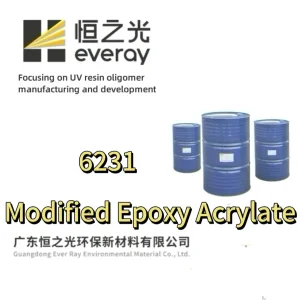
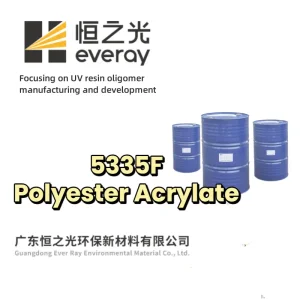
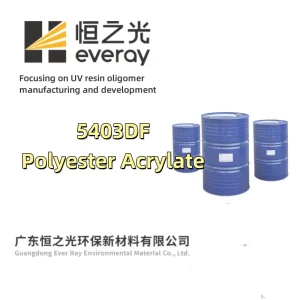
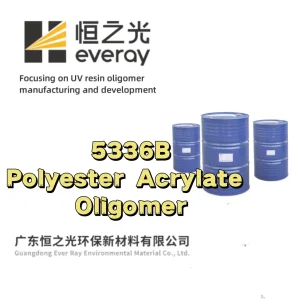
The Science of Industrial UV Epoxy Acrylate Formulations
A rigorous examination of molecular backbone design, free-radical vinyl polymerization kinetics, epoxide ring reaction dynamics, and structural glass transition temperature (Tg) engineering.
Bisphenol A Diacrylate (EBPDMA) Physics
Standard UV epoxy acrylates originate from reacting bisphenol-A diglycidyl ether (DGEBA) with acrylic acid. The rigid phenylene rings in the backbone provide extraordinary mechanical hardness (up to 4H-5H pencil hardness), high refractive indices (nD > 1.52), and impervious resistance to caustic chemicals, ketones, and prolonged boiling water exposure.
Free-Radical vs. Cationic Photopolymerization
While free-radical acrylic unsaturation cures in milliseconds under broad-spectrum mercury (254-365nm) or UV-LED (365-405nm) radiation, cycloaliphatic cationic formulations eliminate oxygen inhibition entirely. By strategically blending modified epoxy acrylates with reactive diluents (TPGDA, TMPTA, DPGDA), formulators tailor crosslink density without post-cure shrinkage stresses.
Mitigating Oxygen Quenching & Shrinkage
Uncontrolled volumetric shrinkage (often reaching 6% to 9% in standard acrylated monomers) results in substrate warping and micro-delamination. Ever Ray modifies epoxy acrylate backbones with aliphatic polyether segments and tertiary amine synergists to neutralize atmospheric triplet oxygen quenching while moderating internal cured film stress.
Enterprise Sourcing: Managing Quality, Volatility & Lead Times
Industrial procurement directors face three primary friction points: fluctuating raw material petro-feedstock prices, international logistics lead-time slippage, and batch-to-batch polymer dispersity. Here is how modern manufacturers guarantee continuous manufacturing reliability.
Feedstock Upstream Integration
By securing direct synthetic supply partnerships for epichlorohydrin, acrylic acid, and high-purity Bisphenol-A, our manufacturing ecosystem stabilizes resin COGS despite upstream petroleum price shocks.
GPC Polydispersity Verification
Every commercial lot undergoes rigorous Gel Permeation Chromatography (GPC) to verify molecular weight distribution (Mw/Mn). This guarantees tight viscosity windows crucial for automated roller coaters and jetting heads.
Dynamic Climate Packaging
Export packaging features nitrogen-purged, light-tight fluorinated high-density polyethylene (HDPE) drums and steel-caged 1,000L IBC totes, ensuring 12+ months shelf-life across equatorial sea-freight corridors.
Rapid Pilot-to-Scale Transition
From initial benchtop 1kg sample screening to 20-ton single-batch synthesis, our dedicated chemical piloting facilities ensure seamless recipe transfer with precisely identical shear-thinning and curing response.
Oligomer Performance Matrix: Selecting by Application
Benchmarking mechanical resilience, optical transmittance, weathering stability, and curing kinetics across major UV radiation polymer categories.
| Resin Chemistry Family | Pencil Hardness | Tensile Modulus (MPa) | Elongation at Break (%) | Yellowing Index (ΔYI) | Primary Industrial Sector | Target Substrates |
|---|---|---|---|---|---|---|
| Standard Bisphenol A Epoxy Acrylate | 4H - 5H | 2,100 - 2,800 | 2% - 5% | Moderate (3.5 - 6.0) | Wood sealers, OPV, Electronics | Oak, Birch, Glass, Copper, Tinplate |
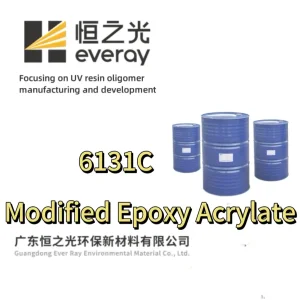
| Modified Epoxy Acrylate (Flexible) | 2H - 3H | 1,200 - 1,700 | 12% - 25% | Low (1.5 - 2.8) | Vacuum Metallizing, Plastic 3C | ABS, Polycarbonate, Treated PET |
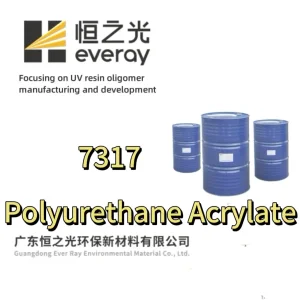
| Aliphatic Polyurethane Acrylate (PUA) | F - 2H | 450 - 950 | 45% - 120% | Ultra-Low (< 0.8) | Automotive Topcoats, Screen Protectors | PMMA, TPU, PC/ABS, Polyolefin Films |
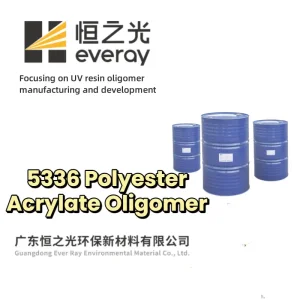
| Polyester Acrylate (High Functionality) | 3H - 4H | 1,600 - 2,200 | 4% - 8% | Moderate (2.5 - 4.2) | Offset Litho & Flexo Printing | Coated Paper, Folding Carton, Foils |
| Hyperbranched Acrylate Oligomer | 5H - 6H | 2,800 - 3,500 | 1% - 3% | Low (1.2 - 2.2) | Anti-Scratch Optical Hardcoats | Polycarbonate sheets, TAC lenses, Optical glass |
Tailored Solutions for Demanding Industrial Ecosystems
Precision photopolymer science deployed across advanced manufacturing verticals to maximize line speeds, reduce VOC emissions, and secure extreme surface protection.
Consumer 3C & Precision Optics
Consumer electronics demand microscopic coating thicknesses (5-15μm) exhibiting scratch resistance, sebum (artificial sweat) immersion resilience, and total optical clarity. Our modified epoxy acrylates, when combined with aliphatic PUA matrices, deliver zero post-mold distortion on heat-sensitive polycarbonate and cyclic olefin copolymer housings.
High-Speed Graphic Arts & UV Inks
Modern lithographic and flexographic presses operate at web speeds surpassing 300 meters per minute. Ever Ray polyester and modified epoxy acrylate systems provide rapid pigment wetting, shear-thinning thixotropy, and stable ink-water balance for offset dampening systems, preventing ink emulsification and misting.
Additive Manufacturing & Photopolymers
For industrial SLA, DLP, and LCD/mSLA 3D printing formulators, our low-viscosity modified oligomers offer rapid layer crosslinking under 405nm LED illumination. Our ABS-like and heat-resistant resin systems balance high green strength with low post-cure warpage, essential for automotive and dental prototypes.
Technological Roadmap: The Next Generation of Radiation Curing
Addressing the shifting paradigm toward energy-efficient narrow-band UV-LED systems, sustainable bio-based building blocks, and non-endocrine disrupting polymer architectures.
Narrow-Band UV-LED Sensitivity
Formulating high-reactivity modified epoxy oligomers optimized for 385nm, 395nm, and 405nm excitation, reducing power usage by up to 70% compared to traditional mercury arc lamps.
Bio-Renewable Acrylate Precursors
Synthesizing novel oligomeric backbones incorporating vegetable oil derivatives, isosorbide, and cashew nutshell liquid (CNSL), targeting > 45% bio-based carbon content.
BPA-Free High Hardness Resins
Developing novel alicyclic and hyperbranched core chemistries to replace Bisphenol-A entirely, proactively addressing stringent European consumer safety and food-contact directives.
Dual-Cure Hybrid Architectures
Integrating secondary moisture, thermal, or anaerobic curing mechanisms into the epoxy acrylate backbone to guarantee complete deep-section curing in shadowed geometric profiles.
Regulatory Integrity & Global Compliance Framework
Ensuring risk-free import clearance, worker safety compliance, and comprehensive substance transparency across all international chemical inventories.
EU REACH & UK REACH
Full registration and Only Representative (OR) coverage across primary oligomer and monomer products, guaranteeing uninterrupted supply into European economic zones.
US TSCA & EPA Active
Formulations comply with the Toxic Substances Control Act inventory, complete with active 16-section Safety Data Sheets aligned with OSHA HazCom 2012 / GHS Revision 8.
RoHS 3.0 & Halogen-Free
Certified absence of heavy metals (Pb, Cd, Hg, Cr VI), polybrominated biphenyls (PBBs), PBDEs, and phthalates, meeting IEC 61249-2-21 electronic component standards.
Zero-VOC Industrial Standard
100% solids, non-solvent formulations designed to support closed-loop industrial manufacturing facilities aiming for zero atmospheric volatile organic compound discharge.
Specialty Curing Oligomers, Engineering Resins & Monomers
Advanced structural resins designed for vacuum plating, high-wear flooring, specialty texture effects, and demanding functional prototyping.
Frequently Asked Questions: Technical Engineering & Sourcing
In-depth responses to the most critical technical and operational questions posed by formulators, chemical engineers, and procurement directors.
How do you resolve surface tackiness caused by atmospheric oxygen inhibition?
Oxygen inhibition occurs when atmospheric triplet oxygen (³O₂) diffuses into the liquid film surface and reacts with propagating carbon radicals faster than monomer addition, yielding unreactive peroxy radicals. To overcome this in thin coatings without nitrogen inerting, we recommend incorporating 5%–12% amino acrylate synergists (such as Ever Ray amino co-initiators) or hyperbranched acrylates. These donate alpha-hydrogen atoms, rapidly consuming trapped oxygen molecules and re-initiating polymerization.
What mechanisms mitigate severe volumetric shrinkage in high-hardness epoxy acrylates?
Standard bisphenol-A epoxy diacrylates exhibit volumetric shrinkage between 6% and 9% due to covalent bond formation pulling vinyl groups together. We formulate modified epoxy acrylates with flexible aliphatic spacer chains and recommend pairing them with lower-shrinkage reactive diluents such as Isobornyl Acrylate (IBOA) or Cyclic Trimethylolpropane Formal Acrylate (CTFA). This lowers internal shrinkage stresses, guaranteeing cross-hatch adhesion scores of 5B on untreated metals, glass, and engineering plastics.
Why does standard bisphenol A epoxy acrylate exhibit yellowing, and how is it prevented?
The aromatic rings and ether linkages in unmodified Bisphenol-A backbones are susceptible to photo-oxidative degradation when exposed to intense UV wavelengths (especially sub-320nm), forming light-absorbing quinoid chromophores that manifest as yellowing. For outdoor, clear-coat, or nail gel applications requiring ΔYI < 1.0, we advise transitioning to our aliphatic polyurethane acrylate portfolio (such as 7200-1) or specially hydrogenated, modified epoxy acrylates combined with Hindered Amine Light Stabilizers (HALS).
How does viscosity adjustment affect the curing speed and final crosslink density?
Reducing oligomer viscosity requires reactive diluent monomers. High-functionality monomers (like TMPTA or DPHPA) reduce viscosity while increasing cure rate and surface hardness, but they introduce brittleness and elevate shrinkage stress. Conversely, mono- or di-functional monomers (like TPGDA or HDDA) maximize film flexibility and substrate wetting at the expense of slight cure speed reductions. Our application lab provides verified starting formulations optimizing the oligomer-to-monomer ratio.
What is the recommended storage protocol to prevent dark polymerization in bulk containers?
Radiation-curable acrylate oligomers require dissolved oxygen in the liquid matrix to maintain inhibitor efficacy (typically 100-300 ppm of MEHQ). Never blanket pure acrylate resins with pure nitrogen during extended storage. Drums and IBC totes must be stored between 15°C and 25°C, away from direct sunlight, thermal heaters, and static electrical discharges. Under these conditions, Ever Ray guarantees chemical stability and constant viscosity for 12 months from manufacture.
Can Ever Ray engineer bespoke oligomeric backbones for non-standard curing lines?
Yes. Our R&D synthesis team specializes in custom macromolecular design. Whether your production facility operates long-wavelength 395nm/405nm UV-LED sources, electron-beam (EB) curing systems requiring zero photoinitiator extraction, or complex plastic substrates requiring specialized acid-functionalized adhesion promoters, we synthesize, evaluate, and scale candidate polymers to meet your performance targets.
