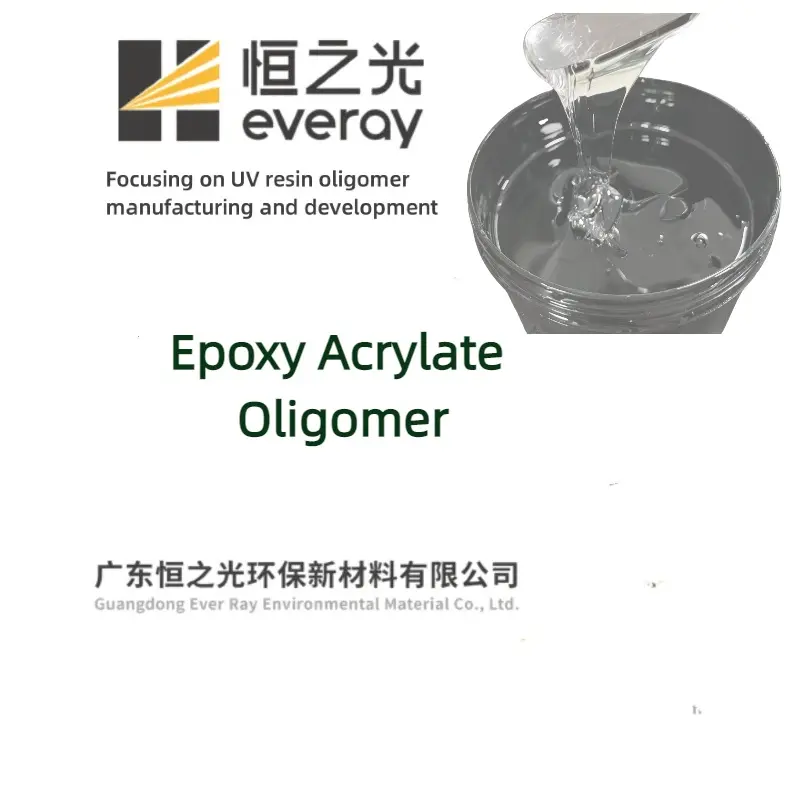
High-Efficiency Reactive Oligomers & Specialty Formulations
Explore precision-synthesized polyester, waterborne, and Bisphenol A epoxy acrylates engineered for balanced rheology, extreme film toughness, and minimal oxygen inhibition across modern production lines.
Global Enterprise Sourcing Paradigms for UV Cure Epoxies
In high-throughput continuous manufacturing, raw material inconsistency leads to micro-cracking, optical distortion, and costly assembly line stoppages. Discover the criteria enterprise chemical buyers use to de-risk procurement.
Batch-to-Batch Polydispersity Control
Enterprise procurement requires stringent limits on Gel Permeation Chromatography (GPC) molecular weight distribution ($M_w/M_n$). Narrow polydispersity indices (PDI < 1.35) prevent unreacted monomers and volatile plasticizers from outgassing, ensuring ultra-stable viscosity in automated precision jet-dispensing systems across high-volume electronics runs.
Kinetic Shadow-Cure & Dark Polymerization
For complex sub-assemblies featuring opaque substrates or shadowed structural cavities, multi-national OEMs require cationic or hybrid dual-cure mechanisms. Epoxy ring-opening photopolymerization proceeds through superacid catalysis (such as hexafluoroantimonate salts), driving latent room-temperature dark polymerization well after irradiation ceases.
Total Cost of Ownership (TCO) & Yield Protection
While primary acrylate esters offer cheap raw costs, high volumetric shrinkage (frequently 6% to 11%) introduces catastrophic interfacial delamination. Specifying high-purity UV cure epoxy matrices with shrinkage below 1.5% prevents component warp, reducing field return rates and elevating secondary assembly yields to over 99.8% in tier-one plants.
Macro-Industrial Solutions: Tailoring Photocurable Networks
Across semiconductor manufacturing, zero-emission automotive packaging, and optical communication matrices, UV cure epoxies deliver high chemical inertness, tailored refractive indices, and robust thermal shock resistance.
Optoelectronics & Micro-Lens Stacking
Modern CMOS image sensors and LIDAR emitter arrays require optical adhesives with light transmittance above 99.2% from 400nm to 1100nm. Specifying alicyclic UV-curable epoxy networks eliminates chromophore yellowing under intense UV weathering while anchoring optical components to micron-level positioning tolerances during cure.
Automotive Power Inverters & Battery Packs
Electric vehicle sub-modules operate under severe thermal vibrations (-40°C to +150°C). UV cure epoxy compounds provide UL94 V-0 flame-retardant encapsulations, dielectric breakdown resistances exceeding 25 kV/mm, and moisture barrier properties that shield vulnerable silver sinter pads from electrolytic corrosion and dendrite growth.
High-Density Flexible Hybrid Electronics (FHE)
Polyimide and PET substrates degrade under prolonged thermal baking. Photopolymerized epoxy oligomers allow near-instantaneous bonding at room temperature. Functionalized rubber-toughened formulations mitigate internal stresses, allowing circuits to withstand tens of thousands of dynamic bending cycles without trace delamination.
Hermetic MEMS & Medical Diagnostic Sensors
Diagnostic fluidic microchips require bonding layers completely devoid of cytotoxicity and leaching solvents. Specifying cationic UV-cured epoxies yields dense 3D crosslinked ether networks resistant to repeated autoclave sterilization cycles, isopropyl alcohol wipes, and prolonged contact with physiological media.
Fundamental Photochemistry: Radical Acrylates vs. Cationic Epoxies
Understanding the fundamental kinetics between free radical chain-growth and cationic oxirane ring-opening polymerizations enables formulation chemists to balance cure speed against mechanical integrity.
| Performance Characteristic | Radical Epoxy Acrylates | Cycloaliphatic Cationic Epoxies | Dual-Cure Hybrid Systems | Significance to Production Yield |
|---|---|---|---|---|
| Polymerization Mechanism | Free radical addition across acrylic double bonds ($C=C$) | Proton-catalyzed oxirane ring-opening reaction | Sequential radical cross-linking followed by thermal/cationic cure | Defines sensitivity to line chemistry, atmospheric gas blankets, and lamp type. |
| Atmospheric Oxygen Inhibition | Severe (Tacky Surface) | Zero Inhibition (Complete Cure) | Negligible on Final Matrix | Eliminates nitrogen purge shrouding costs in open continuous web lines. |
| Volumetric Shrinkage Rate | 6.0% – 10.5% (High Stress) | 0.8% – 2.0% (Ultra-Low) | 1.5% – 3.2% (Balanced) | Directly governs substrate warping, localized shear, and interfacial bond peeling. |
| Post-Exposure Dark Cure | Terminates instantly upon lamp cutoff | Active superacid centers continue polymerization | Photo-triggered initial fix, dark thermal propagation | Critical for achieving uniform structural strength beneath blind electronic traces. |
| Glass Transition Temp ($T_g$) | 60°C – 120°C | 120°C – 190°C | 90°C – 160°C | Ensures dimensional stability during downstream lead-free reflow operations. |
| Interfacial Adhesion | Requires silane/titanate coupling agents | Natural ether linkages coordinate with polar substrates | Exceptional across mixed metal/polymer stacks | Prevents moisture ingress at dielectric joints under thermal cycling. |
Engineering Note on Oxygen Inhibition Mitigation
Free radical UV cure formulations frequently encounter peroxy radical quenching ($R\bullet + O_2 \to ROO\bullet$), resulting in unreacted surface films. Incorporating copolymerizable amino acrylates or active amine synergists into the resin backbone donates alpha-hydrogens, scavenging peroxy radicals and regenerating carbon-centered propagating radicals ($ROOH + R'\bullet$), enabling tack-free surfaces under ambient air at line speeds exceeding 80 m/min.
Technology Roadmap: The Next Decade in Radiation Curing (2025–2035)
The global photopolymer sector is undergoing a massive transformation driven by narrow-spectrum LED sources, green chemistry initiatives, and sub-micron nanolithography architectures.
Narrow-Wavelength UV-LED Tuning (365nm to 405nm)
Medium-pressure mercury vapor lamps are being phased out globally under the Minamata Convention on Mercury. Formulators are transitioning to long-wavelength LED sources (385nm and 395nm). Advanced photoinitiator cocktails incorporating acylphosphine oxides (TPO/BAPO) paired with sensitizing thioxanthones ensure rapid deep-section cure across thick cross-sections without thermal distortion.
172nm Excimer Laser Matting Networks
Traditional gloss reduction requires inorganic silica particles that increase viscosity and compromise transparency. Quasi-monochromatic 172nm vacuum UV excimer irradiation induces instantaneous micro-wrinkling on the topmost nanometer layer of the resin. This creates resilient, ultra-matte, soft-touch coatings with superior stain and fingerprint resistance without matting agents.
Bio-Based & Circular Monomer Backbones
Environmental criteria require higher Renewable Carbon Indices (RCI > 45%). Modern chemical syntheses use isosorbide, epoxidized soybean oil (ESBO), cardanol, and lignin-derived phenols to construct functional epoxy acrylate resins, achieving mechanical properties comparable to classic bisphenol A backbones while lowering cradle-to-gate carbon footprints.
Localized Support & International Chemical Compliance
Distributing high-performance photopolymers worldwide requires total compliance with chemical safety frameworks, environmental standards, and customer-specific formulation guidelines.
Full REACH & RoHS 3 Traceability
Our raw material inventories and synthesis lines comply strictly with EU REACH (EC 1907/2006) registration criteria and SVHC candidate listings. All delivered formulations maintain rigorous limits on restricted phthalates, heavy metals, halogenated flame retardants, and polycyclic aromatic hydrocarbons (PAHs), ensuring friction-free customs clearance into North American, Japanese, and European ports.
Analytical Quality Verification (COA/TDS)
Every delivered production lot comes with comprehensive Certificate of Analysis documentation. In-house analytical laboratories verify dynamic viscosity (Brookfield cone & plate), acid values, color values (Gardner scale), epoxy equivalent weights (EEW), and curing energy thresholds via real-time Fourier-Transform Infrared (FTIR) double-bond conversion monitoring.
Field Application Engineering (FAE)
Our engineering group assists your production line technicians with empirical starting formulations, photoinitiator concentration optimization, pigment wetting strategies, and cure troubleshooting. We maintain dedicated UV dosage radiometers and environmental test chambers to simulate thermal cycling, boiling-water immersion, and cross-hatch tape adhesion in our testing facilities.
Frequently Asked Questions: Industrial Formulations
Authoritative technical guidance compiled directly by our materials engineering division to resolve critical formulation and production-line challenges.
How do UV cure epoxies overcome volumetric shrinkage issues during cure?
Traditional acrylic photopolymers convert intermolecular van der Waals distances into covalent carbon-carbon bonds, driving significant volume contraction (often 6%–11%). In contrast, cycloaliphatic cationic UV epoxies polymerize via an oxirane ring-opening mechanism. The breaking and cleavage of the oxirane ring expands the molecular skeleton, counteracting bond formation shrinkage and keeping volumetric shrinkage below 1.5%.
What storage protocols preserve the stability of reactive UV-curable oligomers?
Epoxy and polyester acrylates must be stored in dark, opaque containers (typically high-density polyethylene or coated metal drums) between 15°C and 25°C. Completely purging the headspace with nitrogen can accelerate premature gelation, because radical polymerization inhibitors (such as monomethyl ether of hydroquinone, MEHQ) require dissolved oxygen to form active stabilizing quinones. Keep drums away from direct sunlight, radiant heat, and strong oxidizers.
Can high-viscosity epoxy acrylates be effectively blended with reactive diluents?
Yes. Standard bisphenol A epoxy acrylates exhibit room-temperature viscosities above 100,000 mPa·s. Formulators adjust viscosity by compounding with mono-, di-, or tri-functional reactive diluent monomers like TPGDA (tripropylene glycol diacrylate), TMPTA (trimethylolpropane triacrylate), or low-irritation monomers like IBOA (isobornyl acrylate). Monomer selection balances viscosity reduction against cure speed, film brittleness, and skin irritation potential.
How do you achieve boil-water adhesion on inorganic glass substrates?
Untreated glass has high surface energy and polar silanol ($-Si-OH$) groups that adsorb water molecules, weakening adhesive bonds under moisture immersion. Achieving durable boil-water adhesion requires modified acrylate oligomers functionalized with carboxyl or phosphate groups, alongside epoxy- or methacryl-functional silane coupling agents (e.g., GLYMO). These establish covalent siloxane bridges ($Si-O-Si$) across the interface that resist hydrolytic attack.
What mechanisms drive photo-thermal dual-curing in 3D photopolymer systems?
Dual-curing systems integrate two distinct functional groups: an acrylate moiety that cures via free radicals under UV irradiation (establishing rapid green strength and dimensional stability in stereolithography vats), and a secondary thermal epoxy/polyurethane network. Post-cure thermal baking triggers thermal crosslinking, eliminating trapped radicals and building dense, tough polymer networks with heat resistance that mimics injection-molded engineering thermoplastics.
Why is water-ink balance vital when selecting polyester acrylates for UV offset inks?
In lithographic offset printing, the ink film continuously interacts with an aqueous fountain solution. If the polyester acrylate is overly hydrophilic, excessive water emulsification leads to misting, dot gain, and slow drying. If too hydrophobic, the ink fails to transfer cleanly. Specifying optimized polyester acrylates (such as our 5403-3F or 5332F) maintains a stable, clean printing boundary across high-speed press runs.
High-Purity Functional Resins & Engineering Oligomers
Explore our complete range of specialized resins, including dual-curing polyurethane acrylates, anti-yellowing modified epoxy acrylates, and impact-resistant engineering photopolymers for demanding industrial uses.