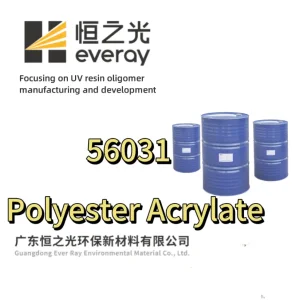
Buy 56031 Low Viscosity High Reactivity Polyester Acrylate Resin for UV Gravure Varnish, Flexo Ink & Snow Effect Coatings Manufacturer, Manufacturers
Explore Grade
Engineered oligomer systems optimized for fast bubble release, Newtonian flow profiles, and superior mechanical wear resistance.
How stringent ESG compliance, smart gigafactories, and automated logistics are redefining high-build polymer leveling chemistry worldwide.
Global semiconductor fabrication plants and electric vehicle battery gigafactories demand ultra-flat floors compliant with ISO 14644-1 Class 4 cleanroom standards. Self-leveling epoxy coatings with zero VOC emissions and anti-static dissipation prevent micro-particle contamination during sensitive lithium-ion cell winding.
Global procurement teams are shifting away from intermediate blending houses toward vertically integrated polymer manufacturing plants. Direct sourcing from factories that handle epichlorohydrin (ECH) and bisphenol processing guarantees tighter tolerances on epoxy equivalent weight (EEW) and moisture content.
Modern fulfillment logistics depend on Automated Guided Vehicles (AGVs) operating on floors with strict DIN 18202 flatness tolerances. Our modified epoxy-acrylate systems self-level under gravitational meniscus forces, eliminating surface micro-undulations that cause sensor deviation in high-speed robotic distribution centers.
Compare standard solvent-borne coatings against advanced 100% solids epoxy-acrylate and polycycloaliphatic curing matrices.
| Performance Metric | Legacy Solvent Epoxy | High-Solid Standard (80%) | Next-Gen 100% Solid Self-Leveling | Target Industrial Standard |
|---|---|---|---|---|
| Cured VOC Content | 280 - 450 g/L | 120 - 180 g/L | < 5 g/L (Near-Zero) | LEED v4.1 / AgBB Criteria |
| Surface Leveling Viscosity (25°C) | 1,200 - 2,500 mPa·s | 800 - 1,400 mPa·s | 250 - 550 mPa·s | ASTM D2196 (Brookfield) |
| Compressive Yield Strength | 45 - 60 MPa | 65 - 75 MPa | > 95 MPa | ASTM D695 / ISO 604 |
| Shore D Durometer Hardness | 72 - 78 Shore D | 80 - 84 Shore D | 88 - 92 Shore D | ASTM D2240 |
| Pot Life vs. Thin-Film Cure | 35 min / 24 hrs | 30 min / 16 hrs | 45 min / 6-8 hrs (Walkable) | Balanced Exotherm Latency |
| Linear Polymerization Shrinkage | 3.8% - 5.5% | 1.8% - 2.6% | < 0.28% (Zero Micro-crazing) | ASTM D2566 Test Method |
Formulated resin chemistries tackling mechanical stress, chemical aggression, and strict thermal cycling across heavy industries.
Self-leveling epoxy matrices must resist aggressive biocide washes (peracetic acid, vaporized hydrogen peroxide) while delivering a seamless, pinhole-free finish that eliminates microbial colonization vectors at the wall-to-floor cove interface.
Dielectric self-leveling resins formulated with modified cycloaliphatic backbones shield sensor boards and battery pack electronics from moisture penetration, thermal expansion mismatch, and corrosive airborne hydrocarbons in automotive radar housings.
Distribution centers with heavy forklift and automated pallet traffic experience localized shear stresses exceeding 30 MPa. Our high-functionality epoxy systems offer tensile elongation balanced with high Shore D hardness to prevent chip-outs and wheel rutting.
A look at the emerging crosslinking technologies reshaping self-leveling performance from 2026 to 2030.
Combining cationic UV photo-curable moieties with latent amine room-temperature curing gives operators the advantage of instant surface walkability under mobile UV radiation rigs, while shadow zones cure through dark secondary oxirane conversion.
To reduce dependency on petroleum aromatics, commercial resin synthesis is migrating toward glycerol-derived epichlorohydrin (G-ECH) and cardanol-modified reactive flexibilizers, cutting carbon footprints by 42% while retaining high chemical resistance.
Next-generation anti-static epoxy systems replace conventional carbon black additives with surface-functionalized graphene nanoplatelets. This ensures consistent electrical conductivity (10^4 - 10^6 ohms) without raising slurry viscosity or dulling aesthetic color profiles.
Critical chemistry considerations, substrate preparation protocols, and formulation advice from our technical support laboratory.
Standard brush-and-roll coatings exhibit thixotropic shear-thinning behavior to prevent vertical sagging. True self-leveling resins are formulated with Newtonian or near-Newtonian flow curves under low shear, relying on surface tension and gravity to eliminate trowel chatter marks and achieve uniform planarity before gelation.
Air bubbles stem from concrete outgassing or high-speed paddle mixing. Proper priming with a low-viscosity penetrant seals substrate capillaries. Formulations must balance surface tension using modified polyacrylate or silicone defoamers that destabilize bubble walls without causing surface craters or fish-eyes.
The EEW indicates the mass of resin containing one mole of reactive oxirane rings. To achieve an optimal polymer network, stoichiometric pairing with amine hydrogen equivalent weight (AHEW) is necessary. An improper mix ratio results in unreacted amine blush, softening, or embrittlement under thermal stress.
Standard Bisphenol A and Bisphenol F epoxy resins contain aromatic rings that break down and photo-oxidize under solar UV, causing surface yellowing and chalking. For exterior installations, an aliphatic polyurethane or polyaspartic clear topcoat must be specified over the self-leveling base.
Reliable bulk volumes directly from certified production lines, delivered with comprehensive TDS, SDS, and technical support.