High-Performance UV Oligomers & Printing Formulations
Precision-engineered acrylate resins and specialty oligomers delivering instant UV curing, superior interfacial adhesion, high shear thixotropy, and resilient mechanical resistance.
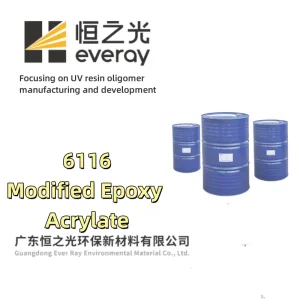
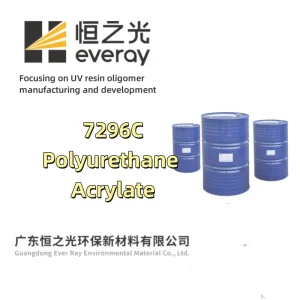
The Screen Printing Paradigm: Photopolymer Chemistry Meets Industrial Precision
In contemporary electronics, automotive displays, medical diagnostics, and specialty packaging, screen printing is no longer merely a graphic method—it is a critical deposition technique for functional polymers, conductive tracks, optical barriers, and tactile topographies.
Rheological Tailoring & Thixotropy
Screen printing inks demand distinct shear-thinning profiles. Under the high-shear stroke of the squeegee, viscosity must collapse instantaneously to permit effortless mesh passage; once deposited onto the substrate, viscosity must immediately recover to stop ink bleeding and dot gain.
- High shear-recovery index (<0.8s)
- Zero mesh clogging across 350-460 mesh counts
- Elimination of pinholes and orange peel defects
Cure Kinetics & Interfacial Bonding
Free-radical UV polymerization frequently suffers from surface oxygen inhibition, causing tacky surfaces on thin screen prints. Our amine-functionalized polyurethanes donate active hydrogen radicals, driving full surface conversion even at high belt speeds.
- Tack-free curing under low UV dosage (80-150 mJ/cm²)
- Chemical anchoring on treated PET, PC, PMMA, and glass
- Low volume shrinkage (<4.5%) minimizing curl
Harsh Environment Resilience
Screen-printed industrial decals, membrane switches, and touch panels must resist aggressive solvents, thermal shock, and constant abrasion. Formulations based on hyperbranched and aliphatic frameworks resist severe degradation.
- 500+ Double MEK rubs without micro-fissuring
- Thermal resistance spanning -40°C to +125°C
- Zero yellowing after 1000h QUV accelerated weathering
Engineering Targeted Solutions for Critical Global Sectors
We supply verified oligomers and formulated systems configured to resolve industry-specific screen printing and functional coating bottlenecks.
Automotive In-Mold Decoration (IMD/IML)
Formulations requiring deep-draw thermoforming without micro-cracking the screen-printed circuit or graphic layer. Our high-elongation aliphatic PUA retains exceptional 200%+ elongation at 140°C while resisting post-cure mold injection pressures.
High Elongation • Non-YellowingOptical & Architectural Glass Primers
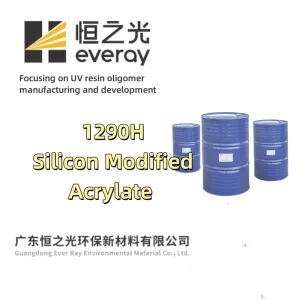
Overcoming catastrophic interface delamination on hydrophilic vitreous surfaces. Our modified acrylates feature silane functional linkages that chemically anchor with glass SiO₂ networks, ensuring boiling water resistance and 0% cross-hatch peel.
Boil-Water Proof • Hydrolytic StabilityHigh-Speed Packaging & Tactile Varnishes
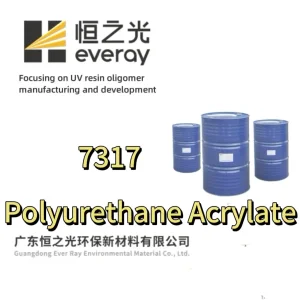
UV Snowflake, wrinkle, and high-build tactile embossing effects via screen printing. By combining highly reactive oligomers (such as 7317) with dual photoinitiator packages, we trigger distinct phase-separation kinetics for controlled visual and tactile relief.
Tactile Relief • Instant Wrinkle Effects| Resin / Oligomer Class | Polymer Backbone | Pencil Hardness | Elongation (%) | Solvent Resistance (MEK) | Ideal Screen Printing Application |
|---|---|---|---|---|---|
| 6116 / 6118 Series | Bisphenol-A Epoxy Acrylate | 3H – 4H | 2% – 5% | > 200 Rubs | Rigid PCB solder masks, glass overcoats, paper OPV |
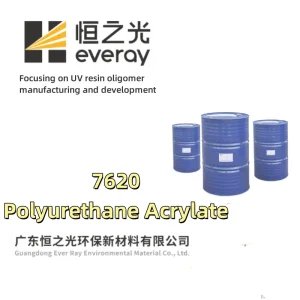
| 7296C / 7620 Series | Aliphatic Polyurethane Acrylate | H – 2H | 40% – 85% | > 150 Rubs | Automotive instrument clusters, membrane switches, 3C plastics |
| 7317 Specialty | Modified Polyurethane Acrylate | HB – F | 90% – 140% | > 100 Rubs | UV wrinkle, snowflake inks, luxury cosmetic packaging |
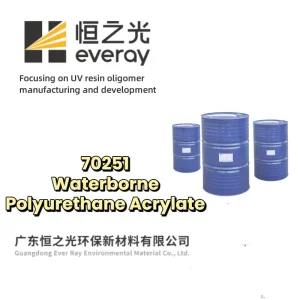
| 70251 Waterborne | Aqueous Polyurethane Dispersion | H | 120% – 220% | > 80 Rubs | Zero-VOC graphic inks, wood-finish screen coatings, flexible synthetic leather |
| 17730A-2 Glass Grade | Silane-Modified Polyacrylate | 2H – 3H | 10% – 25% | > 300 Rubs (Post Bake) | Architectural glass printing, cookware panels, perfume flacons |
China Factory 4.0: Supply Chain Resilience, Automation & Scale
Operating from our high-tech industrial base in Yunfu, Guangdong, Guangdong Ever Ray Environmental Material Co., Ltd. combines advanced DCS automation with closed-loop quality control to safeguard global supply lines against volatility.
DCS Continuous Synthesis
Multi-stage automated reactors equipped with distributed control systems guarantee accurate exothermic tracking and vacuum stripping, eliminating unreacted monomers and batch variance.
Feedstock Verticality
Direct upstream integration with regional petrochemical refineries safeguards supply continuity of acrylic acid, polyols, and isocyanates against global price fluctuations.
Analytical Rigor
Every batch undergoes rigorous GPC molecular weight determination, Brookfield rotational rheology profiles, FTIR spectra matching, and double-rub test verification before dispatch.
Rapid Global Fulfillment
Optimized export channels through Shenzhen and Guangzhou ports ensure compliant UN-rated packaging, temperature-controlled sea freight, and complete SDS/TDS document dispatch.
Compliance Assurance & B2B Procurement Specifications
We support Fortune 500 chemical brands, Tier-1 screen printing converters, and ink formulators across North America, the European Union, Southeast Asia, and Japan with transparent documentation.
EU REACH & RoHS Validation
Strict raw material tracking ensures every monomer, oligomer, and functional additive complies with REACH Annex XVII restrictions, SVHC inclusion updates, and RoHS heavy metal bans.
- SVHC content verified < 0.1% (w/w)
- Zero halogen & phthalate formulations
Zero-VOC & Food Contact Guidelines
Screen printing inks for food packaging, pharmaceuticals, and consumer electronics demand ultra-low migration risks. We offer waterborne polyurethane acrylates and hyperbranched resins that eliminate volatile organic solvents entirely.
- Nestlé Guidance & Swiss Ordinance adherence
- Low photoinitiator residual odor profiles
Technical On-Site Support
Formulation assistance goes beyond product datasheets. Our application engineers provide starting-point formulations, viscosity dilution curves, UV light intensity mapping, and mesh screen tension guidance.
- Custom trial sampling within 72 hours
- Direct laboratory-to-plant video consultation
Frequently Addressed Formulator & Supplier Questions
Clear, direct answers regarding rheology modification, surface energy matching, UV LED conversion, and overseas logistics from our engineering team.
How do your resins eliminate ink misting and mesh dripping in fast screen presses?
We precisely manipulate the polymer molecular weight distribution (MWD) and integrate tailored hydrogen-bonding urethane domains. This yields a high thixotropic index where viscosity drops under squeegee shear and instantly recovers upon mesh exit, preventing ink drip, dot spread, or airborne atomization.
Are your UV screen printing resins compatible with modern 395nm UV LED curing systems?
Yes. While traditional mercury lamps emit across broad spectra (including short-wave UVC for surface cure), 395nm UV LED arrays deliver narrow UVA radiation, which often leaves surface layers soft. Our amino acrylates and hyperbranched oligomers accelerate radical initiation and suppress oxygen inhibition, achieving complete cure at energy inputs under 120 mJ/cm².
What chemistry ensures reliable adhesion to untreated polyolefin and polyester films?
For low-surface-energy substrates such as BOPP, untreated PET, and cyclic olefin copolymers, we synthesize modified pure acrylate and carboxyl/phosphate functional oligomers (e.g., Special Functional Series) that promote substrate wetting and form mechanical micro-interlocking bonds with the plastic interface.
What lead times, sample policies, and batch documentation can overseas buyers expect?
Standard lab samples (500g–1kg) ship within 48 to 72 hours via international couriers. Full commercial scale batches (1 MT to 20 MT) maintain an average factory dispatch cycle of 7 to 12 working days. Every shipment includes lot-specific Certificates of Analysis (COA), FTIR verification curves, GPC reports, and full multi-language SDS documents.
Specialty Acrylates, Adhesion Promoters & Resins
Explore our full line of modified epoxy acrylates, high-bonding adhesives, and vacuum plating resins engineered for high-demand industrial converting.