
Engineered UV Oligomers & Plastic Surface Solutions
Explore our core synthetic resin systems offering exceptional adhesion kinetics, low-shrinkage curing, chemical inertness, and superior mechanical wear profiles across diverse plastic substrates.
Buy Polyester Acrylate 5377A – The Ideal Choice for Flexographic UV Inks Suppliers, Factory
Explore Specifications
Buy 5338 UV resin as oligomer and active diluent, reasonable Manufacturers, Supplier
Explore Specifications
Buy 17701 Low Shrinkage Modified Acrylate Oligomer - Resin for Offset and Film Inks Factories, Product
Explore Specifications
Wholesale A Versatile Solution for High-Efficiency Curing Applications: Epoxy Acrylate 92001 Manufacturer, Product
Explore Specifications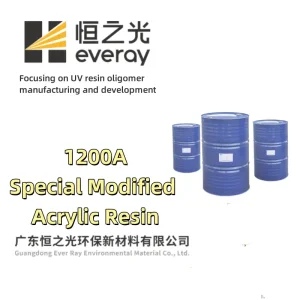
High-Quality 1200A UV resin in adhesion of density-board primer and metal-substrate Suppliers, Product
Explore Specifications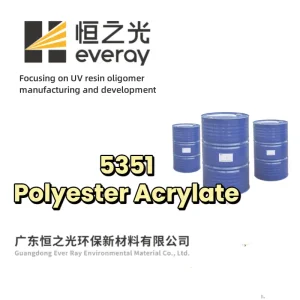
High-Quality Polyester Acrylate 5351 – The Ideal Choice for High-Performance UV Coatings and Inks Product, Products
Explore Specifications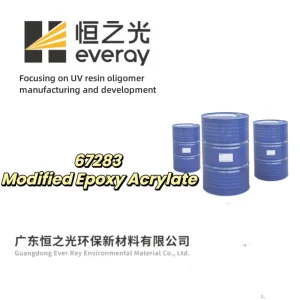
Wholesale 67283:Rapid-setting yellowing-resistant modified epoxy acrylate solution Manufacturers, Supplier
Explore Specifications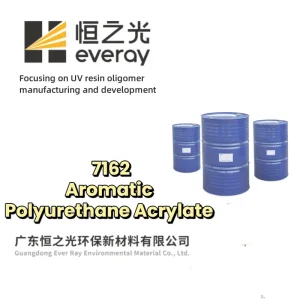
Buy Aromatic PA UV-resin 7162 for Plastic Spray-coatings, wood-finishes and UV-inks Manufacturer, Supplier
Explore SpecificationsMacro Industry Solutions: Bridging Interfacial Energy & Mechanical Integrity
Industrial polymer coatings demand rigorous control over surface thermodynamics, curing conversion kinetics, and internal strain relaxation to deliver robust adhesion across challenging polymeric substrates.
Interfacial Surface Energy & Wetting Mechanics
Polymeric substrates such as Polycarbonate (PC), Acrylonitrile Butadiene Styrene (ABS), Polypropylene (PP), and PMMA present severe surface tension discrepancies. High-performance plastic coatings must achieve a critical surface tension lower than the substrate’s critical wetting threshold.
Ever Ray designs hyper-branched and modified polyester acrylate oligomers incorporating active polar bonding vectors (carboxyl, phosphate, and hydroxyl functionality) that induce thermodynamic wetting, completely eliminating orange peel and crater defects without excessive solvent thinning.
Curing Contraction Stress Mitigation
Standard free-radical polymerization causes significant volumetric shrinkage (up to 8-15%) as van der Waals distances transform into covalent bond spacing. This internal shrinkage induces residual mechanical shear stress at the interface, leading to micro-cracking, delamination, and warpage.
Our proprietary resin architectures, notably represented by model 17701 and aliphatic urethane acrylate backbones, integrate flexible ether-ester segments and steric spacer groups that buffer structural contraction during rapid UV crosslinking, ensuring 100% cross-hatch tape test retention (ISO 2409 Class 0).
Dual-Network Kinetic Balance
Balancing high crosslink density (necessary for surface hardness and chemical resistance) with elastomeric elongation is the primary trade-off in plastic coating formulation. Rigid tri- and hexa-functional acrylates frequently embrittle substrates.
By blending multifunctional urethane acrylates with hyperbranched dendritic polymers, Ever Ray enables high-modulus, abrasion-resistant shell formation with a pencil hardness rating of up to 4H-5H, while preserving the ductile impact energy absorption of the underlying thermoplastic matrix.
Global Commercial & Industrial Realities
As the international plastics market transitions toward circular polymers, ultra-low VOC emissions, and automated production cells, resin manufacturing infrastructure must guarantee rigorous supply chain continuity and technological scalability.
Supply Chain Resiliency & Upstream Monomer Integration
Global formulators frequently face acute raw material volatility in acrylic acid, isocyanates, and specialty polyols. Guangdong Ever Ray Environmental Material Co., Ltd. mitigates commercial exposure through strategic backward integration and redundant raw material qualification programs.
By securing direct petrochemical upstream partnerships across Asian, European, and domestic suppliers, our manufacturing facility ensures uninterrupted production cycles, fixed quality profiles, and stable lead times for Tier-1 automotive and consumer electronic contract manufacturers.
Energy Transition: Mercury Vapor to UV-LED & Excimer
International industrial facilities are accelerating the phase-out of high-pressure mercury arc discharge lamps due to energy consumption, high thermal dissipation (damaging heat-sensitive plastics), and toxic heavy-metal restrictions under the Minamata Convention.
Ever Ray has systematically developed reactive oligomers tuned specifically to narrow-band UV-LED wavelengths (365nm, 385nm, 395nm, and 405nm) as well as 172nm excimer quasi-laser micro-folding systems. These resins feature high photo-absorption responsiveness, negating thermal substrate deformation.
Material Chemistry Performance Matrix
Standardized lab evaluation demonstrating physical, mechanical, and optical parameters across Ever Ray's primary UV plastic coating resin families.
| Resin Chemistry Family | Pencil Hardness (ASTM D3363) | Adhesion on PC/ABS (ISO 2409) | Taber Abrasion (CS-10F, 500g, 1000c) | MEK Double Rubs | Elongation at Break (%) | Primary Industrial Sector |
|---|---|---|---|---|---|---|
| Aliphatic Urethane Acrylate | 2H – 4H | Class 0 (100%) | < 15 mg loss | > 250 cycles | 15% – 45% | Automotive Interior & 3C Enclosures |
| Aromatic Urethane Acrylate | 3H – 5H | Class 0 (100%) | < 20 mg loss | > 200 cycles | 8% – 25% | Heavy Machinery, Tool Housings, Flooring |
| Modified Epoxy Acrylate | 4H – 6H | Class 1 (>95%) | < 12 mg loss | > 350 cycles | 2% – 8% | Rigid Engineering Plastics, Barrier Coats |
| Polyester Acrylate | H – 3H | Class 0 (100%) | < 25 mg loss | > 150 cycles | 20% – 60% | IMD/IML Films, Flexo & Offset Inks |
| Hyperbranched Acrylate | 5H – 7H | Class 0 (100%) | < 8 mg loss | > 500 cycles | 1% – 5% | Optical Hardcoats, Scratch-Resistant Lenses |
| Waterborne Polyurethane Acrylate | H – 2H | Class 0 (100%) | < 30 mg loss | > 100 cycles | 50% – 180% | Eco Soft-Touch Plastics, Synthetic Leather |
Localized Industrial Application Scenarios
Engineering tailor-made plastic surface finishes requires solving distinct micro-environmental challenges across discrete industrial supply sectors.
Automotive Cockpits & Radomes
Modern automotive centers integrate capacitive touch displays, steering wheel trim, and exterior radar-transparent polycarbonate radomes. These components must withstand intense solar UV exposure (SAE J2527 weatherometer testing), continuous human perspiration, chemical sunscreens, and temperature cycling (-40°C to +85°C).
Ever Ray aliphatic polyurethane acrylates deliver non-yellowing stability, high flexural fatigue resistance, and absolute transparency in radar frequencies without signal attenuation.
3C Electronics & Mobile Enclosures
Consumer smartphones, laptops, smart home hubs, and wearable bands demand micro-thin film coatings that guarantee fingerprint oleophobicity, rapid thermal dissipation, and high drop-impact toughness. Brittle coatings peel upon corner impact.
By blending custom hyperbranched acrylates with flexible aromatic/aliphatic PUAs, formulators achieve razor-thin 8-12 micron coatings exhibiting 4H surface hardness while surviving repeated 1.5-meter concrete drop validations.
Medical Diagnostic & Device Housings
Polymeric medical casings molded from ABS, PC, and cyclic olefin copolymers (COC) face constant contact with aggressive chemical disinfectants (isopropyl alcohol, sodium hypochlorite, quaternary ammonium) and repeated ethylene oxide (EtO) sterilization.
Ever Ray modified epoxy and pure acrylate resins provide dense, chemically crosslinked matrices that prevent environmental stress cracking (ESC) and plasticizer migration in hospital environments.
PVD Vacuum Metallization Base/Topcoats
Vacuum electroplating of plastics requires high-gloss, ultra-smooth basecoats to seal porous polymer surfaces and provide high surface energy for aluminum or chromium vapor deposition. The clear topcoat must prevent oxidation without compromising mirror reflectivity.
Our dedicated model 7620 curing resin exhibits exceptional interlayer adhesion between plastic substrates and evaporated metallic nanolayers, passing cross-hatch adhesion even after boiling-water immersion.
Regulatory Compliance & Localized Technical Support
Meeting global chemical governance standards while providing on-the-ground technical formulation support ensures seamless transition from pilot batch to high-speed commercial production.
Global Chemical Inventory Compliance
All raw oligomers and functional monomers manufactured by Ever Ray are fully compliant with international chemical regulatory inventories, including:
- EU REACH: Complete registration and SVHC screening.
- US TSCA: Certified listing for high-volume import.
- RoHS & WEEE: Absolute exclusion of restricted heavy metals and polybrominated biphenyls.
- Zero N-Vinylpyrrolidone (NVP): Ultra-low skin irritation profiles for consumer-grade goods.
DCS Automated Quality Control & Metrology
Batch-to-batch consistency is the primary foundation of factory viability. Our Yunfu production center operates fully automated Distributed Control Systems (DCS) governing all synthesis stages.
Every industrial production batch undergoes strict metrology evaluation: Gel Permeation Chromatography (GPC) for molecular weight distribution, Fourier-Transform Infrared Spectroscopy (FTIR) for functional conversion monitoring, and Brookfield viscometry to guarantee viscosity within tight tolerances (±5%).
Localized Formulation Support & Sampling
Selecting an oligomer strictly off a technical data sheet often fails due to equipment, line speed, and substrate variance. Ever Ray bridges this gap with rapid-response technical formulation assistance.
Our senior chemical engineers provide direct formulation troubleshooting—diagnosing surface oxygen inhibition, advising on photoinitiator synergy (Type I vs Type II), recommending optimal active diluents, and dispatching pre-qualified pilot trial samples worldwide within 48 to 72 hours.
Technology Roadmap & Future Outlook (2025–2035)
Pioneering sustainable chemistry, nano-structured optical interfaces, and stimulus-responsive polymers to fulfill future industrial manufacturing requirements.
172nm Excimer Matt-Finish Systems
Eliminating physical silica matting agents via vacuum-UV excimer crosslinking. Achieves deep ultra-matte gloss (< 2 GU at 60°) while creating highly scratch-resistant, velvety skin-feel finishes across engineering plastics.
High Bio-Carbon Content Oligomers
Synthesizing acrylate polymers derived from renewable biomass polyols, succinic acids, and modified seed-oil matrices. Targets 40% to 65% bio-carbon content while matching petrochemical mechanical performance.
Intrinsic Self-Healing Polymeric Networks
Developing reversible covalent bond networks (Diels-Alder adducts and dynamic hydrogen-bonded urethane segments) that permit localized micro-scratch recovery on automotive clear coats upon ambient thermal exposure.
Dual-Cure Optoelectronic Composites
Light-shadow dual curing (UV photo-radical plus thermal or moisture cationic post-cure) engineered for intricate 3D architectural shapes, complex sensor pods, and automotive light assemblies where shadowed undercuts exist.
Specialty Functional Resins & Custom Coating Systems
High-grade performance oligomers engineered for extreme thermal gradients, vacuum electroplating, excimer laser finishing, and low-VOC functional coatings.
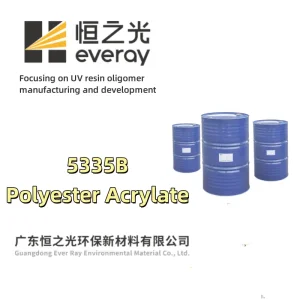
Buy 5335B UV-resin in UV color inks, varnishes, and offset inks Manufacturers, Products
Explore Specifications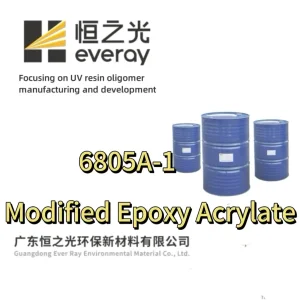
Buy Fast-Cure High-Gloss Modified Epoxy Acrylate UV Resin 6805A-1 for UV Ink and UV varnish Factory, Factories
Explore Specifications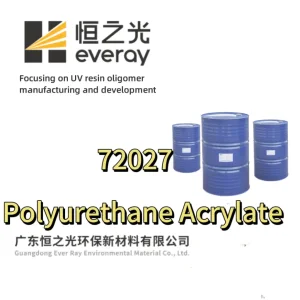
Wholesale Model 72027 Weather-Resistant Polyurethane Acrylate Resin | Low Yellowing & High Tack PSA Adhesive Oligomer for Outdoor Tapes & Labels Supplier, Factory
Explore Specifications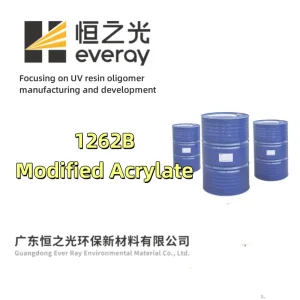
Wholesale Low viscosity 1262B: suitable for PVC floor coating applications Manufacturer, Supplier
Explore Specifications
High-Quality Fast curing 7402 Polyurethane Acrylate UV resin for high quality coatings Supplier, Products
Explore Specifications
High-Quality 7620 UV-curing Resin applied in UV vacuum electroplating Factories, Products
Explore Specifications
Buy Durable 7200F polyurethane acrylate: suitable for heat-resistant and cold-resistant UV coatings Manufacturers, Products
Explore Specifications
High-Quality 53036 Polyester Acrylate UV resin: very suitable for use in excimer lasers, providing excellent skin feel Suppliers, Products
Explore SpecificationsEngineering Questions & In-Depth Technical Answers
Authoritative technical insights compiled directly from Ever Ray’s application development engineers to address real-world formulating and manufacturing challenges.
