Industrial Raw Material Matrix
High-Performance Curable Resins & Special Coating Precursors
Advanced oligomer solutions engineered for supreme tensile elongation, chemical resistance, and non-yellowing mechanical adhesion across flexible substrates.
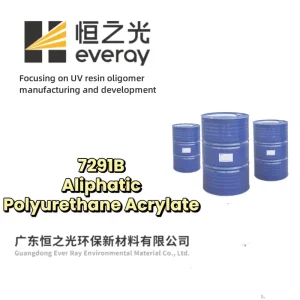
High-Quality A Revolutionary Choice Empowering High-End UV Applications: PUA 7291B Factories, Products
View Product Details
High-Quality 7913 High Reactivity Anti-fouling & Abrasion Resistant Polyurethane Acrylate UV Resin Manufacturers, Supplier
View Product Details
Wholesale 1762 UV resin as adhesive: durable and anti-yellowing, high bonding strength Manufacturers, Factory
View Product Details
High-Quality 9105A-80: Bisphenol A Epoxy Acrylate Resin - Superior Hardness and Chemical Resistance Ideal for Resin Polyester Applications Manufacturers, Suppliers
View Product Details
Wholesale 5403DF:Ideal polyester acrylic UV resin for UV and flexographic printing applications Manufacturers, Product
View Product Details
Wholesale 67283:Rapid-setting yellowing-resistant modified epoxy acrylate solution Manufacturers, Supplier
View Product Details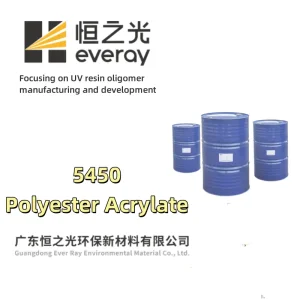
Wholesale 5450 UV resin for UV coating, paper varnish, screen creeping Manufacturer, Manufacturers
View Product Details
Material Science & Chemical Architecture
Engineering the Next Era of Industrial Leather Coatings
A technical dissertation on how aqueous polymer chemistry, crosslinking density, and rheological formulation govern dynamic flex cracking, tactile feel, and eco-compliance.
Aliphatic PUD Polymer Matrices
Modern leather refinishing and industrial manufacturing depend fundamentally on Waterborne Polyurethane Dispersions (PUDs) synthesized using aliphatic diisocyanates (such as IPDI and H12MDI). Unlike aromatic precursors that exhibit irreversible UV degradation and bathochromic shifting (yellowing), aliphatic networks preserve pristine chromatic integrity under rigorous xenon-arc aging protocols.
Crosslink Topology & Flex Fatigue
Leather is an anisotropic substrate experiencing multiaxial elongation, shear strain, and variable hygroscopic expansion. Balancing hard segments (responsible for tensile modulus, block resistance, and chemical barrier) with soft polycarbonate or polyether segments guarantees flex-fatigue endurance exceeding 100,000 cycles in Bally flexometer evaluations at sub-zero environments (-20°C).
Eco-Toxicology & Zero-VOC Systems
With tightening REACH Annex XVII restrictions, California Proposition 65 thresholds, and ZDHC Level 3 MRSL imperatives, our synthesis replaces N-Methyl-2-pyrrolidone (NMP) and alkylphenol ethoxylates (APEOs) with bio-based neutralizing counter-ions and self-emulsifying polyols, achieving ultra-low VOC emissions without sacrificing film coalescing capacity.
"In automotive seating and ultra-luxury leather applications, coating failure is almost never purely aesthetic—it is a micromechanical failure at the collagen-polymer interface. True material resilience requires targeted mechanical interlocking coupled with covalent interfacial bridging."
100,000+
Bally Flex Resistance Cycles
< 50 g/L
Ultra-Low VOC Content
Grade 5
Veslic Dry/Wet Rub Fastness
40,000 m²
Integrated Production Scale
Strategic Sourcing & Scale
The Chinese Factory Advantage in High-Spec Leather Chemistry
Why Tier-1 leather goods producers, automotive OEM finishing contractors, and international private label brands partner with our integrated synthesis facilities in Guangdong.
Upstream Chemical Integration
Our direct access to world-scale domestic petrochemical synthesis complexes in the Pearl River Delta ensures continuous access to primary isocyanates, acrylic acids, polyols, and proprietary functional monomers. This upstream vertical integration eliminates supply-chain bottlenecks and insulates our international clients against volatile raw material swings.
Automated Synthesis & Consistency
Batch-to-batch consistency is the primary challenge in aqueous dispersions. Our automated reactor facilities feature multi-stage digital temperature control, inert nitrogen blanketing, and laser-guided polymer filtration. Every production lot undergoes rigorous analytical tracking using Gel Permeation Chromatography (GPC) and Brookfield dynamic viscometry.
Rapid Bespoke Customization
With on-site application laboratories outfitted with automated spray lines, roller coating pilot stations, and environmental conditioning chambers, our technical response time for custom tinting, haptic adjustment (from silky nappa touch to rubberized matte), or specialized adhesion promoters is measured in days, not quarters.
Formulation Architecture
Comparative Formulation Matrix: Leather Coating Resins & Binders
Technical performance evaluation across fundamental binder classifications used in base coats, pigment binders, interlayers, and high-performance top coats.
| Resin Classification | Elongation at Break (%) | Tensile Strength (MPa) | Hydrolysis Stability | UV Lightfastness | Primary Industrial Use-Case |
|---|---|---|---|---|---|
| Aliphatic Polycarbonate PUD | 350% – 550% | 25.0 – 45.0 | Exceptional (>10 weeks) | Grade 4.5+ (Blue Wool) | Automotive Tier-1 Topcoats, Premium Nappa Furniture |
| Aliphatic Polyether PUD | 600% – 850% | 15.0 – 30.0 | Superior Flexibility | Grade 4.0+ (Non-Yellowing) | Footwear Uppers, Cold-Flex Athletic Sneaker Finishes |
| Waterborne Acrylic-PU Hybrid | 200% – 400% | 18.0 – 32.0 | High Resistance | Grade 4.5+ (Excellent) | Pigmented Basecoats, High-Traffic Contract Upholstery |
| UV-Curable Acrylate Oligomer | 80% – 250% | 30.0 – 55.0 | Impermeable | Grade 4.0 – 4.5 | Industrial Continuous Coated Split Leather, Instant Curing |
| Specialty Compact Base Binder | 700% – 1100% | 8.0 – 16.0 | Moderate-High | Grade 4.0 | Aniline/Semi-Aniline Deep Interlocking Impregnation |
Real-World Deployment
High-Stress Application Scenarios & Substrate Tailoring
From extreme climate automotive interiors to the restorative custom footwear sector: How chemistry adapts to substrate-specific tribological demands.
Automotive OEM Seating & Trim
Automotive interior leathers undergo severe climatic shifts. Formulations incorporate polycarbodiimide or blocked isocyanate crosslinkers to satisfy VDA 278 volatile organic emission limits, meet extreme dry rub fastness (1,000 cycles Veslic with 1 kg load), resist perspiration acidity, and withstand soiling transfer from indigo blue denim fabrics.
Luxury Footwear & Custom Sneaker Refinishing
Athletic and performance footwear coatings demand unprecedented shear-thinning rheology for airbrush and fine-nozzle atomization. Films must maintain crack-free adhesion across dynamic toe-creasing zones while resisting wet scuffing, mud-borne alkalinity, and repeated abrasive rubbing against urban pavements.
Aviation & Contract Upholstery
In high-density public venues, hotels, and commercial aircraft, coatings must integrate reactive organophosphorus fire retardants directly within the polymer backbone to clear FAR 25.853 flame propagation testing, without creating a brittle, cardboard-like hand feel that degrades guest comfort.
Procurement & Technical Consulting
Engineering FAQ: Leather Paint Formulation & Global Sourcing
In-depth responses from our senior coating technologists on chemistry troubleshooting, international testing protocols, and volume procurement.
How do you resolve micro-cracking during sub-zero dynamic flexing?
Micro-cracking at low temperatures (-10°C to -30°C) is primarily driven by the Glass Transition Temperature (Tg) of the polymer’s soft segment phase. In low-cost resins synthesized with high acrylic content or high-crosslink aromatic structures, the polymer passes below its brittle point, resulting in cohesion failures under shear. Our engineers formulate using polycarbonate polyols or modified polyether structures possessing a baseline soft-segment Tg below -45°C. Furthermore, we optimize the steric hindrance of our crosslinkers to guarantee that even fully cured networks maintain macromolecular segment mobility under extreme thermal contraction.
What is the mechanism of anti-denim (anti-soiling) resistance in topcoats?
Denim stain transfer occurs when indigo dyestuff migrates into the amorphous domains of the topcoat under mechanical friction, body heat, and humidity. To prevent dyestuff penetration, our topcoat dispersions incorporate modified reactive polysiloxanes and fluoro-modified acrylate telechelics. These functional components migrate toward the film-air boundary during drying, lowering surface free energy down to <20 mN/m. This low surface energy repels hydrophobic oily contaminants and hydrophilic dye transfer while sustaining optical clarity and matte-finish tactile properties.
Why is polycarbodiimide preferred over polyaziridine as a crosslinking agent?
Polyaziridine crosslinkers offer rapid room-temperature reactivity with carboxyl groups on the polyurethane backbone; however, polyaziridines carry severe human health hazards (mutagenic risks, acute inhalation toxicity) and have extremely limited pot-life once admixed (<8 hours). Polycarbodiimides represent the modern, non-toxic alternative. They react selectively with polymer carboxylic groups (-COOH) without releasing hazardous volatile byproducts, exhibit pot-life stability exceeding 48 to 72 hours, and comply fully with ZDHC Level 3 and OEKO-TEX Eco Passport requirements for export-grade consumer goods.
How do you guarantee intercoat adhesion across corrected-grain vs. full-grain leathers?
Corrected-grain leathers have had their natural epidermal layer mechanically buffed away, leaving a porous collagen fibril network, whereas full-grain leathers possess intact, low-energy natural grain surfaces. We design multi-tier primer solutions: For full-grain surfaces, we supply ultra-fine particle size dispersions (<30 nm) with targeted wetting agents that penetrate micro-pores and anchor chemically to residual amine groups via hydrogen bonding. For buffed corrected-grain or reconstituted leather, we deploy compact binders with higher film-building rheology that stabilize the fiber matrix and avoid excessive resin strike-through.
What documentation and test verifications accompany international shipments?
Every commercial container shipped from our manufacturing base is accompanied by an individualized Certificate of Analysis (CoA) referencing standard ASTM, ISO, and DIN testing criteria. Key quantitative parameters validated per lot include Non-Volatile Solids Content (%), Brookfield Viscosity at 25°C (mPa·s), Average Particle Size Distribution (via Dynamic Light Scattering), pH Value, Minimum Film Formation Temperature (MFFT), and Specific Gravity. Full GHS-compliant Safety Data Sheets (SDS) are provided in all standard target languages alongside technical processing guidebooks.
Technical Catalog Expansion
Specialized Polymer Formulations & Radiation-Cured Oligomers
Targeted monomers, active amines, and modified oligomer resins engineered for rapid line speeds, vacuum metallization, flexo inks, and tough surface coatings.
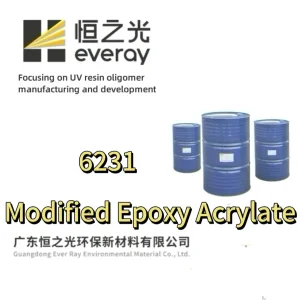
Buy Fast Curing Modified Epoxy Acrylate Resin 6231 for High Gloss UV Coatings and Inks Manufacturer, Supplier
View Product Details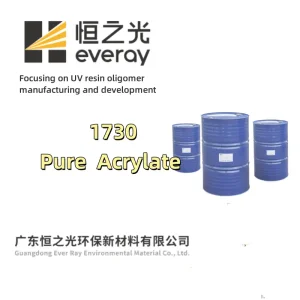
High-Quality Fast curing and strong adhesion 1730 UV resin suitable for vacuum plating Manufacturer, Suppliers
View Product Details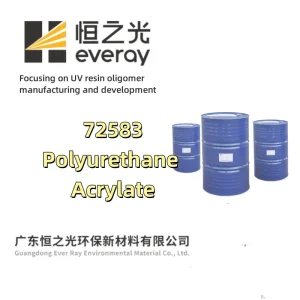
High-Quality Low heat release 72583 polyurethane UV resin for nail extension glue and 3C coating Supplier, Product
View Product Details
Buy 5335B UV-resin in UV color inks, varnishes, and offset inks Manufacturers, Products
View Product Details
Buy Polyester Acrylate 5377A – The Ideal Choice for Flexographic UV Inks Suppliers, Factory
View Product Details
High-Quality 5403-3F Polyester Acrylate, which can achieve the best water-ink balance in UV ink Manufacturers, Products
View Product Details
Wholesale Aromatic PA UV-resin 7113A for UV Vacuum-metallization and Plastic-coating Manufacturers, Suppliers
View Product Details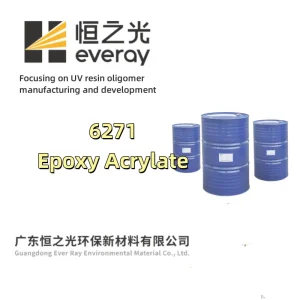
High-Quality Durable 6271 UV resin: very suitable for UV adhesive with low yellowing risk Suppliers, Products
View Product Details
Compliance & Verification
Enterprise Sourcing: Standards, Regulatory Audits & Scalability
Meeting the strict environmental and mechanical criteria mandated by multinational conglomerates, luxury leather houses, and institutional supply chains.
ZDHC & REACH Compliance
Every product series adheres strictly to the Zero Discharge of Hazardous Chemicals (ZDHC) Manufacturing Restricted Substances List (MRSL V3.1) and EU REACH Annex XVII. Formulations are systematically verified by third-party testing institutes (SGS, TÜV Rheinland) to be free of alkylphenol ethoxylates (APEO), short-chain chlorinated paraffins (SCCP), polycyclic aromatic hydrocarbons (PAH), and restricted heavy metals (lead, cadmium, hexavalent chromium).
Rigorous Factory Auditing
Our Yunfu production hub operates under certified ISO 9001:2015 (Quality Management), ISO 14001:2015 (Environmental Management), and ISO 45001:2018 (Occupational Health & Safety) frameworks. We actively support and participate in international brand corporate social responsibility (CSR) audits including SMETA / Sedex Pillar 4 verification, providing verifiable transparency from raw monomer intake to final export packaging.
OEM Private Label & Packaging
We provide full-spectrum turnkey OEM contract manufacturing for international chemical formulators, paint brands, and leather distributors. Packaging capabilities span 25 kg anti-static fluorinated drums, 200 kg steel drums with phenolic inner linings, up to 1,000 kg Intermediate Bulk Containers (IBC totes) with inert nitrogen seals. Private label formulations can be custom tailored for viscosity, dry time, sheen rating, and haptic signature.