
Industrial Grade UV Curable Resins & Acrylate Oligomers
High-reactivity bisphenol-A epoxy acrylates, aliphatic and aromatic urethanes, and specialized dual-cure resin polymers formulated for high-yield production runs.
Buy Scratch resistant 4600 hyperbranched acrylic UV resin :suitable for varnish and ink Suppliers, Factory
Product Specifications
High-Quality Waterborne 70251 UV-resin for 3D Printing,UV-ink and UV Wood-coatings Manufacturers, Suppliers
Product Specifications
Wholesale A Versatile Solution for High-Efficiency Curing Applications: Epoxy Acrylate 92001 Manufacturer, Product
Product Specifications
Buy Fast Curing Modified Epoxy Acrylate Resin 6231 for High Gloss UV Coatings and Inks Manufacturer, Supplier
Product Specifications
Wholesale 72017 Photo-Thermal Dual-Curing Polyurethane Acrylate Resin | Low Shrinkage & High Toughness Oligomer for 3D Printing Supplier, Products
Product Specifications
Buy Durable UV furniture coating: 7200-1 Aliphatic polyurethane acrylate UV Resin Factory, Products
Product Specifications
Buy 61163 High Solid Low Viscosity Anti-Yellowing Modified Epoxy Acrylate Resin For UV Coating Factory, Factories
Product Specifications
Wholesale 7317 High Reactivity Flexible Polyurethane Acrylate Oligomer for UV Wrinkle & Snowflake Ink Product, Products
Product SpecificationsEpoxy Acrylate & Cationic Photopolymerization Fundamentals
An authoritative evaluation of crosslink kinetics, radical propagation, conversion efficiencies, and volumetric shrinkage control in industrial UV curing formulations.
In modern industrial coating, ink, adhesive, and 3D printing applications, ultraviolet (UV) curing epoxy resin systems represent the pinnacle of speed, mechanical integrity, and chemical resistance. At a molecular level, epoxy UV curing operates primarily through two distinct photochemical mechanisms: free-radical initiated epoxy acrylates (EA) and cationic ring-opening polymerization of cycloaliphatic epoxides. Understanding the fundamental thermodynamics and polymerization mechanics of these architectures is essential for formulators seeking to balance glass transition temperature (Tg), optical clarity, interlaminar adhesion, and volumetric contraction.
Epoxy acrylates—typically synthesized through the addition reaction of acrylic acid to bisphenol-A diglycidyl ether (DGEBA)—combine the rapid crosslinking kinetics of the acrylate double bond with the rigid phenylene backbone of the epoxy pre-polymer. The resulting three-dimensional matrix exhibits exceptional surface hardness (pencil hardness up to 4H–6H), high solvent resistance (withstanding >200 MEK double rubs), and superior tensile strength. However, the high reactivity of standard DGEBA diacrylates often introduces high crosslink density, leading to intrinsic volumetric shrinkage (typically 6% to 10%) and substrate embrittlement. To mitigate these phenomena, advanced modified epoxy acrylates incorporate aliphatic chains, caprolactone extensions, or hyperbranched dendrimers that introduce steric flexibility, dramatically enhancing elongation-at-break without sacrificing line speed.
Technological Roadmap: From Mercury Arc Lamps to LED-Cured Sustainable Chemistries
Mapping the paradigm shifts in photoinitiator absorption spectra, bio-based monomer integration, and dual-stage polymerization architectures.
Narrowband UV-LED Adaptation (365–405nm)
Traditional mercury vapor lamps emit a broadband spectrum with substantial infrared heat dissipation. Modern automated coating lines demand monochromatic UV-LED sources (365nm, 385nm, 395nm, and 405nm). Our latest modified epoxy acrylates are molecularly tuned with Type I acylphosphine oxide (BAPO/TPO) systems to maximize deep-layer penetration and prevent oxygen inhibition at high line speeds (>60 m/min).
Photo-Thermal Dual-Curing Hybrid Networks
Overcoming shadow-zone curing deficiencies in three-dimensional optoelectronic assemblies and complex composite laminates: our proprietary dual-cure photo-thermal oligomers combine a rapid primary UV radical stage (curing >85% within seconds) with a latent secondary thermal amine/anhydride addition mechanism, guaranteeing 100% cure throughout non-illuminated cavities.
Bio-Based & Low-Carbon Acrylate Syntheses
Aligning with Scope 1–3 decarbonization targets, our R&D pipeline synthesizes epoxy oligomers utilizing isosorbide, epoxidized soybean oil (ESBO), and cashew nut shell liquid (cardanol) derivatives. These sustainable matrices yield bio-carbon contents exceeding 40% while matching petroleum-derived mechanical modulus, chemical inertness, and ultra-low yellowing indexes (ΔE < 0.5).
Macro Industry Solutions: Targeted Substrate & Process Matching
Solving complex material challenges across consumer electronics, industrial manufacturing, precision optoelectronics, and micro-additive production.
3C Electronics & Wearables
Direct roll-to-roll and robotic spray coatings for smartphone frames, tablets, and wearable housings. Engineered with modified aliphatic epoxy acrylates delivering exceptional artificial perspiration resistance, anti-fingerprint compatibility, and zero delamination under RCA abrasion (>300 cycles at 175g load).
- Substrates: Polycarbonate (PC), PMMA, ABS, Aluminum
- Adhesion: 5B cross-hatch rating after thermal humidity aging
- Recommended: 61163 High Solid & 4600 Hyperbranched
Additive Manufacturing / 3D Photopolymers
Formulated for high-resolution stereolithography (SLA), digital light processing (DLP), and LCD/MSLA systems. Low viscosity (<350 mPa·s at 25°C) promotes rapid recoating, while low-shrinkage oligomer matrices eliminate micro-warping in large-format engineering models and dental prosthetics.
- Key Property: Heat Deflection Temperature (HDT) >110°C
- Tensile Modulus: 2,400–3,200 MPa
- Recommended: 72017 Dual-Cure & 70251 Waterborne
High-Speed Offset & Flexographic Inks
Optimized ink transfer, pigment wetting, and water-ink balance for industrial web offset, screen, and flexo presses operating up to 400 m/min. Incorporates amine synergists to eliminate tackiness caused by atmospheric oxygen quenching in thin films (<3 µm).
- Viscosity Range: 15,000–35,000 mPa·s at 25°C
- Fast Surface Tack-Free time: <0.05 seconds under UV-LED
- Recommended: 92001 Acrylate & 6231 Fast-Cure
Flooring, Wood & Industrial Packaging
Roller-coater and curtain-coater ready formulations designed for engineered hardwood, luxury vinyl tile (LVT), and high-barrier folding cartons. Offers high solid content (>99%), exceptional sandability for primers, and scratch-resistant topcoats capable of passing 1,000 cycles Taber abrasion.
- Environmental: Zero VOC release; solvent-free
- Surface Hardness: 4H–6H pencil hardness rating
- Recommended: 7200-1 Aliphatic PUA & 7317 Oligomer
| Resin Chemistry Family | Primary Monomer / Oligomer Base | Tensile Strength (MPa) | Hardness (Pencil) | UV Cure Mechanism | Primary Industrial Sector |
|---|---|---|---|---|---|
| Standard Epoxy Acrylate | Bisphenol-A Diglycidyl Ether Diacrylate | 55 – 70 | 3H – 5H | Free Radical | Overprint Varnishes, Wood Primers, Paper OPV |
| Modified Epoxy Acrylate | Amine-Modified / Aliphatic-Doped EA | 45 – 60 | 2H – 4H | Free Radical / Synergy | UV Silk-Screen Inks, PCB Solder Mask, 3C Plastic |
| Dual-Cure Polyurethane Acrylate | IPDI / HDI Urethane Backbone + Blocked Epoxy | 65 – 85 | 2H – 3H | Photo-Thermal Hybrid | Automotive Sensors, Structural Adhesives, Micro-Optics |
| Hyperbranched Acrylate | Polyester/Polyether Dendritic Core | 70 – 95 | 5H – 6H | Free Radical (Ultra-Dense) | Anti-Scratch Topcoats, Optical Films, Display Windows |
| Waterborne UV Resin | Anionic / Non-ionic PUA Dispersion | 30 – 45 | HB – 2H | Evaporative + Radical | Eco-Friendly Wood Finishes, Leather Coats, Spray Lines |
China Factory 4.0: Supply Chain Resilience, Automation & Batch Uniformity
How fully digitized DCS synthesis reactors, integrated upstream feedstock pipelines, and real-time analytical chromatography eliminate batch variance for Tier-1 multinationals.
Upstream Chemical Integration
By leveraging direct upstream supply agreements and proximity to major regional petrochemical refineries producing acrylic acid, epichlorohydrin, and bisphenol-A, our manufacturing base insulates global procurement partners from volatile monomer market swings. This structural cost advantage translates directly into consistent price stability and long-term contract reliability.
DCS Automated Closed-Loop Reactors
Our Yunfu production hub operates multi-ton stainless steel reactors governed by Yokogawa Distributed Control Systems (DCS). Exothermic ring-opening reactions between epoxy oxirane groups and carboxyl functionalities are regulated within ±0.5°C, ensuring narrow molecular weight distribution (Mw/Mn < 1.35) and eliminating the risk of premature thermal polymerization.
Rigorous Analytical QA/QC Laboratories
Every single manufactured drum passes automated testing including Gel Permeation Chromatography (GPC) for oligomer molecular weight, Gas Chromatography-Mass Spectrometry (GC-MS) for residual monomer tracing (<0.05%), Brookfield cone-and-plate rheology, and Karl Fischer coulometric titration ensuring moisture levels remain strictly below 0.1%.
Global Enterprise Procurement Requirements: Supplier Qualification Matrix
A structured operational roadmap designed for chief procurement officers, supply chain managers, and laboratory formulation directors sourcing chemical raw materials.
Procuring UV curable epoxy resins on an international scale requires a rigorous validation protocol that extends far beyond standard pricing negotiations. Chemical consistency directly dictates machine uptime on high-speed industrial converting lines. A 10% shift in resin viscosity or an acid value excursion can trigger coating misting, pigment flocculation, or incomplete cure, resulting in substantial production losses. Global procurement executives utilize our four-stage supplier onboarding protocol:
Phase 1: Analytical Audit & TDS Review
Procurement teams cross-verify Technical Data Sheets (TDS) against specific application benchmarks: acid value (<1.0 mg KOH/g), epoxy equivalent weight (EEW), hydroxyl value, and specific gravity (typically 1.12–1.20 g/cm³). Complete IR spectral fingerprint matching is provided for every grade.
Phase 2: Bench-Scale Formulation Trial
We supply verified 1kg–5kg pilot samples dispatched via specialized hazardous/non-hazardous express courier alongside certified lot-specific Certificates of Analysis (CoA). Formulators evaluate compatibility with reactive diluents (TMPTA, TPGDA, DPGDA) and evaluate photobleaching curves.
Phase 3: Pilot Scale Run & Line Audit
Upon laboratory sign-off, a 200kg drum trial validates process window behavior on production machinery: evaluating shear thinning, thermal stability during recirculation, roller transfer leveling, and cured adhesion under variable ambient humidity conditions (30% to 85% RH).
Phase 4: Commercial Contract & Safety Stock
Long-term framework agreements incorporate buffer inventory allocations in bonded regional warehouses, guaranteed 15-day order dispatch SLA, and custom packaging solutions ranging from 25kg HDPE pails, 200kg epoxy-lined steel drums, up to 1,000kg ISO-certified IBC totes.
Localization Support, Regulatory Compliance & ESG Safeguards
Ensuring full market compliance across European, North American, and Asia-Pacific regulatory regimes with transparent environmental stewardship.
Global Chemical Inventories & REACH Compliance
Our complete epoxy resin and acrylate oligomer portfolio complies with European EU REACH (Registration, Evaluation, Authorisation and Restriction of Chemicals), including SVHC (Substances of Very High Concern) screening. Products are registered under the US Toxic Substances Control Act (TSCA), IECSC (China), and KECL (South Korea), enabling friction-free customs clearance and uninterrupted transcontinental logistics.
RoHS 3.0, Halogen-Free & VOC Elimination
Meeting the stringent environmental criteria of leading consumer electronics brands, all grades are certified free of lead, mercury, cadmium, hexavalent chromium, PBBs, and PBDEs under EU RoHS Directive 2011/65/EU and its amendment (EU) 2015/863. Halogen content is rigorously kept below 900 ppm (Cl and Br) and total halogens under 1,500 ppm, conforming to IEC 61249-2-21 standards.
Dedicated Cross-Border Technical Field Support
Technical integration is sustained by our dedicated Application Engineering Department. We provide localized multi-lingual GHS-standard 16-section Safety Data Sheets (SDS), technical starting formulation recipes, and on-site troubleshooting for rheological matching, lamp irradiance calibration, and curing line optimization across customer facilities worldwide.
Technical Q&A: Solving Critical UV Epoxy Formulation Challenges
Direct answers to complex photochemical, rheological, and mechanical problems encountered by industrial chemical formulators.
How do you overcome severe oxygen inhibition in thin-film epoxy acrylate curing?
Atmospheric oxygen rapidly quenches free radicals on the coating surface, generating stable, non-propagating peroxy radicals (ROO•) that result in tacky surfaces. Effective strategies include: (1) Incorporating copolymerizable amino acrylate synergists or active tertiary amines which donate α-hydrogens to regenerate initiating carbon radicals while consuming oxygen; (2) Increasing photoinitiator concentration using high-surface-activity Type I photoinitiators (e.g., Omnirad 184 / TPO); (3) Formulating with hyperbranched acrylates to increase reactive vinyl density; or (4) Implementing nitrogen inerting during high-speed printing/coating runs.
What is the core distinction between Free-Radical Epoxy Acrylates and Cationic Epoxy Resins?
Free-radical epoxy acrylates cure in milliseconds via carbon double bonds, deliver high hardness and solvent resistance, but exhibit higher shrinkage (5–8%) and oxygen sensitivity. Cationic UV curing utilizes cycloaliphatic epoxides with onium salt photoacid generators (PAGs); it is entirely immune to oxygen inhibition, exhibits exceptionally low shrinkage (<2%), and continues to "dark-cure" after exposure. However, cationic curing is slower, highly sensitive to ambient relative humidity (>60% RH retards cure), and cannot be catalyzed on basic/alkaline substrates.
How can formulators solve the brittleness and poor adhesion of epoxy acrylates on non-polar plastics (PP/PE)?
Standard bisphenol-A epoxy acrylates have high crosslinking density and high shrinkage, which concentrates internal interfacial stress and leads to delamination on untreated polyolefins. To achieve 5B adhesion: (1) Blend with 20–40% flexible aliphatic polyurethane acrylates (e.g., Ever Ray 7200-1) or pure acrylic oligomers with low glass transition temperatures; (2) Introduce adhesion-promoting monomers such as chlorinated polyester acrylates or phosphate methacrylate functional monomers; (3) Utilize plasma, corona, or flame pre-treatment on PP/PE substrates to raise surface energy above 42 dynes/cm.
Why does post-cure yellowing occur in epoxy UV formulations, and how is it prevented?
Yellowing stems from two distinct factors: photoinitiator photolysis decomposition products (especially benzophenone and alpha-amino ketones) and the presence of aromatic rings in bisphenol-A structures which form quinoid chromophores under heat or solar UV exposure. For water-clear or non-yellowing topcoats, formulators must switch to hydrogenated bisphenol-A epoxy acrylates, aliphatic polyurethane acrylates, or cycloaliphatic epoxies, combined with non-yellowing photoinitiators (Omnirad 2959 or 819) and hindered amine light stabilizers (HALS / UVA benzotriazoles).
What storage protocols ensure a 12-month shelf life without premature gelation?
UV curable acrylate resins contain reactive double bonds stabilized by minute quantities (100–300 ppm) of phenolic inhibitors such as MEHQ (4-methoxyphenol). MEHQ strictly requires dissolved atmospheric oxygen to actively prevent radical chain reactions. Resins must be stored in dark, opaque amber HDPE or epoxy-phenolic lined drums at 15°C–25°C. Never store under pure nitrogen blanketing, as the absence of oxygen quickly deactivates MEHQ, inducing spontaneous runaway polymerization.
What is the advantage of using Waterborne UV-Curable Resins (e.g., 70251 / 70601)?
Waterborne UV polyurethane/epoxy acrylate dispersions use water as the primary viscosity-reducing medium instead of monomer diluents like TPGDA or HDDA. This allows formulators to achieve ultra-thin, natural-feel film thicknesses (5–10 µm) with zero monomer odor and near-zero VOC emissions. After a brief thermal flash-off stage to evaporate water, the film undergoes instantaneous UV crosslinking, yielding the mechanical and chemical resistance of traditional UV curable solids.
High-Performance UV Oligomers & Specialty Formulation Resins
Ultra-fast curing polyester acrylates, non-yellowing polyurethane oligomers, and high-tenacity peelable resin solutions engineered for mission-critical manufacturing.
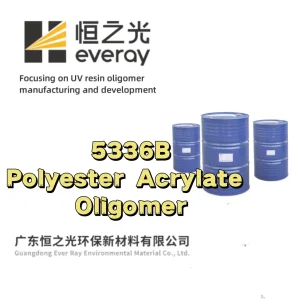
Buy 5336B High-Performance Polyester Acrylate Resin | Ultra-Fast Cure for UV Offset & Flexo Inks Supplier, Factory
Product Specifications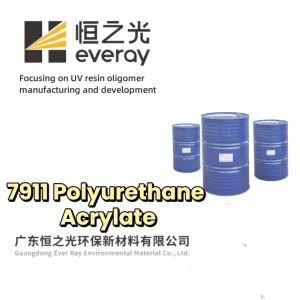
Wholesale Polyurethane Acrylate 7911 – The Ideal Choice for High-Performance UV Coatings! Factories, Product
Product Specifications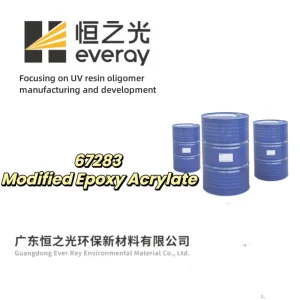
Wholesale 67283:Rapid-setting yellowing-resistant modified epoxy acrylate solution Manufacturers, Supplier
Product Specifications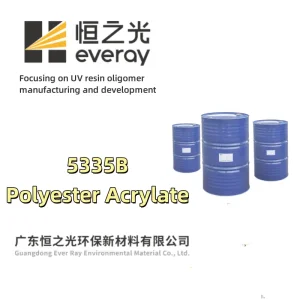
Buy 5335B UV-resin in UV color inks, varnishes, and offset inks Manufacturers, Products
Product Specifications
Wholesale Waterborne 70601 UV-resin for 3D Printing,UV-ink and UV Wood-coatings Manufacturers, Products
Product Specifications
Wholesale 5403DF:Ideal polyester acrylic UV resin for UV and flexographic printing applications Manufacturers, Product
Product Specifications
Wholesale 72923 Fast-Cure Non-Yellowing Polyurethane Acrylate Resin for UV Peelable adhesive Manufacturers, Factories
Product Specifications
Wholesale Multifunctional 7600 polyurethane acrylate oligomer for UV coatings and inks Product, Products
Product Specifications