Featured Polymer Solutions
Industrial UV Curable Epoxy Oligomers & Formulations
Engineered for instantaneous cross-linking, extreme chemical resistance, and non-yellowing durability across multi-substrate industrial platforms.
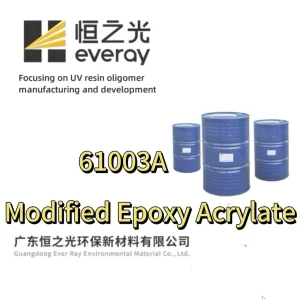
61003A Fast Curing Tough Epoxy Acrylate Resin
Explore Product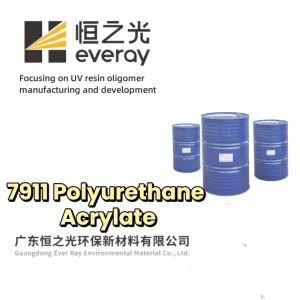
Wholesale Polyurethane Acrylate 7911 For UV Coatings
Explore Product
Wholesale Low Viscosity 6300 Modified Epoxy Acrylate
Explore Product
Wholesale 1762 Anti-Yellowing UV Adhesive Resin
Explore Product
High-Quality 6203F UV Resin for Metal Coating & Ink
Explore Product
High-Quality 70250 UV Resin for 3D Printing & Wood
Explore Product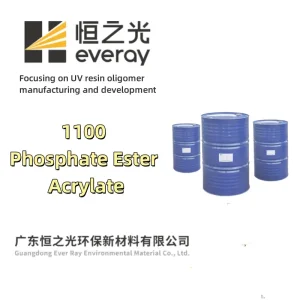
Strong Adhesion Acrylate Oligomer 1100 UV Resin
Explore Product
Engineering Whitepaper
Epoxy Resin Description & Macromolecular Dynamics
Exploring the chemical morphology of bisphenol-A based epoxy acrylate prepolymers, photolytic activation kinetics, and the ongoing transition from traditional solvent systems to zero-VOC photopolymer networks.
Macromolecular Structure
UV curable epoxy acrylate resins are typically synthesized via the nucleophilic ring-opening addition of acrylic acid to diglycidyl ethers of bisphenol-A (DGEBA). This distinct chemical backbone imparts immense mechanical rigidity, thermal glass transition temperatures (Tg) exceeding 90°C, and unmatched adhesion due to residual polar hydroxyl groups.
Free Radical Kinetics
Upon irradiation by UV-LED or mercury vapor discharge, free-radical photoinitiators cleave within nanoseconds. Ever Ray's modified oligomers optimize electron density across terminal acrylic double bonds, effectively counteracting atmospheric oxygen inhibition at line speeds exceeding 80 m/min without film hazing.
Yellowing Mitigation
Traditional epoxy resins degrade into conjugated quinoid structures under actinic radiation. By chemically introducing hyperbranched cores, hydrogenated aromatic rings, and aliphatic spacer blocks, Ever Ray produces grades like 61003A that retain ΔE < 1.5 even under accelerated QUV weathering.
Global Procurement Intelligence
Global Procurement Demand Shifts in Radiation Curing
Cross-border procurement directors and OEM chemical formulators demand supply security, tighter viscosity tolerances, and complete regulatory compliance across diverse macro-regions.
Zero-VOC Mandates
Environmental standards such as the EU Green Deal and EPA directives are forcing chemical applicators to discard solvent-based systems. UV curable 100% solid oligomers deliver equivalent film builds without volatile losses or heavy drying infrastructure.
Viscosity Batch Precision
In automated robotic sprayers, high-speed gravure roll-coaters, and SLA 3D printing vats, viscosity drift results in catastrophic defects. Ever Ray guarantees automated real-time rheological feedback, securing ±3% viscosity limits across metric-ton batches.
Supply Security & Multi-Sourcing
Relying on single-source oligomer synthesis exposes multinational formulators to severe geopolitical risks. Operating a 40,000 m² state-of-the-art facility in Yunfu, Guangdong, Ever Ray holds over 10 automated reactor vessels running continuous synthesis schedules.
2006
Established Year
40,000+
Plant Area (m²)
10+
Production Lines
10+
Invention Patents
100+
Skilled Chemists
Cross-Sector Engineering
Industrial Problem-Solving Architecture
From microelectronic encapsulation to high-volume coil metal pre-coatings, our tailored epoxy acrylate resin matrix resolves typical field failures.
3C Consumer Electronics
Combines modified epoxy acrylates with aliphatic polyurethanes to produce optical-grade clear coats. Imparts pencil hardness up to 4H while retaining cross-hatch adhesion (0B/5B) on polycarbonate (PC), ABS, and PMMA housings subjected to cyclic artificial perspiration.
Additive SLA/DLP Printing
Low-viscosity modified oligomers formulate stereolithography resins with rapid green-state photo-conversion. Minimizes shrinkage stress below 1.2%, yielding high tensile modulus parts capable of dimensional stability during post-cure thermal conditioning.
UV Metal Coating & Packaging
Addresses the thermal expansion mismatch between rigid resins and tinplate or aluminum. Grades like 6203F leverage flexible backbone chain-extenders that withstand severe post-curing deep drawing, stamping, and direct food-contact heat seal processes.
Industrial Wood & Floor Sealers
Fast-setting high-solids epoxy acrylates provide deep wood pore penetration, grain enhancement, and instant sandability within 5 seconds under roller coating UV lamps, delivering the perfect mechanical key for PU topcoats.
Regulatory & Quality Assurance
Global Compliance & Formulation Support
Strict analytical characterization (GPC, FTIR, HPLC) combined with global inventory certifications ensure safe, predictable chemical imports.
REACH, RoHS & TSCA
All exported oligomers and reactive diluents are fully pre-registered or listed on TSCA (USA), EU REACH, IECSC (China), and KECL (Korea). Each export consignment ships accompanied by multilingual GHS-compliant Safety Data Sheets and Certificate of Analysis (CoA).
Zero Residual Monomer
Employing proprietary low-temperature vacuum degassing and molecular filtration, residual acrylic acid levels are kept below 0.05%, drastically minimizing occupational skin irritation (Draize test scores) and product odor in finished UV curable prints.
Bilingual Technical Assistance
Our applications lab, staffed by senior PhD polymer chemists, offers formulation matching, cure speed optimization with dynamic differential scanning calorimetry (Photo-DSC), and customized monomer dilution profiles via direct video consults.
Innovation Horizon
Next-Gen Epoxy Acrylate Technology Roadmap
Pioneering sustainable chemistry: from bio-derived carbon backbones to ultra-long wavelength LED photon harvesting.
PHASE I: 2025-2026
Bio-Based Epoxy Feedstocks
Synthesizing oligomers utilizing epoxidized soybean oil (ESBO) and cashew nut shell liquid (CNSL) cardanol backbones to achieve >40% renewable carbon content without sacrificing mechanical glass transitions.
PHASE II: 2026-2027
395nm/405nm LED Optimization
Engineering hyper-reactive terminal double bonds designed specifically for low-energy LED lamps. Eliminates ozone emissions and reduces operational electricity expenditure across factory roll-coaters by 65%.
PHASE III: 2027-2028
Self-Healing Polymeric Networks
Incorporating dynamic covalent disulfide bonds within modified epoxy matrices to create self-healing, scratch-resistant surface coatings capable of surface restoration under ambient sunlight exposure.
PHASE IV: 2029-2030
Recyclable Thermoset Chemistry
Developing hydrolytically degradable acetal linkages in crosslinked networks, allowing electronic potting composites and fiber-reinforced composite laminates to be disassembled and recycled at end-of-life.
Technical Clarifications
Frequently Asked Questions for Formulation Engineers
Authoritative chemical answers to critical procurement and production troubleshooting inquiries.
What distinguishes epoxy acrylate from aliphatic polyurethane acrylate?
Standard bisphenol-A epoxy acrylates provide superior surface hardness, rapid crosslinking conversion, and unmatched chemical/solvent resistance at a cost-efficient price point. However, aliphatic polyurethane acrylates (PUA) utilize isocyanate chemistry free of aromatic rings, conferring superior tensile elongation, flexibility, and long-term non-yellowing UV stability for outdoor coatings and cosmetic nail gels.
How does Ever Ray solve oxygen inhibition in thin-film printing inks?
In thin ink layers (under 10 microns), atmospheric oxygen diffuses into the liquid film faster than initiation occurs, scavenging free radicals into inactive peroxy radicals. Ever Ray incorporates copolymerizable amino acrylate oligomers and active amine synergists into the resin blend. These molecules donate active alpha-hydrogens, consuming dissolved oxygen and regenerating propagating alkyl radicals to secure rapid tack-free surface cures.
Which oligomer choice is recommended for boiling-water-resistant glass primer?
Direct glass adhesion normally suffers from interfacial hydrolytic debonding when exposed to moisture. Formulations require special functional acrylates (such as modified pure acrylates or phosphoric-acid functionalized epoxy acrylates) coupled with silane crosslinkers. Grades like 5830A provide high hydroxyl density that forms stable covalent siloxane bonds with the glass substrate, passing continuous 2-hour boiling-water immersion testing without flaking.
What is the shelf life and optimal storage condition for modified epoxy acrylates?
Stored in unopened original black opaque HDPE containers at 15°C to 28°C away from direct sunlight, thermal sources, and strong oxidizers, our epoxy acrylate resins maintain guaranteed stability for 12 months. All grades are formulated with calibrated amounts of radical scavengers (MEHQ) that consume spontaneous thermal radicals without impeding photo-induced UV polymerization.
Extended Catalog
High-Performance Acrylates & Specialty Polymers
Browse our extended product portfolio for high-tensile bonding, thermal cycle stability, and advanced substrate coating formulations.
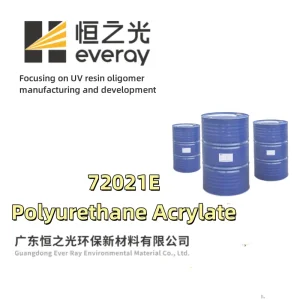
72021E Multi-Substrate Bonding UV Resin
Explore Product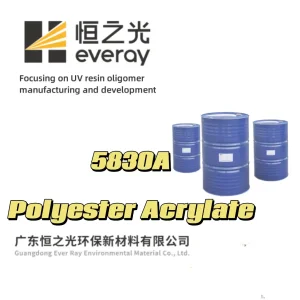
5830A High Hydroxyl Polyester Acrylate Resin
Explore Product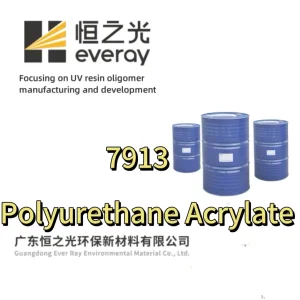
7913 High Reactivity Anti-Fouling PUA Resin
Explore Product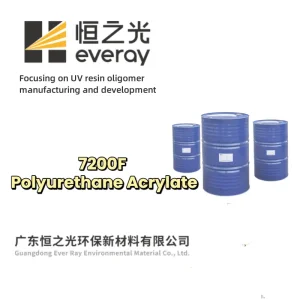
Durable 7200F Heat & Cold Resistant PUA
Explore Product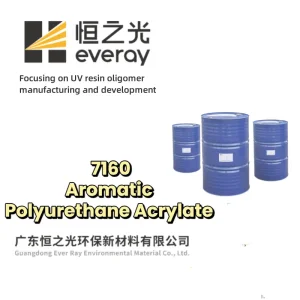
High-Quality Aromatic PA UV Resin 7160
Explore Product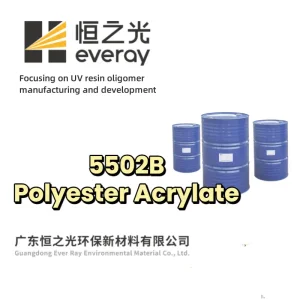
Polyester Acrylate 5502B Fast Reactivity Resin
Explore Product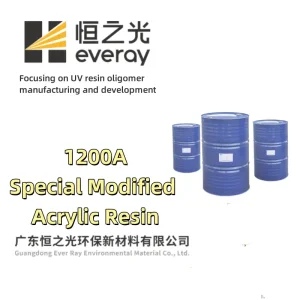
1200A UV Resin For Primer & Metal Substrates
Explore Product