
High-Performance UV Oligomers & Curing Paint Resins
Explore our core radiation-curable resins engineered for high surface reactivity, extreme chemical resistance, and non-yellowing durability across industrial finishing lines.
Photopolymerization Dynamics: The Engineering of Curing Paint
Understanding how radiation-curable coatings transition from liquid monomer/oligomer dispersions into crosslinked, high-modulus polymers within fractions of a second.
In high-throughput manufacturing, conventional solvent-borne and thermal-curing coatings present severe bottlenecks: massive volatile organic compound (VOC) emissions, extensive drying tunnel footprints, and protracted dwell times that elevate energy consumption. Industrial curing paint—predominantly formulated using ultraviolet (UV), electron beam (EB), or dual-cure mechanisms—bypasses thermal evaporation entirely. Instead, it relies on light-induced free-radical or cationic crosslinking reactions that occur in milliseconds at ambient temperatures.
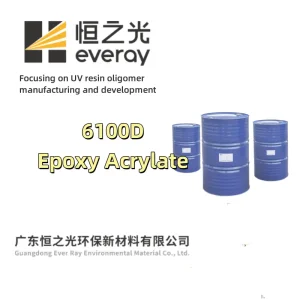
At the core of this chemical engineering lies the acrylate oligomer backbone. As established by Guangdong Ever Ray Environmental Material Co., Ltd. (operating since 2006 in Guangdong, China), the polymer backbone directly governs film attributes such as tensile strength, glass transition temperature ($T_g$), crosslink density, and substrate adhesion. Epoxy acrylates contribute exceptionally rigid, chemical-resistant networks through bisphenol-A aromatic rings, making them the standard for sanding primers, wood finishes, and overprint varnishes. Conversely, aliphatic and aromatic polyurethane acrylates (PUA) integrate carbamate (-NH-COO-) linkages that provide elastomeric flexibility, superior elongation, and unmatched impact dampening.
Free-Radical UV Photopolymerization
Utilizing high-reactivity acrylates, photoinitiators split under UV irradiation (mercury arc or 365–405 nm LED) to generate radicals that attack terminal carbon-carbon double bonds (C=C).
- Sub-second curing speeds (>60 m/min line rates)
- Zero VOC release under 100% solid formulation
- Susceptible to atmospheric oxygen inhibition
Cationic & Dual-Cure Hybrid Systems
Triggered by sulfonium or iodonium photo-acid generators (PAGs) to crosslink cycloaliphatic epoxides and oxetanes, or hybridized with secondary moisture/thermal cures.
- Immune to atmospheric oxygen inhibition
- Extremely low volumetric cure shrinkage (<2%)
- Shadowed area curing via thermal secondary cure
Waterborne Polyurethane Acrylate (WPUA)
Dispersing acrylated polyurethane pre-polymers into aqueous phases without external surfactants via internal ionic groups (such as DMPA carboxylates).
- Minimal film build with soft, natural hand-feel
- Total elimination of reactive diluent monomer odor
- Compliance with strict corporate ESG standards
Strategic Advantages of China's UV Curing Paint Ecosystem
How upstream petrochemical integration, precision chemical parks, and advanced synthesis capacity position Chinese manufacturers as dominant partners for global supply chains.
The global radiation curing market has undergone a definitive geographic realignment over the past two decades. What was historically concentrated in Western Europe and North America has migrated to China’s advanced chemical manufacturing clusters, notably within the Greater Bay Area of Guangdong. This evolution is not simply a matter of competitive labor economics; it is driven by fully integrated raw material supply chains, rapid chemical synthesis turnaround times, and state-of-the-art chemical process automation.
Vertical Upstream Feedstock Integration
China accounts for over 45% of global acrylic acid, epichlorohydrin, and diisocyanate (TDI, IPDI, HDI) precursor capacities. Manufacturing bases located near primary petrochemical refineries benefit from direct pipeline delivery of raw materials, buffering global clients against supply disruption, raw material allocation crises, and price volatility.
Agile Custom Molecular Synthesis
Facilities like Ever Ray’s Yunfu Production Base feature modular reactor arrays ranging from 1,000L pilot reactors to 20,000L industrial units. Supported by over 10 invention and utility patents, our chemists can alter acrylate oligomer functionality, graft hyperbranched cores, or tailor polyether/polyester ratios within 14-day development cycles.
Rigorous Environmental Safety Parks
Operating inside specialized, certified chemical development parks (such as Dawan Industrial Park in Yunfu) ensures strict compliance with national ecological governance, 24/7 automated waste treatment, VOC incineration, and unbroken operational continuity—shielding procurement teams from unscheduled plant shutdowns.
Global Technology Trends Shaping Radiation Curing Paint
From UV LED narrow-spectrum migration to regulatory bio-sustainability demands, discover the technological shifts redefining performance benchmarks for commercial formulators.
The industrial coating industry is witnessing a structural transformation driven by two powerful catalysts: environmental regulation (such as EU REACH, RoHS 3.0, and strict limits on carbon footprint) and the engineering transition toward energy-efficient narrow-band UV LED curing sources. Suppliers must continually innovate their oligomer structures to accommodate lower photon energy levels while satisfying aggressive anti-scratch, anti-yellowing, and adhesion targets.
1. Transition from Mercury Arc to UV-LED
Traditional medium-pressure mercury arc lamps emit broadband UV (200–450 nm) alongside extensive infrared radiation (heat). The rapid shift toward 365 nm, 385 nm, and 395 nm UV-LED sources reduces line energy usage by up to 75% and eliminates thermal distortion on heat-sensitive substrates like thin PVC, OPP films, and delicate plastic polymers. To prevent tacky surfaces caused by oxygen inhibition under narrow LED wavelengths, Ever Ray engineers hyperbranched acrylates and amino-functional acrylate synergists that accelerate surface cure kinetics without migrating photoinitiators.
2. Low-Migration & Food-Contact Regulations
Global packaging converters face intense regulatory scrutiny concerning photoinitiator fragments and unreacted monomers migrating into packaged foodstuffs, cosmetics, and pharmaceuticals (Swiss Ordinance Annex 10 and Nestlé Guidance). Advanced factories are shifting synthesis focus toward polymeric photo-initiators, self-initiating oligomers, and hyperbranched structures whose large molecular weight ($M_w > 2000$) completely locks them within the crosslinked polymer matrix, virtually eliminating extractables.
3. Decarbonization & Bio-Based Acrylates
Enterprise ESG targets have generated massive demand for bio-content verification (ASTM D6866). Upstream chemists are replacing petroleum-derived polyols and carboxylic acids with derivatives of soy, castor oil, and tall-oil fatty acids. Formulating bio-based polyurethane and polyester acrylates with up to 45% renewable carbon allows tier-1 coating suppliers to deliver measurable Scope 3 emissions reductions while matching or exceeding the tensile and hardness metrics of synthetic equivalents.
Industrial Application Matrix & Chemistry Selection
Matching specific oligomer functional classes to mechanical, optical, and adhesive demands across demanding commercial substrates.
| Target Application | Predominant Substrate | Key Performance Demands | Recommended Oligomer Chemistry | Critical Film Property |
|---|---|---|---|---|
| 3C Consumer Electronics | PC, ABS, PC/ABS, PMMA | Pencil hardness ≥3H, anti-sweat, zero yellowing, RCA abrasion >300 cycles | Aliphatic PUA + Hyperbranched | High crosslink density balanced with anti-brittle flexibility |
| Industrial Wood & Flooring | Solid Hardwood, MDF, Bamboo, LVT | Fast sanding sealer cure, intercoat adhesion, steel wool scratch resistance | Epoxy Acrylate + Aromatic PUA | Excellent solvent release and immediate stackability within 5s |
| Graphic Arts & Packaging | Coated Paper, BOPP, PET, Foil | Ink-water balance in offset, pigment wetting, extreme surface cure speed | Polyester Acrylate + Amino Synergist | High gloss, zero tack under high-speed rewinding (>150 m/min) |
| Glass & Metal Coating | Borosilicate Glass, Aluminium, Tinplate | Boiling water resistance >2h, cross-hatch 5B, anti-corrosive barrier | Special Functional / Adhesion Promoted | Direct covalent bonding with inorganic silanol / metal oxide sites |
| Cosmetic Nail Gels | Natural Keratin Nail Plate | Non-yellowing, acetone soak-off capability, low exotherm skin safety | Aliphatic PUA (Low-Skin Irritation) | Minimal shrinkage stress preventing client heat spikes (ΔT <10°C) |
| Additive SLA/DLP 3D Printing | Photopolymer Bath | Viscosity <500 mPa·s, dimensional accuracy, impact toughness | Low-Viscosity Pure Acrylate / Diluents | High green-strength, low volumetric cure distortion (<1.5%) |
Enterprise Sourcing Framework & International QA Standards
A rigorous verification guide for chief procurement officers, technical lab managers, and supply chain analysts evaluating Chinese curing paint factories.
Procuring industrial curing paint and acrylate resins on an international scale involves substantial supply chain risks if supplier qualification is limited solely to cost-per-kilogram metrics. Commercial buyers must evaluate chemical manufacturers based on repeatable quality control regimens, analytical equipment capabilities, and certified compliance with international environmental directives.
Standardized Physical & Chemical Testing
Every commercial batch must be accompanied by a validated Certificate of Analysis (CoA) documenting strict parameter tolerances:
- Viscosity (Brookfield DV2T at 25°C, ASTM D2196): ±5%
- Color (Gardner Color Scale, ASTM D1544): ≤1 for clear topcoats
- Acid Value (mg KOH/g, ASTM D1639): strictly monitored to guarantee storage stability
- Refractive Index & Monomer Purity via Gas Chromatography (GC)
Film Durability Performance Validation
Application performance must be verified in formulation labs under rigorous mechanical and environmental stress parameters:
- Pencil Hardness (ASTM D3363): Up to 4H–6H on glass/metal
- Cross-Hatch Adhesion (ASTM D3359): Class 5B with zero detachment
- Solvent Resistance (MEK Double Rubs, ASTM D5402): >200 rubs
- QUV Accelerated Weathering (ASTM G154): >1000h color stability
Global Regulatory & Packaging Assurance
Export logistics requiring safe, contamination-free delivery under chemical stability protocols:
- EU REACH SVHC Compliance & pre-registered substances
- RoHS 3.0 Directive (EU 2015/863) zero heavy metal testing
- Heavy-duty, opaque 200kg steel drums and 1000kg IBC totes
- Stabilizer packages (MEHQ) preventing premature in-transit polymerization
Specialty Functional UV Resins & Industrial Monomers
Tailored solutions for glass primers, low-viscosity overprint varnishes, high-speed offset inks, and abrasion-critical architectural coatings.
Frequently Asked Questions: Radiation-Curing Chemistries
In-depth technical answers addressing monomer selection, curing kinetics, oxygen inhibition, and international order fulfillment.
The distinction lies in the underlying isocyanate chemical building block. Aliphatic Polyurethane Acrylates are synthesized using non-aromatic isocyanates such as Isophorone Diisocyanate (IPDI) or Hexamethylene Diisocyanate (HDI). Because they contain no aromatic benzene rings capable of photolytically rearranging into quinoid chromophores under UV light, they possess exceptional outdoor weatherability and non-yellowing characteristics. They are the premier choice for exterior automotive trims, optical lenses, 3C electronic clear coats, and cosmetic nail gels.
Aromatic Polyurethane Acrylates utilize isocyanates like Toluene Diisocyanate (TDI) or Methylene Diphenyl Diisocyanate (MDI). They impart outstanding tensile toughness, mechanical impact resistance, and superior abrasion resistance at a significantly lower synthesis cost. However, because they yellow upon prolonged sunlight or UV exposure, they are specifically targeted for pigmented industrial paints, indoor wood primers, parquet floor sealers, and dark overprint inks.
Atmospheric ground-state triplet oxygen ($^3\text{O}_2$) readily scavenges free radicals generated by photoinitiators, converting highly reactive carbon radicals into unreactive peroxy radicals ($\text{ROO}\cdot$). This creates a tacky, uncured surface layer—especially evident under 395 nm UV-LED lamps where short-wavelength surface photons (254 nm) are absent.
Formulators overcome this challenge through three proven chemical strategies: First, incorporating amino acrylate oligomers or active amine synergists (such as Ever Ray amino acrylates). The amine's α-hydrogen is readily abstracted by peroxy radicals to regenerate initiating alkyl radicals while rapidly consuming dissolved oxygen. Second, blending in high-functionality hyperbranched acrylates to increase local radical density. Third, utilizing high-efficiency Norrish Type I cleavage photoinitiators alongside Type II amine-promoted systems.
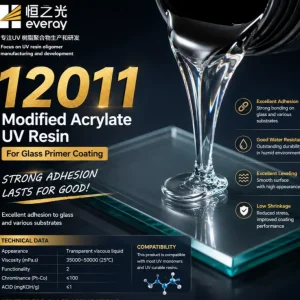
Glass surfaces possess hydrophilic silanol (-Si-OH) groups that readily form hydrogen bonds with polar coatings. Under exposure to boiling water, moisture penetrates the interface, disrupting these hydrogen bonds and causing catastrophic peeling. Achieving boiling-water resistance >2 hours requires a specialized primer strategy utilizing 12011 Modified Acrylate UV Resin blended with acrylated silane coupling agents (e.g., methacryloxypropyltrimethoxysilane) and low-shrinkage urethane acrylates.
During UV irradiation and subsequent post-bake, the silane hydrolyzes and forms permanent, covalent -Si-O-Si- siloxane crosslinks with the glass lattice. The low-shrinkage polymer network prevents localized peeling stresses, maintaining 100% (5B) cross-hatch adhesion after boiling water immersion.
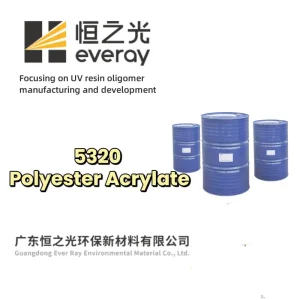
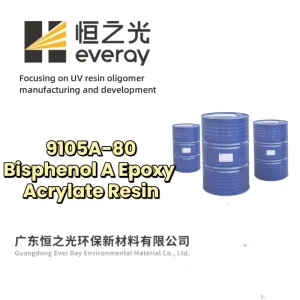
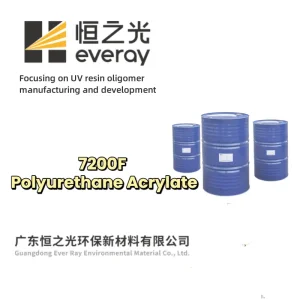
For standard catalog grades (such as 6100D, 5320, 7200F, and 9105A-80), standard lead time is 7 to 10 working days from order confirmation to port departure (FOB Shenzhen, Guangzhou, or Hong Kong). Minimum order quantity (MOQ) for commercial production runs is typically 1 standard pallet (four 200 kg steel drums, total 800 kg). For lab development, 1 kg to 5 kg qualification samples are dispatched via express international couriers with complete Certificate of Analysis (CoA) and Safety Data Sheets (SDS).
Standard export packaging includes 25 kg fluorinated plastic pails, 200 kg coated internal steel drums (palletized and stretch-wrapped), and 1,000 kg UN-certified Intermediate Bulk Containers (IBC totes) equipped with oxygen-barrier liners to prevent polymerization during sea transit across tropical climate zones.
Yes. Custom molecular design is Ever Ray’s core technological competence. Our engineering team routinely alters polyester backbone segments, modulates polyol molecular weight ($M_n$), adjusts acrylate functionality from 1 to 6+, and pre-dilutes viscous oligomers with specialized reactive monomers (e.g., TPGDA, TMPTA, DPGDA, IBOA, or HDDA) to achieve targeted viscosity profiles for roll coating, curtain coating, flexographic print, spray lines, or stereolithography 3D print engines.
Clients provide substrate parameters, curing line configuration (lamp type, mW/cm² irradiance, mJ/cm² energy density), and target physical specs (flexibility, pencil hardness, elongation, chemical resistance). Our R&D lab prepares synthesized candidate samples within two weeks.
Acrylate double bonds are thermodynamically prone to premature thermal polymerization if stabilizers are improperly balanced. Ever Ray adds optimized inhibitor packages—principally hydroquinone monomethyl ether (MEHQ) alongside sterically hindered phenols—at parts-per-million levels calibrated to preserve liquid stability during extended 60-day sea freight without hindering factory-line UV cure speeds.
All automated synthesis lines at our Yunfu facility operate under DCS (Distributed Control Systems) regulating reactor temperature to ±0.5°C. Batches undergo Gel Permeation Chromatography (GPC) molecular weight distribution profiling, Brookfield viscosity certification, and 60°C thermal accelerated storage stability checks before export lot clearance, ensuring a minimum shelf-life of 6 to 12 months when stored below 30°C in unopened, light-shielded containers.
Partner with an Experienced UV Resin Manufacturer
Whether you are optimizing an existing UV wood coating line, developing ultra-tough 3C composite finishes, or formulating next-generation 3D photopolymers, our technical application engineers in Guangdong are prepared to evaluate your specification sheets.
