High-Performance UV Oligomers & Photocurable Solutions
Explore our industrial-grade epoxy acrylates, functionalized resins, and reactive diluents engineered for fast conversion rates, minimal volumetric shrinkage, and substrate adhesion.
Buy 5338 UV resin as oligomer and active diluent, reasonable Manufacturers, Supplier
View Specifications
Buy 17701 Low Shrinkage Modified Acrylate Oligomer - Resin for Offset and Film Inks Factories, Product
View Specifications
High-Quality A Revolutionary Choice Empowering High-End UV Applications: PUA 7291B Factories, Products
View Specifications
Buy 6116 UV-resin in most substrate coating and UV-printing ink Factory, Product
View Specifications
High-Quality 6116 Low Viscosity UV Curing Epoxy Oligomer, High Flexibility Acrylic Resin
View Specifications
Wholesale 6231: Curing modified epoxy acrylate with excellent leveling properties Manufacturer
View Specifications
High-Quality 7620 UV-curing Resin applied in UV vacuum electroplating Factories, Products
View Specifications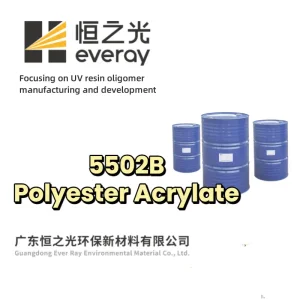
Wholesale Polyester Acrylate 5502B–Fast Reactivity, High Hardness, Low Odor & Heat Resistance
View SpecificationsThe Global Shift in UV Cure Chemistry & Polymer Science
Transitioning from conventional thermal curing to ultra-fast ultraviolet crosslinking architectures has unlocked unprecedented manufacturing throughput across high-precision electronic and industrial sectors.
LED-UV Curing Shift
Global regulatory pressure and energy reduction mandates are accelerating migration from medium-pressure mercury arc lamps to narrow-band UV-LED systems (365nm, 385nm, 395nm, 405nm). This transition requires oligomers designed with tuned absorption profiles, hyperbranched functionality, and customized photoinitiator synergists to eliminate surface oxygen inhibition without excessive thermal build-up.
Low-VOC & Bio-Sourced
Strict carbon emission caps in the European Union, North America, and East Asia demand solventless, 100% solids UV curable coatings. Modern photocurable resin formulation synthesizes acrylated vegetable oils, bio-based polyols, and renewable functional diluents, achieving near-zero VOC discharge while exceeding traditional mechanical wear resistance benchmarks.
Dual-Curing Engineering
Complex 3D architectures, shadowed electronics underfills, and multilayer vacuum-metallized automotive components have driven widespread adoption of hybrid dual-cure mechanisms (Free Radical UV + Thermal Curing or Cationic Moisture Post-cure). This eliminates unreacted shadow zones and maximizes cohesive structural shear strength.
Industrial Automation & Global Supply Chain Resilience
Operating from our modern chemical production facilities in Yunfu and Jiangmen, Guangdong, Ever Ray combines automated reaction synthesis, closed-loop QC pipelines, and strategic port logistics to guarantee stable global distribution.
Distributed DCS Automation
Batch-to-batch molecular weight distribution (MWD) consistency is controlled through automated distributed control systems (DCS). Precise thermal ramping, monomer dosing, and catalytic activation curves keep viscosity tolerance margins under ±3%.
Upstream Chemical Integration
Situated within the Greater Bay Area’s comprehensive chemical corridors, our sourcing chains secure raw diisocyanates (IPDI, HDI, TDI), acrylic acid, and specialty polyols directly from tier-one domestic synthesis plants, isolating overseas partners from raw-material supply shocks.
Stringent Analytical Lab QC
Every industrial shipment undergoes analytical testing: Gel Permeation Chromatography (GPC) for polymer chain length, FTIR spectroscopy for vinyl conversion rate verification, and Brookfield cone-plate viscometry across multiple shear rates.
Multimodal Freight Logistics
Direct accessibility to Nansha, Yantian, and Hong Kong container terminals ensures rapid ocean dispatch. ISO-tank containerization, UN-standard IBC totes, and steel drums with temperature-controlled warehousing safeguard product stability during transit.
Comparative Performance Matrix of UV Resin Oligomer Systems
A reference architecture tailored for R&D chemists and material engineers evaluating trade-offs between reactivity kinetics, glass transition temperatures (Tg), flexibility, and optical clarity.
| Oligomer Chemical Family | Hardness / Pencil | Tensile / Elongation | Cure Velocity (m/min) | Yellowing Resistance | Primary Industrial Use Case |
|---|---|---|---|---|---|
| Standard Bisphenol A Epoxy Acrylate | 4H - 5H (High) | Low (< 5%) | > 45 m/min | Moderate (Prone to ΔE shift) | Overprint varnishes (OPV), rigid wood sanding primers, screen inks |
| Aliphatic Polyurethane Acrylate (PUA) | 2H - 3H (Balanced) | High (40% - 150%) | 25 - 35 m/min | Exceptional (ΔE < 0.5) | Consumer 3C electronics, exterior automotive coatings, cosmetic gels |
| Aromatic Polyurethane Acrylate | 3H - 4H | Moderate (15% - 35%) | 30 - 40 m/min | Low to Moderate | Heavy-traffic commercial flooring, industrial maintenance coats |
| Hyperbranched Polyester Acrylate | 5H - 6H (Extreme) | Very Low (< 2%) | > 60 m/min (Ultra-fast) | High | Anti-scratch optical hardcoats, excimer laser ultra-matte skins |
| Waterborne Polyurethane Dispersion (UV-PUD) | H - 2H | High (60% - 200%) | Post-water flash UV flash | High | Eco-compliant architectural wood, synthetic leather topfinishing |
Precision Applications Engineered for Demanding Substrates
Our tailored resin formulations resolve complex wetting, adhesion, and durability bottlenecks across divergent manufacturing ecosystems worldwide.
3C Electronics & Optoelectronic Films
Smartphone casings, laptop touchpads, and display lenses fabricated from polycarbonate (PC), PMMA, and composite sheets require scratch-resistant coatings that survive continuous abrasion, artificial sweat exposure, and drop tests. Ever Ray's aliphatic urethane grades incorporate special functional anchors to ensure 100/100 cross-hatch tape adhesion without damaging sensitive plastic substrates.
High-Speed Additive Manufacturing (3D SLA/DLP)
Precision photopolymer stereolithography demands ultra-low viscosity (150 - 450 mPa·s at 25°C) to facilitate rapid layer recoating. Our reactive monomers and flexible urethane acrylates minimize volumetric shrinkage during the radical photocure phase, preventing part warpage, ensuring micrometer-scale accuracy, and delivering ABS-like mechanical durability.
Vacuum Metallization & Electroplating Primers
Vacuum-deposited aluminum and chromium layers on cosmetic packaging or automotive headlamp reflectors require flawless leveling, high surface gloss, and intercoat bond reliability. Ever Ray 7620 and specialized modified acrylates withstand rigorous thermal shocks (-40°C to 120°C cycles) without delamination, blistering, or metallic tarnishing.
Boil-Water Proof Glass & Ceramic Inks
Silicate surfaces present chemical bonding challenges due to inorganic hydroxyl barriers. Our special functional acrylate systems combine silane-coupling active bridges that chemically bond to glass matrixes, retaining complete adhesion and scratch durability even after 2-hour boiling water immersion tests.
Excimer Laser Soft-Touch & Ultra-Matte Finishes
Modern luxury furniture and automotive interior consoles favor micro-wrinkled, deep-matte surfaces that resist fingerprint staining. By tuning the polymerization kinetics with excimer 172nm short-wavelength surface crosslinkers, Ever Ray 53036 creates consistent micro-folding textures that deliver an ultra-soft skin feel without reliance on matting powders.
Structural UV Adhesives & Peelable Protective Films
Industrial electronics manufacturing utilizes UV-activatable pressure-sensitive adhesives (PSAs) and clean-release peelable masks. Resins like Ever Ray 72923 deliver high initial tack, rapid green strength upon UV dose exposure, and residue-free de-bonding characteristics for semiconductor wafer dicing and optical glass polishing.
Frequently Asked Questions from Global Formulators & Buyers
Expert insights addressing key inquiries from coatings manufacturers, purchasing managers, and chemical logistics teams.
What is the primary factor driving the choice between aliphatic and aromatic polyurethane acrylates?
The chemical distinction centers on the isocyanate structure. Aliphatic PUA oligomers (using IPDI or HDI) do not contain aromatic ring conjugated systems, delivering superior exterior weatherability and yellowing resistance (ΔE < 0.5 under QUV testing), essential for clear coats, optical lenses, and nail gels. Aromatic PUAs (derived from TDI or MDI) provide higher tensile toughness, chemical resistance, and lower raw material costs, making them ideal for pigmented formulations, indoor wood finishes, and flooring systems where UV-induced yellowing is mitigated by colorants.
How does Ever Ray prevent batch-to-batch viscosity drift across seasonal shipments?
Viscosity fluctuations typically stem from uncontrolled polymerization end-points and thermal drift during esterification. Ever Ray utilizes DCS automated reactor loops that monitor end-point acid values and inhibitor stability in real time. Before packaging, lots are calibrated with specific reactive diluents or pure oligomers to maintain Brookfield viscosity within a strict ±3% specification range, validated via automated cone-plate rheometers.
What role do amino acrylates play in overcoming atmospheric oxygen inhibition?
In thin films, such as offset printing inks and overprint varnishes, atmospheric oxygen penetrates faster than photo-radical initiation occurs, forming stable peroxy radicals that cause surface tackiness. Amino acrylate oligomers feature tertiary amine nitrogen sites that donate active hydrogen atoms, consuming peroxy radicals and regenerating initiating amino-alkyl radicals. This mechanism accelerates tack-free surface curing while eliminating migration risks associated with low-molecular-weight free amine additives.
Can Ever Ray custom-synthesize UV resins tailored to proprietary curing lines?
Yes. Our synthesis laboratory customizes oligomer backbones, functionality degrees, molecular weight distributions, and monomer diluent ratios to meet your production targets. Whether you require enhanced adhesion to non-polar plastics (PP/PE), low curing shrinkage for optical stereolithography, or compatibility with narrow-spectrum 395nm LED systems, our technical team provides starting formulations, bench samples, and rapid pilot-scale synthesis.
What international export compliance and chemical registrations do you provide?
All commercial products exported by Ever Ray comply with international chemical management frameworks, including EU REACH (with relevant mono-substance registrations), RoHS 3.0, and TSCA inventory listings. Complete GHS-compliant Safety Data Sheets (SDS) in 16 standardized sections, comprehensive Certificates of Analysis (COA), and technical data sheets (TDS) accompany all bulk and trial shipments.
What is the standard delivery timeline and sample evaluation policy?
We supply standard R&D evaluation samples (500g to 1kg bottles) dispatched via express air freight (DHL/FedEx) within 48 to 72 hours of technical verification. Commercial full-container-load (FCL) orders typically ship within 10 to 14 business days from our Yunfu production base to major Pearl River Delta ports, backed by safety stock reserves for our long-term supply partners.
Specialty Acrylates, Advanced Polymers & Custom Solutions
Explore our specialized functional resins, soft-feel polyesters, peelable polyurethane acrylates, and specialty ink effect solutions engineered for unique substrate challenges.
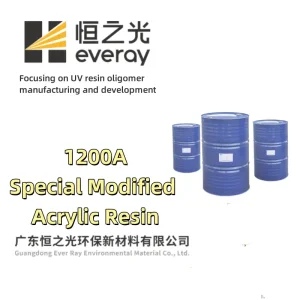
High-Quality 1200A UV resin in adhesion of density-board primer and metal-substrate Suppliers
View Specifications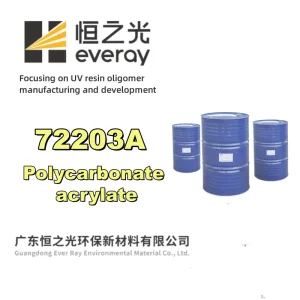
Wholesale Polycarbonate Acrylate 72203A – Fast Curing UV Resin for Soft Touch Coatings & Inks
View Specifications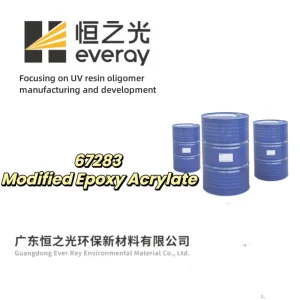
Wholesale 67283: Rapid-setting yellowing-resistant modified epoxy acrylate solution Manufacturers
View Specifications
High-Quality 53036 Polyester Acrylate UV resin: suitable for excimer lasers, skin feel Suppliers
View Specifications
Buy Fast Curing Modified Epoxy Acrylate Oligomer - High Flexibility Resin for Plastic & Furniture
View Specifications
Wholesale 72923 Fast-Cure Non-Yellowing Polyurethane Acrylate Resin for Peelable adhesive
View Specifications
High-Quality A150 UV-resin for UV-ink and UV-coatings Manufacturer, Factories
View Specifications