Featured Craft & Engineering UV Resins
Direct technical formulations engineered by Guangdong Ever Ray Environmental Material Co., Ltd. for rapid curing, non-yellowing stability, high peel performance, and zero-shrinkage multi-substrate adhesion.
Global Craft UV Resin Procurement Landscape & Enterprise Dynamics
How international brands, consumer electronics prototypers, and craft art manufacturers are shifting from commoditized epoxies to precision-synthesized, low-toxicity acrylate oligomers.
Supply Chain Decoupling & Quality
Global consumer product suppliers and industrial art craft houses can no longer tolerate batch-to-batch volatility. Discrepancies in viscosity (mPa.s), monomer flashpoints, and unreacted photoinitiator residues cause high rejection rates during assembly.
- Demand for traceable synthetic origin and GC-MS purity auditing.
- Direct procurement from basic reactor synthesizers rather than blenders.
- Stringent shelf-life stabilization against dark-cure premature gelation.
Optical Clarity & Delta E Limits
The craft resin sector has evolved far past yellowing amine systems. High-end epoxy acrylate hybrids and aliphatic polyurethane acrylates must achieve an ultimate yellowing index of ΔE < 1.5 under ASTM G154 accelerated weathering cycles.
- Elimination of aromatic diisocyanates in water-clear clearcoat grades.
- Sterically hindered amine light stabilizers (HALS) chemical bonding.
- Crystal-clear high refractive index (nD > 1.51) for jewelry gem casting.
Low-Toxicity Consumer Safety
Craft UV resins are applied by artists, jewelers, modelers, and factory line workers in semi-enclosed workshops. Modern B2B tenders demand radical reductions in skin-sensitizing reactive diluents such as monomeric TPGDA, HDDA, or free acrylic acid.
- Migration to high-molecular weight ethoxylated or propoxylated backbones.
- Zero-VOC and non-detectable free formaldehyde or residual monomers.
- Low skin irritation index (P.I.I. < 2.0) and virtually odorless curing profiles.
Comprehensive Engineering Solutions for Craft & Industrial Assemblies
Resolving interfacial boundary failures, volumetric curing contraction, and thermal decomposition through molecular customization of monomer and oligomer networks.
Multi-Substrate Adhesion
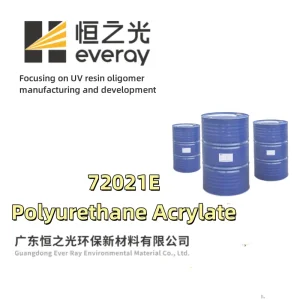
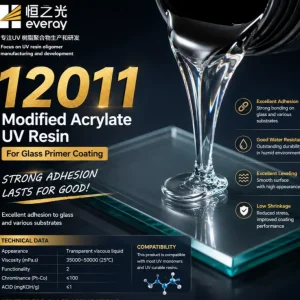
Polycarbonate, PMMA, glass, anodized aluminum, silicone, and raw hardwoods exhibit vastly different surface free energies. Our 72021E & 12011 resins incorporate organosilane and phosphate ester functionality that forms covalent and coordination bonds directly with substrate hydroxyl groups.
Volumetric Shrinkage Control
Standard acrylate monomers undergo 8% to 14% polymerization shrinkage, generating internal shear stress, substrate warpage, and edge curling in craft castings. Ever Ray utilizes hyperbranched and ring-opening oligomers, restricting volumetric contraction to < 1.8%.
Deep-Section UV-LED Penetration
Craft castings often exceed 20 mm in single-pour thickness, where high optical absorption prevents curing at the floor. Formulated with bis-acylphosphine oxide (BAPO) synergists active at 395–405 nm, our resins cure thoroughly through deep layers without surface burning.
Thermal & Moisture Resilience
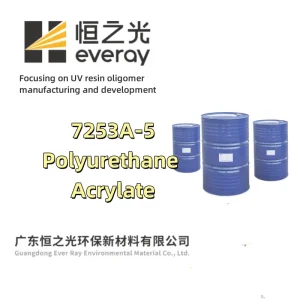
Craft creations, table inlays, and automotive interior pieces must endure boiling water, high humidity, and cyclical temperature changes (-30°C to +110°C). Products like 7253A-5 combine aliphatic urethane segments that dissipate thermal stress and prevent micro-fracturing.
Physical & Photopolymerization Performance Matrix
Quantitative benchmarks measured under standard cure condition: 395nm LED lamp, 1200 mJ/cm² total radiant exposure, 25°C ambient humidity 55% RH.
| Resin Chemistry / Grade | Viscosity (mPa.s @ 25°C) | Shore Hardness | Tensile Strength (MPa) | Elongation at Break (%) | Cure Speed (395nm LED) | Primary Industrial Fit |
|---|---|---|---|---|---|---|
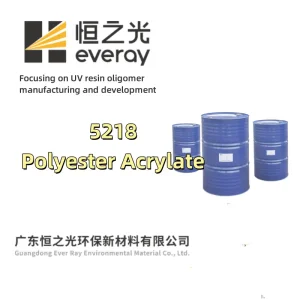
| 5218 Polyester Acrylate | 1,200 – 2,500 | 82 D | 38.5 | 8.2% | < 3.0 sec (thin film) | Pigmented Craft Inks & Foils |
| 72021E Multi-Substrate PUA | 4,500 – 7,000 | 70 D | 29.2 | 42.0% | < 4.5 sec | Glass-to-Metal Craft Assembly |
| 7253A-5 Multifunctional UV | 8,000 – 14,000 | 85 D | 54.0 | 6.5% | < 2.5 sec | Heat/Cold Shock Stable Potting |
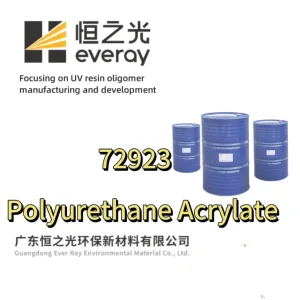
| 72923 Non-Yellowing PUA | 2,000 – 3,500 | 45 A (Peelable) | 12.8 | 180.0% | < 2.0 sec | UV Masking & Temporary Protect |
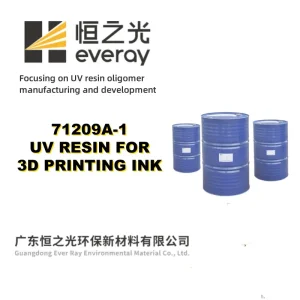
| 71209A-1 ABS-Like Photopolymer | 350 – 650 | 84 D | 48.0 | 18.5% | 1.8 sec / 50μm layer | Precision SLA/LCD Miniature Art |
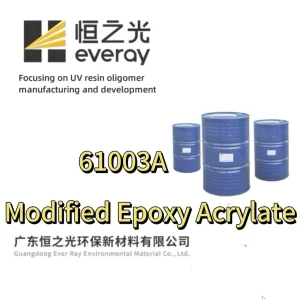
| 61003A Modified Epoxy Acrylate | 15,000 – 25,000 | 88 D | 62.5 | 3.8% | < 1.5 sec | High-Gloss Domed Stickers & Badges |
| 12011 Modified Acrylate | 800 – 1,800 | 78 D | 34.0 | 12.0% | < 3.5 sec | Boil-Water Resistant Glass Enamel |
| 9105A-80 BPA Epoxy Acrylate | 40,000 – 60,000 | 90 D | 71.0 | 2.1% | < 1.2 sec | Scratch-Proof Jewelry Overcoats |
From Artisan Craft Studios to High-Throughput Industrial Manufacturing
How the definition of “Craft UV Resin” has expanded into micro-encapsulation, high-precision figurine manufacturing, luxury accessory embellishment, and optical electronics bonding.
Fine Jewelry & Gem Inlays
High-end costume jewelers and fine precious metal craft studios are replacing two-component heat-cure epoxies with fast UV resins. Immediate setting under LED light eliminates dust settlement and pinholing defects.
Resins like 9105A-80 and 61003A offer refractive indices simulating natural gemstones, achieving diamond-like clarity, high Shore D surface hardness, and superior resistance to cosmetic perfumes, hand lotions, and ultrasonic cleaning baths.
Tactile Packaging & Doming
Brand packaging manufacturers utilize craft UV resins for 3D raised braille textures, crystal-clear badge emblems, and domed luxury labels. These applications require high surface tension control to prevent sagging before exposure.
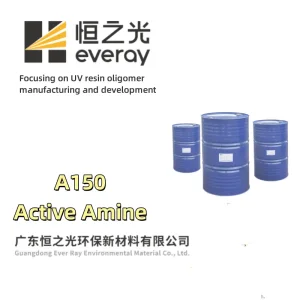
By precisely matching our 61003A and A150 oligomer viscosities, manufacturers achieve smooth 3D lens curvature with self-healing elastic memory, preventing fingernail scratches and maintaining high gloss outdoors.
Collectible Figurines & Miniatures
With the surge in digital tabletop sculpting and artisan resin toys, consumers demand injection-mold quality directly from additive fabrication lines. Standard brittle photopolymers fail drop tests.
Our 71209A-1 ABS-Like resin introduces high-impact urethane modifications that allow fine thin features (swords, antennas, micro-joints) to bend under stress without snapping, pairing rapid LCD exposure speeds with extreme toughness.
Global Compliance & Local Technical Support Architecture
Ensuring frictionless international logistics and toxicological safety for distributors, direct retail brand holders, and Tier-1 contract manufacturers.
Statutory Documentation (SDS/TDS)
Every shipment is supported by comprehensive 16-section Safety Data Sheets tailored to destination jurisdictions: GHS-compliant for North America (OSHA HazCom), the European Union (CLP Regulation 1272/2008), Japan (JIS Z 7253), and Asia-Pacific customs.
Technical Data Sheets disclose precise infrared curing profiles, glass transition temperatures (Tg via DMA), coefficient of thermal expansion (CTE), and viscosity-temperature curves.
Substance of Concern Restrictions
Craft items are frequently handled by children or worn against the skin. Ever Ray rigorously enforces substance bans across its product portfolio:
- EU REACH Annex XVII: Fully SVHC-free with regular testing by third-party SGS/TÜV labs.
- RoHS Directive 2011/65/EU: Zero presence of lead, mercury, cadmium, hexavalent chromium, PBBs, PBDEs, or phthalates.
- California Proposition 65: Formulations engineered without listed carcinogenic diluents.
- TSCA & IECSC: All synthetic monomer components registered on active chemical inventories.
Application Engineering Labs
Procuring industrial photopolymers requires continuous technical dialogue. Our application laboratory in Yunfu, Guangdong operates calibrated curing tunnels, UV-LED bar lamps, Brookfield rotational viscometers, and peel test dynamometers.
We provide sample pre-matching, formulation adjustment (adjusting viscosity from 300 to 60,000 mPa.s), and line-speed optimization for large-scale OEM/ODM brand manufacturers.
Next-Generation Photopolymer Technology Roadmap
Anticipating the technological disruptions that will define craft, optical, and adhesive UV formulations across the next decade.
Bio-Based Acrylate Backbones
Shifting from petrochemical building blocks to bio-derived isosorbide, itaconic acid, and modified soybean oil acrylates. Our synthesis goal is reaching >45% renewable carbon content while exceeding the mechanical toughness and non-yellowing clarity of traditional petroleum acrylates.
Ultra-Low Energy 405nm LED Curing
Traditional high-pressure mercury arc bulbs emit intense heat, ozone, and consume excessive electrical power. Future craft formulations are tuned exclusively for cold-light 395–405nm LEDs, allowing low-power desktop curing stations without curling or heat-deforming delicate plastic craft substrates.
Dual-Cure Photothermal Systems
Where opaque fillers, colored pigments, or shadowed craft geometries block light transmission, conventional UV resins remain liquid. Next-generation systems pair rapid UV photopolymerization with a secondary moisture or mild thermal cure mechanism (80°C), guaranteeing 100% cure in shadowed crevices.
Self-Healing Surface Networks
Micro-scratching on high-gloss resin craft tabletops, jewelry bezels, and phone accessories impairs visual clarity over time. Ever Ray is synthesizing reversible covalent disulfide or hydrogen-bonded network oligomers that allow surface abrasions to reflow and heal under mild heat or sun exposure.
Frequently Asked Questions on Craft UV Resin Engineering
In-depth answers addressing formulation troubleshooting, lamp compatibility, substrate pretreatment, and bulk export purchasing.
Surface tackiness is caused by atmospheric oxygen inhibition. Atmospheric O&sub2; diffuses into the top layer of the resin and quenches initiating free radicals much faster than the rate of acrylate double bond propagation, forming unreactive peroxy radicals. To solve this without using nitrogen inerting, Ever Ray formulates with copolymerizable amino acrylate oligomers and active amine synergists. These donate labile hydrogen atoms that reactivate peroxy radicals and consume local oxygen, producing a tack-free, rock-hard surface in under 3 seconds.
The difference lies in the isocyanate precursor structure. Aromatic polyurethane acrylates (built on TDI or MDI) contain benzene rings. Under ultraviolet exposure and thermal oxidation, these rings undergo photochemical rearrangement into quinoid chromophores, causing pronounced yellowing within weeks. Aliphatic polyurethane acrylates (built on IPDI, HDI, or H12MDI) lack conjugated aromatic structures. They exhibit exceptional resistance to UV photo-oxidation, preserving water-white optical transparency and weatherability for outdoor craft, automotive clearcoats, and high-clarity jewelry casting.
Standard unfunctionalized resins delaminate easily from high-energy substrates like glass and polished metal because of curing shrinkage stresses and lack of chemical bonding. Ever Ray integrates special functional acrylate oligomers (such as 12011 and 72021E) containing acrylated silanes and organophosphate esters. These functionalities undergo hydrolysis and condensation at the interface, creating stable metalloxane (Si-O-Si, Al-O-P) chemical linkages that withstand standard 2-hour boiling water testing without delamination or blistering.
Enterprise buyers should establish strict batch inspection tolerances around five core analytical parameters: (1) Viscosity Profile across shear rates to prevent settling; (2) Color Gardner Index (≤ 1 for clear formulations); (3) Acid Value (mg KOH/g) to avoid premature catalyst interactions; (4) Monomer Residual Content via gas chromatography to maintain compliance with low-odor and skin-sensitization rules; and (5) Monomer Functionality and Conversion Kinetics via real-time FTIR to verify cure speed consistency under target line lamps.
Advanced Photopolymer Oligomers & Specialized Adhesion Grades
High-abrasion modified epoxy acrylates, low-shrinkage monomers, high-solid matte resins, and vacuum-metallization topcoats available for direct factory shipment.