
High-Performance Acrylate & UV Curable Resins
Precision-formulated oligomer grades featuring tuned double-bond conversion kinetics, tailored shrinkage mitigation, and verified batch consistency for international converting and manufacturing operations.
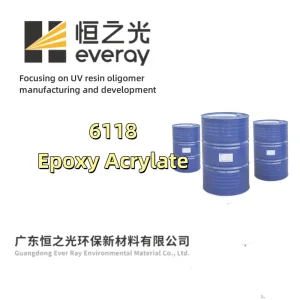
Durable 6118 Epoxy Acrylate UV Resin
- High reactivity & surface hardness
- Superior wood & plastic wetting
- Rapid crosslinking under Hg/LED
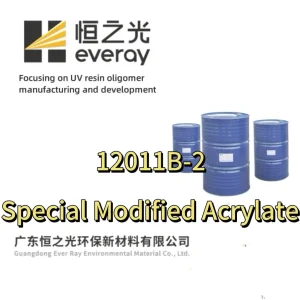
Special Modified Low Shrinkage Acrylate
- Excellent glass & ceramic adhesion
- Volumetric shrinkage < 3.2%
- Optimized for water transfer printing
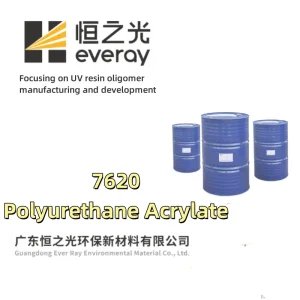
7620 UV Resin for Vacuum Electroplating
- Flawless mirror-finish primer compatibility
- Intercoat adhesion to evaporated aluminum
- High thermal distortion resilience
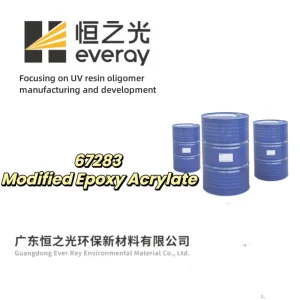
67283 Rapid-Setting Modified Epoxy Acrylate
- High-speed line cure response (>45 m/min)
- QUV accelerated aging rating ΔE < 1.2
- Engineered flexibility/hardness balance
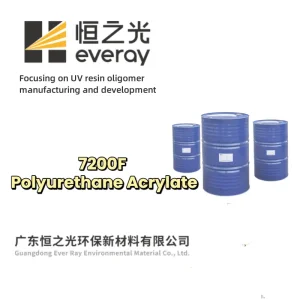
7200F Thermal Cycle Polyurethane Acrylate
- Operating range: -40°C to +130°C
- Elastic recovery & fracture toughness
- Resistant to embrittlement cracking
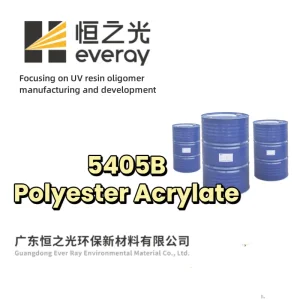
Polyester Acrylate 5405B High-Efficiency
- High wetting capacity for organic pigments
- Balanced tensile elongation & slip
- Multi-field coating & ink universal resin
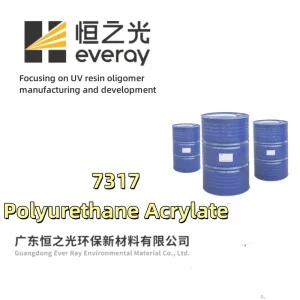
7317 UV Resin for Wrinkle & Snowflake Ink
- Controlled differential surface shrinkage
- Repeatable textured tactile haptics
- Luxury screen-printed packaging resin
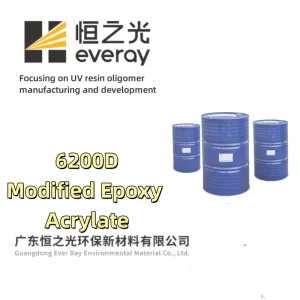
6200D Optical Shadowless Adhesive Resin
- Refractive index matched (nD 1.49 - 1.51)
- Zero hazing under high humidity testing
- Instant optical glass-to-metal bonding
The Molecular Engineering of High-Quality Acrylic & UV Curable Resins
In radiation-curing chemistry, polymer performance is dictated by backbone stoichiometry, acrylate functionality, and steric crosslink density. Understanding the fundamental chemistry ensures zero-failure formulation across hostile thermal, chemical, and mechanical environments.
Epoxy Acrylate Oligomers
Synthesized predominantly via the stoichiometric ring-opening addition of acrylic acid to Bisphenol-A (or novolac) diglycidyl ethers. Epoxy acrylates are celebrated for exceptional radical polymerization reactivity, extreme crosslink density, surface hardness exceeding 3H-4H pencil test metrics, and superior chemical barrier resistance against polar solvents, acids, and alkalis. They serve as the structural cornerstone for wood sanding primers, rigid overprint varnishes (OPV), and anti-corrosive metal coatings.
Polyurethane Acrylates (PUA)
Constructed through multi-step polyaddition reactions between diisocyanates (IPDI, HDI for aliphatic non-yellowing systems; TDI, MDI for cost-effective aromatic systems), high-molecular-weight polyols, and hydroxyl-terminated acrylates (such as HEA/HPA). The urethane linkage (-NH-COO-) creates dense hydrogen-bonding domains that confer unmatched elongation at break, scratch self-healing potential, thermal-shock resistance, and high-impact toughness without post-cure microcracking.
Hyperbranched & Dendritic Acrylates
Characterized by a multi-arm, globular macromolecular architecture terminating in 6 to 16+ reactive acrylate sites. Unlike high-molecular-weight linear polymers that experience radical chain entanglements, dendritic structures yield very low intrinsic viscosities alongside exponential crosslinking rates. This unique architecture yields sub-second surface cure, complete elimination of oxygen inhibition on ultra-thin coatings, and exceptional abrasion resistance on 3C electronic plastics.
| Resin Chemistry Class | Typical Functionality | Glass Transition (Tg) | Tensile Modulus (MPa) | Volumetric Shrinkage | Color Stability (ΔE UV) | Primary Industrial Use-Case |
|---|---|---|---|---|---|---|
| Standard Bis-A Epoxy Acrylate | 2.0 | 55°C - 75°C | 2,100 - 2,800 | 5.5% - 7.5% | Moderate (ΔE 2.5-4.0) | Industrial Wood Primers, PCB Solder Mask, Graphic Arts |
| Aliphatic Polyurethane Acrylate | 2.0 - 6.0 | -15°C - 65°C | 450 - 1,600 | 2.0% - 4.2% | Superior (ΔE < 0.8) | Automotive Clearcoats, 3C Electronics, Cosmetic Gels |
| Aromatic Polyurethane Acrylate | 2.0 - 4.0 | 20°C - 50°C | 1,200 - 1,900 | 3.5% - 5.0% | Indoor Only (ΔE > 3.0) | Heavy-Duty Resilient Flooring, Plywood Topcoats |
| Polyester Acrylate Oligomer | 3.0 - 6.0 | 10°C - 45°C | 800 - 1,400 | 4.0% - 6.0% | Good (ΔE 1.2-2.0) | Lithographic & Offset Inks, Pigment Dispersions |
| Hyperbranched Acrylate Oligomer | 6.0 - 14.0 | 85°C - 110°C | 2,800 - 3,500 | 6.0% - 8.5% | Excellent (ΔE < 1.0) | Hardcoats on Polycarbonate/PMMA, 3D Nano-Resins |
| Waterborne UV Polyurethane (PUD) | 1.5 - 3.0 | -25°C - 40°C | 300 - 950 | < 1.5% (dry) | Excellent (ΔE < 0.9) | Zero-VOC Eco Wood Coatings, Leather Finishing |
China Manufacturing Powerhouse: Synthesis Scale & Raw Material Security
Navigating modern polymer procurement requires extreme supply-chain transparency, certified environmental resilience, and stable raw material feedstock pricing. Ever Ray's manufacturing complex in Yunfu, Guangdong bridges scientific synthesis with unmatched bulk scale.
Upstream Integration
Direct pipeline and strategic alliance integration with key petrochemical monomers (AA, MMA, IPDI, TMPTA, EODPA). This insulates global formulators from volatile international commodity price spikes and seasonal raw material allocations.
Statistical QC Rigor
Every 15-ton reactor charge undergoes continuous in-situ FTIR conversion monitoring, differential scanning calorimetry (DSC), and Ubbelohde capillary viscometry. Batch-to-batch acid value deviations are locked within ±0.5 mg KOH/g.
Hazardous Zone Logistics
Operating out of an official Chinese Provincial Class-1 Chemical Development Zone (Dawan Industrial Park). Full legal production quotas guarantee zero sudden environmental production shutdowns during high-demand international cycles.
Export Ready Packaging
Full UN-certified chemical export logistics infrastructure. Specialized options include light-shielded 200kg steel drums, 1,000kg ISO-IBC composite containers, and temperature-controlled reefer containers for reactive heat-sensitive monomers.
Regulatory Assurances: REACH, RoHS, TSCA & GHS SDS Dossiers
High-end global brand-owners cannot risk customs impoundment or civil liability from banned monomers or unregistered chemical substances. We provide rigorous compliance documentation tailored for EU, North American, and East Asian regulatory jurisdictions.
EU REACH & UK REACH Registrations
Full substance and polymer exemption dossiers established for EU importers. Rigorous gas chromatography-mass spectrometry (GC-MS) validation guarantees all heavy metal precursors, free toluene diisocyanate (<0.1% w/w), and SVHC candidates remain below detectable European Chemical Agency thresholds.
US TSCA & EPA Title V Conformance
Resin chemistries strictly verified against the Active Toxic Substances Control Act Inventory. Formulations engineered for maximum atom efficiency, eliminating volatile aromatic hydrocarbons (BTX-free) and providing compliance certification for regional Air Quality Management Districts (SCAQMD).
Localized 16-Section GHS Safety Data Sheets
Complete multilingual Safety Data Sheets (SDS) formulated strictly in adherence to GHS Revision 8 / OSHA HazCom 2012 guidelines. Detailed transport class designations (UN3082 Class 9 environmentally hazardous vs. non-regulated status) to minimize export clearing customs delays.
Future Horizons in UV Acrylic Resin Systems
The worldwide transition away from medium-pressure mercury arc lamps toward energy-efficient narrow-band UV-LEDs is accelerating, paired with strict consumer protection mandates regarding skin sensitization and plastic recyclability.
UV-LED 385–405nm Matching
Standard mercury curing generates wide UVC radiation (200-280nm) that suppresses surface tack. With monochromatic UV-LEDs lacking UVC, our amine-modified acrylates act as internal oxygen scavengers, facilitating rapid tack-free surface curing without nitrogen inerting.
Dual-Cure (Free-Radical / Thermal)
For geometric parts with deep shadow areas (automotive interior bezels, optical sensors), our hybrid acrylic architectures incorporate dual-functional isocyanate or oxirane backbones that cure under initial light strike and complete full crosslinking through ambient moisture or heat.
Bio-Derived Acrylate Backbones
Integrating modified isosorbide, itaconic acid derivatives, and cardanol-based polyols into the acrylate skeleton. These deliver over 35%-50% renewable biocarbon content (ASTM D6866 certified) while matching or surpassing petrochemical tensile performance.
Low-Migration Packaging Inks
Formulated specifically for secondary food packaging compliant with Swiss Ordinance and Nestlé guidance notes. Features ultra-high molecular weight oligomers where unreacted functional monomers drop below 0.05%, eliminating taint, off-odor, and set-off migration.
End-Use Engineering Scenarios Across High-Volume Sectors
Explore how chemical formulators adapt Ever Ray UV acrylic resin grades across precision coating lines, electronic cleanrooms, and automated continuous manufacturing.
3C Electronics PVD Vacuum Metallizing
Problem: Aluminum deposition blistering and delamination on mobile phone housings under environmental humidity chamber testing (60°C / 90% RH × 500h).
Solution: Implementation of Grade 7620 Basecoat Resin. The controlled crosslink network forms exceptional chemical bite into polyolefin and polycarbonate matrixes while maintaining a smooth mirror surface that eliminates pinholing during sputtering.
Optically Clear Adhesives (LOCA) for Touch Displays
Problem: Wavefront distortion, optical ménage fringing, and edge-delamination from cure shrinkage in automotive center consoles.
Solution: Formulation based on Grade 6200D Shadowless Glue. Delivers <1.8% volumetric shrinkage, refractive index matching of 1.498, 99.2% transmittance across 400-800nm, and high resistance to yellowing (Δb* < 0.3) after 1,000h QUV test exposure.
High-Speed Sheetfed UV Offset Printing Inks
Problem: Emulsification misting on offset rolls, poor fountain solution balance, and chalking on non-porous metallized PET cardboard.
Solution: Deployment of Polyester Acrylate 5332F & 5405B. Provides superior pigment wetting with high carbon black and lithol rubine loading. Maintains clean ink-water balance window at press speeds exceeding 15,000 sheets/hour.
Frequently Addressed Formulation Challenges & Procurement Queries
Direct engineering responses from Ever Ray’s Senior Synthesis Chemists addressing curing kinetics, compatibility windows, storage stability, and international supply execution.
How do you overcome severe oxygen inhibition in thin-film (<10 μm) UV curing without nitrogen inerting?
Oxygen inhibition occurs because atmospheric diradical oxygen (O&sub2;) rapidly scavenges growing polymer radicals to form unreactive peroxy radicals (ROO•), halting polymerization at the air-coating interface. We recommend incorporating our Amino Acrylate oligomers (e.g., active amine synergists) at 5%–15% dosage. The unshared electron pair on the tertiary nitrogen donates hydrogen atoms to peroxy radicals, generating active carbon radicals while consuming oxygen, yielding tack-free surface cures at ambient atmospheric conditions.
What is the mechanism for balancing high pencil hardness (3H+) with flexible mandrel bend testing?
Single oligomer systems struggle with this classic paradox: high functionality increases crosslink density and hardness, but amplifies curing shrinkage and brittleness. The solution lies in formulating an interpenetrating polymer network (IPN). We combine a high-hardness backbone (such as Hyperbranched Acrylate 4600 or Bis-A Epoxy Acrylate 9104) with an Aliphatic Polyurethane Acrylate (such as 7200F). The urethane soft segments absorb impact deformation via intermolecular hydrogen bonding, while the high-density acrylate clusters supply surface scratch shielding.
Why does curing acrylic resin over untreated glass or metal fail after boiling-water immersion tests?
Untreated inorganic glass and metallic surfaces possess high surface energies and hydrophilic hydroxyl groups. Hydrolytic moisture penetrates the coating-substrate interface, disrupting physical dipole adhesion bonds. Formulations require our Special Modified Acrylate Resin or adhesion promoters containing phosphate functional acrylates and gamma-methacryloxypropyltrimethoxysilane. These chemistries form covalent siloxane (-Si-O-Si-) or metallo-organic bonds directly into the substrate matrix, maintaining 100/100 cross-hatch adhesion even after 2 hours in boiling water.
What is the shelf-life stability of Ever Ray UV acrylic resins during long-haul ocean transit through equatorial zones?
Uninhibited UV acrylates can undergo premature thermal radical polymerization when container temperatures exceed 45°C. Ever Ray utilizes a proprietary dual-stabilizer inhibitor package combining MEHQ (monomethyl ether of hydroquinone) with sterically hindered nitroxide free-radical scavengers. Crucially, these require a trace dissolved oxygen equilibrium to remain active. Stored in specialized light-shielded, head-space oxygen-equilibrated UN drums below 30°C, our resins maintain guaranteed chemical and viscosity stability for 12 months minimum.
Can Ever Ray custom-synthesize resins with specific viscosity and functionality targets for our production line?
Yes. Our R&D application laboratory operates 5-liter, 50-liter, and 500-liter pilot synthesis vessels specifically designed for tailored customer scale-ups. We can modify prepolymer molecular weight distribution (MWD), alter dilution monomer packages (e.g., swapping standard TPGDA for low-skin-irritation DPGDA, HDDA, or bio-IBOMA), and customize the bio-based carbon fraction to meet customer target specs prior to multi-ton commercial batch production.
What are the minimum order quantities (MOQ) and documentation provided for sample qualification?
For preliminary laboratory trials, sample kits (500g to 2kg in light-tight fluorinated bottles) are provided along with a comprehensive Certificate of Analysis (CoA), full 16-section GHS Safety Data Sheet (SDS), and standard starting-point formulation guidelines. Commercial order MOQs begin at standard 200kg drums or full container loads (FCL), with flexible Incoterms including EXW, FOB Jiangmen/Guangzhou/Shenzhen, CFR, and CIF main global destination ports.
Targeted Oligomers, Waterborne PUDs & Hyperbranched Chemistries
Complete your formulation architecture with advanced hyperbranched anti-scratch topcoats, eco-friendly waterborne dispersions, and low-heat cosmetic oligomers.
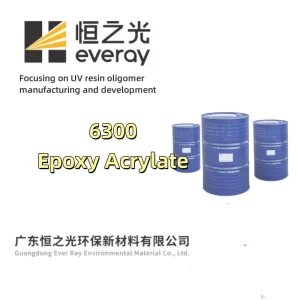
6300 Low Viscosity Modified Epoxy Acrylate
- Reduced monomer dilution requirement
- Exceptional paper varnish high gloss (>95 GU)
- Fast line speed roller coating response
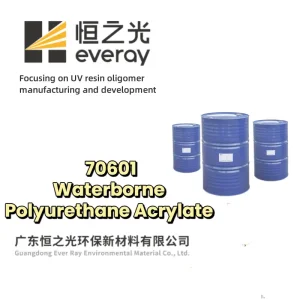
Waterborne 70601 Zero-VOC UV Resin
- Water-dilutable clean air formulation
- High definition 3D printing & SLA parts
- Natural open-pore wood finish texture
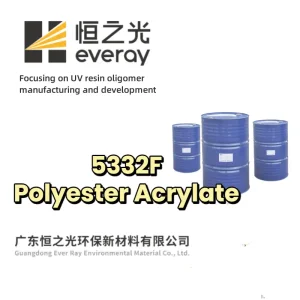
Polyester Acrylate 5332F for Offset Inks
- Optimum fountain solution water-ink balance
- High rheological stability on press rolls
- Intense pigment dispersion transfer efficiency
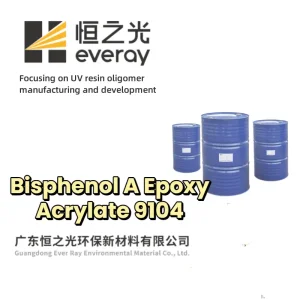
Bisphenol A Epoxy Acrylate 9104 Core Resin
- Benchmark industrial workhorse resin
- High chemical solvent & abrasion resistance
- Economical foundation for high-build coatings
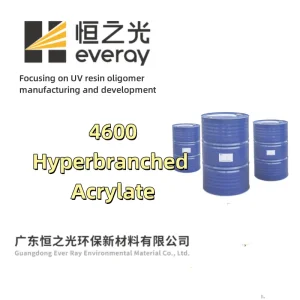
Scratch Resistant 4600 Hyperbranched Resin
- Dendritic multi-arm structure (12 functional)
- Steel wool resistance > 1,000 cycles (1kg)
- Extreme crosslink density with low viscosity
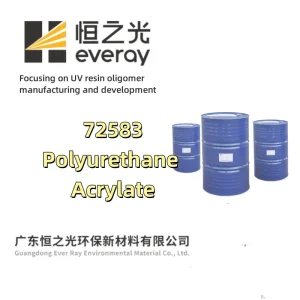
Low Heat Release 72583 Polyurethane UV Resin
- Zero burning sensation during LED nail curing
- Non-irritating skin safety cosmetic grade
- High clarity for thick dome protective coatings
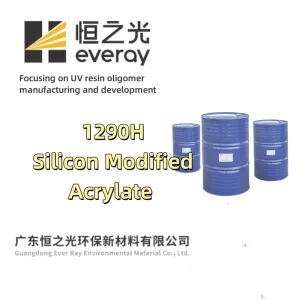
Low Shrinkage 1290H Resin for PVC Flooring
- Zero edge-curling on flexible vinyl tiles
- Taber abrasion resistance > 50,000 cycles
- Stain resistant against iodine & rubber heels
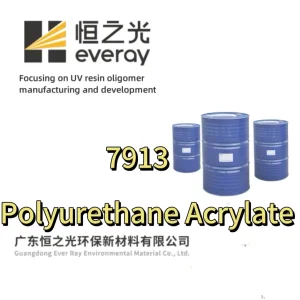
7913 Anti-Fouling Abrasion Resistant PUA
- Fluorine-silicon modified surface migration
- Water contact angle > 108° (Easy-to-clean)
- Permanent marker wipe-off without residue
Accelerate Your Next-Generation UV Coating Formulation
Partner directly with Ever Ray's senior polymer synthesis team. Whether you need custom backbone modification, low-shrinkage optical development, or bulk container procurement with full REACH/GHS certification, our chemical engineering specialists are at your disposal.
