Precision Engineering Solutions
High-Reactivity Oligomers & Diluents for 3D Jetting & Vat Polymerization
Explore our core synthetic resins optimized for balanced double-bond conversion, structural stability, and surface detail reproduction.
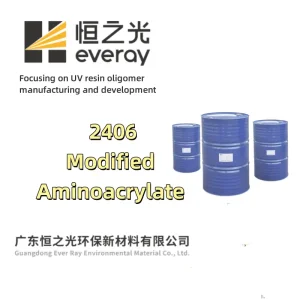
Buy 2406 UV Resin: Low Odor Solution for Rapid Paper and Plastic Varnishes Manufacturer, Factories
Technical Specifications →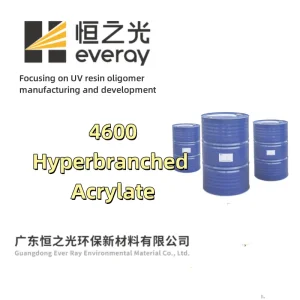
Buy Scratch resistant 4600 hyperbranched acrylic UV resin : suitable for varnish and ink Suppliers, Factory
Technical Specifications →
High-Quality Excellent adhesion: 7230E polyurethane acrylate UV Resin for vacuum plating Supplier, Factories
Technical Specifications →
Wholesale Strong adhesion acrylate oligomer 1100UV resin, suitable for UV coatings and inks Supplier, Suppliers
Technical Specifications →
High-Quality Polyester Acrylate 5351 - The Ideal Choice for High-Performance UV Coatings and Inks Product, Products
Technical Specifications →
High-Quality Polyester Acrylate 5405B - A High-Efficiency Solution for Multi-Field UV Applications Suppliers, Product
Technical Specifications →
High-Quality Fast curing 7402 Polyurethane Acrylate UV resin for high quality coatings Supplier, Products
Technical Specifications →
Industrial Status & Market Transformation
The Global Industrial Landscape of Advanced 3D Printing Inks
Additive manufacturing has decisively pivoted from rapid aesthetic prototyping into high-throughput, serial production across automotive, medical device engineering, consumer electronics, and dental restorative prosthetics. At the center of this industrial inflection is the rheological and chemical performance of photopolymer 3D printing inks.
Modern printing engines—ranging from high-speed Digital Light Processing (DLP) and Liquid Crystal Display (LCD) stereolithography to Piezoelectric Multi-Jet Printing (MJP)—require inks that decouple high reactivity from volumetric shrinkage. Conventional monomer-heavy solutions often compromise structural integrity, yielding unmanageable warpage and brittle interfaces.
Modern formulators require hyperbranched architecture and precision aliphatic backbones to achieve sub-2% volumetric shrinkage while maintaining rapid cure speed at 385nm and 405nm LED wavelengths.
As a seasoned chemical synthesizer and global supplier, Guangdong Ever Ray Environmental Material Co., Ltd. addresses this industry dilemma by producing custom polyurethane acrylates (PUA), dendritic acrylates, and specialty oligomers that empower formulators worldwide to match or exceed thermoplastic performance metrics like ABS, polypropylene, and vulcanized rubber.
Rheology-Engineered Low Viscosity
Our modified monomers and hyperbranched systems achieve steady viscosities under 300 cps at operational temperatures, enabling continuous jetting without clogging high-density piezo printheads or causing layer-separation defects.
Low Volume Shrinkage & High Toughness
Incorporating dual-curing networks and aromatic/aliphatic copolymer urethane matrices effectively disperses polymerization stress, yielding high elongation at break (>150%) and high tensile modulus simultaneously.
Synthesis Infrastructure
Manufacturing Rigor & Batch-to-Batch Predictability
High-precision 3D printing is unforgiving of chemical variances. A shift in oligomer molecular weight or acid value alters critical printing metrics like depth of cure and critical exposure thresholds.
2006
Foundation Year
40,000 m²
Dedicated Production Base
10+
Continuous Reaction Lines
< 1.5%
Controlled Linear Shrinkage
Application Engineering
Industrial Scenarios for Photopolymer Ink Formulators
Our oligomer and monomer systems provide targeted chemical properties across diverse industrial manufacturing ecosystems.
Automotive Prototyping & End-Use Ducts
Demands elevated heat deflection temperature (HDT > 120°C) and resistance to glycol, motor oil, and hydraulic fluids. Formulated with our aromatic polyurethane acrylates and hyperbranched resins (such as 4600 and 7200F), parts withstand long-term under-the-hood thermal stress.
Precision Dental Models & Surgical Guides
Demands near-zero warpage, superior dimensional stability, and verified class I/II biocompatibility potential. Utilizing our low-viscosity, low-odor monomers (such as 2406) ensures safe processing, razor-sharp margins, and minimal post-cure deformation.
Consumer Footwear & Elastic Damping Lattices
Demands exceptional energy return, rebound resilience, and high dynamic flexural fatigue resistance. Our photo-thermal dual-curing polyurethane acrylate grades (e.g., 72017) build interpenetrating networks capable of withstanding millions of compression cycles without plastic deformation.
Micro-Optics & 3C Electronic Enclosures
Requires pristine optical clarity, non-yellowing characteristics under prolonged UV radiation, and excellent dielectric properties. Aliphatic urethane acrylates deliver high transmission indices paired with pencil hardness values up to 3H-4H.
Rapid Metal/Ceramic Precursor Slurries
Stereolithographic printing of ceramics and metals requires binders that hold heavy sub-micron solid loads while decomposing cleanly with minimal ash residue during sintering. Our pure acrylate oligomers yield carbon-free burnouts.
Functional Electronics Jetted Inks
Piezo drop-on-demand printing requires exact surface tension tuning (28-34 dynes/cm) and stable drop-breakoff behavior. Our amine-modified acrylates and diluent combinations prevent satellite formation and ensure reliable jetting over long cycles.
Formulation Matrix
Cross-Disciplinary Photopolymer Chemistry & Solutions
Selecting the right chemical backbone helps mitigate key failure modes during rapid 3D photopolymerization.
| Oligomer Chemical Class | Primary Kinetic Strengths | Common Formulation Challenges | Ever Ray Solution & Grade Matching |
|---|---|---|---|
| Aliphatic Polyurethane Acrylate (PUA) | Exceptional elongation, high impact resistance, zero yellowing under weathering. | Higher raw viscosity; slower initial radical propagation in oxygenated environments. | Hybrid synthesis incorporating active amine synergists and diluents like 5338 to balance viscosity. |
| Bisphenol A Epoxy Acrylates | Rapid surface curing, extreme surface hardness (up to 4H), cost-efficient base build. | High curing shrinkage, poor flexibility, brittle fracture surfaces. | Modified epoxy acrylates with flexibilized ether links (e.g., 6116) to alleviate internal stresses. |
| Hyperbranched Acrylates | High functionality, elevated crosslink density without extreme viscosities. | Tendency toward steric hindrance; potential embrittlement if over-crosslinked. | Our 4600 hyperbranched series delivers pencil hardness and scratch resistance while staying fluid. |
| Photo-Thermal Dual-Curing Systems | Unmatched isotropic strength, engineering-plastic-grade toughness (yielding true ABS properties). | Requires secondary thermal activation; extended processing cycle. | Grade 72017 dual-curing polyurethane provides low baseline shrinkage and high mechanical integrity. |
Future Outlook
R&D Strategic Roadmap: 2025–2030 Inks Evolution
Addressing the shifting technical requirements of next-generation additive manufacturing platforms.
Phase 01: Chemistry
Bio-Derived & Non-Toxic Formulations
Replacing standard petroleum isocyanates with plant-based acrylic polyols, drastically lowering carbon footprint without losing mechanical resilience.
Phase 02: Processing
Hot Lithography Resins
Formulating high-molecular-weight oligomers engineered to process at 60–80°C, enabling tough engineering parts from previously unprintable high-viscosity resins.
Phase 03: Performance
True Flame-Retardant Photopolymers
Direct integration of halogen-free organophosphorus groups into the oligomer backbone, achieving UL94 V-0 ratings for passenger aerospace and rolling-stock electronics.
Phase 04: Functional
Recyclable Dynamic Covalent Networks
Introducing reversible bond chemistries (vitrimers) that allow UV-cured parts to be thermally reprocessed or chemically reclaimed, supporting circular life cycles.
Authoritative Engineering QA
Frequently Asked Inquiries from 3D Ink Formulators
Technical guidance straight from our senior photopolymer synthesis chemists and application engineers.
How do you effectively resolve volumetric shrinkage and part warping in 3D photopolymer inks?
Volumetric shrinkage originates from the conversion of van der Waals distances between monomers into dense covalent carbon-carbon bonds during polymerization. To minimize this, formulators should avoid excessive amounts of low-molecular-weight multi-functional monomers like TMPTA. Instead, blend in flexible oligomers with high molecular weight per functional group (such as our 72017 dual-cure or aliphatic PUAs), incorporate hyperbranched acrylates (like grade 4600) to maintain low free volume, or utilize ring-opening hybrid epoxies.
What are the key considerations when choosing resins for Piezo Multi-Jet Printing (MJP) versus DLP/SLA?
Multi-Jet Printing demands strict fluid dynamics: steady operational viscosity of 10-25 mPa·s at jetting temperatures (50-70°C), tight Newtonian fluid behavior, and surface tension balanced between 28 and 32 dynes/cm. DLP and SLA can process higher viscosities (ranging from 100 to 4,000 cps). Jetting inks rely heavily on modified mono-acrylates and low-viscosity polyester acrylates (such as 5405B or 5351) paired with anti-misting surfactants to avoid nozzle crusting and drop deviation.
How does Ever Ray guarantee chemical batch-to-batch consistency for export clients?
In 3D printing inks, slight variations in acid value, double-bond density, or residual monomer ratios can alter the critical curing energy (Ec) and depth of penetration (Dp). We monitor our synthesis across 10+ lines with computerized temperature control, automated raw material dosing, and end-of-batch testing using Gel Permeation Chromatography (GPC), FTIR analysis, Brookfield rheometry, and Karl Fischer moisture titration. Every lot is released with a comprehensive, verifiable Certificate of Analysis (COA).
How do amine synergists and amino acrylates improve thin-layer cure response under 405nm LED arrays?
Oxygen inhibition poses a major hurdle in thin-layer photopolymerization, converting active free radicals into unreactive peroxy radicals and leaving surfaces tacky. Amino acrylates donate labile hydrogen atoms that react with peroxy radicals, converting them into hydroperoxides and generating new active amino radicals that sustain the polymerization chain. Incorporating active amines speeds up tack-free curing while using less expensive photoinitiator.
Can Ever Ray engineer bespoke polymers for functional electronics or optical printing?
Yes. Our R&D center in Yunfu, Guangdong collaborates with formulators to synthesize tailored polymer backbones. We can adjust the refractive index (from 1.45 to 1.58), optimize dielectric loss tangent profiles, introduce adhesion groups for glass and metal, or engineer flexible resins to achieve target elongation windows.
Specialty Functional Oligomers
Advanced Specialty Acrylic Resins for Performance Inks & Coatings
Targeted polymers engineered for thermal-shock stability, high intercoat adhesion, flexible film build, and low shrinkage.
Buy 61003A UV resin in UV plastic-film varnish and LED-UV Packaging Manufacturers, Products
Technical Specifications →
Wholesale 72923 Fast-Cure Non-Yellowing Polyurethane Acrylate Resin for UV Peelable adhesive Manufacturers, Factories
Technical Specifications →
Buy Durable 7200F polyurethane acrylate: suitable for heat-resistant and cold-resistant UV coatings Manufacturers, Products
Technical Specifications →
Buy Aromatic Polyurethane Acrylate Oligomer - High-Adhesion Acrylic Resin for UV Vacuum Metallizing & Topcoats on ABS/PC Manufacturer, Suppliers
Technical Specifications →
High-Quality 6116 Low Viscosity UV Curing Epoxy Oligomer, High Flexibility Acrylic Resin for Matte Wood & Ink Coatings Manufacturers, Products
Technical Specifications →
High-Quality Aromatic PA UV-resin 7160 for plastic-coatings, wood and UV-inks Supplier, Suppliers
Technical Specifications →
Wholesale 72017 Photo-Thermal Dual-Curing Polyurethane Acrylate Resin | Low Shrinkage & High Toughness Oligomer for 3D Printing Supplier, Products
Technical Specifications →