Direct Sourcing Line A
High-Performance UV Resins & Oligomer Chemistries
Explore standard and precision-modified oligomers direct from our synthesis reactors, tailored for superior substrate wet-out, crosslinking density, and mechanical endurance.
Buy 71209A-1 ABS-Like Engineering Resin: High Strength Meets High Impact Resistance Factory, Factories
View Technical Specs
High-Quality Polyester Acrylate 5405B – A High-Efficiency Solution for Multi-Field UV Applications Suppliers, Product
View Technical Specs
High-Quality 53036 Polyester Acrylate UV resin: very suitable for use in excimer lasers, providing excellent skin feel Suppliers, Products
View Technical Specs
Wholesale 6106 Fast-Curing Modified Epoxy Acrylate Oligomer—High Adhesion, Flexible & Yellowing-Resistant UV Resin 产品买家热搜关键词 Manufacturer, Suppliers
View Technical Specs
Buy Scratch resistant 4600 hyperbranched acrylic UV resin :suitable for varnish and ink Suppliers, Factory
View Technical Specs
Buy 6116 UV-resin in most substrate coating and UV-printing ink Factory, Product
View Technical Specs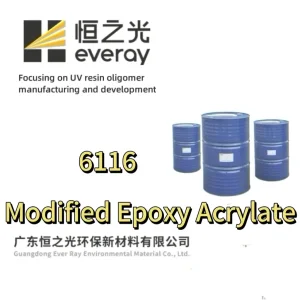
High-Quality 6116 Low Viscosity UV Curing Epoxy Oligomer, High Flexibility Acrylic Resin for Matte Wood & Ink Coatings Manufacturers, Products
View Technical Specs
Industrial White Paper Analysis
Global UV Curable Coatings Landscape & Supply Chain Paradigm Shift
A technical assessment of energy-curable polymers, regulatory drivers, decarbonization targets, and the operational economics shifting industrial procurement directly to Chinese manufacturing hubs.
Global Industrial Dynamics
The global UV curing coatings and paint market is expanding at an unprecedented CAGR of ~7.2%, driven by stringent VOC limits (EPA, EU RoHS, REACH) and the rapid shift away from thermal curing ovens. Industrial coaters require instant photocuring (under 0.5s) to eliminate post-bake footprints, lower factory energy consumption by up to 60%, and achieve 100% solid content zero-emission operations across high-throughput production lines.
Supply Chain Cluster Advantages
Direct manufacturing in Guangdong, China integrates upstream petrochemical feedstocks (acrylic acid, polyols, diisocyanates like IPDI/HDI) with high-capacity automated batch reactors. This continuous integration eliminates third-party trading markups, ensures tight molecular weight distribution (Mw/Mn), guarantees batch-to-batch consistency, and accelerates prototyping turnaround times from months to under 10 business days.
Precision Synthesis & Quality Control
Every industrial synthesis batch undergoes rigorous digital chromatographic monitoring (GPC), FTIR functional group conversion checks, rotational viscometry (Brookfield), and optical colorimetry (APHA < 30). Formulators benefit from tailor-engineered oligomer backbones engineered explicitly to resolve micro-cracking, oxygen inhibition, thermal discoloration, and interfacial shear detachment on low-surface-energy substrates.
Target Application Architecture
Engineering Tailored UV Paint Systems by Substrate
Selecting and formulating UV curing paints requires balancing photo-reactivity with viscoelastic properties. Our oligomer architectures solve specific real-world finishing challenges.
3C Electronics & Vacuum Metallizing
For PC, ABS, and PMMA housings demanding high pencil hardness (up to 4H), scratch self-healing, and sweat resistance. Aliphatic urethane acrylates provide zero-yellowing clarity, while high-adhesion promoters ensure strong mechanical interlocking for vacuum PVD aluminum topcoats without peeling.
Aliphatic PUA
Hyperbranched Oligomers
Anti-Fingerprint
Industrial Flooring & Architectural Wood
High-solid roll-coater formulations balancing fast cure and sandability. Modified epoxy acrylates deliver ultra-hard basecoat leveling, while flexible aromatic polyurethane acrylates impart extreme micro-scratch resistance against high Taber abrasion cycles and chemical spills.
Epoxy Acrylates
Aromatic PUA
Waterborne PUA
Additive Manufacturing & 3D Resins
Specially engineered low-viscosity resins tailored for high-speed SLA, DLP, and LCD vat photopolymerization. Features ultra-low volumetric shrinkage (<2.8%), high heat deflection temperatures (HDT), and ABS-like toughness for high-precision engineering prototypes.
ABS-Like Toughness
Low Shrinkage Diluents
Dual-Curing
Formulator Selection Reference
Photopolymer Oligomer Performance Comparison Matrix
A reference guide engineered by Ever Ray application specialists to assist R&D chemists and factory formulation leaders in choosing the optimal binder chemistry for target mechanical envelopes.
| Resin Backbone Type | Acrylate Functionality | Viscosity (25°C, mPa·s) | Curing Mechanism | Tensile Strength & Hardness | Primary Industrial Utility |
|---|---|---|---|---|---|
| Standard Bisphenol A Epoxy Acrylate | 2.0 | 15,000 – 35,000 (diluted) | Free-radical UV / LED | Pencil 3H - 4H / High Modulus | Wood sanding sealers, OPV varnishes, fast offset inks |
| Aliphatic Polyurethane Acrylate | 2.0 – 6.0 | 2,500 – 18,000 | Free-radical UV / Mercury | Pencil HB - 2H / Elongation 20-120% | 3C plastic housings, automotive trim, premium UV nail gel |
| Aromatic Polyurethane Acrylate | 2.0 – 4.0 | 10,000 – 45,000 | Free-radical UV / LED | Pencil 2H - 3H / Superior Abrasion | PVC resilient flooring topcoats, industrial heavy-wear paint |
| Hyperbranched Multi-Functional Acrylate | 6.0 – 14.0 | 1,200 – 6,500 | Rapid Excimer / LED | Pencil 5H / Extreme Crosslinking | Anti-scratch clear hardcoats, excimer skin-feel matte coats |
| Waterborne Polyurethane Dispersion (PUD) | 2.0 – 3.0 | 50 – 500 | Water-evap + UV Cure | Pencil H - 2H / High Elasticity | Zero-VOC natural-grain furniture, roll-to-roll thin foils |
Procurement Intelligence
Global Industrial Buyer Demands: Beyond Price Per Drum
Procuring UV curable raw materials for large-scale operations demands supply chain reliability, technical transparency, and proactive environmental compliance.
Batch Chemical Reproducibility
Automated high-speed coating lines cannot tolerate viscosity drift or shelf polymerization. We enforce automated reactor dosing, rigorous residual monomer headspace gas chromatography, and standard storage stability testing before clearing certificates of analysis (COA).
Regulatory & Eco-Standard Compliance
All manufactured oligomer and monomer lines fully conform to EU REACH registration standards, RoHS III prohibitions, and regional low-odor, monomer-free migration demands essential for food-grade packaging inks and consumer cosmetic products.
Synthesis Customization (Custom Mw & Viscosity)
Off-the-shelf resins don't always fit specialized spray or inkjet viscosities. Our synthetic laboratory tailors molecular weights, changes functional backbones, or creates customized blends diluted in reactive monomers (TMPTA, TPGDA, HDDA, DPGDA) directly in-reactor.
Technical Clarifications
Frequently Asked Questions: UV Resin Procurement & Formulation Engineering
Comprehensive engineering insights addressing key formulation problems, synthesis parameters, and international bulk shipping protocols.
How do you resolve surface stickiness caused by oxygen inhibition in thin films?
Atmospheric oxygen quenches free radicals at the film surface during polymerization, leading to tackiness in thin films (<10 µm). Formulators solve this by adding 5%–15% reactive amino acrylate oligomers or active amine co-initiators. These act as sacrificial hydrogen donors, neutralizing peroxy radicals and accelerating tack-free curing under high-speed UV LED or mercury lines.
What is the chemical difference between aliphatic and aromatic polyurethane acrylates?
Aliphatic PUAs use isocyanates such as IPDI or H12MDI that lack conjugated aromatic rings. This makes them inherently resistant to photodegradation and yellowing under UV radiation, ideal for exterior parts and optical coatings. Aromatic PUAs (using TDI/MDI) offer higher tensile modulus, scratch resilience, and lower raw material costs, but will discolor when exposed to direct sunlight.
How can an industrial coater prevent curing shrinkage on untreated plastics?
High functional density can induce volumetric shrinkage exceeding 8%, creating severe internal shear stress that leads to delamination on ABS, PC, or PET. We mitigate this by incorporating hyperbranched structures with lower shrinkage stress, blending with pure acrylate adhesion polymers, or introducing flexible polyether/polyester long-chain urethane oligomers.
What packaging options and export certifications are standard for global shipments?
Orders are shipped in 20kg poly drums, 200kg steel drums, or 1000kg IBC totes. Shipments comply with hazardous/non-hazardous maritime transport classifications, include certified SDS (GHS 16 sections), technical data sheets (TDS), certificates of analysis (COA) per batch, and full factory trace documentation for customs clearance.
Direct Sourcing Line B
Specialty Functional Resins, Monomers & Reactive Polymers
Complete your formulation toolbox with high-impact specialty resins engineered for fast reactivities, flexographic inks, nail polymers, and industrial PVC wear layers.
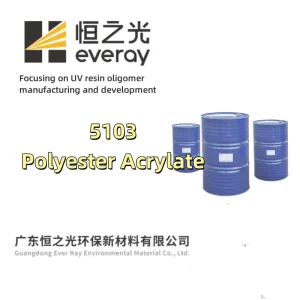
High-Quality Fast-reacting 5103 polyester acrylate UV resin, very suitable for plastic coatings Factories, Product
View Technical Specs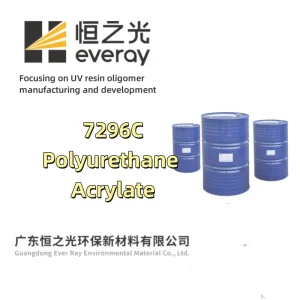
Buy Durable 7296C UV resin: solvent-resistant, abrasion-resistant, suitable for nail polish and wood coating Manufacturers, Factory
View Technical Specs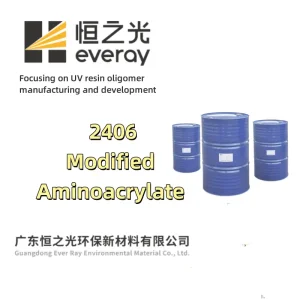
Buy 2406 UV Resin: Low Odor Solution for Rapid Paper and Plastic Varnishes Manufacturer, Factories
View Technical Specs
Buy 61163 High Solid Low Viscosity Anti-Yellowing Modified Epoxy Acrylate Resin For UV Coating Factory, Factories
View Technical Specs
Wholesale 1762 UV resin as adhesive: durable and anti-yellowing, high bonding strength Manufacturers, Factory
View Technical Specs
Wholesale Multifunctional 7600 polyurethane acrylate oligomer for UV coatings and inks Product, Products
View Technical Specs
High-Quality Low shrinkage 1290H can apply for PVC floor coating applications Supplier, Product
View Technical Specs