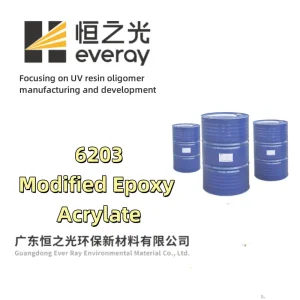
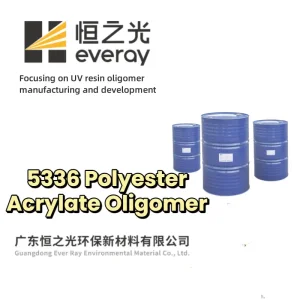
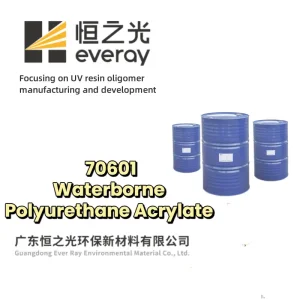
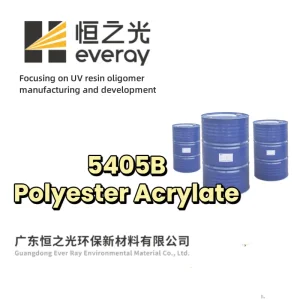
Featured Industrial UV Curable Resins & Monomers (Batch 01–08)
Precision reactive oligomers designed for accelerated curing speeds, zero-defect substrate wetting, optical clarity, and extreme mechanical durability across specialized coating and 3D printing applications.
Molecular Engineering of UV Curable Epoxy Resins: Free-Radical vs. Cationic Photopolymerization Dynamics
An authoritative analysis of crosslink density, conversion kinetics, oxygen inhibition suppression, and shrinkage dissipation in Bisphenol-A Diglycidyl Ether Acrylates (EBPA) and Cycloaliphatic Epoxies.
Epoxy Acrylate (Free-Radical) Chemistry
Epoxy acrylates represent the benchmark oligomer class for industrial UV radiation curing. Synthesized via the catalytic addition esterification of acrylic acid to the oxirane rings of Bisphenol-A Diglycidyl Ether (DGEBA), these prepolymers combine the terminal unsaturation of vinyl acrylates with the rigid aromatic backbone of bisphenol-A and polar hydroxyl side chains.
Under irradiation (365–405 nm), Norrish Type I/II photoinitiators cleave to generate active free radicals, propagating double-bond addition within milliseconds. The aromatic core imparts superior tensile strength (>55 MPa), exceptional pencil hardness (up to 4H–5H), and robust chemical resistance against harsh solvents such as MEK and acetone.
Cycloaliphatic Epoxy (Cationic) Kinetics
Unlike free-radical systems, cationic UV-curable epoxies rely on photolatent Onium salts (diaryliodonium or triarylsulfonium hexafluoroantimonates). Upon UV photon absorption, these salts photolyze to generate Bronsted superacids ($H^+MF_6^-$), triggering electrophilic ring-opening polymerization of oxirane rings without free-radical intermediates.
Crucially, cationic photopolymerization is entirely immune to atmospheric oxygen inhibition. Furthermore, oxirane ring opening introduces minimal volumetric shrinkage (<1.5% compared to 6–9% in multifunctional acrylates), drastically curbing internal interfacial stress and preventing delamination on unprimed metals, glass, and engineering thermoplastics.
Overcoming Brittleness & Shrinkage Stress
Standard bisphenol-A diacrylates exhibit high crosslinking density, which can lead to excessive brittleness and reduced flexibility (elongation at break typically <4%). Ever Ray’s polymer synthesis laboratories resolve this intrinsic trade-off through tailored elastomeric and caprolactone modifications.
By incorporating flexible polyether segments, aliphatic urethane backbones, or hyperbranched dendrimers directly into the epoxy framework (e.g., our 61003A and 67283 grades), formulators achieve balanced toughness, high line-speed curing, and superior impact resistance without sacrificing surface hardness or solvent tolerance.
| Oligomer Chemical Architecture | Viscosity (mPa·s @ 25°C) | Functionality (f) | $T_g$ (°C) | Volumetric Shrinkage | Pencil Hardness | Key Formulator Advantages |
|---|---|---|---|---|---|---|
| Standard Bisphenol-A Epoxy Acrylate | 18,000 – 35,000 (diluted) | 2.0 | 72 – 85 | 6.8% – 7.5% | 4H – 5H | Fastest cure rate, high modulus, exceptional cost efficiency. |
| Flexibilized Modified Epoxy Acrylate (Ever Ray 6231) | 8,000 – 16,000 | 2.0 – 2.5 | 48 – 62 | 4.2% – 5.0% | 2H – 3H | Superior flow leveling, excellent deep draw flexibility, reduced yellowing. |
| Cycloaliphatic Diepoxide Cationic Resin | 250 – 500 | 2.0 | 110 – 145 | 1.1% – 1.8% | 3H – 4H | Zero oxygen inhibition, outstanding thermal stability, ultra-low dielectric loss. |
| Aliphatic Urethane Modified Epoxy Acrylate (61003A) | 12,000 – 22,000 | 2.0 – 3.0 | 55 – 68 | 3.8% – 4.5% | 3H | Potting toughness, microcrack suppression, UV-light non-yellowing. |
| Novolac Epoxy Acrylate Multi-Functional | 40,000 – 75,000 | 3.5 – 6.0 | 95 – 125 | 7.5% – 8.8% | 5H – 6H | Maximum crosslink density, solder mask resistance, hot chemical bath stability. |
Global Industrial Landscape: The Decarbonization & LED-UV Transition
How tightening VOC regulations, soaring energy costs, and the rapid phase-out of mercury-arc lamps are driving worldwide enterprise adoption of advanced UV curable epoxy resin technologies.
Strict Global Regulatory Mandates
Industrial manufacturing sectors across the European Union (EU REACH Annex XVII, Industrial Emissions Directive), North America (EPA Clean Air Act, SCAQMD Rule 1113), and East Asia are aggressively constraining allowable Volatile Organic Compound (VOC) releases and hazardous air pollutants (HAPs). Conventional solvent-borne thermal baking systems emit hundreds of grams of VOCs per liter.
UV-curable 100% solids epoxy systems present a zero-VOC alternative that achieves complete conversion without thermal bake cycles. Furthermore, our formulations comply proactively with SVHC candidate lists, bisphenol-A food contact restriction thresholds, and California Proposition 65 directives.
The LED-UV & Energy Revolution
Global assembly plants are dismantling traditional high-pressure mercury arc lamps, driven by the Minamata Convention on Mercury and the urgent need to slash energy footprints. Mercury lamps require massive heat dissipation, emit ozone, and degrade rapidly, consuming up to 70% more power than modern narrow-band LED-UV emitters (365 nm, 385 nm, 395 nm, 405 nm).
However, LED-UV emits within a concentrated wavelength band devoid of short-wavelength UVC (200–280 nm), which traditionally overcame surface oxygen inhibition. Ever Ray's reactive amino acrylates, active amines, and specialized phosphine oxide co-initiators specifically restore lightning-fast, tack-free surface cure under LED lamps.
High-Speed Industrial Integration
From automated high-speed coil coating lines operating at >120 meters per minute to continuous roll-to-roll label flexography and microelectronic surface mount assembly, speed is profitability. UV epoxy resins undergo phase transition from liquid monomer/oligomer blends to fully crosslinked glassy polymers within 0.1 to 1.5 seconds.
Eliminating multi-stage thermal tunnels frees up to 80% of valuable factory floor space, slashes continuous cooling water requirements, and allows immediate robotic handling, stack testing, and downstream post-processing without cooldown queues.
Localized Application Scenarios: Delivering Target Substrate Reliability
Field-proven formulation strategies and oligomer selection matrices tailored for extreme operating environments across automotive, electronics, architectural, and packaging sectors.
3C Consumer Electronics & Microelectronics
Mobile phones, smartwatches, and laptop housings demand thin-film protection that provides pencil hardness >3H, abrasion resistance (500+ cycles steel wool @ 1kg load), and flawless clarity on polycarbonate (PC), polymethyl methacrylate (PMMA), and ABS. Formulations combine aliphatic urethane diacrylates with flexibilized epoxy acrylates (such as Ever Ray 72583 and 6231) to eliminate yellowing while cushioning drop impacts.
Automotive & EV Battery Systems
Cell-to-pack (CTP) structural battery modules require dielectric insulation coatings that cure rapidly without generating exotherms that could damage lithium-ion separators. Modified UV epoxy resins serve as potting varnishes and dielectric insulation layers, resisting thermal cycling between -40°C and +125°C, thermal shock, battery acid vapors, and motor oil immersion.
Excimer Laser 172nm Soft-Touch Mattes
Ultra-matte finishes without silica matting agents are achieved using 172nm excimer lamps. The short VUV wavelength polymerizes the top nanometer layer instantly, creating micro-folding wrinkles that scatter light. Our 53036 polyester acrylate and specialized epoxy oligomers yield a silky, soft-skin feel with scratch-resistant, anti-fingerprint properties on luxury flooring, kitchen cabinetry, and automotive dashboards.
Industrial Stereolithography & DLP 3D Printing
High-precision additive manufacturing relies on low-viscosity resin vats (<800 mPa·s at print temp) with minimal volumetric shrinkage. Ever Ray’s ABS-like formulations (71209A-1) blend epoxy diacrylates with modified reactive monomers to deliver parts with tensile strength exceeding 65 MPa, HDT >75°C, and isotropic dimensional accuracy for snap-fit functional prototyping and casting masters.
Heavy-Duty Metal Packaging & Vacuum Metallizing
Applying UV coatings to untreated aluminum, cold-rolled steel, or sputtered metallized plastic films (ABS/PC) demands adhesion-promoting polar groups. Ever Ray’s aromatic polyurethane acrylates (grade 485623c8) and 6203F epoxy resins utilize phosphate/hydroxyl-functionalized oligomers to achieve cross-hatch adhesion (0B to 5B rating, ASTM D3359) without requiring corrosive solvent wash primers.
Wood Sanding Sealers & High-Build Fillers
Automated roller-coating lines for multi-layer engineered wood and luxury vinyl tile (LVT) utilize high-solids epoxy acrylates for foundational sealing. Offering high hardness, low shrinkage, and fast sanding characteristics, these grades fill porous wood fibers in a single pass without clogging abrasive sanding belts, allowing immediate topcoat application.
China Supply Chain Resilience: Direct Synthesis, Scale & Quality Control
Guangdong Ever Ray Environmental Material Co., Ltd. operates a high-throughput synthetic chemical complex in Yunfu, Guangdong, delivering end-to-end quality control and supply certainty to international formulators.
Backward Raw Material Integration
Our production facilities maintain direct upstream linkages to premier domestic petrochemical feedstocks—including acrylic acid, epichlorohydrin, bisphenol-A, isocyanates (IPDI, HDI, TDI), and specialty diols. By managing raw material inventory internally, Ever Ray protects global buyers from upstream price swings and supply bottlenecks.
Automated Reactor Infrastructure
Spanning over 40,000 m² of modern industrial space, our production base features 10+ dedicated automated stainless-steel reactors (ranging from 10,000L to 30,000L capacity). Precision Distributed Control Systems (DCS) monitor exothermic kinetics, esterification temperatures, acid values, and oxygen-sparging levels in real time to guarantee consistent batch-to-batch polymer dispersion.
Rigorous QC Laboratory Testing
Every commercial batch undergoes multi-stage validation prior to tank discharge. Our analytical laboratory employs Gel Permeation Chromatography (GPC) for molecular weight distribution, Brookfield rotational viscometry, Fourier Transform Infrared (FTIR) spectroscopy for double-bond conversion tracking, and Gardner colorimetry to ensure export consignments meet strict customer specifications.
Technological Roadmap: The Next Frontier of Radiation Curing Chemistry
Anticipating performance demands over the next decade through bio-renewable carbon synthesis, dual-stage photothermal curing, and ultra-low migration food packaging grades.
Bio-Based Epoxy Acrylates
Replacing petrochemical bisphenol-A with renewable backbones derived from cardanol (cashew nutshell liquid), itaconic acid, and lignin-derived vanillin. Our bio-resins achieve >45% renewable bio-carbon content while matching petrochemical tensile and cure metrics.
Dual-Stage Photothermal Hybrids
Developing multi-cure systems (UV + moisture, or UV + thermal latent amine) for complex 3D assemblies and opaque automotive components. Primary UV irradiation fixes the geometry in seconds, while secondary thermal crosslinking completes cure in shadowed recesses.
Low-Migration Polymeric Acrylates
High-molecular-weight hyperbranched and polymeric photoinitiator-functionalized oligomers engineered to eliminate low-molecular-weight extractables. Compliant with Swiss Ordinance SR 817.023.21 and Nestlé guidance for indirect food contact flexographic inks.
Graphene & Nano-Silica Hybrids
Synthesizing transparent nano-silica core-shell particles bonded into the epoxy acrylate backbone. These deliver high anti-scratch, anti-wear optical clearcoats for display screens without hazing, settling, or high viscosity buildup.
Localized Global Support, Customization & Regulatory Compliance
Providing formulation troubleshooting, localized export compliance, and responsive technical engineering to accelerate your development cycles.
Custom Molecular Engineering
Buying standard resin off the shelf rarely resolves complex substrate adhesion or rheological defects. Our synthesis chemists tailor prepolymer molecular weights, functionality (f=2 to f=6), reactive diluent packages (HDDA, TPGDA, TMPTA, DPGDA), and viscosity windows to match your specific lamp spectra and application equipment.
Export Regulatory Documentation
All international consignments include verified Technical Data Sheets (TDS), GHS Rev 9 compliant 16-section Safety Data Sheets (SDS) in English and regional languages, Certificates of Analysis (COA) per batch, and full regulatory dossiers covering EU REACH, US EPA TSCA, RoHS 3 (Directive EU 2015/863), and Halogen-Free certifications.
Export Packaging & Fast Sampling
We supply standardized 20kg plastic jerrycans, 200kg steel drums, and 1,000kg ISO Intermediate Bulk Containers (IBCs), wrapped with UV-protective opaque barriers. Our export logistics desk coordinates door-to-door air freight samples (1kg–5kg) within 48 to 72 hours for international trial formulation.
Frequently Asked Questions by Industrial Formulators & Chemical Buyers
Authoritative answers to common formulation challenges, photoinitiator selections, shelf-life management, and procurement specifications.
How do epoxy acrylates differ from polyurethane acrylates (PUA) and polyester acrylates?
How can formulators overcome oxygen inhibition in thin-film UV epoxy applications?
Which photoinitiators pair best with UV curable epoxy resin systems?
What is the recommended storage temperature and shelf stability for UV epoxy resins?
Can Ever Ray modify resin viscosity and reactivity for specific roller, spray, or inkjet systems?
What are the MOQ, export shipping lead times, and sample verification policies?
Featured Industrial UV Curable Resins & Monomers (Batch 09–16)
Specialty adhesion promoters, waterborne polyurethane dispersions, tough potting oligomers, and high-wettability print binders designed for challenging industrial conditions.