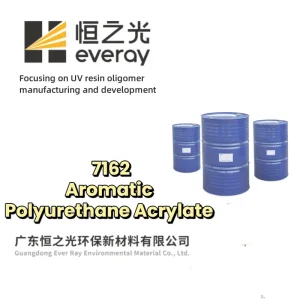
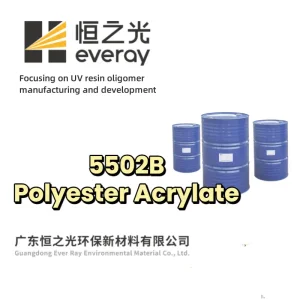
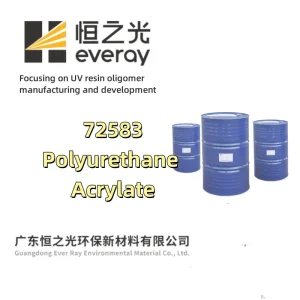
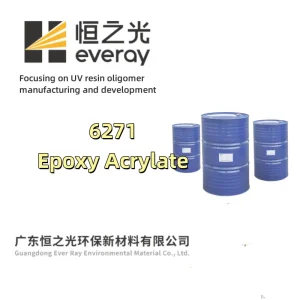
Primary UV Acrylate Oligomer Lineup (Top Selections)
Explore our top industrial-grade UV curable resins formulated for extreme chemical resistance, fast crosslink propagation, optical clarity, and low shrinkage.
Global Sourcing Dynamics: Why Enterprises Buy Direct From UV Resin Manufacturers
In modern industrial radiation curing, navigating raw material procurement requires moving past spot-market distributors toward integrated synthetic chemical manufacturers.
Global corporations faced with tightening volatile organic compound (VOC) emissions, zero-carbon production pledges, and high-frequency automated assembly lines cannot afford inconsistencies in radiation curing binders. When procurement directors opt to buy resin manufacturer direct from Guangdong Ever Ray Environmental Material Co., Ltd., they eliminate the margin cascades of regional trading intermediaries while gaining immediate direct access to synthetic polymer scientists.
UV radiation curing technology relies on instantaneous photopolymerization where liquid prepolymers convert into three-dimensional crosslinked networks within milliseconds under UV/EB light. The exact molecular weight distribution, branching architecture, residual monomer content, and photoinitiator compatibility determine whether a finished formulation meets high-yield factory standards or fails catastrophic cross-hatch tape tests.
Total Cost of Ownership (TCO)
Direct sourcing guarantees factory-gate tier-1 pricing, bypassing 15-30% broker markups while securing guaranteed batch allocation during raw material supply shocks.
Narrow Batch-to-Batch Variance
Equipped with fully automated DSC, GPC, and Brookfield viscometers, Ever Ray tightens viscosity and polydispersity tolerances to ±3%, preventing line recalibration downtime.
Global Environmental ESG
All oligomers and functional monomers conform strictly to EU REACH, RoHS, EPA TSCA, and Proposition 65 regulations, actively phasing out hazardous aromatic impurities.
Co-Development Agility
Formulators receive private custom synthesis projects, modifying backbone functionality, double bond density, and diluent packages within rapid 2-to-3-week synthesis cycles.
UV Curable Resin Portfolio: Chemistry Families & Selection Metrics
Engineered across Bisphenol-A epoxies, aliphatic/aromatic urethanes, multi-branched polyesters, and dendritic hyperbranched backbones.
| Resin Family | Crosslink Hardness | Elasticity & Flex | Non-Yellowing QUVA | Cure Propagation | Primary Industrial Vector |
|---|---|---|---|---|---|
| Bisphenol A Epoxy Acrylate | Very High (4H-5H) | Low (< 5%) | Moderate (Prone to tint) | Instantaneous | Wood sealers, sanding primers, overprint varnishes, high-speed inks |
| Aliphatic Polyurethane Acrylate | Medium to High (H-3H) | Exceptional (> 150%) | Superior (> 1000h QUV) | Fast | 3C electronics, exterior topcoats, nail gel polish, thermoforming films |
| Aromatic Polyurethane Acrylate | High (2H-3H) | Moderate (10-30%) | Low (Indoor only) | Fast | Heavy-duty parquet flooring, vacuum metallization basecoats, industrial primers |
| Polyester Acrylate Oligomer | Moderate (F-H) | Balanced (15-40%) | Moderate | High | UV offset lithography, flexo printing, plastic spray coats, screen inks |
| Hyperbranched Acrylate Oligomer | Extreme (5H-6H) | Very Low | High | Ultra-Rapid | Nanocomposite hard coats, optical lens scratch layers, anti-wear overlays |
| Waterborne PUA Dispersion | Moderate (HB-H) | High (50-100%) | High | Moderate (Requires Flash) | Zero-VOC eco wood cabinetry, interior automotive leather, thin-film paper |
| Amino Acrylate / Active Amine | N/A (Copolymer Synergist) | N/A | Moderate | Oxygen Scavenger | Surface tack removal, thin UV inks, OPV topcoats, electron beam curing |
A frequent challenge encountered by industrial chemists is the intrinsic trade-off between cure shrinkage and interfacial bonding. High-functionality resins provide extreme surface hardness and scratch resistance, yet volumetric shrinkage often induces micro-cracking and delamination on inert substrates like polycarbonate (PC), untreated polypropylene (PP), and optical glass. Ever Ray's R&D department utilizes advanced urethane acrylate oligomers integrated with internal flexibilizing soft segments, creating an interpenetrating polymer network (IPN) that releases internal shrinkage stresses while maintaining exceptional surface barrier resistance.
Macro Industry Applications: Precision Chemical Integration
Delivering tailored radiation curable resins into the world's most demanding high-volume manufacturing assembly operations.
3C Electronics & Optoelectronics
Smartphone enclosures, wearable chassis, and laptop bezels require high pencil hardness (≥3H) coupled with resistance to cosmetic lotions, sebum, and thermal shock. Ever Ray’s aliphatic PUAs paired with modified acrylate monomers achieve micro-thin films that anchor tenaciously to vacuum-metallized ABS, PC, and PMMA without yellowing.
UV Graphic Arts & High-Speed Inks
In high-speed offset and flexographic printing lines, ink-water equilibrium and pigment wetting dictate print clarity. Our engineered polyester acrylates exhibit tailored polar-dispersive surface energy ratios, preventing ink misting, roller swelling, and emulsification on paperboards, foil laminates, and barrier films.
Structural UV Adhesives & Potting
Fast-bonding optical clear resins (LOCA) and microelectronic potting resins must demonstrate deep-cure capability and sub-1.5% linear shrinkage. Ever Ray formulations prevent stress cracking on fragile silicon chips, quartz sensors, and automotive camera modules while isolating electronics from moisture ingress.
Additive Manufacturing / 3D Photopolymers
Industrial SLA, DLP, and LCD 3D printing requires low-viscosity resins that quickly re-level in vat setups. Formulated ABS-like and engineering rubber photopolymers developed by Ever Ray offer controlled critical exposure ($E_c$) and penetration depth ($D_p$) for dimensional accuracy, heat deflection resistance, and flexural resilience.
Continuous Wood & Parquet Coating Lines
Industrial furniture and multi-ply flooring production lines utilize high-throughput roller coaters running at 30-60 meters per minute. Ever Ray epoxy acrylates provide immediate sandability in primer layers, while dual-curing aromatic PUAs provide superior steel wool scratch durability and stain resistance.
Eco-Cosmetics & UV Nail Polish Gel
Nail gel systems demand cosmetic safety, painless curing without heat spikes, zero skin irritation, and smooth acetone soak-off capability. Ever Ray produces specialized low-exotherm, hema-free, and odorless aliphatic oligomers tailored for salons and luxury cosmetic brands globally.
Technology Roadmap: Next-Generation Radiation Curing Chemistries
Pioneering sustainable bio-mass carbon fractions, energy-efficient narrow-band UV-LED systems, and advanced dual-cure mechanisms.
Eliminating mercury arc lamps in favor of energy-efficient solid-state diodes. Synthesizing hyper-reactive oligomers that achieve rapid surface cure under narrow-band, low-energy LED irradiation without surface oxygen inhibition.
Transitioning from petroleum-derived diacids and polyols to renewable bio-succinic acid, cardanol-derived acrylates, and vegetable-oil polyols, delivering 30-55% certified renewable carbon content without sacrificing performance.
Combining primary UV free-radical curing with secondary thermal or anaerobic moisture condensation reactions. Crucial for complex 3D geometric assemblies and automotive electronic modules containing optical shadow zones.
Engineering non-fluorinated dendritic acrylate surfaces with hydrophobic and lipophobic nanostructured terminal groups, directly satisfying stringent upcoming global packaging bans on per- and polyfluoroalkyl substances.
Worldwide Industrial Localization, Logistics & Compliance Architecture
Seamless export protocols, localized starting formulation blueprints, and rigorous international quality documentation.
ISO 9001 & 14001 Quality System
Every synthetic resin batch produced at our Dawan Industrial Park facility undergoes automated DCS reactor monitoring, strict raw material pre-screening, and GPC molecular weight distribution verification before drumming and dispatch.
Starting Formulation Support
We do not merely supply raw resins in steel drums. Our senior application specialists supply full formulation matrices—including photoinitiator blends, anti-skinning stabilizers, wetting agents, and reactive diluent dilution curves.
Dangerous Goods Logistics & SDS
Full support for international maritime (IMDG) and air (IATA) hazardous chemical classifications. Each consignment ships with authentic multilingual GHS Safety Data Sheets, certificates of analysis (COA), and secure UN-rated steel/IBC containers.
Frequently Asked Questions: Technical & Commercial Inquiries
Expert responses from our chief chemists and global trade directors to guide your raw material evaluation process.
What criteria differentiate Aliphatic from Aromatic Polyurethane Acrylates?
How can oxygen inhibition be counteracted on high-speed UV lines?
What is the minimum order quantity (MOQ) and sample trial protocol for overseas buyers?
Can Ever Ray synthesize custom oligomers to match specific mechanical benchmarks?
How does Ever Ray guarantee chemical stability and shelf life during maritime transport?
Specialty Resins & Advanced Acrylates (Bottom Selections)
Complete your procurement specification with specialized resin grades developed for demanding mechanical, lithographic, and 3D prototyping requirements.