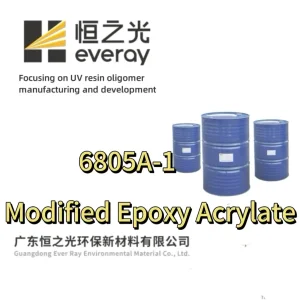
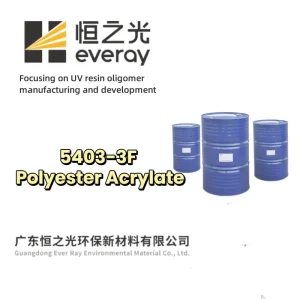
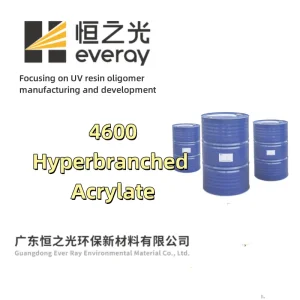
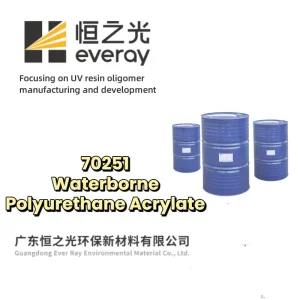
Featured Acrylate & Epoxy Oligomers
Immediate commercial delivery for UV inks, high-build overprint varnishes, flexographic systems, and specialty multi-substrate coatings.
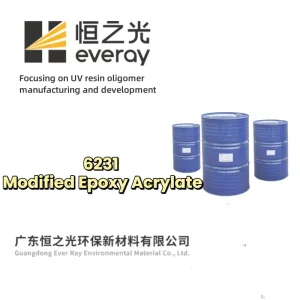
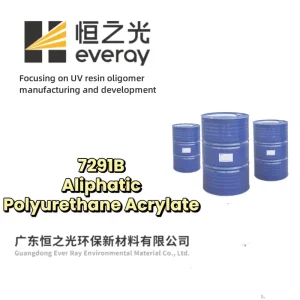
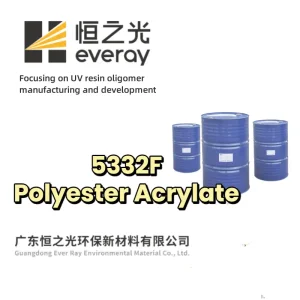
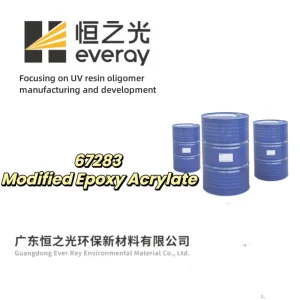
Strategic Manufacturing Advantages in China
How Guangdong Ever Ray transforms high-purity chemical syntheses into unshakeable commercial supply chains for international purchasers.
Vertically Integrated Feedstock
Direct sourcing integration with domestic petrochemical refineries ensures stable Bisphenol A, acrylic acid, and isocyanate access. By insulating production from volatile upstream pricing, we secure uninterrupted delivery cycles and price stability for global procurement managers.
Rigorous Analytical QC Testing
Every synthetic resin batch undergoes real-time GPC (Gel Permeation Chromatography) molecular weight mapping, Brookfield rotational viscosity qualification, and Karl Fischer moisture titration to eliminate batch-to-batch variability before loading into ISO-tank or drum containers.
Dedicated Yunfu Industrial Base
Operating within the government-approved Dawan Industrial Park in Yunfu, Guangdong, our facilities adhere to national chemical synthesis compliance, backed by comprehensive continuous water treatment, zero-emission scrubbers, and strict green-manufacturing governance protocols.
Industry Trends & Next-Gen Photopolymer Chemistry
The transformation from conventional VOC-emitting systems to fast-reacting, low-toxicity UV/LED curable oligomers.
LED Long-Wavelength Shift
Global regulations are phasing out medium-pressure mercury arc lamps in favor of energy-efficient 365nm, 385nm, and 395nm LED systems. Formulators mandate epoxy acrylates and co-initiator resins engineered for higher surface sensitivity and fast radical propagation under lower energy emission windows.
Bio-Based Carbon Content
Driven by ESG frameworks across Europe and North America, multinational resin consumers require measurable bio-renewable carbons. We synthesize specialized acrylate oligomers derived from cardanol, soybean polyols, and bio-derived organic acids without degrading glass transition values (Tg).
Low-Migration Standards
Packaging ink compliance (Nestlé guidance, Swiss Ordinance) necessitates near-zero residual photoinitiator migration and exceptionally low extractables. Our hyperbranched and polymeric amine synergists lock directly into the polymer matrix during crosslinking, preventing monomer leaching.
Zero-VOC Waterborne UV
Combining the application handling of water dispersions with the instantaneous crosslinking speed of radiation curing. Waterborne polyurethane and modified acrylate emulsions satisfy strict indoor air quality (IAQ) mandates across premium European architectural interior sectors.
Technical Specification & Chemistry Selection Matrix
Cross-functional matrix for formulation chemists: balance cure responsiveness, mechanical flexibility, and surface finish.
| Resin Family | Hardness Range | Tensile Strength | Elongation % | Viscosity (25°C mPa.s) | Primary Commercial Application |
|---|---|---|---|---|---|
| Standard Bisphenol A Epoxy Acrylate | 2H - 4H | 45 - 65 MPa | 1.5% - 4.5% | 15,000 - 35,000 (cut w/ TPGDA) | High-speed paper varnishes, industrial wood primers, offset inks |
| Modified Flexible Epoxy Acrylate | HB - 2H | 25 - 40 MPa | 8.0% - 25.0% | 8,000 - 18,000 | PET/BOPP flexographic packaging, metal can decorative coatings |
| Polyester Acrylate (3 to 6 functional) | F - 3H | 35 - 55 MPa | 3.0% - 10.0% | 400 - 3,500 | Lithographic offset systems, high pigment-load dispersion concentrates |
| Aliphatic Polyurethane Acrylate | B - 3H | 20 - 50 MPa | 15.0% - 180.0% | 5,000 - 45,000 | Automotive clearcoats, consumer electronics (3C), cosmetic gel polishes |
| Hyperbranched Acrylate Oligomer | 3H - 5H | 50 - 80 MPa | 1.0% - 3.0% | 1,200 - 4,500 | Anti-scratch optical films, high-durability floor wear layers |
Localized Applications & Manufacturing Scenarios
Delivering high-modulus, high-clarity resin chemistries designed for specialized downstream equipment profiles.
Automated UV Wood & Parquet Flooring
High-volume roller coating production lines require resins with balanced rheology, minimal shrinkage stress, and exceptional sandability. Our epoxy acrylates provide deep sealing into porous wood grain, preventing post-cure delamination and resisting moisture vapor diffusion.
3C Electronics & Vacuum Metallization
Smartphone housings and structural components made from polycarbonate (PC) and PMMA demand robust surface hardness paired with adhesion. Ever Ray provides non-yellowing aliphatic systems and adhesion promoters engineered to withstand thermal cycling and artificial sweat resistance tests.
UV Packaging Inks & Cold Foil Adhesives
Modern offset and flexo presses operate upwards of 300 meters per minute. Resins must provide fast radical conversion and immediate chemical tack. Our polyester acrylates ensure ideal pigment wetting to prevent misting, scumming, and ink-fountain instability.
Macro-Industry Global Procurement Demands
Meeting the operational compliance, logistics security, and environmental frameworks demanded by Tier-1 buyers.
Comprehensive REACH & TSCA Compliance
Navigating chemical registration hurdles across international boundaries. All monomer systems and oligomers produced by Ever Ray feature active documentation, complying directly with EU REACH registration guidelines, US TSCA chemical inventory status, and RoHS environmental certifications.
Logistical Security & Custom Packaging
Chemical supply security depends on fail-safe packaging options. Shipments are packed according to global marine hazards standards in nitrogen-purged 200kg steel drums, 1000kg composite IBC totes, or insulated ISO Tanks configured with continuous temperature tracking sensors.
Custom Formulation Scale-Up
From initial benchtop formulation matching through full pilot reactor validation batches, our technical team works in synergy with external formulators to adapt backbone molecular weights, hydroxyl numbers, and acid values for customer-specific substrate adhesion targets.
Frequently Asked Questions (FAQ)
Direct technical explanations addressing core formulation challenges, storage variables, and procurement specifics.
How do modified epoxy acrylates reduce crosslinking brittleness?
Standard bisphenol A epoxy acrylates present high crosslink density resulting in exceptional surface hardness but inherent film brittleness. Modified epoxy acrylates introduce flexible ether or polyester segments into the core backbone, widening the distance between reactive vinyl acrylate groups. This structural reconfiguration dramatically enhances flexibility and impact strength without sacrificing cure speed.
What steps mitigate surface oxygen inhibition during thin-film ink curing?
Atmospheric oxygen reacts with active free radicals at the coating interface, generating stable peroxy radicals that terminate the polymerization cascade and result in persistent surface tack. Formulators resolve this by incorporating tertiary amine-modified polyether acrylates or active amine synergists, which act as efficient chain-transfer agents, rapidly abstracting hydrogen and sustaining line cure velocity.
What are the ideal temperature and handling guidelines to prevent dark polymerization?
Acrylate double bonds are sensitive to sustained thermal spikes and absence of dissolved oxygen. Resins must be stored between 15°C and 25°C away from direct sunlight, open UV radiation, and severe oxidation sources. Drums require atmospheric headspace containing minimum oxygen concentrations (6–8% dissolved air equilibrium) to keep in-can phenolic inhibitors (such as MEHQ) functional.
How does polyester acrylate optimize water-ink balance in offset lithography?
In high-speed offset lithographic printing, resin binders must establish precise interfacial tension against dampening fountain solutions without emulsifying. Specialized polyester acrylates balance hydrophilic-lipophilic pathways, preventing pigment wash-out and plate tinting while delivering clean water release over continuous web and sheetfed print cycles.
Specialty Oligomer & Monomer Formulations
Complete commercial grades supporting low-shrinkage coating, printing ink manufacturing, and difficult substrate adhesion.