High-Performance Oligomers & Polyurethane Adhesives
Explore our foundational structural prepolymers, fast-setting epoxy-acrylates, and specialty oligomers engineered for rapid crosslinking, superior peel strength, and extreme substrate wettability.
The Chemical Architecture of Advanced Polyurethane Adhesives
A rigorous examination of isocyanate-polyol stoichiometry, urethane linkage dynamics, and hybrid radiation-curable networks for industrial assembly and structural bonding.
Aliphatic vs. Aromatic PU Networks
Polyurethane adhesives synthesized from aliphatic diisocyanates (such as IPDI or HDI) provide impervious resistance to photolytic ultraviolet degradation, eliminating yellowing in optical components, electronic displays, and glass laminates. Conversely, aromatic systems (TDI, MDI) yield superior modulus, elevated glass transition temperatures ($T_g$), and unparalleled tensile lap shear strength for heavy-duty structural engineering, high-load machinery, and subfloor integration.
Moisture-Cure vs. UV-Free Radical Crosslinking
Moisture-curing reactive polyurethanes (PUR) depend on ambient and substrate humidity to drive isocyanate-amine reactions, evolving polyurea segments that demonstrate elastomeric elongation and profound chemical inertness. When integrated into UV-curable polyurethane acrylates (PUA), secondary actinic radiation triggers microsecond photopolymerization, resolving the common industrial trade-off between instant handling strength and deep-seated environmental durability.
Hydrogen Bonding & Dynamic Viscoelasticity
The polyurethane backbone is defined by dynamic hydrogen bonding between urethane (-NH-COO-) hard segments embedded in an amorphous polyether or polyester soft segment matrix. This microphase separation allows our polyurethane adhesives to dissipate cyclical mechanical stresses, absorb thermal shock between dissimilar substrates (such as aluminum-to-polycarbonate), and mitigate adhesive bondline delamination across severe thermal swings (-40°C to +125°C).
Engineered Polyurethane Systems for Critical Global Sectors
Addressing stringent OEM assembly challenges through custom polyurethane formulations, tailored surface tension kinetics, and high-cohesion structural glues.
3C Electronics & Wearables
Micro-dispensed UV-moisture dual curing polyurethane glues deliver hermetic IP68 water sealing, optical clarity for camera lens barrels, acoustic mesh bonding, and high impact resistance on anodized aluminum, sapphire glass, and cyclic olefin copolymers (COP).
Automotive & EV Lightweighting
Thermal-conductive polyurethane adhesives for EV battery pack cell-to-pack (CTP) structural cohesion. Exceptional damping properties, crash-test shear resistance, and structural bonding across composite carbon fibers, galvanized steel, and treated polyamides.
Engineered Wood & Flooring
Solvent-free, zero-formaldehyde 100% solids reactive polyurethane glues for multi-layer engineered hardwood, LVT/SPC luxury vinyl tile, and high-speed exterior architectural laminates, exceeding EN 204 D4 boiling-water resistance standards without delamination.
Clean Energy & Photovoltaics
Weatherable polyurethane encapsulants and perimeter junction frame structural adhesives exhibiting high hydrolytic stability, minimal thermal shrinkage stress, and uninterrupted dielectric isolation against 85°C/85% RH damp heat degradation over decades.
Industrial Polyurethane Adhesive Performance Specifications
| Polymer System | Tensile Modulus (MPa) | Elongation at Break (%) | Glass Transition ($T_g$) | UV Yellowing Delta E | Primary Substrate Affinity |
|---|---|---|---|---|---|
| Aliphatic PUA System | 350 – 850 | 60% – 180% | 35°C to 75°C | ΔE < 1.2 (1000h QUV) | PC, PMMA, PET, Optical Glass |
| Aromatic Structural PU | 800 – 2100 | 15% – 50% | 55°C to 110°C | ΔE > 5.0 (Yellowing) | Galvanized Steel, Composites, FRP |
| 1K Moisture-Cure PUR | 20 – 120 | 250% – 600% | -25°C to 15°C | ΔE < 3.0 (Indoor Spec) | Treated Woods, Ceramics, Concrete, PVC |
| Dual-Curing PUA/Epoxy | 1200 – 2800 | 5% – 25% | 85°C to 145°C | ΔE < 1.8 (Engineered) | Silicon Wafers, Copper, Anodized Al |
China Factory 4.0: Supply Chain Resilience & Batch Reproducibility
Inside Guangdong Ever Ray Environmental Material Co., Ltd.: Leveraging automated DCS reactors, vertical chemical synthesis, and ISO-certified continuous precision.
Fully Automated DCS Reactors
Our Yunfu production base operates automated high-tonnage stainless steel reactors regulated through advanced Distributed Control Systems (DCS). Closed-loop exotherm monitoring controls precise addition of isocyanates, capping catalysts, and acrylic monomers, maintaining isocyanate content (%NCO) and batch-to-batch polymer dispersion within a ±0.05% tolerance window.
Vertical Integration & Security
By producing our own polyester polyols, modifying specialized epoxy backbones, and stocking foundational aliphatic/aromatic diisocyanates in multi-hundred-ton bulk capacity, Ever Ray shields global formulators and distributor networks from volatile chemical price shocks and acute geopolitical raw material shortages.
Standardized Metrology & Quality Audit
Every shipment is verified against strict Certificates of Analysis (COA) utilizing Gel Permeation Chromatography (GPC) for molecular weight distribution, Fourier Transform Infrared (FTIR) fingerprint validation, and Brookfield RVT viscosity profiles across 25°C, 40°C, and 60°C conditions to ensure seamless dispensing on automated client lines.
Supply Chain Integrity Assurance for Tier-1 Contracts
Ever Ray implements automated inventory forecasting and dedicated multi-drum or IBC tote reserves for international contract customers. With direct port proximity via Guangdong logistics hubs, export consignments clear customs with zero regulatory hold-ups.
Technical Roadmap & Future Outlook for Polyurethane Adhesives
Pioneering sustainable bio-based monomers, debonding-on-demand circular designs, and intelligent dual-cure hybrid matrices.
Bio-Based & Carbon-Neutral Polyols
Accelerating the replacement of petrochemical polyols with succinic acid derivatives, modified castor oil, and recycled PET polyols to reach up to 45% bio-carbon content while preserving mechanical shear strength and hydrolytic stability.
Debonding-on-Demand (DoD)
Synthesizing thermally cleavable Diels-Alder linkages into the structural polyurethane backbone, enabling clean, defect-free separation of consumer electronics and EV batteries for frictionless refurbishment and circular recycling.
Nano-Toughened Hybrid Networks
Dispersion of core-shell rubber (CSR) nanoparticles and functionalized POSS (polyhedral oligomeric silsesquioxane) cages within the polyurethane acrylate network to suppress crack propagation under cryogenic stress without raising resin viscosity.
AI-Guided Stoichiometric Synthesis
Deploying predictive modeling to forecast oligomer viscosities, phase separation kinetics, and crosslink density curves, slashing custom polymer formulation cycles from months down to less than fourteen business days.
Localization Support & International Regulatory Safeguards
Ensuring frictionless market access, regulatory compliance, and workplace safety validation across European, North American, and Asia-Pacific jurisdictions.
EU REACH & SVHC Compliance
Every polyurethane adhesive, acrylate monomer, and reactive resin manufactured by Ever Ray undergoes comprehensive substance screening under Regulation (EC) No 1907/2006 (REACH). Formulations remain devoid of SVHCs (Substances of Very High Concern), including forbidden plasticizers, organotin compounds, and residual monomers.
TSCA, RoHS 3 & Proposition 65
Full conformance with the Toxic Substances Control Act (TSCA) for direct importation into the United States. Adherence to EU Directive 2015/863 (RoHS 3) restricts heavy metals and phthalates, fulfilling stringent California Prop 65 consumer exposure risk assessments.
Zero-VOC & Ultra-Low Monomer Content
To comply with stringent industrial emission limits and occupational air quality thresholds, Ever Ray provides 100% active solids formulations and waterborne polyurethane systems characterized by sub-0.1% free monomer content and zero volatile organic compounds.
Global Enterprise Sourcing Framework & Quality Parameters
What engineering directors and global purchasing heads must verify when auditing polyurethane glue suppliers.
Rheology & Thixotropic Index
Ensuring dispensing reliability through precise yield stress metrics. Our technical data sheets (TDS) specify exact viscosity indices at variable shear rates to avoid dripping on vertical structural joints while facilitating effortless automated micro-beading.
Open Time vs. Press Time Windows
Balancing assembly line throughput requirements. Formulations are tuned from ultra-fast 30-second initial tack for robotic pick-and-place lines to extended 60-minute open times for wide-format architectural wood panel sandwich presses.
Substrate Surface Energy Matching
Overcoming poor wettability on low-surface-energy (LSE) materials like untreated polyolefins (PP, PE) and PTFE through custom functionalized polyurethane backbones that generate dynamic polar interactions without expensive plasma pre-treatment.
Export Packaging & Inert Purging
Available in nitrogen-purged 20kg UN-certified metallic pails, 200kg steel drums, and 1000kg reinforced IBC totes fitted with desiccated vapor barriers to stop premature moisture-induced isocyanate gelling during extended transoceanic shipments.
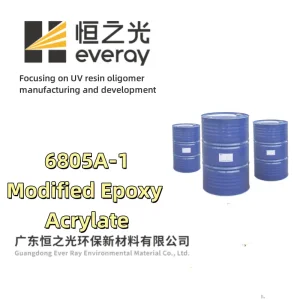
Advanced Resins, Functional Acrylates & Polyurethane Systems
Procure specialized polyurethane acrylates, non-yellowing oligomers, and customized crosslinking agents directly from our automated production lines.
Frequently Asked Questions from Industrial Buyers & Formulators
In-depth technical answers mined from global search queries, formula troubleshooting requests, and enterprise procurement audits.
What is the fundamental difference between Aliphatic and Aromatic Polyurethane Acrylate (PUA) adhesives?
The distinction lies entirely in the chemical structure of the diisocyanate precursor used during polymer synthesis. Aliphatic PUA adhesives (utilizing IPDI, H12MDI, or HDI) contain no conjugated benzene aromatic rings, rendering them completely impervious to photo-oxidation, thermal discoloration, and yellowing when exposed to solar ultraviolet radiation. They represent the gold standard for optical bonding, consumer 3C electronics housings, transparent plastic laminates, and cosmetic nail enhancements. In contrast, Aromatic PUA adhesives (derived from TDI or MDI) possess aromatic rings that form quinoid chromophores under UV radiation, causing yellowing over time. However, aromatic systems offer markedly higher mechanical modulus, superior tensile strength, faster crosslinking kinetics, and favorable cost efficiency, making them the preferred choice for industrial floorings, structural engineered wood adhesives, and interior automotive assembly where light exposure is absent.
How does a moisture-cure reactive polyurethane glue (PUR) achieve structural cohesion without solvent evaporation?
Reactive hot-melt and liquid moisture-curing polyurethanes (PUR) are 100% solids prepolymers synthesized with reactive terminal isocyanate (-NCO) end groups. Upon application, initial green strength is established rapidly through cooling or physical wetting. Subsequently, the terminal isocyanate groups react with ambient atmospheric moisture or moisture present within the substrate (such as timber or concrete). This nucleophilic addition reaction generates an unstable carbamic acid that decomposes into carbon dioxide gas and a primary amine. The freshly formed amine immediately reacts with another unreacted isocyanate group to create a strong, symmetrical polyurea linkage (-NH-CO-NH-). This crosslinking transforms the adhesive into an infusible, highly resilient three-dimensional network with outstanding resistance to boiling water, chemical solvents, and high thermal mechanical loading.
How do dual-cure UV-moisture polyurethane systems resolve shadow curing issues in complex assemblies?
In complex modern assemblies (such as multi-component camera modules, EV battery thermal plates, and display frames), certain bondline zones are completely shaded from direct ultraviolet lamp or LED exposure. A pure UV-curable glue leaves these shaded areas unreacted, leading to bond failure, outgassing, and component corruption. Dual-cure polyurethane formulations incorporate both acrylic functional groups for instantaneous free-radical UV crosslinking and free terminal isocyanate (-NCO) groups for ambient moisture post-curing. The UV flash (365nm to 405nm) crosslinks the exposed outer boundary within 2 to 5 seconds, providing instantaneous handling strength for continuous line automation. Simultaneously, the unexposed shadowed zones cure completely over 24 to 72 hours via secondary moisture mechanisms, ensuring 100% structural cohesion throughout the geometry.
What testing procedures and documentation are supplied with Ever Ray industrial shipments?
Every commercial production batch manufactured at our Yunfu facility is accompanied by an authentic Certificate of Analysis (COA) containing exact laboratory test results for: (1) Brookfield dynamic viscosity profiles across standard reference temperatures; (2) Isocyanate content (%NCO titration via di-n-butylamine method) or acrylate double bond conversion values; (3) Color metric grading (Gardner or APHA scales); (4) Non-volatile solids content (verified at 105°C for 3 hours); (5) Density and refractive indices. For international trade compliance, our products are shipped with multilingual SDS compliant with GHS Revision 8, EU REACH compliance certificates, RoHS 3 chemical testing reports, and packaging conformity certificates for maritime dangerous goods (IMDG) or non-hazardous transport verification.
Can Ever Ray custom-synthesize a proprietary polyurethane oligomer for custom viscosity and elongation targets?
Yes. Custom synthesis represents over 35% of Ever Ray's annual engineering output. Formulators can specify their exact performance targets, including target viscosity (e.g., from ultra-low 250 mPa·s for inkjet/spray to thick 150,000 mPa·s thixotropic pastes), specific elongation requirements (from 5% rigid hard coats to 400% high-strain elastomeric joints), and specific substrate adhesion demands (such as untreated PET, optical glass, or anodized magnesium). Our R&D team adjusts the polyol backbone (polycarbonate, polyether, or polyester), alters isocyanate functionality, and selects optimal reactive diluent packages. Laboratory screening samples are typically synthesized and dispatched within 7 to 10 working days, followed by seamless pilot-scale reactor scale-up validation.