Primary Line-up
High-Performance Polyurethane Acrylates & Specialty Oligomers
Direct factory supply of verified resin grades engineered for optical clarity, vacuum metallization, extreme abrasion defense, and high-adhesion industrial coatings.
High-Quality 7901B UV-resin for industrial coatings Factory, Products
Product Details
High-Quality Fast curing and strong adhesion 1730 UV resin suitable for vacuum plating Manufacturer, Suppliers
Product Details
High-Quality 6203F UV resin for UV metal coating and printing ink Factories, Products
Product Details
Wholesale Bisphenol A Epoxy Acrylate Resin 9105M-80: A Versatile Core Resin for Durable and Glossy UV Coatings Manufacturer, Suppliers
Product Details
Wholesale Polyester Acrylate 5502B–Fast Reactivity, High Hardness, Low Odor, and Excellent Heat Resistance Manufacturer, Supplier
Product Details
High-Quality 7620 UV-curing Resin applied in UV vacuum electroplating Factories, Products
Product Details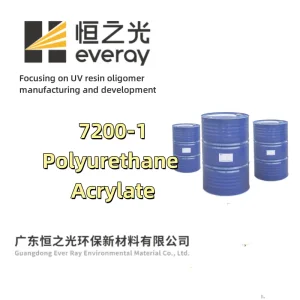
Buy Durable UV furniture coating: 7200-1 Aliphatic polyurethane acrylate UV Resin Factory, Products
Product Details
Industry Macro-Dynamics
Global Polyurethane Application Landscape & Technical Transition
How the worldwide drive toward decarbonization, volatile organic compound (VOC) reduction, and micro-precision manufacturing is reshaping the polyurethane application supply chain.
Radiation Curing vs. Thermal PU
Traditional two-component (2K) solvent-based polyurethanes require intensive thermal flash-off zones and lengthy polymerization dwell times. Modern polyurethane application facilities have accelerated transitions to 100% solids UV/EB radiation curing and Waterborne Polyurethane Dispersions (PUD). This eliminates thermal oven energy footprints by up to 75% and slashes process line lengths.
- Near-instant crosslinking (<3 seconds)
- Zero VOC emission compliance
Commercial Economic Shifts
Global procurement teams face escalating raw material price volatility in polyols (PTMG, PPG, polyester polyols) and diisocyanates (IPDI, HDI, TDI, MDI). Forward-integrated manufacturers who synthesize oligomers directly from basic building blocks insulate downstream compounders from catastrophic price shocks, maintaining narrow viscosity tolerances and predictable batch-to-batch deliverability.
- Upstream monomer hedging
- Direct bulk isotank & drum economics
Aliphatic vs. Aromatic Divergence
Polyurethane structural selection dictates commercial viability. Aromatic polyurethane acrylates (TDI/MDI backbones) dominate structural, interior flooring, and wood applications where impact strength, tensile toughness, and cost efficiency take precedence over color fastness. Aliphatic chemistries (IPDI/HDI) are mandatory for consumer electronics, automotive trim, and outdoor clearcoats to eliminate yellowing indices (ΔYI < 1.0).
- QUV-A accelerated weathering stability
- Elastic memory vs. surface glass hardness
Substrate & Regional Engineering
Localized Polyurethane Application Paradigms
Specific formulation engineering tailored to regional manufacturing clusters, environmental conditions, and distinct substrates across global manufacturing hubs.
East Asian 3C Electronics
Engineered for high-volume automated lines producing laptops, tablets, and mobile smartphones. Demands pencil hardness ≥ 3H, Taber abrasion resistance (>1,000 cycles with CS-10 wheels), and uncompromised adhesion to difficult injection-molded substrates (PC, ABS, PC/ABS blends) without primer flashcoats.
- Core Substrate: Polycarbonate & ABS alloys
- Primary Target: RCA wear > 300 cycles
European Low-VOC Wood Finishing
Formulated for stringent EU REACH and Decopaint Directives. Uses waterborne polyurethane acrylate dispersions and hyperbranched oligomers on automated roller-coating and vacuum-coater lines for engineered hardwood, PVC luxury vinyl tile (LVT), and high-end cabinetry, delivering open-grain natural wood warmth.
- Core Substrate: Oak, Walnut, SPC/LVT Core
- Primary Target: Zero free isocyanate monomers
North American Industrial PVD
Tailored for automotive lighting reflectors, cosmetic packaging, and architectural hardware requiring physical vapor deposition (PVD) basecoats and topcoats. Guarantees leveling without orange peel, gas-tight crosslink networks, and thermal shock resistance (-40°C to +85°C cycles).
- Core Substrate: Sputtered Aluminum/Chrome
- Primary Target: Boiling water resistance > 2 hrs
Global Additive Stereolithography
Formulated for high-precision industrial DLP, SLA, and LCD 3D printers. Tailored polyurethane acrylate backbones provide elongation at break up to 150% without brittle shattering, curing speed tailored to 385nm and 405nm LED engines, and low linear shrinkage (<1.2%).
- Core Process: Top-down / Bottom-up Photopolymer
- Primary Target: High tensile yield + high impact
China Factory Advantage
Guangdong Supply Chain Resilience & Synthesis Scale
Operational execution from the chemical heartland of South China, integrating raw material bulk synthesis, DCS automated processing, and comprehensive quality assurance.
2006
Established Pioneer
40,000m²+
Production Base
10+
DCS Reactor Trains
10+
Invention Patents
100+
Polymer Engineers
DCS Automation
Fully integrated Distributed Control System (DCS) monitoring exotherm temperatures, catalyst feeding rates, and isocyanate conversion indexes (NCO titration) in real time to secure strict batch consistency.
Port Logistics Proximity
Strategically situated along the Pearl River Delta logistics corridor with multimodal access to Shenzhen, Guangzhou, and Jiangmen deep-water terminals for prompt containerized export handling.
Traceability & QC
Every production lot undergoes Gel Permeation Chromatography (GPC), Brookfield rotational viscosity profiling, FT-IR fingerprinting, and colorimetric Gardiner assays with retain samples preserved for 24 months.
Future Trajectory
Polyurethane Chemistry Roadmap: 2026–2030
Strategic R&D frontiers driving next-generation high-solids, dual-cure, and bio-derived polyurethane acrylates to meet evolving industrial demands.
Dual Photo-Thermal Crosslinking
Overcoming shadow-cure limitations in complex 3D-molded structural components and multi-layer automotive assemblies. Our developmental dual-cure polyurethane acrylates incorporate UV photopolymerization for rapid surface tackification followed by mild thermal crosslinking (≤80°C) for deep shadow zones.
- Elimination of uncured monomers in undercut geometries
- Enables low-distortion assembly of hybrid substrates
Bio-Based Polyol Integration
Synthesizing aliphatic and aromatic polyurethane acrylates utilizing 30% to 55% renewable bio-carbon sourced from castor, soybean, and succinic acid feedstocks. These resins meet strict environmental benchmarks while matching or exceeding the hydrolytic and mechanical performance of petroleum-based benchmarks.
- Verified USDA BioPreferred and ISCC+ compatibility
- Zero sacrifice in pencil hardness or tensile modulus
Self-Healing Dynamic Networks
Incorporating reversible disulfide bonds and dynamic hydrogen-bonded urethane domains within UV-curable matrices. Minor surface scuffs on automotive finishes, wearable touchscreens, and protective coatings recover autonomously under mild ambient warmth (≥45°C) without loss of gloss.
- Repeatable scratch self-recovery cycles
- High optical transparency (>92% transmittance)
Global Compliance Architecture
International Regulatory Compliance & Field Support
Ensuring frictionless international trade, supply assurance, and technical deployment across all major regulatory zones.
REACH, TSCA & GHS Certification
All commercial shipments are supplied with complete documentation packages including 16-section GHS Safety Data Sheets (SDS), technical dossiers, Certificates of Analysis (COA), and registration status updates for EU REACH, US TSCA, and South Korea K-REACH.
Specialized Chemical Packaging
Export-certified UN-rated heavy-gauge steel drums (200kg net), intermediate bulk containers (IBC 1000kg net), and temperature-controlled isotank transport. UV-opaque, nitrogen-blanketed headspaces prevent light exposure and moisture contamination during transit.
Field Application Engineering
Our bilingual senior chemists deliver rapid line-side assistance, assisting clients in curing spectrum matching (Mercury arc vs. 365/395nm LED), reactive diluent blending ratios, substrate surface tension matching, and solving oxygen inhibition issues.
Direct Formulator Consultation
Frequently Asked Questions Regarding Polyurethane Applications
In-depth technical and commercial answers directly addressed by our chemical synthesis and formulation specialists.
What is the structural and mechanical difference between aliphatic and aromatic polyurethane acrylate oligomers?
Aliphatic polyurethane acrylates are synthesized using aliphatic diisocyanates such as IPDI (Isophorone Diisocyanate) or HDI (Hexamethylene Diisocyanate). Because the backbone contains no conjugated benzene rings, these polymers cannot generate quinoid chromophores under ultraviolet radiation, providing exceptional resistance to yellowing (ΔYI < 1.0) and superior outdoor weatherability. They are the benchmark choice for automotive clearcoats, optical films, 3C electronic housings, and cosmetic gel coatings.
Aromatic polyurethane acrylates are based on aromatic diisocyanates like TDI (Toluene Diisocyanate) or MDI (Methylene Diphenyl Diisocyanate). While they offer high tensile modulus, scratch resistance, rapid cure rates, and superior cost-effectiveness, the aromatic ring degrades under UV light, leading to yellowing. Consequently, they are preferred for indoor applications such as parquet floor coatings, furniture finishes, structural primers, and pigmented inks.
Aromatic polyurethane acrylates are based on aromatic diisocyanates like TDI (Toluene Diisocyanate) or MDI (Methylene Diphenyl Diisocyanate). While they offer high tensile modulus, scratch resistance, rapid cure rates, and superior cost-effectiveness, the aromatic ring degrades under UV light, leading to yellowing. Consequently, they are preferred for indoor applications such as parquet floor coatings, furniture finishes, structural primers, and pigmented inks.
Which oligomer systems should be selected for high-performance UV wood and parquet floor coatings?
Industrial wood and flooring coating lines utilize a layered architecture. Sealer and sanding primer coats typically employ modified epoxy acrylates due to their rapid surface curing, high crosslink density, deep grain penetration, and easy sanding properties. For intermediate and topcoats, formulators blend multifunctional aromatic or aliphatic polyurethane acrylates with hyperbranched acrylates to achieve a balance of Taber abrasion resistance, flexibility to accommodate seasonal wood expansion/contraction, and micro-scratch resistance. In eco-regulated facilities, waterborne polyurethane acrylate dispersions (PUDs) are used to achieve an ultra-low-VOC, natural open-pore matte finish.
Can your factory synthesize custom polyurethane acrylates to meet specific formulation targets?
Yes. Our R&D engineering center specializes in targeted macromolecular engineering. We can modify polyol chain backbones (polycarbonate, polyester, polyether), adjust oligomer functionality (from difunctional to hexafunctional and hyperbranched architectures), alter molecular weight distributions, and formulate bespoke reactive diluent packages (such as IBOA, TPGDA, TMPTA, DPHA). Whether you require adhesion to untreated polypropylene, extreme flexibility for coil coatings, low volumetric shrinkage for 3D photopolymers, or specific high glass transition temperatures (Tg > 90°C), we can synthesize lab-scale prototypes and scale them up via our DCS reactor lines.
How do amino acrylates and active amines improve curing kinetics in thin-film polyurethane coatings?
Atmospheric oxygen strongly inhibits free-radical photopolymerization by rapidly scavenging propagating carbon-centered radicals to form unreactive peroxy radicals, which terminates polymerization and leaves a tacky, under-cured surface. Amino acrylates and reactive amine synergists act as hydrogen donors when combined with Type II photoinitiators (such as benzophenone or ITX). The amine alpha-hydrogen transfer generates reactive aminoalkyl radicals that react with and consume oxygen molecules, rapidly eliminating surface oxygen inhibition. Because our amino acrylates feature copolymerizable double bonds, the amine compound is fully crosslinked into the cured polymer network, eliminating residual amine odor and preventing migration.
What documentation, export testing, and logistics services are provided for overseas bulk buyers?
Every export shipment includes a certified Certificate of Analysis (COA) specifying Brookfield viscosity, acid value, non-volatile solid content, chromaticity, and density. Fully compliant 16-section Safety Data Sheets (SDS) are provided in multiple languages. We furnish technical data sheets (TDS) containing suggested starting formulations, cure response benchmarks (mJ/cm²), and substrate compatibility charts. Logistically, we handle ocean container shipping, ISO tanks, and dangerous goods maritime packing declarations (IMDG code) directly from South China shipping ports.
Extended Polymer Portfolio
Advanced Photopolymer Resins, Oligomers & Functional Systems
Browse our precision engineering resins, dual-cure polyurethane systems, and photo-thermal formulations for specialty coatings and additive manufacturing.
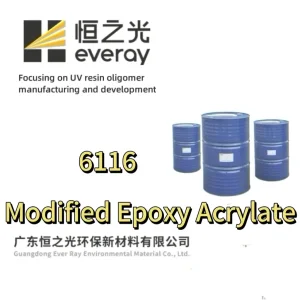
High-Quality 6116 Low Viscosity UV Curing Epoxy Oligomer, High Flexibility Acrylic Resin for Matte Wood & Ink Coatings Manufacturers, Products
Product Details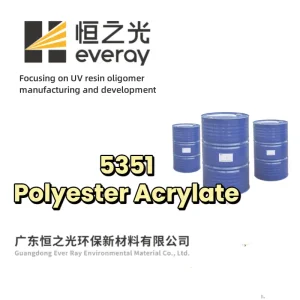
High-Quality Polyester Acrylate 5351 – The Ideal Choice for High-Performance UV Coatings and Inks Product, Products
Product Details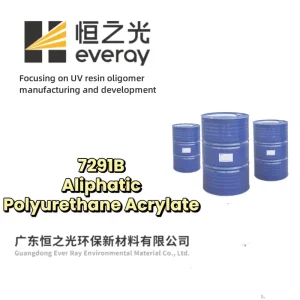
High-Quality A Revolutionary Choice Empowering High-End UV Applications: PUA 7291B Factories, Products
Product Details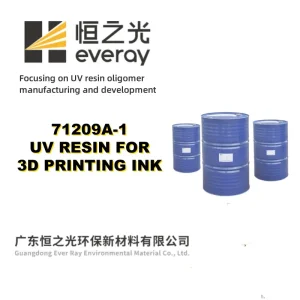
Buy 71209A-1 ABS-Like Engineering Resin: High Strength Meets High Impact Resistance Factory, Factories
Product Details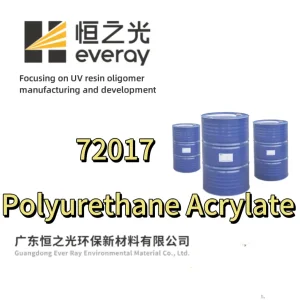
Wholesale 72017 Photo-Thermal Dual-Curing Polyurethane Acrylate Resin | Low Shrinkage & High Toughness Oligomer for 3D Printing Supplier, Products
Product Details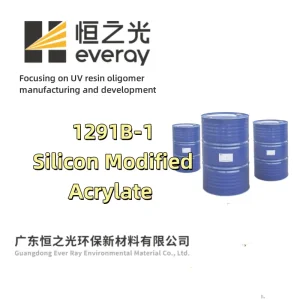
High-Quality Enhance UV coating using the antifouling function of 1291B-1 Suppliers, Product
Product Details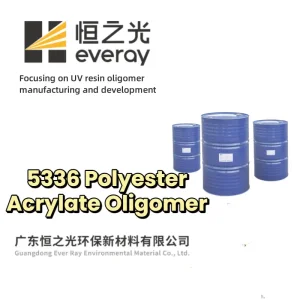
Buy Polyester Acrylate 5336 – The Ideal Resin for High-Performance UV Inks and Varnishes Manufacturer, Supplier
Product Details