
Featured UV Polyester & Epoxy Acrylate Oligomers
Precision-polymerized chemical grades manufactured directly at our Yunfu automated synthesis reactors, formulated for immediate integration into high-throughput UV curing production lines.
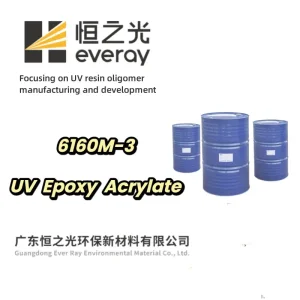
High-Quality 6160M-3: Fast curing modified epoxy acrylate for improved performance Manufacturer, Supplier
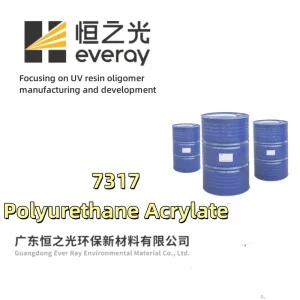
High-Quality 7317 UV resin professional in UV ink-wrinkle and snowflake effects Manufacturers, Factories
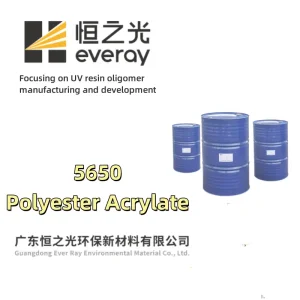
High-Quality 5650F UV resin for UV varnish and printing ink Manufacturer, Product
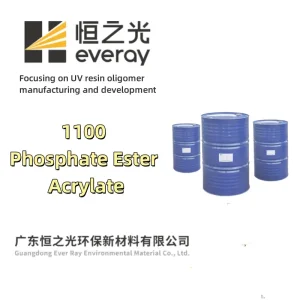
Wholesale Strong adhesion acrylate oligomer 1100UV resin, suitable for UV coatings and inks Supplier, Suppliers
Wholesale High Gloss Fast Curing Modified Epoxy Acrylate Resin (UV Oligomer) Manufacturers, Product
Wholesale Multifunctional 7253A-5 UV resin: heat-resistant, cold-resistant, suitable for various adhesives Supplier, Factories
Wholesale 5450 UV resin for UV coating, paper varnish, screen creeping Manufacturer, Manufacturers
High-Quality Polyester Acrylate 5405B – A High-Efficiency Solution for Multi-Field UV Applications Suppliers, Product
Molecular Engineering of Polyester Epoxy Acrylates
Resolving the historical paradox between brittle epoxy cure hardness and elastomeric polyester flexibility through custom-tailored prepolymer hybridisation and oxirane ring opening.
Hybrid Backbone Architecture
Standard Bisphenol-A epoxy acrylates yield exceptional pencil hardness (3H–5H), rapid surface cure kinetics, and uncompromised chemical inertness, yet suffer from high internal volume contraction and substrate embrittlement. Ever Ray synthesizes hybrid polyester-epoxy systems that integrate multi-functional aliphatic/aromatic polyester diols directly into the glycidyl ether prepolymer matrix.
- Balanced ester chain flexibilization
- Low internal stress during rapid photopolymerization
- Exceptional crosshatch adhesion (ISO Class 0)
Photocure Kinetics & Dual Cure
Equipped with terminal acrylate ester functionalities and latent functional backbones, our custom resins exhibit elevated double-bond conversion rates under both medium-pressure mercury arc lamps and energy-efficient 365–395nm UV-LED arrays. By modulating the oligomer's steric hindrance, we suppress radical recombination traps.
- Surface cure speeds surpassing 60 m/min
- Overcoming atmospheric oxygen inhibition
- Optimized for shadow-cure hybrid curing protocols
Interfacial Chemistry & Passivation
Polyester epoxy hybrid macromolecules feature polar hydroxyl side chains generated during the ring opening of oxirane groups with acrylic acid. These polar groups form strong hydrogen and covalent coordinate bonds with polar substrates, ensuring durable mechanical keying and chemical passivation on non-porous surfaces.
- Anti-corrosive passivation on electroplated alloys
- Zero delamination in 100°C boiling water immersion
- Excellent wetting dynamics on corona-treated BOPP & PET
Macro-Industry Turnkey Formulations: Engineered for Reliability
From consumer electronics micro-coatings to ultra-high-speed industrial flexographic packaging, our polyester epoxy materials bridge the performance gap between synthetic chemistry and shop-floor productivity.
3C Consumer Electronics
Smart devices and wearable chassis demand optical coatings capable of surviving skin oils, synthetic perspiration, and abrasive dropped impacts. Our modified polyester epoxy acrylates provide exceptional micro-scratch healing, chemical barrier performance against isopropyl alcohol rubs (>200 double rubs), and zero delamination across polycarbonate and anodized magnesium-aluminum alloys.
High-Speed Graphic Inks & OPV
For offset, gravure, and flexo presses operating above 300 meters per minute, binder rheology is the single determining factor for printing clarity. Ever Ray's polyester acrylates exhibit controlled pseudoplastic thixotropy, ensuring instantaneous pigment wetting, minimal ink misting at elevated cylinder shear, and immediate water-ink emulsification balance.
Automotive & Coil Coating
Exterior coil coating systems and engine bay plastics confront persistent thermal cycling (-40°C to +120°C) coupled with corrosive road salt sprays. Formulating with high-molecular-weight polyester-modified epoxy networks locks elasticity into the matrix, enabling pre-coated metallic sheets to endure severe 0T–2T stamping and folding without micro-fracturing.
Additive Manufacturing & SLA
Photopolymer vat 3D printing requires an uncompromising balance between reactive resin fluidity and solid green-state tensile strength. Our low-viscosity modified oligomers accelerate vat layer recoating times while cutting post-cure shrinkage down to negligible levels, yielding dimensionally stable engineering prototypes and functional orthotics.
China Factory 4.0: Supply Chain Elasticity & Scale
Integrating fully closed-loop synthesis automation, real-time distributed process control (DCS), and raw material backward integration to guarantee zero-defect international supplies.
Continuous Synthesis DCS Control
Our 40,000 square meter manufacturing base in Yunan County, Yunfu City operates automated continuous synthesis units overseen by state-of-the-art DCS systems. Reactor thermal spikes during exothermic acrylic acid additions are held within an exacting ±0.5°C tolerance, eliminating batch-to-batch polymer chain variance.
- Automated mass flow metering for raw precursors
- Continuous in-line acid value and viscosity monitoring
- Automated vacuum azeotropic dehydration
Raw Material Upstream Backward Integration
Global market volatility in Epichlorohydrin, Bisphenol-A, and Acrylic Acid frequently halts downstream production for non-integrated blending facilities. Ever Ray safeguards its global supply pacts through multi-year strategic off-take contracts and internal storage reservoirs exceeding 5,000 metric tons.
- 99.8% on-time fulfillment rate across worldwide hubs
- Stable price hedging against commodity fluctuations
- 10 fully scalable production lines in continuous operation
Strict Lot Fingerprinting & Traceability
Every drum leaving our Yunfu plant features an encrypted QR-coded Certificate of Analysis (CoA) tied directly to our analytical spectrometry archives. Our QA laboratory scrutinizes Gel Permeation Chromatography (GPC) molecular weight distributions to verify that monomer oligomerization matches technical standards.
- Gel Permeation Chromatography (GPC) trace verified
- Residual oxirane ring titration via ASTM D1652
- Retained batch sample archives preserved for 24 months
Technology Roadmap: Next-Gen Radiation Curing
Mapping our forward R&D investments toward carbon-neutral feedstocks, ultra-low viscosity diluent-free binders, and high-efficiency LED excimer systems.
| R&D Vector | Current Industrial Standard | Ever Ray 2026 Milestone | Horizon 2030 Objective | Impact on Formulation |
|---|---|---|---|---|
| Bio-Renewable Carbon Index (BCI) | 0% – 100% Petrochemical Origin | 25% – 40% USDA Certified Bio-polyols | > 70% Bio-derived Organic Esters | Drastic Scope 3 carbon reduction with identical Tg and tensile values. |
| Photo-Initiation Window | Mercury Vapour (254nm – 365nm) | UV-LED High Response (385nm – 395nm) | LED / Deep Near-IR Dual Photo-Latent | Zero ozone emissions, 70% thermal energy savings, deep penetration through opaque pigments. |
| Diluent Monomer Elimination | Requires 20–35% Monomer (HDDA/TMPTA) | Hyperbranched Oligomers (<3000 mPa·s) | 100% Zero-Monomer Waterborne UV Dispersions | Compliance with tight global REACH toxicological thresholds; eliminating skin irritation hazards. |
| Thermal Endurance & Anti-Yellowing | Yellowing delta E > 3.5 under 200h QUV | Delta E < 1.2 via Hydrogenated BPA | Delta E < 0.5 via Aliphatic Ring Stabilization | Optical-grade coatings for outdoor electronic displays and automotive radar covers. |
Localization, Auditing & Global Supply Compliance
Navigating international chemical inventories, strict substance-of-concern declarations, and end-to-end containerized logistics for industrial enterprises.
Regulatory Passport: REACH, TSCA & RoHS
Importing specialized polymer raw materials demands stringent jurisdictional inventory clearances. Ever Ray guarantees full commercial clearance for international client shipments across major markets worldwide.
- EU REACH registered substances with full OR coverage
- US EPA TSCA compliant listings
- Zero SVHC (Substances of Very High Concern) inclusion
Dedicated Technical Field Support
We provide responsive, engineer-to-engineer technical consultation. Our polymer chemists collaborate directly with overseas client R&D laboratories to tune shear rheology, eliminate pigment flocculation, and tailor curing speeds for varied production setups.
- Starting formulation guides and ladder studies
- Dilution profiling (TPGDA, DPGDA, TMPTA, IBOA)
- Rapid bench sample distribution within 72 business hours
Packaging & Cold-Chain Preservation
Highly reactive acrylate oligomers are inherently vulnerable to runaway free-radical polymerization when exposed to elevated temperatures during equatorial maritime transport. Ever Ray packages its products with precision-dosed phenothiazine (PTZ) / MEHQ stabilizer systems.
- UN-approved 200kg steel drums and 1000kg composite IBCs
- Dark, light-blocking fluorinated polyethylene linings
- Thermal data loggers included with sensitive shipments
Industrial High-Performance Polyester & Epoxy Resins
Engineered for demanding formulations, from low-yellowing electronics adhesives and waterborne 3D photopolymers to heavy-duty industrial wood and plastic topcoats.
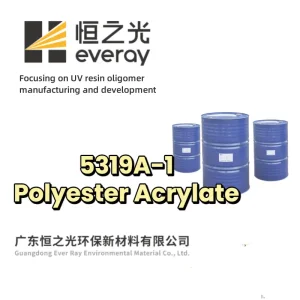
Buy Polyester Acrylate 5319A-1–A Reliable Solution for High-Performance UV Coatings Manufacturers, Suppliers
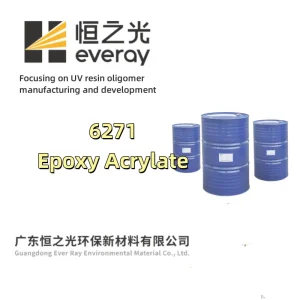
High-Quality Durable 6271 UV resin: very suitable for UV adhesive with low yellowing risk Suppliers, Products
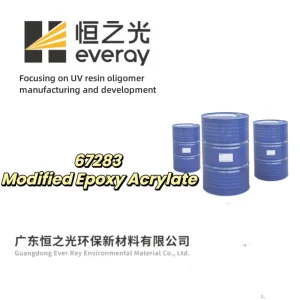
Wholesale 67283:Rapid-setting yellowing-resistant modified epoxy acrylate solution Manufacturers, Supplier
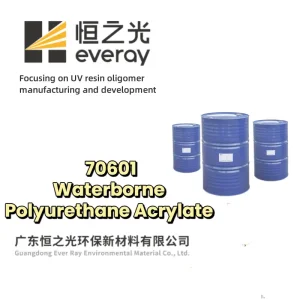
Wholesale Waterborne 70601 UV-resin for 3D Printing,UV-ink and UV Wood-coatings Manufacturers, Products
Wholesale Durable 6118 Epoxy Acrylate UV Resin: Ideal for UV wood, plastic and ink applications Manufacturers, Products
Buy Bisphenol A Epoxy Acrylate Resin 9104: A Core Resin for High-Performance UV Coatings Factory, Products
Wholesale High Solid Low Viscosity Modified Acrylate Oligomer - High Elasticity UV Curable Acrylic Resin Factory, Products
Buy Fast Curing Modified Epoxy Acrylate Oligomer - High Flexibility Acrylic Resin for UV Plastic Coating & Furniture Supplier, Product
Engineering Whitepaper & Procurement Q&A
Answers to technical formulation and procurement inquiries, addressing polymerization kinetics, photoinitiator synergism, storage stability, and chemical compliance.
What are the key chemical differences between pure Bisphenol-A epoxy acrylates and polyester epoxy hybrids?
Polyester epoxy hybrid acrylates integrate linear or branched saturated polyester diol/triol segments directly into the backbone matrix before final acrylation. The flexible ester bonds (-COO-) introduce rotatable chain segments that lower the effective Tg (typically 20°C–50°C), reduce curing shrinkage to below 2%, improve deep-draw metal flexibility (0T–1T bend resistance), and significantly enhance pigment wetting dynamics.
How can formulators mitigate surface oxygen inhibition in thin-film UV overprint varnishes and printing inks?
Ever Ray recommends a threefold formulation solution:
- Incorporate Amino Acrylate Synergists: Formulate with amine-modified acrylate oligomers or active amine co-initiators. Amine alpha-hydrogens readily transfer to peroxy radicals, regenerating active alkyl radicals while simultaneously scavenging oxygen.
- Blend High-Reactivity Fast-Curing Epoxy Acrylates: Introducing accelerated oligomers like 6160M-3 significantly outpaces oxygen diffusion kinetics through sheer double-bond radical propagation velocity.
- Deploy Cleavage + Hydrogen-Abstraction Photoinitiators: Combining Type I photoinitiators (e.g., Omnirad 184 / 1173) with Type II amine systems (e.g., BP or ITX) maximizes surface radical density.
Which polyester epoxy oligomers maintain non-yellowing stability in outdoor or optical applications?
For non-yellowing and optical applications (such as optical adhesives, consumer electronics topcoats, and white inks), formulators should select aliphatic polyurethane acrylates or modified epoxy resins such as Ever Ray 67283 and Durable 6271. These grades replace aromatic cores with hydrogenated bisphenol-A or saturated aliphatic polyester polyols, maintaining clear color stability (Delta E < 1.0) under prolonged QUV weathering tests.
What are the recommended monomer diluents and ladder ratios for optimizing application viscosity?
- TPGDA (Tripropylene Glycol Diacrylate): The standard industry workhorse for overall cost-effective viscosity reduction in wood sealers and graphic overprint varnishes. (Typical addition: 20–35%).
- TMPTA (Trimethylolpropane Triacrylate): Ideal for increasing cure speed, surface crosslink density, and scratch hardness, though higher ratios increase curing shrinkage. (Typical addition: 10–25%).
- IBOA (Isobornyl Acrylate): A monofunctional monomer featuring a bulky alicyclic group that dramatically reduces system viscosity while preserving high Tg and improving plastic substrate wetting without brittleness.
- HDDA (1,6-Hexanediol Diacrylate): Strong solvency power and high crosslinking efficiency, commonly used for UV adhesives and flexographic printing plates.
How does Ever Ray guarantee chemical stability and shelf-life during export sea freight?
- Stabilizer Dosing: Precisely controlled combinations of Monomethyl Ether of Hydroquinone (MEHQ) and Phenothiazine (PTZ) are dosed during final synthesis. These stabilizers operate in the presence of dissolved oxygen to neutralize stray radicals without inhibiting deliberate line curing.
- Dissolved Oxygen Retention: Resins are never vacuum-stripped of dissolved atmospheric air, as phenolic inhibitors require trace dissolved oxygen to maintain active radical-trapping quinone cycles.
- Packaging Standards: Packaging in UV-opaque, fluorinated, high-density polyethylene drums or resin-lined steel barrels protects the contents from light penetration and rust catalysis.
What is the OEM/ODM custom resin development workflow for specific manufacturing constraints?
- Technical Specification Definition: Review of target substrate, curing lamp spectrum (Hg, Metal Halide, UV-LED), line speed, viscosity limits, and testing benchmarks (boil tests, MEK rubs, pencil hardness).
- Lab Synthesis & Analytical Fingerprinting: Preparation of 500g candidate batches with GPC, FTIR, and rheology verification within 7 to 10 business days.
- Application Pilot Testing: Evaluation of candidate formulations on real industrial line equipment in our Guangdong application lab.
- Pilot Plant Scale-Up: Validation of 500kg pilot reactor batches to establish thermal control envelopes and verify batch reproducibility.
- Full Commercial Production: Scaling to automated multi-ton reactor batches with detailed CoAs, SDS documentation, and export logistics clearance.
