
Primary Industrial Resins & Acrylate Solutions
Explore our laboratory-certified flexible epoxies, hyperbranched oligomers, and crosslinkable UV monomers designed for immediate industrial scaling.
Wholesale 6200D UV-resin in shadowless glue systems Factory, Factories
View Specifications
High-Quality 6100D Epoxy Acrylate UV Resin: Excellent brightness and shrinkage resistance for UV inks Manufacturers, Factory
View Specifications
Wholesale 6851A High-Performance Modified Epoxy Acrylate Resin | For UV Coatings, Inks & Gel Polishes | High Transparency & Yellowing Resistance Manufacturers, Factories
View Specifications
Wholesale Low viscosity 1262B: suitable for PVC floor coating applications Manufacturer, Supplier
View Specifications
Buy Anti-Yellowing Polyurethane Acrylate Oligomer-High Flexibility UV Resin for Adhesive and Nail Gel Manufacturer, Factory
View Specifications
Buy Scratch resistant 4600 hyperbranched acrylic UV resin :suitable for varnish and ink Suppliers, Factory
View Specifications
Wholesale High Solid Low Viscosity Modified Acrylate Oligomer - High Elasticity UV Curable Acrylic Resin Factory, Products
View Specifications
High-Quality 7620 UV-curing Resin applied in UV vacuum electroplating Factories, Products
View SpecificationsGlobal Commercial Landscape for Flexible Epoxy Systems
Overcoming the historical trade-offs between crosslink density and elastic elongation in advanced coatings, electronics encapsulation, and multi-layer composites.
Molecular Plasticization vs. Intrinsic Flexibility
Traditional bisphenol-A epoxy networks feature exceptionally high mechanical strength, chemical inertness, and thermal stability. However, their brittle backbone exhibits microcracking under dynamic flexure. Modern synthesis relies on flexible polyurethane-modified epoxies and dimer acid-toughened diglycidyl ethers, which integrate soft segments directly into the matrix, preserving chemical resistance while achieving elongation break points above 45%.
The Shift toward Fast-Cycle UV Radiation Curing
Global assembly plants are shifting from multi-hour thermal curing ovens to automated UV/LED cure sequences. Acrylate-functionalized flexible epoxies polymerize via free-radical and cationic cure mechanisms in fractions of a second. This transformation slashes thermal deformation on thin film substrates (PET, polyimide, PC) while cutting shop-floor carbon output by up to 68%.
Defect Prevention: Zero Shrinkage Stresses
Volumetric shrinkage during cure produces interfacial shear stress, resulting in edge delamination, optical birefringence, and adhesive failure. Incorporating long-chain aliphatic esters and hyperbranched segments into flexible epoxy compounds reduces volumetric shrinkage below 1.5%, ensuring dimensional precision in precision micro-optics and structural bonds.
2006
Direct Chemical Synthesis Since
40,000 m²
Automated Production Footprint
10+
High-Capacity Reactor Trains
< 1.2%
Batch-to-Batch Viscosity Deviation
Direct Chinese Factory Efficiencies: Scalability & Synthesis Control
Direct procurement from specialized Chinese chemical synthesis facilities bridges the gap between competitive raw material pricing and stringent international regulatory compliances.
Upstream Intermediate Integration
Integrated sourcing of fundamental acrylic acid, glycidyl ethers, and cyclic carbonates inside Guangdong chemical corridors insulates production runs from feedstock fluctuations, guaranteeing uninterrupted bulk supply to overseas clients.
Analytical QA & Micro-Purity Testing
Every reactor vessel is coupled with GPC (Gel Permeation Chromatography), FTIR, and Karl Fischer titrators to ensure exact polymer chain weight distribution, low residual free-monomer profiles, and non-detectable halogen traces.
Rapid Polymer Tailoring
Our lab synthesizes modified acrylate oligomers targeting explicit client requirements: adjusting glass transition temperatures (Tg from -20°C to +65°C), modulating curing reactivity, and delivering tailor-made viscosities for spray, gravure, or screen coating.
Turnkey Export Logistical Protocols
Resins ship fully certified under RoHS, REACH, and GHS packing norms. Standardized 25kg, 200kg, and 1000kg IBC tote packaging comes backed by batch-specific Certificates of Analysis (COA) and complete technical dossiers.
Engineering Frontiers: Primary Application Scenarios
Flexible epoxies resolve extreme adhesion, micro-flexibility, and environmental barrier challenges across diversified industries.
Optoelectronics & Display Encapsulation
OLED displays, micro-LED matrices, and camera module lenses undergo repeated micro-impact and ambient moisture ingress. Flexible epoxies with low water-vapor transmission rates (WVTR) and refined optical clarity prevent haze or interface delamination throughout stringent aging tests (-40°C to +85°C).
High-Density Flexible Circuits (FPC)
Continuous flexural cycling breaks unyielding protective layers. Flexible modified epoxy acrylate resists mechanical creasing, copper peel test loads, and harsh soldering fluxes while preserving high dielectric insulation properties across flexible printed circuits and dynamic hinges.
3D Photopolymer Printing (DLP/SLA Lattices)
Additive manufacturing requires an optimum balance between tensile strength and elastic recovery. Our flexible UV-curable chemistries serve as building blocks for resilient impact-absorbing cushions, wear-resistant shoe midsoles, and functional automotive cabin prototypes that resist permanent deformation.
Chemical Systems Performance Comparison
Comparative technical benchmarks of key oligomer families for formulation validation and raw material selection.
| Resin Matrix System | Tensile Modulus (MPa) | Elongation at Break (%) | Surface Hardness | Yellowing Resistance | Primary Industrial Use Case |
|---|---|---|---|---|---|
| Standard Bisphenol-A Epoxy Acrylate | 2,100 - 2,800 | 1.5% - 4% | 3H - 4H | Low to Medium | Wood primers, high-speed overprint varnishes (OPV) |
| Modified Flexible Epoxy Oligomer | 450 - 950 | 25% - 55% | HB - H | Medium to High | Flexible circuits, shadowless structural adhesives |
| Aliphatic Polyurethane Acrylate (PUA) | 300 - 800 | 40% - 120% | 2B - HB | Very High (ΔE < 1.5) | 3C topcoats, cosmetic gels, exterior durable films |
| Hyperbranched Multi-Functional Acrylate | 1,800 - 2,500 | 2% - 6% | 4H - 6H | High | Scratch-resistant hard coats, vacuum electroplating |
| Waterborne Polyurethane Acrylate Dispersion | 150 - 450 | 60% - 180% | B - HB | High | Ultra-low VOC wood finishes, automotive interior leathers |
Global Procurement Demands & Future Market Trends
How stringent ESG initiatives, LED light curing, and supply security are reshaping corporate sourcing strategies worldwide.
Zero-VOC & Waterborne Conversions
Regulatory frameworks across Europe (REACH annexes) and North America continue lowering allowable volatile organic compound thresholds. Global coating manufacturers are phasing out solvent-cut epoxies in favor of 100% solids UV-curable systems and waterborne polyurethane-epoxy hybrids, eliminating solvent reclamation infrastructure while boosting plant floor safety.
Broadband LED Cure Compatibility (385–405 nm)
Traditional mercury arc discharge lamps generate excessive heat and harmful ozone. Industrial conversion to UV-LED diodes requires flexible epoxy systems engineered with higher deep-cure absorption profiles. Resin chemists are fine-tuning active amine synergists and functional chain branching to defeat atmospheric oxygen inhibition at longer wavelengths.
Tier-1 Strategic Sourcing Direct from Source Plants
Midstream repackagers and distributors increase procurement expenses by 30% to 50% while injecting supply lead-time volatility. Major enterprise purchasers are opting for direct vendor engagement with Chinese chemical producers, securing custom packaging, audited traceability, and tailored synthesis runs matching exact manufacturing specifications.
Frequently Asked Questions (Formulator & Sourcing FAQ)
Direct technical answers from senior resin synthesis chemists and commercial export specialists.
What chemically differentiates a flexible epoxy from standard unmodified epoxy resins?
Unmodified epoxy resins, typically synthesized via Bisphenol A and epichlorohydrin, produce rigid aromatic rings linked by tight ether linkages, resulting in high tensile modulus and thermal stability but near-zero flexibility (1–3% elongation). Flexible epoxies introduce long-chain aliphatic polyethers, dimer fatty acid ester bridges, or polyurethane modifications into the backbone. This lowers crosslink density and internal steric hindrance, allowing molecular relaxation under mechanical strain without inducing microfissures.
How does Ever Ray control curing shrinkage in precision flexible adhesives?
Polymerization shrinkage stems from the transition of van der Waals distances to covalent bonds during radical or ring-opening cures. Ever Ray utilizes hyperbranched architecture and bulky modified reactive monomers that exhibit minimal molar volume contraction. By combining higher molecular weight oligomers with specialized active diluents, volumetric shrinkage is kept under 1.5%, mitigating interfacial stress on vulnerable substrates like optical glass or treated foils.
Can flexible epoxy acrylates maintain adhesion on untreated polyolefin or low surface energy plastics?
Untreated polyolefins (PP, PE) exhibit surface energy below 30 dynes/cm. Standard epoxy acrylates struggle with poor wetting and negligible chemical bonding. Ever Ray formulates specialized functional oligomers containing carboxylic or phosphoric acid ester modifications that act as adhesion promoters. These form polar complexes and promote mechanical interlocking at the substrate interface, achieving 5B cross-hatch tape adhesion without needing chlorinated primers.
What export documentation and batch testing are standard for global shipments?
Every commercial container shipped from our Yunfu production hub includes a comprehensive batch-specific Certificate of Analysis (COA) specifying Brookfield viscosity, acid value, non-volatile content, and color index (Gardner/APHA). Additionally, full Safety Data Sheets (SDS) matching GHS standards, RoHS and REACH substance compliance certifications, and transport classifications (air/sea freight) are supplied in English.
What is the typical turnaround for pilot batch synthesis and customized viscosity targets?
From initial technical review to custom lab-scale synthesis (1–5 kg samples), our technical development timeline ranges between 7 to 12 working days. Once client validation confirms performance criteria on their production line, pilot-scale trials (500 kg to 2 metric tons) are typically scheduled and shipped within 14 days, supported by direct technical coordination between formulating engineers.
Advanced Polymers, Oligomers & Specialty Formulation Resins
Complete product spectrum covering functional UV vacuum electroplating resins, flexible polyester acrylates, and performance coating additives.
High-Quality 6116 Low Viscosity UV Curing Epoxy Oligomer, High Flexibility Acrylic Resin for Matte Wood & Ink Coatings Manufacturers, Products
View Specifications
High-Quality Enhance UV coating using the antifouling function of 1291B-1 Suppliers, Product
View Specifications
Buy Aromatic PA UV-resin 7162 for Plastic Spray-coatings, wood-finishes and UV-inks Manufacturer, Supplier
View Specifications
Buy Polyester Acrylate 5332F – The Premium Choice for Offset Inks Supplier, Factory
View Specifications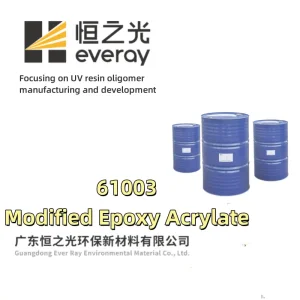
Buy 61003A UV resin in UV plastic-film varnish and LED-UV Packaging Manufacturers, Products
View Specifications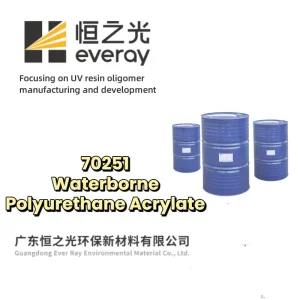
High-Quality Waterborne 70251 UV-resin for 3D Printing,UV-ink and UV Wood-coatings Manufacturers, Suppliers
View Specifications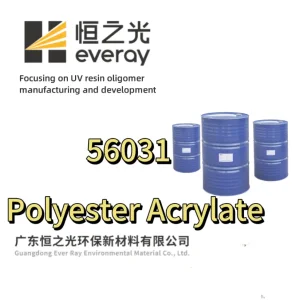
Buy 56031 Low Viscosity High Reactivity Polyester Acrylate Resin for UV Gravure Varnish, Flexo Ink & Snow Effect Coatings Manufacturer, Manufacturers
View Specifications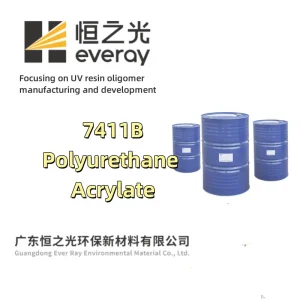
Wholesale 7411B UV Resin: Ideal low viscosity, high solids solution for matte UV applications Suppliers, Factory
View Specifications