
Featured UV Resins & Industrial Acrylate Products
High reactivity, structural stability, and surface adhesion optimized for international converters, formulation factories, and manufacturing plants.
Special Modified Acrylate Resin with low shrinkage and superior adhesion parameters engineered for glass and water transfer printing.
Learn More
High-Quality 5650F UV Resin synthesized for industrial-scale UV overprint varnishes, flexographic systems, and printing inks.
Learn More
61003A UV Resin developed specifically for UV plastic-film varnish systems and LED-UV packaging applications requiring rapid conversion.
Learn More
Polycarbonate Acrylate 72203A delivering fast curing dynamics for soft-touch tactical coatings, optical clear coats, and resilient inks.
Learn More
Industrial Grade 70250 UV-Resin for multi-layer 3D stereolithography printing, specialized UV-inks, and high-build wood coatings.
Learn More
5403-3F Polyester Acrylate synthesized to deliver exceptional water-ink emulsion stability in precision UV offset printing systems.
Learn More
Low Viscosity 1262B formulated for resilient PVC flooring topcoats, offering scratch protection and outstanding mechanical flexibility.
Learn More
Specialty 7317 UV Resin engineered for tactile surface effects, wrinkle textures, and snowflake visual patterns in UV decorative inks.
Learn MoreThe Commercial Landscape of Epoxy Acrylate Utilization
As environmental compliance tightens globally, the role of Bisphenol-A and modified epoxy resins in radiation-curable systems has shifted from mere binders to performance-critical polymers.
Global Decarbonization Mandates
Strict volatile organic compound (VOC) directives across North America (EPA Clean Air Act) and the European Union (REACH & Industrial Emissions Directive) are compelling coating manufacturers to replace conventional thermal-solvent systems with 100% solid UV epoxy systems.
High-Productivity Photopolymerization
Epoxy acrylates remain unmatched in free-radical curing velocities. With reaction kinetic conversion rates exceeding 90% in fractional seconds under medium-pressure mercury or LED arrays, processing lines achieve line speeds beyond 120 meters per minute.
Substrate Functional Evolution
Modern applications require composite substrate wetting. Epoxy acrylates are increasingly tailored with hydroxyl, carboxy, or phosphate modifications to bond securely to low-surface-energy plastics, etched glass, aluminum foils, and non-ferrous alloys without separate primers.
Factory Scalability & The Chinese Efficiency Advantage
How Guangdong Ever Ray Environmental Material Co., Ltd. delivers measurable cost-performance benefits, technical agility, and reliable throughput for worldwide formulators.
Upstream Chemical Clustering
Situated within the industrial heart of Guangdong, Ever Ray benefits from direct, short-radius pipeline access to fundamental monomers including acrylic acid, bisphenol-A diglycidyl ether (DGEBA), epichlorohydrin, and specialized catalysts, stabilizing downstream pricing.
Batch-to-Batch Quality Engineering
Our Dawan Industrial Park facility in Yunfu utilizes automated DCS reactor oversight. Every synthesized batch is analyzed via Gel Permeation Chromatography (GPC), Fourier Transform Infrared Spectroscopy (FTIR), and cone-and-plate viscometry to eliminate viscosity drift.
Rapid Polymer Formulation Iteration
Unlike monolithic commodity conglomerates, our R&D chemists customize backbone crosslink densities within 10 to 14 days. From balancing tensile flexibility against Rockwell hardness to reducing residual unreacted monomer odor, customization is fully modular.
Localized Application Scenarios: Precision Substrate Engineering
From consumer electronic touchscreens to structural wood finishes, our UV epoxy solutions are engineered for demanding industrial environments.
3C Electronics & High-Hardness Housings
In consumer laptops and mobile frames, cured films must withstand scratch cycles and chemical solvents (sweat, isopropyl alcohol). Modified epoxy acrylates provide 3H-4H pencil hardness, high pencil-scratch resilience, and clean, non-greasy haptic surfaces.
Continuous Wood & Furniture Roller Coating
High solids formulation lines require sanding primers that fill porous grain structures without shrinkage checks. Our standard bisphenol-A epoxy acrylates deliver the rapid sandability, fast curing response, and high gloss retention required by high-speed flat-panel roll lines.
Graphic Arts, Offset Inks & Foil Overprints
Press stability requires a balance between hydrophilic fountain solutions and hydrophobic ink varnishes. Our polyester-modified epoxy systems deliver sharp water-ink balance, high pigment transfer ratios, and deep rub resistance across metallic foil packaging substrates.
Industry Trends & What Global Enterprise Buyers Demand
Navigating raw material supply security, LED-UV wavelengths, and customized chemical packaging for global container shipments.
Transition to 385nm & 395nm LED-UV
With conventional mercury vapor lamps being phased out under the Minamata Convention on Mercury, modern epoxy acrylates must exhibit surface cure reactivity under narrow UV-A wavelengths, overcoming oxygen inhibition via synergistic amine backbone modifications.
Supply Chain Audits & REACH Compliance
Procurement directors require transparent supply documentation. Every Ever Ray grade is supported by GHS-compliant Safety Data Sheets, full REACH registration tracking, halogen-free confirmations, and comprehensive Certificate of Analysis (COA) documents.
Standardized Export Packaging Logistics
Resin integrity depends on secure logistics. We provide export shipments in 200kg tight-head steel drums, 1000kg composite IBC totes, or nitrogen-blanketed ISO tanks, utilizing dark, UV-blocking materials to prevent thermal premature polymerization during transit.
Frequently Asked Questions on UV Epoxy Resins
Detailed technical answers to common questions about monomer compatibility, shrink reduction, and factory integration.
What are the primary differences between pure Bisphenol-A epoxy acrylate and modified epoxy acrylates?
Pure Bisphenol-A epoxy acrylates (such as our 9104 and 9105A series) deliver high reactivity, strong surface hardness, and chemical resistance. However, their rigid aromatic backbone can lead to brittleness and cure shrinkage. Modified epoxy acrylates incorporate fatty acid chains, polyethers, or caprolactone segments into the polymer matrix. This broadens flexibility, improves substrate adhesion, and mitigates yellowing while maintaining rapid curing kinetics.
How does Ever Ray manage viscosity stability across seasonal temperature fluctuations?
Viscosity drift is typically caused by variations in residual monomer composition, oligomer molecular weight distribution (polydispersity index), or trace inhibitor levels. We monitor synthesis via in-line refractometry and FTIR, ensuring target double-bond conversion and stable molecular weights. In addition, our multi-component stabilization package protects free-radical groups during warm ocean shipments, ensuring viscosity changes remain within ±5% across shelf life.
Which reactive diluent monomers pair best with UV epoxy acrylate oligomers?
Epoxy acrylates typically require diluents to reduce processing viscosity. Tripropylene glycol diacrylate (TPGDA) and 1,6-hexanediol diacrylate (HDDA) are standard options for general crosslink density and cure speed. When formulating for low shrinkage, higher flexibility, and improved adhesion on plastics or metals, alkoxylated monomers like ethoxylated trimethylolpropane triacrylate (TMP(EO)3TA) or monofunctional monomers like isobornyl acrylate (IBOA) and 2-phenoxyethyl acrylate (PHEA) are recommended.
What strategies effectively mitigate oxygen inhibition in thin-film overprint varnishes?
In thin films (1 to 5 microns), atmospheric oxygen diffuses into the liquid layer and quenches photo-initiating free radicals, leading to surface tackiness. Formulators can address this by incorporating reactive amine-modified polyether acrylates or active amine synergists into the epoxy base. The amine groups scavenge peroxy radicals via hydrogen extraction, regenerating active chain-carrying carbon radicals to deliver tack-free curing at lower UV exposure levels.
What are the lead times and container loading capacities for international export orders?
Standard grade shipments leave our factory warehouse within 7 to 10 working days following order confirmation. For customized synthesis grades, pilot evaluation requires 10 to 14 days, followed by commercial batch delivery within 21 days. Standard full container load (20ft FCL) capacities are 80 steel drums (16,000 kg net) on pallets, or 18 to 20 IBC totes (18,000 to 20,000 kg net), accompanied by complete export documentation.
Engineered Acrylate Resins & Precision Industrial Grades
Bisphenol-A formulations, specialty polyurethane acrylates, and functional primer polymers engineered for global manufacturing facilities.
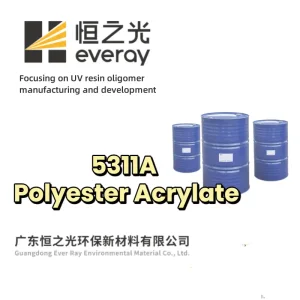
Polyester Acrylate 5311A delivering balanced flexibility and reactivity for UV overprint varnishes and screen printing inks.
Learn More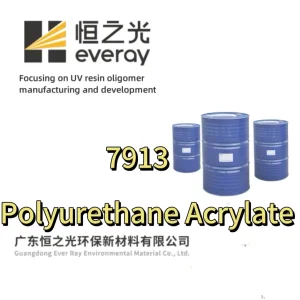
High Reactivity 7913 Polyurethane Acrylate resin providing anti-fouling characteristics and scratch resistance for topcoat applications.
Learn More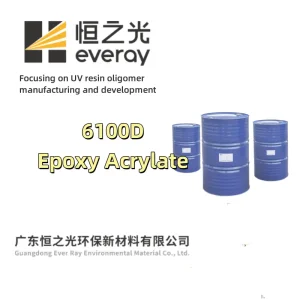
6100D Epoxy Acrylate UV Resin formulated for gloss retention and low curing shrinkage across graphic inks and functional paper coatings.
Learn More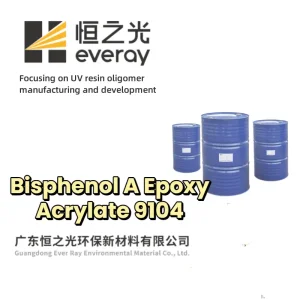
Bisphenol A Epoxy Acrylate 9104: A standard core resin for hard wood sealers, paper overprints, and high-reactivity UV coating systems.
Learn More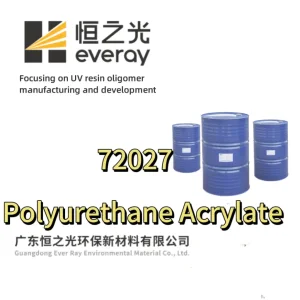
Model 72027 Weather-Resistant Polyurethane Acrylate Resin engineered with low yellowing and high tack for outdoor tape and PSA systems.
Learn More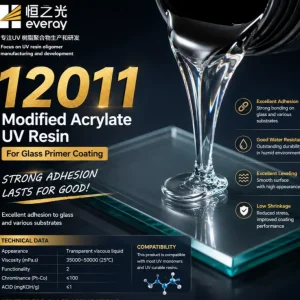
Modified Acrylate 12011 developed for glass primers, maintaining interfacial bonding after boiling water immersion tests.
Learn More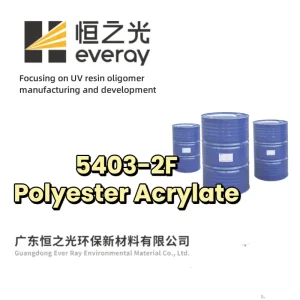
Polyester Acrylate 5403-2F offering steady pigment wetting, flow dynamics, and film flexibility for high-speed industrial printing presses.
Learn More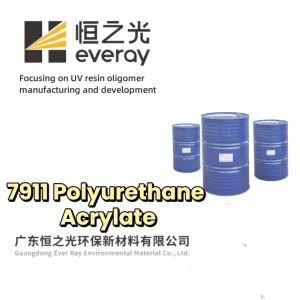
Polyurethane Acrylate 7911 formulated for performance clear coats, combining elongation flexibility with mechanical abrasion resistance.
Learn More