
Flagship Modified Acrylate Oligomers & Specialized Curing Resins
Precision-synthesized reactive oligomers providing exceptional hardness, accelerated cross-linking kinetics, and substrate adhesion across demanding industrial coating lines.
The Global Commercial & Technical Reality of Epoxy Modified Resins
Navigating chemical regulatory transformations, energy transition pressures, and polymer engineering breakthroughs across global manufacturing hubs.
In modern industrial polymer chemistry, the demand to buy epoxy modified materials directly from primary chemical synthesis plants has surged substantially. Global radiation-curable coatings, high-precision electronics potting compounds, and aerospace structural matrices require unprecedented film hardness, minimal thermal cure cycles, near-zero volatile organic compounds (VOCs), and unyielding chemical inertness. Standard unmodified epoxy resins, while chemically rigid, frequently suffer from inherent brittleness, severe volumetric polymerization shrinkage, and excessive UV degradation under solar weathering.
By engineering chemically tailored modifications—specifically grafting flexible aliphatic urethane links, silicone elastomer segments, or multifunctional acrylate moieties into the bisphenol-A diglycidyl ether (DGEBA) or novolac epoxy backbone—chemists achieve an optimum balance of mechanical toughness and photolytic cure kinetics. Leading synthesis enterprises, such as Guangdong Ever Ray Environmental Material Co., Ltd. (operating from its extensive Yunfu manufacturing base), have completely revolutionized this spectrum. Industrial procurement leaders and chief formulate chemists are shifting away from generic distributors toward specialized manufacturing factories capable of customizing oligomer chain lengths, hydroxyl values, acid numbers, and molecular weight distributions.
Decarbonization & Solvent Ban
Global net-zero regulations and strict VOC caps (including EU REACH Annex XVII mandates and US EPA Section 112 rulings) have mandated a rapid industrial pivot away from traditional solvent-borne thermal coatings toward 100% solids UV/EB radiation cure formulations powered by high-conversion epoxy acrylates.
Supply Chain Resiliency
Fluctuating petrochemical feedstock prices (such as epichlorohydrin, acrylic acid, and isophorone diisocyanate) have exposed formulation houses relying on non-integrated toll compounders. Direct factory partnerships with dedicated reactor complexes ensure stable pricing and consistent batch-to-batch polymer dispersion.
High-Productivity Line Speeds
High-volume manufacturing of electronics and multi-layer packaging demands instant radical cross-linking under high-speed UV-LED arrays (365nm to 405nm). Modified epoxy acrylates provide line speeds exceeding 80 m/min without sacrificing final surface cure or inducing unreacted monomer migration.
Epoxy-Modified Oligomer Synthesis & Molecular Kinetics
Achieving high cross-link density, low curing shrinkage, and interfacial cohesion through deliberate macromolecular architecture.
The esterification of bisphenol-type epoxy resins with acrylic acid yields standard epoxy diacrylates characterized by rigid aromatic rings and pendant secondary hydroxyl (-OH) groups. These hydroxyl groups deliver exceptional hydrogen-bonding adhesion to polar substrates such as glass, treated aluminum, and cold-rolled steel. However, the high concentration of rigid bisphenol cores frequently results in an excessively rigid network with brittle failure under dynamic mechanical shear. Ever Ray's macromolecular design overcomes this through precise chemical modification routes:
| Modification Pathway | Backbone Chemistry | Key Performance Trade-Off | Glass Transition (Tg) | Primary Industrial Sector |
|---|---|---|---|---|
| Fatty Acid Modified Epoxy Acrylate | Long-chain aliphatic carboxylate grafting via oxirane ring opening | Substantially lowered viscosity, improved flexibility & pigment wetting; slight decrease in surface hardness | 35°C to 55°C | Offset Lithographic & Flexo Printing Inks |
| Urethane Modified Epoxy (PEUA) | Isocyanate terminated prepolymers co-reacted with hydroxyl-bearing epoxy acrylates | Exceptional impact resistance, scratch recovery, and elongation at break; medium viscosity profile | 60°C to 85°C | Automotive Plastic Topcoats & Floor Sealers |
| Amine Modified Epoxy Acrylate | Michael addition of secondary alkanolamines across terminal acrylic double bonds | Rapid cure in air, dramatic reduction of oxygen inhibition, built-in co-initiator response; elevated dark yellowing risk | 45°C to 70°C | Overprint Varnishes (OPV) & Paper Lacquers |
| Silicone/Silane Modified Acrylate | Functionalized polydimethylsiloxane / alkoxysilane polycondensation | Hydrophobic barrier, extreme boiling water resistance, anti-graffiti surface release; requires precise compatibility balancing | 50°C to 95°C | Vacuum Plating Primers & Marine Topcoats |
A critical challenge during high-energy UV photopolymerization is volumetric cure shrinkage, which commonly ranges between 6% and 12% in low-molecular-weight multi-acrylates. This rapid contraction creates residual tensile stress at the coating-substrate interface, triggering micro-delamination and catastrophic loss of cross-hatch adhesion. Through hyperbranched architectures and customized reactive diluent diluting systems (such as high-solid low-shrinkage acrylates), internal stresses are dynamically dissipated throughout the curing network.
Tailored Application Scenarios Across Global Value Chains
Formulation engineers depend on distinct oligomer functional groups to overcome substrate energy boundaries and localized operational stress.
Vacuum Plating & Metalizing Primers
In consumer electronics and cosmetic packaging, substrates such as PC, ABS, and aluminum require vacuum metallization primers that withstand high thermal cycling without outgassing. Ever Ray's 7230E series provides exceptional interfacial bond strength, preventing micro-cracking during rapid aluminum physical vapor deposition (PVD).
Heavy-Traffic Wood & PVC Flooring
Commercial luxury vinyl tile (LVT) and solid parquet floors endure harsh mechanical abrasion and repeated chemical cleanings. Utilizing our 1262B and 7913 oligomers ensures rapid roller-applied surface curing, high Taber abrasion resistance, and stain resistance against oils, iodine, and household chemicals.
UV Flexo & Offset Printing Inks
Modern high-speed rotary presses require inks that maintain strict hydrophobic-hydrophilic equilibrium without misting or plate emulsification. Our 5403DF and 5312A polyester-acrylic hybrid platforms ensure stable rheology, rapid dot-sharp pigment wetting, and instantaneous curing under UV-LED pinning lamps.
Electronic Encapsulation & Potting
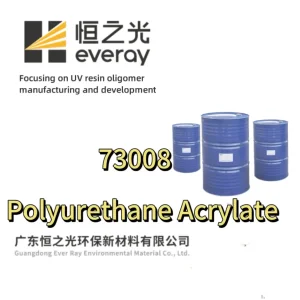
Protecting microelectronic surface-mount devices against moisture ingress, vibration, and thermal fatigue requires low-shrinkage UV oligomers. The 73008 grade balances dielectric strength with thermal shock resistance, providing continuous insulation performance from -40°C to 150°C.
Nail Gels & Cosmetic Topcoats
Cosmetic nail enamels require skin-safe formulations free of residual monomers and hazardous diluents. Modified aliphatic polyurethane acrylates provide flexibility that conforms to natural nail movement, resists yellowing under sunlight, and enables fast soak-off removal without aggressive mechanical filing.
Anti-Corrosive Industrial Primers
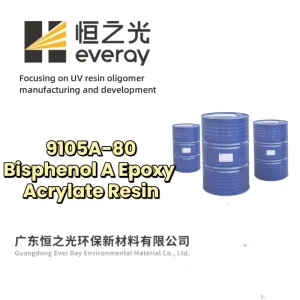
Protecting steel structures and marine hardware against saltwater exposure demands dense barrier properties. Bisphenol A epoxy acrylates combined with phosphate functional adhesion promoters cross-link into a highly chemical-resistant film that prevents cathodic disbondment and galvanic rust creep.
Macro Solutions for Common Radiation Cure Bottlenecks
Systematic engineering protocols addressing oxygen inhibition, intercoat peeling, and low LED cure response.
Combatting Atmospheric Oxygen Inhibition
Thin film applications (<15 μm) suffer from oxygen quenching radical propagation, resulting in surface tackiness. Formulators solve this by incorporating 5% to 15% amino acrylate oligomers or active amines. These act as sacrificial hydrogen donors, consuming dissolved oxygen into stable peroxy radicals that continue cross-linking.
Overcoming Intercoat Delamination
In multi-coat lines (e.g., UV sealer followed by high-hardness topcoat), full cure of the base coat leaves few unreacted double bonds, leading to poor intercoat adhesion. Formulating with balanced-functionality epoxy acrylates ensures an optimum ratio of core cross-linking to surface-anchoring chemical sites.
Optimizing 395nm UV-LED Cure Response
The global transition to monochromatic UV-LEDs eliminates mercury vapor heating but limits deep curing due to narrow spectral emission. Pairing long-wavelength acylphosphine oxide initiators (such as TPO or BAPO) with high-reactivity modified epoxy oligomers restores through-cure line speeds beyond 100 m/min.
Technology Roadmap: Next-Generation Radiation Cure Oligomers
Strategic research pipelines driving the convergence of circular raw materials, advanced functional nanocomposites, and dual-cure polymer networks.
Bio-Based Carbon Feedstocks
Replacing petrochemical bisphenol-A and neopentyl glycol with cardanol, epoxidized soybean oil (ESBO), and lignin-derived diphenols. Ever Ray's goal targets >45% certified renewable carbon content by 2028 without sacrificing cured film hardness or solvent resistance.
Dual-Cure Photopolymer Systems
Developing hybrid resins carrying both free-radical acrylate groups and thermal/moisture-reactive blocked isocyanates or oxirane rings. This ensures total polymer network cure inside shadowed undercuts of complex 3D automotive structures.
Nano-Silica Hybrid In-Situ Grafting
Chemically functionalizing spherical nanosilica (15–30 nm) directly into modified epoxy acrylate oligomer backbones. This achieves optical clarity with pencil hardness surpassing 6H and Taber wear resistance 400% above conventional polymers.
Waterborne UV PUA Dispersions
Zero-VOC polyurethane acrylate emulsions delivering the ultimate low viscosity necessary for natural grain wood finishes and spray lines, combining the safety of waterborne mediums with the instantaneous cure of UV radiation.
Specialty Epoxy Acrylates, Polyesters & High-Tack Resins
Bulk-synthesized industrial oligomer grades ready for international container export, certified under ISO9001 and strict regulatory frameworks.
Frequently Asked Questions for Global Procurement & Formulation Chemists
Clear, authoritative technical answers addressing resin handling, modifications, performance parameters, and logistics.
