
High-Performance Acrylate & Epoxy Oligomer Portfolio
Engineered for high cure conversion, exceptional intercoat bonding, micro-hardness, and chemical resilience. Sourced directly from our state-of-the-art Guangdong synthesis facility.
Evolution of the Global Epoxy Coating & Paint Manufacturing Sector
A rigorous examination of shifting chemical polymerizations, zero-VOC mandates, and the migration from traditional solvent epoxies to photopolymer-modified epoxy acrylates.
The Decarbonization Paradigm Shift
The industrial coating industry faces stringent global thresholds concerning Volatile Organic Compounds (VOCs). Traditional polyamide-cured solvent-borne epoxies are systematically replaced by high-solids formulations, 100% reactive UV epoxy acrylate oligomers, and waterborne epoxy dispersions. Forward-thinking procurement managers are transitioning away from evaporative-loss formulations toward solid crosslink densification networks, cutting carbon footprints while lowering per-square-meter dry film operational costs.
Molecular Crosslinking & Hybridization
Modern epoxy paints are no longer constrained by standard bisphenol-A glycidyl ether skeletons. Advanced manufacturing leverages acrylated epoxies, cycloaliphatic structures, and hyperbranched cores. By grafting acrylate functionalities directly onto oxirane backbones, formulators obtain the lightning curing speed of radical UV crosslinking alongside the tenacious adhesion, chemical barrier performance, and surface hardness typical of legacy thermoset epoxies.
Predictive Upstream Supply Security
Global supply chain volatility has made upstream direct factory sourcing essential for tier-one coating manufacturers. Sourcing basic paint from trading distributors introduces unmanaged batch variability in epoxy equivalent weight (EEW), viscosity drift, and volatile organic impurities. Direct relationships with original monomer and oligomer synthesis factories ensure traceable chemistry, bulk price stability, and bespoke viscosity tuning.
Global Enterprise Sourcing Criteria & Factory Audit Standards
What multi-national brand procurement leaders, technical formulators, and plant directors scrutinize when qualifying an industrial epoxy coating and oligomer manufacturing partner.
Batch-to-Batch Cpk > 1.33
Consistent resin polymer weight distribution (Mw/Mn) verified by automated High-Performance Liquid Chromatography (HPLC) and Gel Permeation Chromatography (GPC). Viscosity margins are restricted within tight operational bands to prevent spray and roller calibration drift on automatic application lines.
Comprehensive TDS / SDS Compliance
Full 16-section Safety Data Sheets aligned with the United Nations Globally Harmonized System (GHS Rev.8). Complete raw material traceability under REACH Annex XVII, SVHC candidate lists, and RoHS directives, safeguarding downstream goods exported to North American and European markets.
Custom Molecular Synthesis
Ability to engineer monomer modification, functionality scaling (di-, tetra-, hexa-functional acrylates), and targeted flexibilization with polyether/polyester spacers to resolve specific industrial pain points, such as embrittlement or surface shrinkage cracking during cure.
Scalable Chemical Logistics
Export packaging options from standard 20kg steel pails, 200kg tight-head drums, to 1000kg composite IBCs and ISO bulk tank containers, equipped with temperature-regulated international shipping protocols to prevent accidental pre-polymerization.
Macro-Level Industrial Solutions: Substrate Matching & Formulation Architecture
Epoxy and hybrid epoxy-acrylate coating systems tailored to aggressive environmental exposure, severe friction, and high-throughput automated production environments.
High-traffic manufacturing floors, aircraft hangars, and logistics hubs requiring extreme Shore D hardness, oil resistance, and zero off-gassing during installation.
- Primer LayerHigh-solids low-viscosity epoxy resin
- Intermediate SlurrySolvent-free epoxy + graded silica aggregates
- Topcoat VarnishWear-resistant polyurethane/epoxy acrylate
- Key PerformanceCompressive strength > 85 MPa, Taber wear < 20mg
Ultra-thin cosmetic coatings for smartphones, laptops, automotive instrument bezels, and wearables, applied directly onto PC, ABS, and PMMA substrates.
- Primer / AdhesionFunctional modified acrylate (Pure / Polyester)
- Hard Protective CoatHyperbranched acrylate + aliphatic PUA blend
- Cure MechanismHigh-speed UV-LED (365nm / 395nm) < 2 seconds
- Key PerformancePencil hardness > 3H, 100-cycle RCA wear resistant
Immersion coatings for storage tank internals, offshore substructures, and industrial piping networks operating in continuous saline and acidic conditions.
- Primary BarrierPhenolic Novolac Epoxy / Modified Bisphenol-A
- Crosslink ModifierAdhesion-promoting silane-functionalized acrylates
- Application WindowAirless spray with high wet-film-thickness (WFT)
- Key PerformanceSalt spray > 5,000 hrs (ASTM B117), chemical immersion
Rotogravure, flexographic, and offset printing lines processing paperboards, corrugated cartons, synthetic label films, and pharmaceutical sleeves.
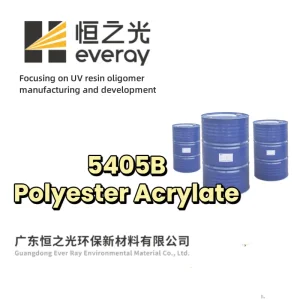
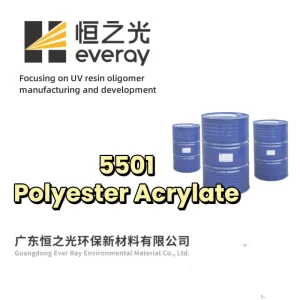
- BindersPolyester Acrylates (Fast pigment wetting)
- Cure AcceleratorsAmino Acrylate Oligomer + Active Amine Synergist
- Oxygen ScavengingIntegrated co-initiators eliminating surface tack
- Key PerformanceLine speeds > 350 m/min, immediate block resistance
Comparative Performance Matrix of Core Industrial Resin Chemistries
A reference architecture for formulation engineers and technical buyers comparing epoxy acrylates against traditional and modified oligomer families.
| Resin Chemistry Family | Surface Hardness | Elastic Flexibility | Yellowing Resistance | Polymerization Speed | Substrate Adhesion Scope | Primary Industrial Sector |
|---|---|---|---|---|---|---|
| Standard Bisphenol-A Epoxy Acrylate | 5 / 5 (Extreme) | 1 / 5 (Rigid) | 2 / 5 (Moderate) | 5 / 5 (Ultra-Fast) | Wood, Paper, Steel, Rigid Plastics | Wood Primers, Overprint Varnishes, Flat Stock Inks |
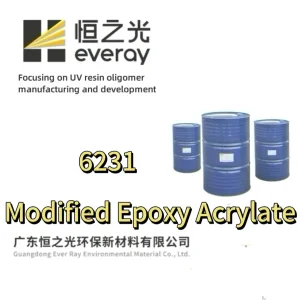
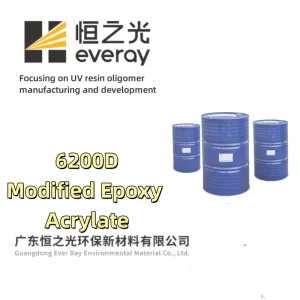
| Modified Epoxy Acrylate (e.g. 6851A, 6231) | 4.5 / 5 (High) | 3 / 5 (Balanced) | 4 / 5 (Superior) | 4.5 / 5 (Fast) | Treated Plastics, Metals, Composites | Automotive Parts, 3C Clear Coats, High-Gloss Inks |
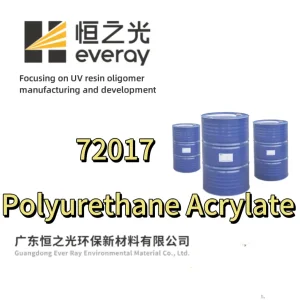
| Aliphatic Polyurethane Acrylate (PUA) | 3 / 5 (Moderate) | 5 / 5 (Superior) | 5 / 5 (Optical Grade) | 3.5 / 5 (Medium) | TPU, PVC, Polycarbonate, Acrylic | Outdoor Clear Topcoats, Screen Protectors, Nail Gel |
| Aromatic Polyurethane Acrylate | 4 / 5 (High) | 3.5 / 5 (Tough) | 1 / 5 (Prone to Drift) | 3.5 / 5 (Medium) | Hardwoods, Concrete, Fiberboard | Heavy-Duty Flooring, Furniture Sealers, Pigmented Enamels |
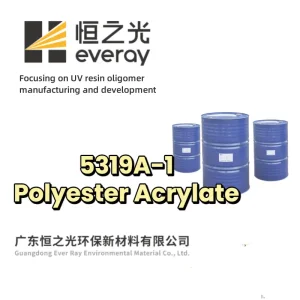
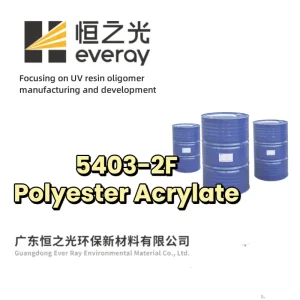
| Polyester Acrylate Oligomer | 3.5 / 5 (Medium-Hard) | 3 / 5 (Flexible) | 3 / 5 (Standard) | 4 / 5 (Fast) | Paperboard, Corona-Treated Films, Metal Foil | High-Speed Offset Inks, Flexo Packaging, Paper Coatings |
| Hyperbranched Acrylate Oligomer | 5 / 5 (Glass-Like) | 1.5 / 5 (Low) | 4 / 5 (Good) | 5 / 5 (Instantaneous) | Rigid Engineering Polymers, Glass | Anti-Scratch Optical Hard Coats, Rapid 3D Printing Resins |
| Waterborne Polyurethane / Epoxy Dispersion | 3.5 / 5 (Moderate) | 4.5 / 5 (Elastic) | 4.5 / 5 (High) | 3 / 5 (Requires Flash-Off) | Porous Wood, Leather, Paper, Cast Concrete | Zero-VOC Furniture Lines, Architectural Finishes, Green Manufacturing |
Engineering Technology Roadmap: Next-Generation Epoxy Paint Chemistry
How Guangdong Ever Ray Environmental Material Co., Ltd. is synthesizing forward-looking resin technologies to address regulatory tightening and extreme manufacturing demands.
LED-UV Spectral Matching (395nm & 405nm)
Traditional medium-pressure mercury arc lamps generate excessive thermal radiation and ozone. Ever Ray is formulating modified epoxy acrylates with tailored absorption kinetics, matching narrow-band, energy-efficient LED-UV curing heads without surface oxygen inhibition or tacky finish issues.
Bio-Based & Circular Precursor Integration
Reducing reliance on petrochemical bisphenol-A through synthesized plant-derived cardanol, itaconic acid, and lignin-based polyols. Our target is achieving > 35% bio-based carbon content in high-hardness epoxy coating products without degrading tensile elongation or hydrolytic stability.
Photo-Thermal Dual-Curing Hybridization
Complex 3D geometries, thick components, and opaque pigmented systems often create shaded zones where direct UV irradiation cannot reach. Dual-cure formulations (UV initiation followed by moderate thermal crosslinking) ensure 100% cure throughout three-dimensional matrix depths.
Guangdong Ever Ray Environmental Material Co., Ltd. Infrastructure
A technical look at our synthesis infrastructure in Yunfu, Guangdong, and corporate management framework designed for steady supply to industrial coating formulators globally.
Yunfu Production Base & Automation
Spanning over 40,000 m² in the Dawan Industrial Park, Yunan County, Yunfu City, our production base houses modern stainless-steel synthesis reactors ranging from 5,000L to 25,000L capacity. Automated PLC-driven thermal, catalyst-addition, and vacuum-stripping systems ensure tight synthesis reproducibility across every batch.
Quality Control & Analytical Testing Lab
Our Jiangmen headquarters (AOYUAN Plaza) and plant QC labs feature full-spectrum testing instruments: Brookfield viscometers, Abbe refractometers, Gas Chromatography-Mass Spectrometry (GC-MS), FTIR spectrophotometers, and mechanical testing rigs evaluating Taber abrasion, cross-hatch adhesion, and impact deformation.
International Safety & Export Verification
Products are synthesized under certified ISO 9001 and ISO 14001 operational standards. International orders receive full analytical support, including Certificates of Analysis (CoA), exact residual monomer determinations (< 0.1%), solvent migration testing, and dangerous goods transport compliance documents.
Frequently Answered Technical & Procurement Inquiries
Authoritative technical guidance compiled by our senior chemical engineers for industrial formulators, plant managers, and strategic buyers.
Standard bisphenol-A epoxy acrylates provide exceptional hardness, high tensile strength, and fast cure speed, but often exhibit high brittleness, elevated viscosity, and a tendency to yellow when exposed to UV radiation. Modified epoxy acrylates (such as our 6851A and 6231) incorporate internal flexible chains (fatty acids, polyethers, or caprolactone spacers) or amine-modified backbones. This modification lowers viscosity, enhances pigment wetting, improves elasticity, and significantly curtails yellowing drift without undermining adhesion or chemical resistance.
Atmospheric oxygen quenches free radicals at the coating's surface, forming stable peroxy radicals that cause surface tackiness and incomplete polymerization, particularly in thin-film inks and overprint varnishes. Effective mitigation strategies include: (1) Blending copolymerizable amine synergists, such as our Amino Acrylate Oligomer or Active Amine co-initiators, which generate active alkyl radicals via hydrogen abstraction; (2) Incorporating higher-functionality hyperbranched acrylates to increase radical density; or (3) Applying short-wavelength UV (254nm) surface-cure lamps.
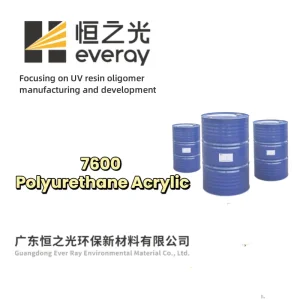
Yes. In high-traffic floor coatings, formulators typically apply a primer composed of high-adhesion epoxy resins, followed by a durable topcoat combining epoxy acrylate (for scratch resistance and cost-efficiency) and aromatic or aliphatic polyurethane acrylate (such as our 7296-1 grade, for impact toughness and abrasion resistance). For eco-driven facilities, waterborne polyurethane acrylates (e.g. 70251) provide low-VOC alternatives with high wear thresholds.
For standard production portfolio grades, our baseline trial order MOQ is 200kg (single drum). For customized oligomer syntheses (tailored viscosity, customized molecular weight, or proprietary diluent blending), baseline production runs typically begin at 1,000kg. Standard lead times for regular stock items run between 7 to 14 days from contract ratification to factory departure, supported by container stuffing directly at our Guangdong synthesis plant.
Epoxy acrylate oligomers are inherently viscous and susceptible to thermally driven radical self-polymerization during prolonged storage. Ever Ray balances polymerization inhibitor systems (MEHQ, BHT, and sterically hindered nitroxide free radical scavengers) with controlled synthesis end-points. We store raw materials and finished products under climate-controlled conditions and issue seasonal handling guidelines to ensure storage stability across 6 to 12 months at temperatures between 5°C and 30°C.
Formulators and procurement specialists can contact our application engineering team directly via [email protected] or WhatsApp (+86-18029628893). Specify your target application, cure light source (LED vs Hg), application method (spray, roller, offset, screen), substrate (metal, plastic, wood, paper), and target properties. Sample kits (500g to 2kg) complete with corresponding TDS and SDS are dispatched worldwide via air courier for evaluation.
Specialty Functional Oligomers, Acrylates & Dual-Cure Resins
Formulation building blocks addressing targeted engineering challenges: extreme adhesion, dual thermal/photo crosslinking, zero-shrinkage matrices, and UV wood finishing.
Request a Custom Polymer Synthesis or Bulk Quotation
Consult with our senior polymer synthesis chemists to optimize your epoxy paint and UV coating formulations. Secure stable batch consistency, competitive factory pricing, and full regulatory documentation.
