
Commercial Resin Grades & Specialty Formulations (Series I)
Explore high-purity oligomers, low-viscosity optical binders, and accelerated surface-cure agents produced under strict automated DCS controls.
-
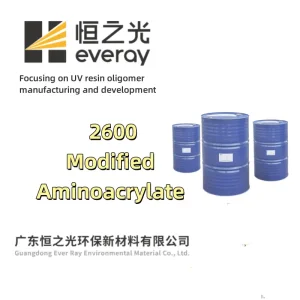
High-Quality Durable 2600UV Resin: High Hardness & Superior Wear Resistance for Industrial UV Systems
View Technical Specs -
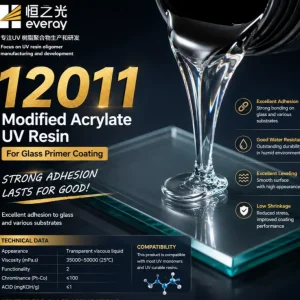
Wholesale 12011 Modified Acrylate UV Resin for Glass Primer Coatings | Boiling Water Resistance
View Technical Specs -
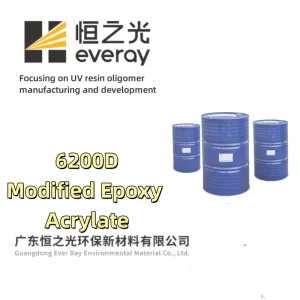
Wholesale 6200D UV-Resin in Shadowless Optical Adhesive & Casting Systems
View Technical Specs -
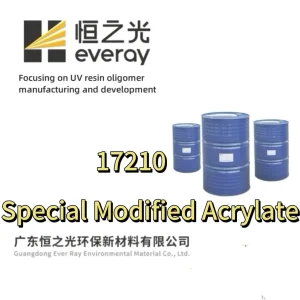
Wholesale High Solid Low Viscosity Modified Acrylate Oligomer - High Elasticity UV Curable Resin
View Technical Specs -
Buy 61163 High Solid Low Viscosity Anti-Yellowing Modified Epoxy Acrylate Resin for Optical Topcoats
View Technical Specs -
Wholesale Waterborne 70601 UV-Resin for High-Precision 3D Printing & Protective Clear Layers
View Technical Specs -
Buy 5830A High Hydroxyl Polyester Acrylate Resin with Extreme Water Boiling Resistance & High Fullness
View Technical Specs -
High-Quality Excellent Adhesion 7230E Polyurethane Acrylate Resin for Vacuum Plating & Castings
View Technical Specs
Advanced Chemical Architecture: Epoxide-Amine Kinetic Optimization
Understanding the thermodynamic, molecular crosslinking, and photo-oxidation factors that govern water-white transparency, low exothermic heat rise, and zero-shrinkage curing.
Cycloaliphatic vs. Bisphenol-A Formulations
Standard diglycidyl ether of bisphenol-A (DGEBA) resins exhibit aromatic ring conjugation that undergoes accelerated photo-oxidative degradation under solar irradiation, leading to premature yellowing (chromophore shift). As an engineering-first manufacturer, Guangdong Ever Ray utilizes specialized hydrogenated bisphenol-A (HBPA) and cycloaliphatic epoxides (such as 3,4-epoxycyclohexylmethyl-3',4'-epoxycyclohexane carboxylate) for formulations demanding indefinite optical neutrality. These alicyclic rings possess no carbon-carbon double bonds sensitive to photon cleavage, preserving a Gardner color index of <0.5 even under accelerated QUV test conditions exceeding 3,000 continuous hours.
Polyetheramine & IPDA Curing Kinetics
Clear casting epoxy performance relies intrinsically on stoichiometric polyamine crosslinker selection. The deployment of branched polyoxyalkyleneamines (Jeffamine D-series equivalents) confers high chain flexibility, dramatically lowering internal tensile stress, while isophorone diamine (IPDA) introduces rigid alicyclic rings that reinforce the glass transition temperature (Tg > 85°C) and scratch resistance. Through precise stoichiometric balancing of the Epoxide Equivalent Weight (EEW 182-192 g/eq) against the Amine Hydrogen Equivalent Weight (AHEW 60-115 g/eq), Ever Ray mitigates uncured residual amines, eliminating surface carbamation (amine blush) triggered by ambient carbon dioxide and moisture.
Dual-Mechanism UV Photostabilization
Industrial-grade non-yellowing relies on a coordinated defense against broad-spectrum degradation. Our casting formulations embed a synergistic cocktail containing low-molecular-weight hindered amine light stabilizers (HALS) and hydroxyphenyl-benzotriazole UV absorbers (UVA). While UV absorbers convert harmful 290–380 nm radiation into non-destructive vibrational thermal energy via excited-state intramolecular proton transfer (ESIPT), HALS scavenges reactive free nitroxyl radicals generated by auto-oxidation. This dual molecular mechanism arrests chain scission and crosslinking densification, maintaining crystal-clear optical clarity throughout years of real-world service life.
Key Engineering Parameter: Exothermic Reaction Dissipation
Deep casting presents serious thermal dissipation hurdles. Large pours generate elevated peak exotherms (ΔT > 120°C in standard resins), causing boiling bubbles, internal stress cracks, and shrinkage distortions. Ever Ray's ultra-slow, low-exotherm casting systems throttle radical/addition reaction rates via molecular chain steric hindrance, maintaining a controlled exotherm curve (<48°C at 50mm thickness), ensuring crystal clarity and dimensional accuracy.
| Polymer Series | Core Backbone Chemistry | Viscosity (25°C, mPa.s) | EEW / Functionality | Shore Hardness | Peak Exotherm (100g) | Key Application Focus |
|---|---|---|---|---|---|---|
| ER-Cast DeepOptic 50 | Hydrogenated Epoxide / IPDA | 220 – 380 | 190 g/eq (f=2) | 82 – 85 Shore D | < 42°C | River Tables & Large Art |
| ER-Cast FastOptic 10 | DGEBA / Modified Cycloaliphatic | 650 – 950 | 185 g/eq (f=2.1) | 86 – 88 Shore D | < 68°C | Jewelry & Doming |
| ER-OptiPot Electronics | Aliphatic Polyol-Epoxy Hybrid | 180 – 300 | 210 g/eq (f=2) | 70 – 75 Shore D | < 38°C | Optoelectronic LED Potting |
| ER-DualCure 72017 | Urethane-Acrylate / Epoxy Dual | 1,200 – 1,800 | Oligomer Hybrid | 80 Shore D | Controllable Photothermal | 3D Precision Optical Casts |
| ER-Infusion AeroCast | Anhydride-Cured High Purity DGEBA | 120 – 220 | 178 g/eq (f=2.2) | 88 – 90 Shore D | External Post-Cure | Carbon Fiber Infusion |
Macro-Industry Solutions: High-Precision Applications
From micro-optoelectronics to architectural living furniture, our clear cast formulations satisfy stringent shear, clarity, and structural requirements across major engineering verticals.
Architectural Woodworking & Deep-Pour Casting
Furniture manufacturing demands deep, crystal-clear pours up to 50–100 mm in a single lift without internal bubbling or scorched resin margins. Ever Ray's deep-pour systems incorporate reactive diluents that reduce dynamic viscosity down to ~250 mPa.s, enabling continuous natural micro-bubble de-aeration without vacuum chambers. The exceptionally flat cure exotherm preserves fragile live-edge wood slabs, preventing moisture boil-off, warp stress, and delamination across wood-epoxy interfaces.
LED Optoelectronics & Micro-Potting
Automotive lighting modules, solar junction capsules, and high-lumen architectural arrays depend on cast resins possessing superior refractive indices (nD > 1.52) and thermal cycling endurance (-40°C to +130°C). Our optical potting epoxies resist dielectric breakdown up to 22 kV/mm while delivering ultra-low dielectric constant loss (tan δ < 0.002). Formulations maintain clarity through solder reflow processes and thermal stress cycles without micro-delamination from copper or ceramic boards.
Aerospace Composites & Clear Infusion
High-transparency carbon fiber and glass fiber infusion processes require void-free wet-out and structural resilience. Ever Ray produces specialized vacuum-assisted resin transfer molding (VARTM) formulations that combine low initial viscosity with extended open working times (180+ minutes). The cured matrix delivers a flexural modulus exceeding 3.4 GPa and tensile elongation above 6.5%, providing structural toughness alongside aesthetic surface depth.
China Factory 4.0: Supply Chain Resilience & Quality Scalability
Guangdong Ever Ray Environmental Material Co., Ltd. leverages state-of-the-art chemical synthesis automation to guarantee batch-to-batch consistency and competitive cost structures.
Distributed Control System (DCS) Synthesis
Our Yunfu, Guangdong manufacturing base (spanning over 40,000 square meters) runs on automated Yokogawa DCS networked reactors. Continuous algorithmic monitoring of heating ramps, exotherm peaks, vacuum stripping levels (-0.098 MPa), and reagent dosing prevents batch deviations. Epoxide equivalent weight fluctuations are kept within ±1.5%, ensuring our global formulators get predictable curing speeds, repeatable viscosity, and exact hardness lot after lot.
Upstream Chemical Integration & Security
By securing strategic long-term pipeline allocation of base epichlorohydrin, bisphenol derivatives, acrylic acids, and specialty cycloaliphatic amines from tier-one global and domestic petrochemical complexes, Ever Ray insulates downstream partners from global price shocks. Our vertically integrated synthesis lines yield raw material cost efficiencies that translate directly into substantial volume savings for tier-1 distributors, private-label brands, and contract blenders.
Advanced Analytical QA/QC Laboratories
Every production batch undergoes comprehensive analytic qualification before entering packaging lines. Our in-house quality assurance center is equipped with Agilent High-Performance Liquid Chromatography (HPLC) for monomer purity verification, Fourier-Transform Infrared (FTIR) spectroscopy for functional group titration, and Brookfield RVT cone-plate rotational viscometers. Full analytical Certificates of Analysis (COA) accompany every shipped drum, tote, and IBC.
Global Enterprise Procurement & Compliance Architecture
Mitigating regulatory, toxicity, and logistics risk for Fortune 500 chemical brands, downstream industrial formulators, and overseas contract manufacturers.
Global Chemical Regulatory Compliance
Ever Ray formulations conform fully with international chemical frameworks, including EU REACH (Registration, Evaluation, Authorisation, and Restriction of Chemicals), RoHS 3 Directive (EU) 2015/863, and the US Toxic Substances Control Act (TSCA). Our technical export division routinely provides 16-section multilingual GHS-compliant Safety Data Sheets (SDS), ensuring problem-free customs clearance across North American, European, and Asia-Pacific ports.
Low-VOC & FDA Indirect Food Contact Profiling
With consumer and industrial mandates targeting airborne solvent reduction, our clear casting epoxies are formulated as 100% solids systems with zero volatile organic compounds (Zero-VOC). In addition, fully cured test matrices fulfill extraction migration thresholds under FDA 21 CFR 175.300 for resinous and polymeric coatings, permitting safe use in tabletop, kitchen countertop, and food-service architectural installations.
Export Logistics & Custom Packaging
Operating in close proximity to major international deep-water logistics hubs in Guangzhou and Shenzhen, we execute rapid turnarounds for 200 kg steel drums, 1,000 kg UN-certified IBC totes, and specialized bulk flexitanks. Air-sealed nitrogen headspace blanket packaging prevents moisture ingress and pre-cure amine crystallization during extended marine transport across equatorial shipping lanes.
Technology Roadmap: Next-Generation Casting Photopolymers
Our R&D scientists are pioneering structural enhancements to transition conventional epoxy casting matrices into sustainable, dual-cure, and hyper-transparent realms.
Bio-Based Renewable Carbon Resins
Through catalytic epoxidation of bio-derived cardanol, glycerol, and furan dicarboxylic acid precursors, Ever Ray is establishing renewable clear casting platforms reaching up to 45% certified bio-based carbon content without sacrificing the glass transition temperature or color clarity (<0.8 Gardner). This enables global consumer products and green building manufacturers to slash their Scope 3 embodied carbon footprints.
Sub-Nanometer Self-Degassing Systems
By synthesizing novel hyperbranched oligomers that act as internal surface tension depressants, our newest formulations accelerate micro-bubble buoyancy velocity by over 400% compared to conventional DGEBA. Air entrained during high-speed shear mechanical dispersion rises to the liquid interface and breaks spontaneously within 15 minutes of pouring, eliminating the necessity for costly laboratory degassing centrifuges or pressurized autoclave curing.
Dual Photo-Thermal Additive Polymers
Integrating free-radical photo-polymerizable acrylate end groups directly with thermal epoxide rings, Ever Ray dual-cure systems bridge high-speed additive fabrication and deep thermoset integrity. Printed or cast components achieve initial structural green strength within seconds under 385/405 nm UV-LED exposure, followed by full crosslink development through mild thermal soaking (80°C), unlocking exceptional impact toughness and chemical resistance.
Frequently Asked Questions (Chemical Formulator & Buyer FAQ)
Detailed technical answers addressing exotherm control, substrate adhesion, storage parameters, and international private label procurement.
Commercial Resin Grades & Specialty Formulations (Series II)
Engineered for demanding scratch-resistance, dual-cure photopolymerization, plastic coatings, and UV offset packaging inks.
-
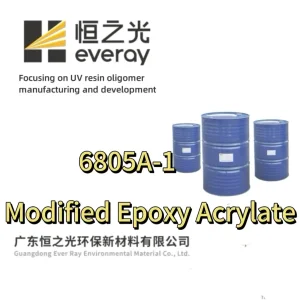
Buy Fast-Cure High-Gloss Modified Epoxy Acrylate UV Resin 6805A-1 for High-Speed Overprint Varnishes
View Technical Specs -
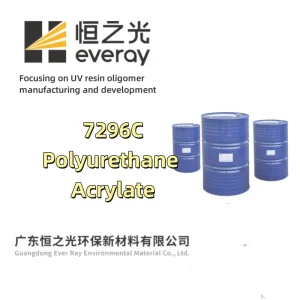
Buy Durable 7296C UV Resin: Chemical & Solvent-Resistant Polyurethane Acrylate for Clear Topcoats
View Technical Specs -
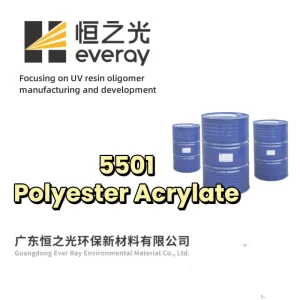
High-Quality Polyester Acrylate 5501 — A Core Resin for LED-UV Wood Coating Systems
View Technical Specs -
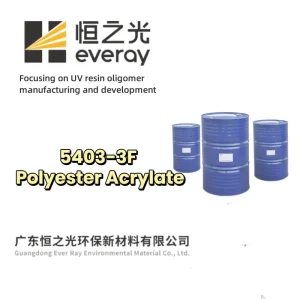
High-Quality 5403-3F Polyester Acrylate for Optimal Water-Ink Balance in Fast Lithographic Inks
View Technical Specs -
Wholesale 72017 Photo-Thermal Dual-Curing Polyurethane Acrylate Resin | Low Shrinkage & High Toughness
View Technical Specs -
Buy Polyester Acrylate 5336 – The Ideal Resin for High-Performance UV Inks, Adhesives & Varnishes
View Technical Specs -
Buy Fast Curing Modified Epoxy Acrylate Oligomer - High Flexibility Acrylic Resin for Plastic & Furniture
View Technical Specs -
Wholesale 7411B UV Resin: Low-Viscosity, High-Solids Solution for Matte Finishes & Cast Clear Layers
View Technical Specs
