
Primary Acrylic Resin Product Portfolio
Procure industrial-scale epoxy acrylates, polyurethane acrylates (PUA), and specialized radiation-curing polymers designed for precision surface performance.
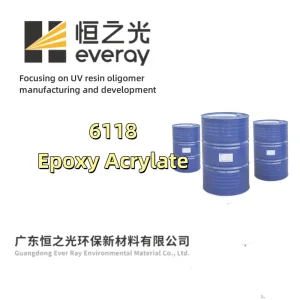
6118 Epoxy Acrylate UV Resin: Wood, Plastic & Ink Formulations
High-reactivity difunctional epoxy acrylate providing exceptional pencil hardness, solvent resistance, and rapid UV curing kinetics.
Procure Grade 6118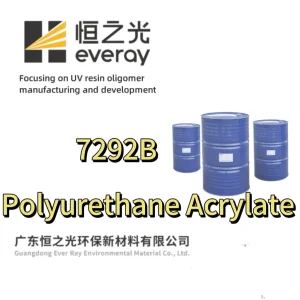
Anti-Yellowing Polyurethane Acrylate: High Flexibility Oligomer
Aliphatic PUA backbone designed for premium cosmetic nail gels, optical clear coatings, and elastomeric structural adhesives.
Procure Anti-Yellowing PUA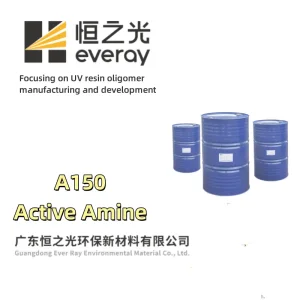
High-Purity A150 UV-Resin: Screen Inks & Industrial Coatings
Formulated for deep curing profile, superior pigment loading capacity, and high substrate cohesion on non-porous films.
Procure Grade A150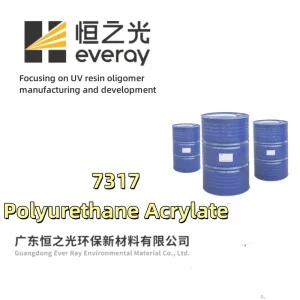
Specialty 7317 UV-Resin: Dynamic Wrinkle & Snowflake Texture
Self-texturing functional acrylate that generates micro-relief patterns under dual-wavelength light without chemical matting agents.
Procure Grade 7317
61003A UV Resin: Plastic-Film Varnish & LED Packaging
Optimized for 385–405nm LED photo-reactivity, low thermal shrinkage, and pinhole-free barrier protection on PET and BOPP.
Procure Grade 61003A
6160M-3 Fast Curing Modified Epoxy Acrylate
Proprietary molecular modification overcoming typical epoxy brittleness; delivers superior elongation and adhesion stability.
Procure Grade 6160M-3
72923 Fast-Cure Non-Yellowing PUA for UV Peelable Adhesive
Controlled peel strength and clean debonding mechanics without adhesive residue for semiconductor and glass masking.
Procure Grade 72923
Waterborne 70601 UV-Resin: 3D Printing & Wood Coatings
Next-generation zero-VOC waterborne polyurethane dispersion offering rapid water release, high crosslink density, and green footprints.
Procure Grade 70601Global Acrylic Resin Landscape: Commercial Dynamics & Structural Demand
Radiation-curable and solvent-free acrylic resin systems represent the pinnacle of industrial surface engineering, delivering unmatched chemical durability, sub-second conversion kinetics, and compliance with the most stringent global emissions directives.
Decarbonization & Regulatory Pressure
Global chemical legislation—including the EU Green Deal, EPA VOC caps, and China’s GB 30981 standards—is aggressively driving industrial coating and ink formulators away from solventborne polyacrylates toward 100% solids UV-curable oligomers and waterborne polyurethane acrylic dispersions.
Substrate Diversification
Modern production processes utilize polycarbonates, fluoropolymers, metal alloys, and recycled composites. Achieving chemical adhesion across low-surface-energy substrates requires modified acrylic oligomers engineered with localized polarity, phosphate groups, or dendritic branching.
The LED UV Operational Shift
The transition from high-pressure mercury arc lamps to narrowband UV-LED emission (365nm, 385nm, 395nm) demands reactive oligomers with negligible oxygen inhibition and balanced surface-to-depth curing efficiency under low energy fluxes.
B2B Procurement Matrix: Chemical Backbone Selection
Formulation chemists and industrial buyers must evaluate trade-offs between crosslink density, chain flexibility, and weathering resistance. The following matrix illustrates the performance vectors across major acrylic resin families.
| Resin Chemistry Family | Tensile Strength & Hardness | Elasticity & Elongation | Weatherability (QUV) | Curing Velocity | Primary Industrial Sector |
|---|---|---|---|---|---|
| Bisphenol A Epoxy Acrylate | Exceptional (3H–5H) | Low (< 5%) | Moderate (Prone to Yellowing) | Ultra-Rapid (< 0.2 sec) | Wood primers, paper overprint varnish, rigid PCB inks |
| Aliphatic Polyurethane Acrylate | High (H–2H) | High (40%–180%) | Outstanding (ΔE < 1.0) | Rapid | Automotive clearcoats, 3C electronics, cosmetic gels |
| Aromatic Polyurethane Acrylate | Very High (2H–3H) | Moderate (15%–40%) | Fair (Indoor Rated) | Rapid | Heavy-duty commercial flooring, industrial maintenance |
| Polyester Acrylate Oligomer | Moderate (HB–F) | Moderate (20%–50%) | Good | High | High-speed lithographic inks, flexographic packaging |
| Hyperbranched Polyacrylates | Extreme (4H–6H) | Very Low (< 2%) | Very Good | Ultra-Rapid | Anti-scratch optical hardcoats, nano-imprint lithography |
| Waterborne PUA Dispersions | Moderate (F–H) | High (50%–200%) | Outstanding | Moderate (Thermal Evap + UV) | Automotive interior leather, sustainable wood finishes |
Technical Roadmap: Overcoming Chemical Formulation Bottlenecks
Engineering acrylic resins for high-throughput automated lines requires resolving molecular physics challenges: oxygen inhibition, cure shrinkage stress, and pigment wetting thermodynamics.
Overcoming Oxygen Inhibition
Atmospheric oxygen quenches free radicals during free-radical acrylic polymerization, leading to surface tackiness. Our proprietary oligomer syntheses incorporate copolymerizable tertiary amine structures and ether linkages within the prepolymer backbone. These act as intrinsic hydrogen donors to consume peroxy radicals, achieving tack-free curing in ambient air at high conveyor speeds.
Shrinkage Stress Dissipation
When double bonds convert into carbon-carbon single bonds, conventional polyacrylates experience volume shrinkage up to 8–15%, reducing interfacial bond strength. By synthesizing hyperbranched cores and integrating aliphatic soft segments, our resins distribute crosslinking stress evenly, preserving adhesion on untreated polycarbonate and metal.
Precise Viscosity-Refractive Index Control
In optical film manufacturing and SLA/DLP 3D printing, resin viscosity governs recoating speed and bubble dissipation, while refractive index affects light transmission. Our modified acrylate monomers offer ultra-low volatile organic content, viscosity down to 5 mPa·s, and refractive indices above 1.52 for crisp optical clarity.
Global Compliance, Hazmat Safety & Supply Reliability
Procuring chemical resins at an industrial scale demands stringent regulatory certification and secure international freight execution. We safeguard your downstream production lines with full chemical traceability.
REACH & TSCA Status
All monomer precursors and synthesized oligomers carry complete registration under EU REACH, UK REACH, and US TSCA inventories, ensuring seamless clearance at ports of entry.
Heavy Metals & Halogens
Compliant with RoHS Directive 2011/65/EU and halogen-free standards (IEC 61249-2-21), satisfying clean manufacturing mandates in automotive electronic control units and smart devices.
Industrial Packaging
Shipments are packaged in UN-certified steel drums (200kg net) or intermediate bulk containers (1,000kg IBCs) with light-blocking liners and stabilized inhibitor packs to prevent premature polymerization.
Full Analytical COA
Every export lot includes an authentic Certificate of Analysis documenting dynamic viscosity, acid value, non-volatile content, Gardner color value, and specific gravity.
Specialized Acrylate Formulations & Performance Resins
Engineered grades for thermal stability, anti-fouling functionality, low-viscosity high-solids requirements, and precision graphic arts.
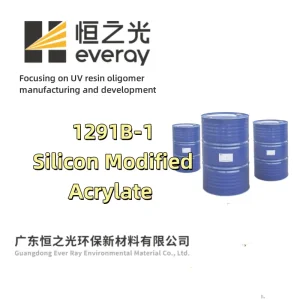
Antifouling Functional UV Resin: Grade 1291B-1
Contains hydrophobic and oleophobic segments that lower surface energy, conferring anti-smudge and easy-clean properties.
Procure Grade 1291B-1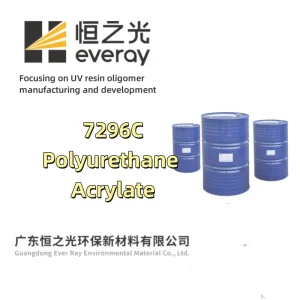
Durable 7296C UV Resin: High Solvent & Abrasion Resistance
High-crosslink oligomer designed for professional cosmetic nail systems, parquet wood floors, and chemical-resistant plastics.
Procure Grade 7296C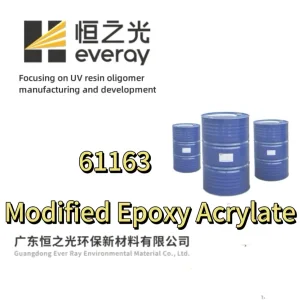
61163 High-Solid Low-Viscosity Modified Epoxy Acrylate
Addresses processing challenges by combining low resin viscosity with superior anti-yellowing performance on clear coats.
Procure Grade 61163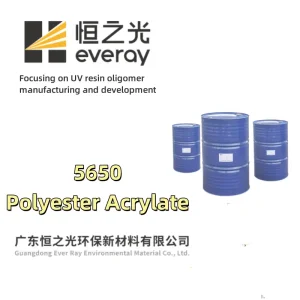
5650F UV Resin: Overprint Varnishes & Printing Inks
Offers rapid surface curing under low energy, excellent gloss development, and outstanding ink-water balance for offset lines.
Procure Grade 5650F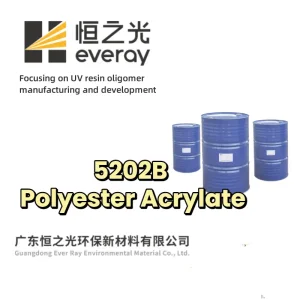
Polyester Acrylate 5202B: Flexible UV Formulations
Tetrafunctional polyester backbone delivering balanced viscosity, rapid curing response, and high elasticity on thermoformable plastics.
Procure Grade 5202B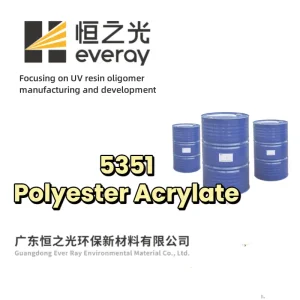
Polyester Acrylate 5351: High-Performance Inks & Coatings
Features exceptional pigment wetting capability, preventing agglomeration in high-solids pigmented screen and offset inks.
Procure Grade 5351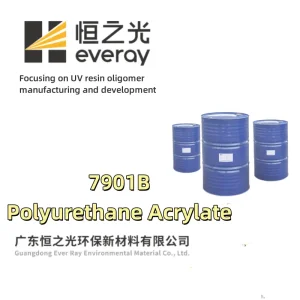
7901B UV-Resin: Resilient Industrial Surface Protection
Engineered for heavy-duty metal primers and composite finishes requiring exceptional corrosion resistance and intercoat adhesion.
Procure Grade 7901B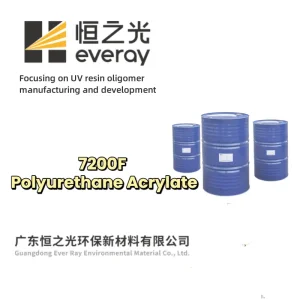
Durable 7200F Polyurethane Acrylate: Thermal Shock Resistant
Maintains structural elasticity and clear appearance across extreme thermal swings (-40°C to +120°C) without microcracking.
Procure Grade 7200FFrequently Asked Questions (B2B Procurement & Technical Support)
Explore answers to common questions regarding oligomer selection, kinetic testing, bulk logistics, and regulatory compliance.
