High-Performance Oligomers & Elastomeric Resins
Explore our industrial photopolymer formulations engineered for high tensile resilience, low shrinkage stress, rapid UV response, and durable lattice elasticity in additive shoe manufacturing.
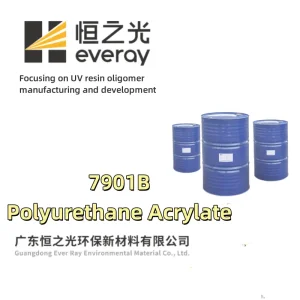
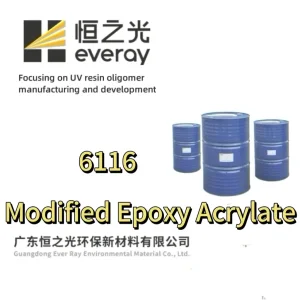
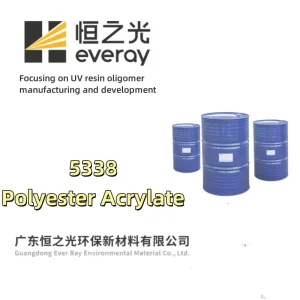
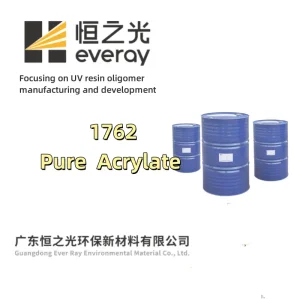
The Global Shift: Additive Manufacturing in Commercial Footwear
From initial design prototyping to end-use mass production, the global footwear sector is undergoing an irreversible transition toward digital light processing (DLP) and stereolithography (SLA) continuous liquid interface production.
From Prototyping to Serial Midsole Production
Traditional compression-molded EVA and thermoplastic polyurethane (TPU) foams are constrained by expensive tooling cycles and physical mold geometry. Global sports footwear giants are aggressively adopting photocurable resins to eliminate 8-to-12-week steel mold fabrication times, moving directly from CAD topology optimization to high-speed batch manufacturing of complex 3D lattice midsoles.
Energy Return & Viscoelastic Mechanics
Modern athletic specifications demand over 60% energy rebound resilience and less than 10% permanent compression set after 100,000 continuous compression cycles. Attaining this tier of mechanical endurance requires bespoke molecular architectures: interpenetrating polymer networks (IPN) that combine light-activated crosslinking speed with thermally matured urethane elasticity.
Mass Customization & Regional Digital Micro-Factories
Supply chain shocks have spurred tier-1 shoe brands to set up localized automated 3D printing hubs close to key consumer markets across Europe, North America, and East Asia. These distributed print centers depend critically on polymer factories capable of providing standardized, drum-packaged resins with tightly controlled liquid viscosity and low temperature-dependent drift.
Dual-Curing Chemistry: Solving the Fundamental Brittle Problem
Standard UV free-radical acrylates crack under dynamic cyclic impact. Ever Ray’s advanced dual-stage synthesis combines high-speed photopolymerization with latent polyurea/polyurethane thermal curing to deliver production-grade elastomeric parts.
Phase 1: UV-Induced Free-Radical Network
During the continuous projection cycle (385 nm or 405 nm LED lamps), reactive acrylate functional groups rapidly form a "green part" crosslinked scaffold. This fast gelation secures micrometer-level dimensional accuracy and allows delicate self-supporting open-cell lattice struts to pull out of the vat without layer delamination or sagging.
Phase 2: Latent Thermal Blocked Isocyanate Reaction
In the secondary convection or infrared post-bake oven (100°C–120°C), thermally triggered blocked isocyanates unblock and crosslink with active chain-extended polyols and polyamines. This drives molecular rearrangement into an interpenetrating polyurethane matrix that imparts high tear strength, superior elongation at break, and persistent flex fatigue endurance.
Zero Plasticizer Migration & Superior Hydrolysis
Unlike commodity physical blends that rely on volatile liquid plasticizers to lower durometer hardness, our aliphatic oligomers use chemically bonded polyether/polycarbonate soft segments. This prevents surface exudation, oily sweating, or shrinkage over time, ensuring flawless long-term bonding to outsoles and lasting hydrolysis resistance in humid climates.
Engineering Data: Photopolymers vs Traditional Footwear Foams
A side-by-side technical evaluation of mechanical properties according to international ASTM and ISO standards for sports shoe midsoles and functional insoles.
| Performance Parameter | Testing Standard | Dual-Cure Photopolymer (Ever Ray 72017) | Standard Molded EVA Foam | Thermoplastic TPU Foam (E-TPU) |
|---|---|---|---|---|
| Shore Hardness | ASTM D2240 | 45A – 70A (Tunable) | 50C – 60C (Equivalent ~30A-40A) | 55A – 65A |
| Rebound Resilience | ASTM D2632 / DIN 53512 | 62% – 68% | 45% – 52% | 60% – 65% |
| Tensile Strength (MPa) | ASTM D412 (Die C) | 12.5 – 18.0 MPa | 2.5 – 4.0 MPa | 8.0 – 12.0 MPa |
| Elongation at Break | ASTM D412 | 280% – 420% | 180% – 250% | 350% – 500% |
| Split Tear Strength | ASTM D624 (Die C) | 38 – 52 kN/m | 12 – 18 kN/m | 30 – 40 kN/m |
| Compression Set (50%, 22h @ 23°C) | ASTM D395 (Method B) | < 8.5% | 22% – 35% (Permanent sagging) | 12% – 16% |
| Ross Flex Fatigue (@ -10°C) | ASTM D1052 | > 150,000 Cycles (No Crack) | 50,000 Cycles (Crack Initiation) | 100,000 Cycles |
| Design Freedom & Geometry | Tooling Requirement | Complex Topology / Zero Tooling | Strict Draft Angles / Costly Molds | Steam Chamber Mold Tooling |
Localized Footwear Application Scenarios
Our photocurable chemical systems are engineered to resolve real design, mechanical, and production bottlenecks across diverse sectors of the footwear and medical orthotics market.
1. Marathon & High-Mileage Running Soles
Long-distance running shoes require dynamic damping under foot strike paired with rapid energy return during toe-off. Through functionally graded Voronoi and gyroid lattice printing, our dual-cure polyurethane materials allow variable strut thickness across the heel, midfoot, and forefoot. Runners experience tuned zonal cushioning that reduces lower-limb fatigue over 42-kilometer distances without material packing-out.
2. Patient-Specific Orthopedic Insoles
Medical orthotics for diabetic foot management, plantar fasciitis, and pronation correction demand patient-matched stiffness profiles based on pressure-plate gait analysis. Using Ever Ray’s low-odor, skin-safe, biocompatible-grade resins, podiatry clinics can print variable-durometer corrective orthotic lattices overnight, transitioning directly from 3D foot scan to finished insole in under 24 hours.
3. Heavy-Duty Industrial Safety Footwear
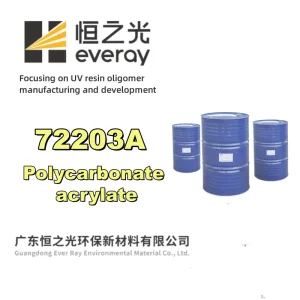
Work boots exposed to construction and mining environments face aggressive contact with motor oils, hydraulic fluids, diesel fuel, and concrete slurry. Standard aromatic urethanes rapidly hydrolyze and swell. Ever Ray’s polycarbonate-modified acrylate formulations provide outstanding chemical resistance, puncture mitigation, and cold-flex stability down to -25°C under rigorous EN ISO 20345 benchmarks.
4. Avant-Garde Luxury & Monolithic Shoes
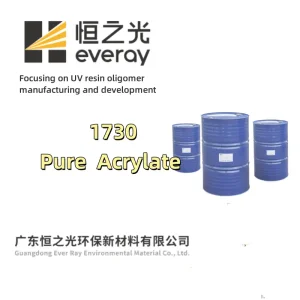
High-end fashion labels are shifting toward fully recyclable, monolithic 3D-printed slip-ons and architectural heels. Combining high structural rigidity in the shank with elastic compliance in the collar requires wide functional versatility. Our pure acrylate and aliphatic polyurethane resins deliver crystal-clear optical transparency, high tinting affinity with organic dyes, and zero yellowing under continuous UV sunlight exposure.
China Factory Advantages: Scale, Integration & Resilience
Why international brands, compounders, and regional distributor networks partner directly with Guangdong Ever Ray Environmental Material Co., Ltd. for their commercial additive material pipeline.
Vertical Chemical Synthesis Integration
Unlike secondary blending companies that simply dilute pre-made resins, Ever Ray synthesizes core prepolymers, polyester backbones, and specialized aliphatic isocyanate adducts in-house. Our modern facility in Yunfu, Guangdong operates 10+ computerized reactor vessels, ensuring direct control over molecular weight distribution, polydispersity index (PDI), and batch-to-batch viscosity consistency.
Unmatched Cost-to-Performance Ratio
By securing upstream petrochemical feedstocks within the Guangdong industrial cluster (including acrylic acid, caprolactone, and polyols) and deploying automated mass production lines, we reduce resin manufacturing overhead by 30% to 45% compared to Western chemical conglomerates, passing clear unit-cost savings to commercial 3D printer fleets.
Rapid R&D Turnaround & Customization
Footwear manufacturing moves fast. Our dedicated laboratory of 20+ senior polymer scientists can modify functional acrylate oligomer backbones, alter Shore hardness, tune elongation, or match curing wavelength profiles (365nm, 385nm, 405nm, or visible light) within 14 working days, shipping evaluation pilot samples worldwide with complete TDS and application dossiers.
Technology Roadmap: The Future of Circular Footwear Materials
Additive footwear is moving toward closed-loop circularity, renewable carbon sourcing, and next-generation dynamic chemical networks.
Covalent Adaptable Networks (CANs & Vitrimers)
Thermoset photopolymers are historically difficult to recycle once fully crosslinked. Our R&D team is incorporating dynamic transesterification and disulfide bond exchange mechanisms into UV resins. This allows ground printed lattices to be remolded under heat and pressure into secondary outsoles, achieving genuine circularity without degrading mechanical properties.
Bio-Based & Plant-Derived Carbon Prepolymers
Ever Ray is scaling acrylate oligomers derived from vegetable fatty acids, soybean polyols, and fermented itaconic acid precursors. Our upcoming bio-content resin tier exceeds 45% certified renewable carbon (ASTM D6866) while matching the rebound resilience, tear strength, and low shrinkage of conventional petroleum-derived polyurethane formulations.
Direct Single-Stage Ambient Moisture Cure
To eliminate capital-intensive post-cure thermal ovens for smaller print shops, our engineers are developing single-step photopolymers that initiate secondary curing via ambient atmospheric moisture. This innovation slashes post-processing energy consumption by 60% while maintaining the dynamic flex resistance required for commercial footwear qualification.
Global Compliance, Quality Assurance & Export Packaging
Cross-border procurement of specialty chemical photopolymers demands absolute adherence to hazardous cargo logistics, safety disclosures, and regulatory compliance.
REACH, RoHS & California Proposition 65
Every commercial batch supplied by Ever Ray complies fully with EU REACH Annex XVII, SVHC candidate lists, and RoHS directives. Our materials are free from banned phthalate plasticizers, chlorinated paraffins, organotin compounds, and restricted volatile organic solvents, ensuring safe export access to global consumer retail channels.
SATRA Footwear Testing Protocol Conformity
Our in-house quality lab subjects cured footwear coupons to international SATRA methodologies: SATRA TM161 (flex resistance at freezing temperatures), SATRA TM134 (density evaluation), and SATRA TM144 (sole friction dynamics). We provide comprehensive analytical test dossiers alongside each bulk production shipment.
Industrial Export Packaging & Cold-Chain
We supply resin in light-blocking 1 kg bottles, 20 kg anti-static HDPE jerrycans, and 200 kg steel drums, purged with dry nitrogen to stop premature moisture curing. We ship DDP, FOB, and CIF via licensed chemical sea-freight and temperature-stabilized air freight lines, complete with authenticated bilingual SDS and GHS labeling.
Frequently Asked Questions by Industrial Formulators & Brands
Key chemical and commercial insights for engineering teams evaluating 3D printed footwear resin factories.
Why is dual-cure chemistry preferred over standard single-cure UV resin for shoe midsoles?
Single-cure free-radical UV resins yield high crosslink density with short polymer chains, making them prone to brittle shattering under cyclic impact. Dual-cure formulations introduce a second thermal reaction that builds an elastomeric polyurethane backbone, achieving up to 400% elongation, 65% energy return, and over 150,000 crack-free flex cycles.
What is the typical liquid viscosity range, and which 3D printers are compatible?
Our footwear oligomers and formulated photopolymers range from 300 to 2,500 mPa.s at 25°C. For industrial DLP, LCD, and CLIP continuous vat platforms equipped with heated resin vats (35°C–40°C), viscosity drops below 400 mPa.s, enabling rapid recoating, fine strut resolution, and high printing throughput.
How does Ever Ray guarantee batch-to-batch stability across large export orders?
We maintain strict ISO 9001 certified manufacturing protocols across all our Yunfu production lines. Every production batch undergoes rigorous Gel Permeation Chromatography (GPC) for molecular weight distribution, Fourier-Transform Infrared Spectroscopy (FTIR) for functional conversion, and rheometer viscosity validation to ensure uniform print performance worldwide.
Can you customize Shore hardness and mechanical damping profiles for proprietary designs?
Yes. Our polymer synthesis team routinely adjusts polyol segment lengths, reactive diluent monomer ratios, and crosslinking densities to achieve target Shore A durometers (from soft 40A cushions to rigid 85A outsoles/stability shanks), tailored precisely to your printer hardware and lattice design.
What post-processing equipment is required for dual-curing photopolymer midsoles?
The standard process involves: (1) solvent washing in tripropylene glycol monomethyl ether (TPM) or isopropyl alcohol (IPA) to clear unreacted surface resin; (2) compressed air drying; (3) short UV flood post-curing; and (4) baking in a standard industrial convection oven at 100°C–120°C for 2 to 4 hours to mature the secondary polyurethane network.
What are the minimum order quantities (MOQ) and lead times for sample testing?
Evaluation sample kits (1 kg to 5 kg) ship within 3–5 working days worldwide via express air courier with full TDS and starting formulation sheets. For commercial bulk orders, our baseline MOQ is 200 kg (one standard drum), with 10–14 calendar days production lead time at our Guangdong plant.
Engineering Resins, Functional Monomers & Dual-Cure Polymers
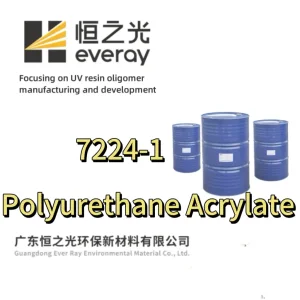
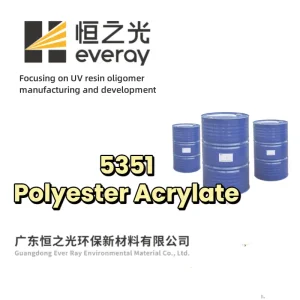
Explore our specialized range of ABS-like engineering resins, functional polyester acrylates, polycarbonate oligomers, and dual-curing photopolymers formulated for high-demand industrial production.

Accelerate Your Footwear Additive Manufacturing Today
Connect directly with Ever Ray's chief polymer engineers. Request complete technical data sheets (TDS), safety certifications (SDS), or an evaluation sample kit customized to your specific DLP/SLA printing hardware.