
China Top Acrylate Based UV Coatings Manufacturers
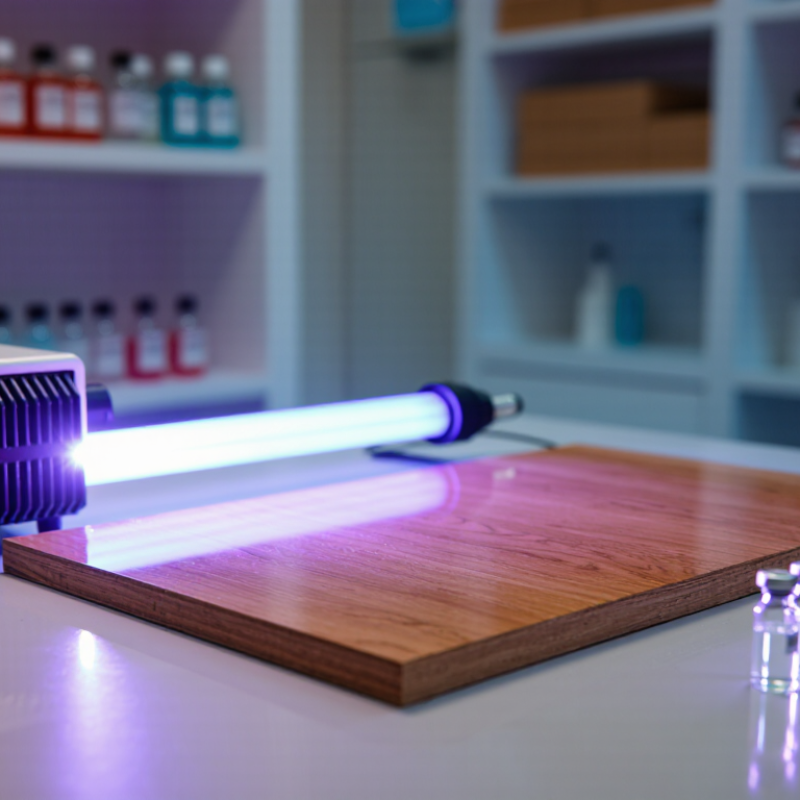
Acrylate Based Uv Coatings are widely used where manufacturers need fast curing, hard surfaces, and strong adhesion. You can see their value on a coated wood panel: the finish cures within seconds under ultraviolet light, leaving a smooth surface ready for handling. Formulations differ, however. Oligomer chemistry, reactive diluents, photoinitiators, and curing equipment all affect performance.
Grand View Research estimated the global UV-curable coatings market at approximately US$6.2 billion in 2023 and forecast continued growth through 2030. This figure covers UV-curable coatings broadly; it is not an acrylate-only market estimate. That distinction matters when comparing suppliers. A large market forecast does not prove that any individual manufacturer offers consistent batch quality, suitable technical support, or the right formulation for a specific production line.
This guide examines China’s leading manufacturers through practical criteria: product range, application expertise, quality systems, export experience, and responsiveness to sample testing. Ask for technical data sheets, curing recommendations, and application-specific test results. A glossy sample is not enough.
Expert quotation note: no source material or verifiable quotation from a named Acrylate Based Uv Coatings specialist was provided. Inventing a quotation would undermine the reliability of this introduction, so a sourced expert statement should be added only after its original publication is confirmed.
What Are Acrylate-Based UV Coatings?
Acrylate-based UV coatings are liquid formulations that harden when ultraviolet light activates a photoinitiator. They commonly combine acrylate oligomers, reactive diluents, pigments, and additives. The oligomer helps set hardness and flexibility; the diluent adjusts viscosity and can become part of the cured film. Once exposed to suitable UV energy, reactive groups link into a solid polymer network. The process can be very fast. But speed alone does not guarantee a sound finish.
The chemistry suits wood panels, plastic parts, metal components, and printed surfaces where rapid handling matters. A MarketsandMarkets report published in 2023 estimated the global UV-curable resins market at USD 4.2 billion in 2022, with a projected USD 6.9 billion by 2028. That market figure covers more than acrylate coatings, so it should not be read as their exact share. In production, film thickness, lamp output, pigment loading, and substrate shape all affect curing. Dark or recessed areas may receive less light, while oxygen at the surface can interfere with curing. A tacky patch is possible. Testing the actual coating on the actual substrate remains essential; a neat laboratory result may not transfer perfectly to a busy line.
FAQS
They are liquid coatings that harden when ultraviolet light activates a photoinitiator. Acrylate groups form a solid polymer network. Fast, but not foolproof.
Typical formulas contain acrylate oligomers, reactive diluents, photoinitiators, and additives. Oligomers influence hardness and flexibility. Diluents adjust flow and may join the cured film.
UV energy activates the photoinitiator, which creates radicals. These link acrylate groups into a solid film. Wavelength, exposure dose, line speed, and coating thickness all matter.
Oxygen can interfere with surface curing, and shaded areas may receive too little light. Dark pigments and recessed edges can complicate exposure. A glossy look proves little.
Common uses include furniture panels, wood flooring, plastic housings, metal components, and printed surfaces. A flat panel is easier to test than a recessed part.
Not always. LED curing can reduce heat exposure, which may help some sensitive parts. The coating and equipment still need testing together.
Formulation, surface preparation, film thickness, and curing conditions affect adhesion and scratch resistance. Household chemical resistance also varies. It is easy to blame the lamp alone.
Interest is growing in LED-compatible formulas, lower-VOC processes, and renewable raw materials. These directions sound promising, but performance still needs practical testing.
Test the coating on the actual substrate. Check adhesion, tack, edges, and shaded areas, not only flat samples. Record lamp settings and film thickness. Lab results can mislead a little.
Conclusion
Acrylate Based Uv Coatings are finishes that use acrylate resins and ultraviolet light to create a cured protective layer. Their formulation may include reactive diluents, photoinitiators, pigments, and additives, selected to balance adhesion, gloss, hardness, flexibility, and resistance to wear. During curing, UV energy triggers a rapid reaction that transforms the liquid coating into a solid film, making the process suitable for efficient production when the materials and equipment are properly matched.
China’s market includes manufacturers serving varied performance and production needs. Buyers can assess potential suppliers by reviewing technical support, product consistency, customization options, quality controls, production capacity, and sample-testing results. These coatings are used on applications such as wood products, plastics, printed materials, and industrial components. Market trends include demand for faster processing, lower-emission formulations, improved durability, and coatings tailored to specific substrates, while reliable testing and clear technical data remain important to successful selection.

