
What Is Acrylate Crosslinking and How Does It Work?

Time:2026-11-05 Author:Ethan
0%

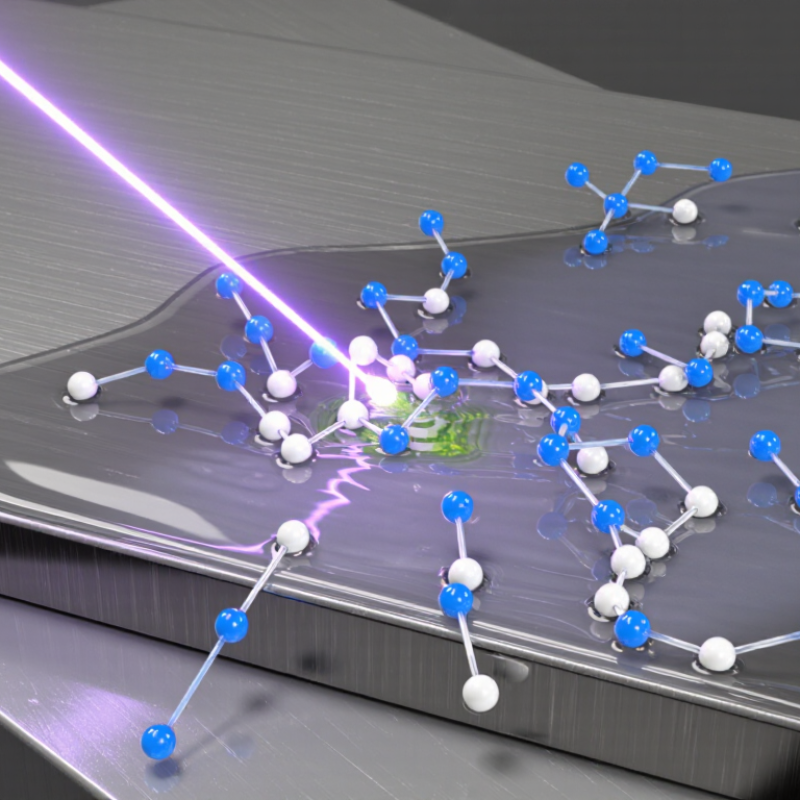
Acrylate Crosslinking turns small reactive molecules into a connected polymer network. Under ultraviolet light, an initiator forms radicals that open acrylate carbon–carbon double bonds. Multifunctional acrylates then link growing chains at several points. The result can be a coating that resists scratches, solvents, and heat better than an uncrosslinked film. Picture a thin liquid layer on a metal panel: seconds after exposure, it can become a firm, continuous surface. That network matters. Too little crosslinking may leave a tacky, weak film; too much can make it brittle. Formulation, light dose, and oxygen at the surface all affect the outcome.

The commercial context is growing. MarketsandMarkets estimated the global UV-curable coatings market at USD 7.2 billion in 2023 and projected USD 11.3 billion by 2028. This is a market indicator, not a direct measure of acrylate crosslinking alone. Still, it shows why fast-curing coating technologies attract investment. Polymer chemist Christopher N. Bowman, whose research focuses on photopolymerization, offers a useful expert lens: his published work emphasizes that network formation and structure shape a cured material’s performance. I cannot verify a direct quotation from him on this specific topic, so that is a paraphrase, not a verbatim quote. A practical detail is easy to overlook: a glossy surface does not prove complete curing. Testing conversion and mechanical properties matters. In this guide, we’ll explain the chemistry, common triggers, and trade-offs behind Acrylate Crosslinking.
What Is Acrylate Crosslinking and How Does It Work?

What Acrylate Crosslinking Builds: A 3D Network from C=C Bonds

Acrylate crosslinking turns small molecules into a connected, three-dimensional polymer network. Each acrylate group carries a reactive carbon–carbon double bond, written as C=C. Under light or heat, an initiator can generate radicals that open these bonds. The resulting chains grow quickly. When a molecule has multiple acrylate groups, it can connect separate chains, creating junctions throughout the material. Think of clear liquid becoming a firm film, with links forming in every direction.

The network’s structure depends on more than the number of C=C bonds. A coating that cures unevenly may feel dry on top while remaining soft beneath. Oxygen, light penetration, and heat can all affect conversion. Plastics Europe’s Plastics—The Fast Facts 2023 reports 400.3 million tonnes of global plastics production in 2022. That figure is not specific to acrylates, but it shows the scale of materials where network design matters. Small structural choices can change flexibility, solvent resistance, and wear.

Manufacturers can assess coating resistance with solvent-rub procedures described in ASTM D5402-19. Such tests offer useful evidence, not a perfect picture of crosslink density. A strong rub result does not reveal every weak spot inside the network. That limitation is worth remembering. A tightly linked structure may resist chemicals well, yet become brittle if its junctions are too dense.

What Acrylate Crosslinking Builds: A 3D Network from C=C Bonds

Each acrylate group contains one reactive C=C bond. During radical curing, molecules with multiple acrylate groups can connect growing polymer chains and help form a three-dimensional network.

The bars show the number of acrylate groups per molecule: one for a monoacrylate, two for a diacrylate, and three for a triacrylate. Actual network formation and density also depend on cure conversion and formulation.

Key Components: Acrylate Functionality, Reactive Diluent, and Initiator

Acrylate crosslinking forms a three-dimensional polymer network when reactive carbon-carbon double bonds join during curing. Acrylate functionality describes how many reactive groups each molecule carries. A molecule with several acrylate groups can connect multiple chains, often increasing network density and hardness. It may also raise shrinkage or brittleness. More functionality is not automatically better.

Reactive diluents reduce formulation viscosity, helping liquid resin flow across a surface or into fine features. Unlike an inert solvent, many diluents contain acrylate groups and become part of the cured network. Their molecular size and functionality influence flexibility, cure speed, and final feel. A thin coating may level well but still cure unevenly in shadowed areas. Small changes matter.

The initiator absorbs suitable energy, commonly UV light, and generates radicals that start acrylate reactions. Lamp output, film thickness, oxygen exposure, and initiator choice all affect conversion. Grand View Research’s UV curing system market report estimated a global market of about US$4.7 billion in 2023, with a projected 9.4% annual growth rate through 2030. This is market context, not proof of cure quality. In practice, test the actual substrate and coating thickness; a formulation that works on paper can disappoint on a textured part.

UV Curing: Radical Formation Under the 315–400 nm UV-A Band

Under UV-A light, roughly 315–400 nm, a photoinitiator absorbs energy at wavelengths it can use. The absorbed energy creates reactive radicals, either by splitting a molecule or by abstracting hydrogen from a nearby donor. The exact route depends on the initiator chemistry. That is the trigger. Radicals add to carbon–carbon double bonds in acrylate groups, starting chain growth. When resin molecules carry multiple acrylate groups, growing chains connect them into a three-dimensional network. The liquid film then becomes a solid coating or adhesive layer.

At 365 nm, for example, a formulation cures well only if its initiator absorbs enough light there. Lamp wavelength alone does not guarantee conversion; intensity, exposure time, film thickness, pigments, and distance all matter. Oxygen at the surface can consume radicals and leave a tacky skin, while shaded recesses may stay soft. Not every layer cures. A practical check is to compare surface feel with cure through the full film, using a suitable test rather than appearance alone. I would not treat one exposure setting as universal: small changes in color or thickness can shift results. Matching the spectrum and dose to the formulation is more dependable.

What Is Acrylate Crosslinking and How Does It Work? — UV Curing: Radical Formation Under the 315–400 nm UV-A Band

Dimension Factual detail What it means in UV curing
UV-A wavelength range UV-A is commonly defined as 315–400 nm. A photoinitiator must absorb a useful portion of the lamp’s output to generate initiating radicals efficiently. The wavelength range alone does not establish whether a formulation will cure.
Photon energy across UV-A Photon energy is approximately 3.10 eV at 400 nm and 3.94 eV at 315 nm, using E ≈ 1240/λ, with wavelength in nanometres. Shorter-wavelength photons carry more energy, but cure performance also depends on absorption, formulation, light intensity, exposure time, and film thickness.
Reactive groups Acrylate groups contain carbon–carbon double bonds (C=C) that can participate in free-radical polymerization. As polymerization proceeds, acrylate groups are consumed and linked into growing polymer chains.
Radical generation A photoinitiator absorbs light and forms reactive species. Type I photoinitiators can split into radicals; Type II systems typically form radicals through a reaction with a hydrogen donor or another co-reactant. The generated radicals initiate addition to acrylate C=C bonds. The exact pathway depends on the photoinitiator system and formulation.
Chain growth An initiating radical adds to an acrylate double bond, producing a new carbon-centred radical that can add to further acrylate groups. Repeated additions build polymer chains. The reaction continues until radicals are terminated or otherwise deactivated.
Crosslink formation When molecules contain multiple polymerizable acrylate groups, reactions between those groups can connect separate chains into a three-dimensional network. Network formation generally increases the cured material’s cohesion. Final properties depend on composition and conversion, not simply on exposure to UV-A.
Oxygen inhibition Oxygen can react with carbon-centred radicals to form peroxy radicals, which are generally less effective at propagating acrylate polymerization. Air exposure can slow surface curing or leave a tacky surface. Formulation design, suitable exposure conditions, or reduced oxygen at the surface may help address this effect.
UV dose Radiant exposure (dose) is commonly expressed in mJ/cm² and is calculated from irradiance over time when conditions are appropriately measured. A stated dose is not, by itself, proof of complete cure. Spectral match, sample geometry, absorption, oxygen, and formulation all affect the result.
Practical verification Cure can be assessed using methods suited to the material and application, such as checking residual tack, measuring acrylate conversion spectroscopically, or testing relevant mechanical or chemical properties. Use a validated method and application-specific acceptance criteria; surface appearance alone may not reveal the conversion or cure state throughout a film.

Process Controls: UV Dose in mJ/cm², Oxygen Inhibition, and Film Thickness

Acrylate crosslinking occurs when UV light activates a photoinitiator, creating reactive species that join acrylate groups into a network. The result is a solid film. UV dose, measured in mJ/cm², combines light intensity and exposure time. Measure it at the coating surface, not just at the lamp. A dose that works on one line may fail on another because lamp output and formulation differ.

Oxygen can interrupt the surface reaction by consuming reactive species. The coating may feel tacky even when deeper layers have cured. Increasing dose can help, but it may also overheat or discolor sensitive materials. Film thickness matters too: light loses strength as it travels through the coating, especially when pigments or fillers absorb it. A glossy surface can hide an undercured layer beneath. Even a careful dose chart can mislead; I would verify cure through the full film, not by touch alone.

Tips: Test several measured doses on the actual substrate. Check surface tack and cut or inspect a sample for depth of cure. Keep film thickness consistent, and record lamp distance, speed, and readings. Small setup changes matter.

Performance Testing: ASTM D5402 Solvent-Rub Resistance and Gel Fraction

After an acrylate coating cures, crosslinks can turn mobile polymer chains into a connected network. ASTM D5402 solvent-rub testing offers a practical way to assess that cured film’s resistance. A cloth is wetted with the selected solvent, then rubbed back and forth over the coating. Record the solvent, rub technique, and failure point; small differences in pressure or cloth wetness can shift the result.

Keep the test conditions consistent. Use the same film thickness, cure time, solvent, and rubbing procedure across samples. Watch for softening, color transfer, loss of gloss, or exposure of the surface beneath the coating. A high rub count can indicate stronger solvent resistance, but it is not a universal pass mark. The standard describes a test method, not one performance threshold for every coating. Details matter.

Gel fraction provides a complementary measurement. A cured sample is weighed, extracted in a suitable solvent, dried, and weighed again. The insoluble portion is reported as a fraction of the original polymer mass. More gel can suggest greater network formation, though fillers and incomplete extraction may affect the result. Don’t treat the two tests as interchangeable. One tracks visible damage during rubbing; the other estimates insoluble network content. Together, they can reveal useful patterns, but neither explains every failure. A result may look neat on paper and still deserve another look.

FAQS

What does UV dose measure?

UV dose combines light intensity and exposure time, measured in mJ/cm². Measure it at the coating surface.

Why can the same UV dose produce different results?

Lamp output and coating formulation can differ between production lines. A dose chart may not transfer cleanly.

Why can a cured coating still feel tacky?

Oxygen can interrupt the surface reaction, leaving the top layer tacky while deeper layers cure. I would not trust touch alone.

How does film thickness affect curing?

UV light weakens as it travels through the coating. Pigments and fillers can absorb more light, leaving deeper material undercured.

How can I check cure depth?

Test measured doses on the actual substrate. Check surface tack, then cut or inspect a sample for cure depth.

What does a solvent-rub test show?

It assesses visible coating damage as a wetted cloth rubs back and forth. Watch for softening, color transfer, lost gloss, or exposed substrate.

Does a high solvent-rub count guarantee good performance?

No. There is no universal pass count for every coating; pressure and cloth wetness can change results. Details matter.

What does gel fraction measure?

It estimates the insoluble portion of a cured sample after solvent extraction and drying. Fillers or incomplete extraction can affect the result.

Are gel fraction and solvent-rub results interchangeable?

No. One measures visible damage during rubbing; the other estimates network content. Together, they help reveal patterns, but may not explain every failure.

Conclusion

Acrylate Crosslinking transforms liquid or flowable ingredients into a durable three-dimensional polymer network. Acrylate-functional molecules contain carbon–carbon double bonds (C=C) that react to connect neighboring chains. A formulation typically combines components with different levels of acrylate functionality, a reactive diluent to adjust flow and help form the network, and a photoinitiator that starts the reaction when exposed to light.

During UV curing, light in the 315–400 nm UV-A band activates the initiator, producing radicals that drive the C=C bonds to react. The result depends on process controls: UV dose, measured in mJ/cm², must be appropriate for the formulation and film thickness. Oxygen at the surface can inhibit curing, while thicker films may need adjusted exposure conditions. Performance can be assessed using ASTM D5402 solvent-rub testing and gel-fraction measurements, which help indicate resistance to solvent and the extent of network formation.


Ethan

Ethan

Ethan is a seasoned marketing professional with a deep expertise in our company's innovative product line. With a passion for sharing knowledge and insights, he takes the lead in regularly updating our corporate blog, where he explores industry trends, product features, and effective marketing......